About Kanda Shrine (Kanda Myojin)
Kanda Shrine (commonly known as Kanda Myojin) is a shrine located in Chiyoda Ward, Tokyo, with a history of over 1300 years. It is characterized by its vibrant vermilion and gold-colored shrine buildings, and during the Edo period, it served as the “guardian shrine of Edo,” protecting the entire city of Edo.
Founded in 730 AD (Tenpyo 2), it was originally located near present-day Otemachi, but was moved to its current location in Sotokanda in 1616 AD (Genna 2) due to the expansion of Edo Castle by Tokugawa Ieyasu.
Deities and History
Kanda Myojin Shrine enshrines three deities:
- Ōnamuchi-no-Mikoto: God of matchmaking and business prosperity
- Sukunahikona-no-Mikoto: God of business prosperity and health
- Taira no Masakado-no-Mikoto: God of protection against disaster and misfortune
It is particularly known for enshrining Taira no Masakado, and during the Edo period, it was widely worshipped by people from commoners to samurai as the “guardian deity of Edo.”
Benefits of Kanda Myojin Shrine
Business Prosperity and Success
Revered as the guardian deity of merchants since the Edo period, it continues to be visited by many business owners and entrepreneurs today. As the principal guardian deity of 108 neighborhood associations including Kanda, Nihonbashi, and Akihabara, it continues to watch over the business district.
Matchmaking and Marital Harmony
Ōkuninushi-no-Mikoto is considered the same deity as Ōkuninushi-no-Mikoto of Izumo Taisha Shrine, and is believed to grant blessings for successful relationships. Matchmaking charms are also available on the shrine grounds.
Prayers for IT and Anime Related Matters
Due to its proximity to Akihabara, many IT and anime-related companies visit the shrine, and it is known as an “IT sanctuary.” Numerous ema (votive tablets) praying for the success of game companies and anime studios are dedicated here.
Points to Note During Your Visit
Highlights of the Shrine and Grounds
Zuishinmon Gate
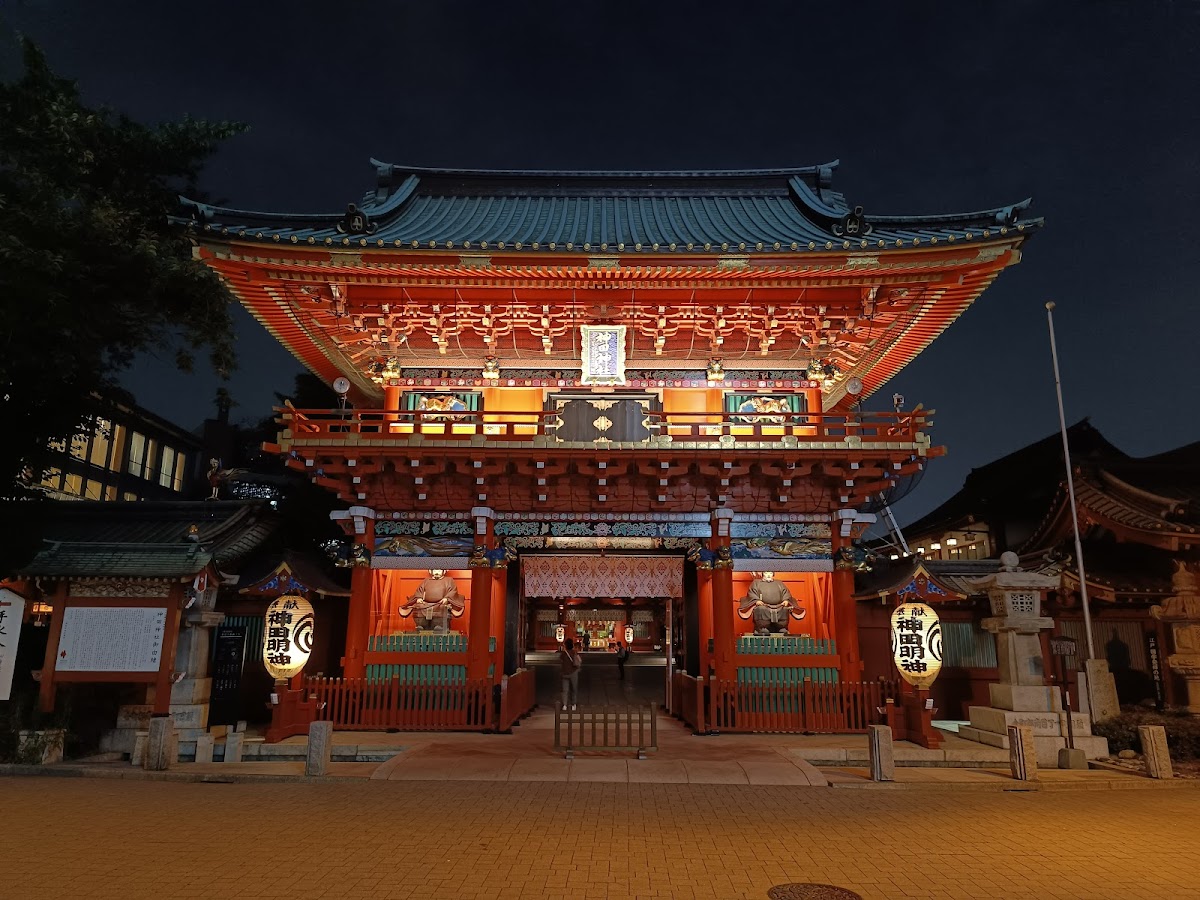
This magnificent vermilion-painted gate was rebuilt in 2003. The gate, approximately 6.6 meters high, features intricate carvings, and guardian statues are placed on either side.
Main Hall
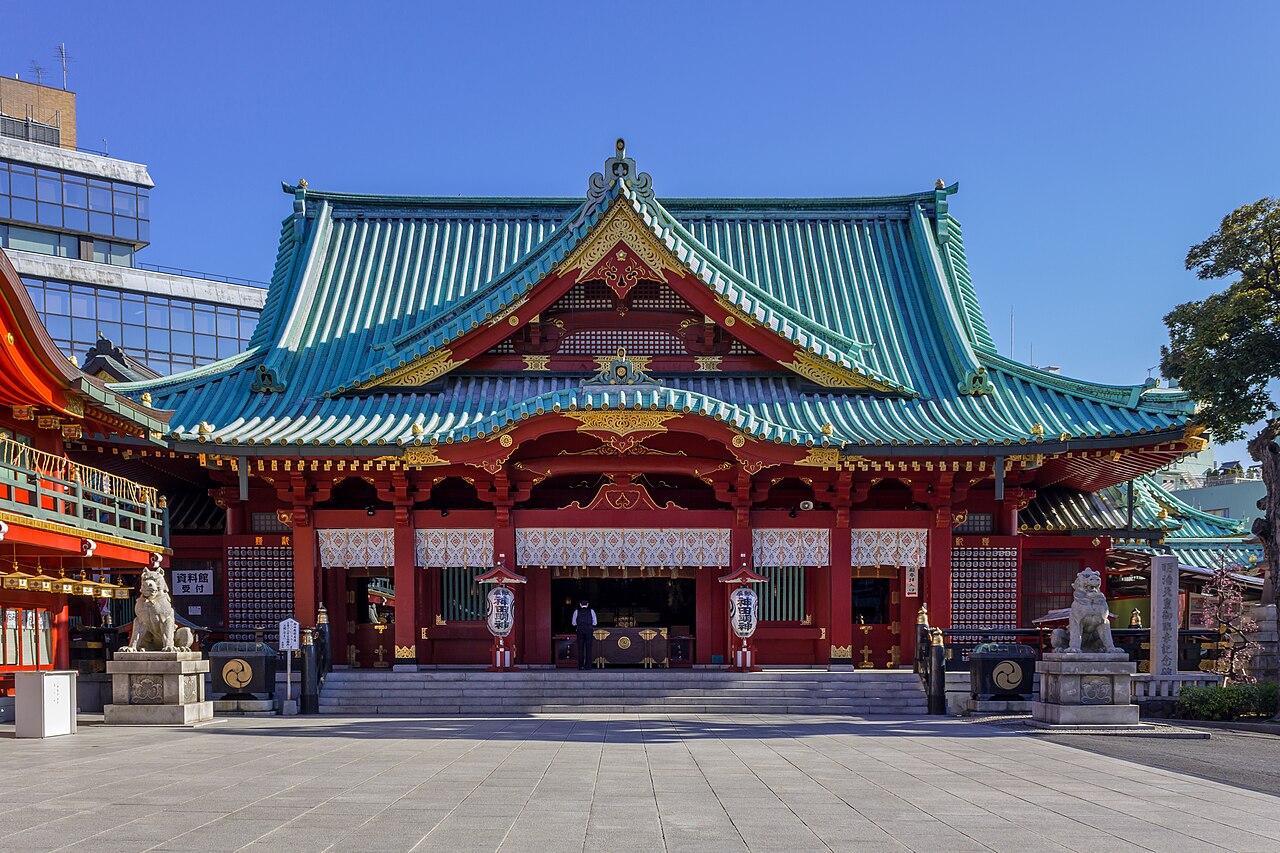
The Gongen-zukuri style shrine building was rebuilt in 1934 and is characterized by its vibrant vermilion and gold decorations. This shrine, a valuable example of a steel-framed reinforced concrete structure that survived wartime destruction, is a building of high cultural value.
Daikoku-sama Statue
Within the shrine grounds stands a 6.6-meter-tall stone statue of Daikoku-sama, attracting a constant stream of worshippers praying for business prosperity.
Worship Etiquette
- Bow before passing through the Zuishinmon Gate
- Purify your body and mind at the water basin (left hand → right hand → mouth → left hand → handle)
- Perform “two bows, two claps, one bow” in front of the main hall
- Offer your donation quietly
Items Available
- Victory Charm: A charm for success in all kinds of competitions
- IT Information Security Charm: A prayer for the safety of computers and smartphones
- Matchmaking Charm: For successful relationships
- Business Prosperity Charm: For business success
Goshuin (shrine stamps) can be obtained at the shrine office (500 yen offering).
Annual Events
Kanda Festival (Mid-May)
A grand festival considered one of Japan’s three greatest festivals and one of Edo’s three greatest festivals. The main festival, held every two years, features a portable shrine procession and a parade of the deity, attracting approximately 300,000 visitors.
Other Major Events
- Hatsumode (January 1st-3rd): Approximately 300,000 visitors
- Setsubun Festival (February 3rd): Bean-throwing ritual
- Shichi-Go-San (November): Prayer reception
Access Information
Access by Train
- JR Chuo Line/Sobu Line: 5-minute walk from Ochanomizu Station (Hijiribashi Exit)
- Tokyo Metro Marunouchi Line: 5-minute walk from Ochanomizu Station (Exit 1)
- Tokyo Metro Chiyoda Line: 5-minute walk from Shin-Ochanomizu Station (Exit B1)
- Tokyo Metro Ginza Line: 5-minute walk from Suehirocho Station
- Tokyo Metro Hibiya Line: 7-minute walk from Akihabara Station
- JR Yamanote Line/Keihin-Tohoku Line: 7-minute walk from Akihabara Station (Electric Town Exit)
Access by Car
Approximately 5 minutes from the Kandabashi exit of the Metropolitan Expressway Inner Circular Route. While there is some parking space on the temple grounds, it is recommended to use public transportation as it can get crowded during festivals and on weekends.
Visiting Hours and Admission Fee
- Visiting Hours: Open 24 hours
- Shrine Office: 9:00 AM – 5:00 PM
- Admission Fee: Free
- Prayer Service Reception: 9:00 AM – 4:00 PM (No reservation required, from 5,000 yen)
Location
2-16-2 Sotokanda, Chiyoda-ku, Tokyo 101-0021
Phone: 03-3254-0753
Official Website: https://www.kandamyoujin.or.jp/
Nearby Tourist Attractions
- Akihabara Electric Town: 5-minute walk
- Yushima Seido: 3-minute walk
- Nikolai-do: 5-minute walk
- Ueno Park: 15-minute walk