Negoroji Temple Complete Guide | History, Highlights, and Visiting Information for the 82nd Temple of the Shikoku 88 Temple Pilgrimage
What is Negoroji Temple?
Negoroji Temple is an independent Tendai sect temple located in Nakayama-cho, Takamatsu City, Kagawa Prefecture. Its formal names are Aomine-san and Senju-in, and its principal image is the Thousand-Armed Kannon Bodhisattva. As the 82nd temple of the Shikoku 88 Temple Pilgrimage, it is a sacred site visited by many pilgrims.
Nestled on the slopes of Aomine-san (elevation 449.3m), the main peak of Goshikidai, and surrounded by deep greenery, Negoroji Temple is known as a special temple founded by two high-ranking priests, Kobo Daishi Kukai and Chisho Daishi Enchin. It is also unique among the Shikoku pilgrimage temples in that it belongs to the Tendai sect, not the Shingon sect.
Basic Information
- Official Name: Aomineyama Senjuin Negoro-ji Temple
- Sect: Tendai Sect (Independent)
- Principal Image: Thousand-Armed Kannon Bodhisattva
- Founder: Kobo Daishi (Kukai), Chisho Daishi (Enchin)
- Established: Konin Era (810-824)
- Pilgrimage Site: Shikoku 88 Temple Pilgrimage, No. 82
- Mantra: Om Vajradharama Kiriku Sowaka
- Waka Poem: As the evening fades away, the sound of the bell rings, the voice of the service, remains.
History of Negoro-ji Temple
Establishment of Hanazoin Temple by Kobo Daishi
The history of Negoro-ji Temple dates back to the Konin Era (810-824). Before his journey to Tang China, Kobo Daishi Kukai visited this Goshikidai area and perceived the Five Wisdom Buddhas of the Vajradhatu Mandala on its five peaks. Based on this miraculous experience, Kobo Daishi chose this Aomine peak as a place for esoteric Buddhist practice and is said to have built Kazoin Temple, which enshrines the Five Great Wisdom Kings, the manifestations of the Five Wisdom Buddhas.
Goshikidai, as its name suggests, consists of five peaks (White Peak, Blue Peak, Yellow Peak, Red Peak, and Black Peak), each said to correspond to one of the Five Wisdom Buddhas of the Vajradhatu Mandala (Vairocana Buddha, Akshobhya Buddha, Ratnasambhava Buddha, Amitabha Buddha, and Amoghasiddhi Buddha). Kobo Daishi designated this area as a sacred site for esoteric Buddhism and used it as a place for ascetic practice.
Founding of Senjuin Temple by Chisho Daishi
Following Kobo Daishi, Chisho Daishi Enchin visited this area in 832 (Tencho 9). Chisho Daishi carved a statue of Senju Kannon (Thousand-Armed Kannon) from a sacred tree and founded “Senjuin” Temple, with this statue as the principal image. This statue of Senju Kannon is still enshrined as the principal image of Negoro-ji Temple today.
It is said that these two temples—Kazoin, built by Kobo Daishi, and Senjuin, founded by Chisho Daishi—came together to be called “Negoro-ji Temple.” The fact that the temple was founded by two great high priests speaks to the historical importance of Negoro-ji Temple.
Changes from the Medieval to the Early Modern Period
Negoro-ji Temple flourished throughout the medieval period and was known as a large temple with many buildings. However, it also experienced hardships, such as the destruction of many of its buildings by fire during the Sengoku period and the Edo period.
During the Edo period, the temple received patronage from the Takamatsu Domain, and reconstruction of the temple buildings progressed. The current main hall was rebuilt in the late Edo period and preserves the architectural style of that time. Also during this period, the legend of the slaying of the Ushioni (ox-demon) became widely known, and the temple became a beloved object of popular faith.
Developments since the Meiji Era
Despite the impact of the anti-Buddhist movement of the Meiji era, Negoro-ji Temple survived as a pilgrimage site of the Shikoku Pilgrimage. During the Showa era, the temple grounds were improved, creating the accessible environment for worshippers that we see today.
As an independent Tendai sect temple, it maintains its unique position among the Shikoku Pilgrimage sites and continues to welcome many pilgrims and tourists.
The Legend of the Ushioni
The “Legend of the Ushioni” is indispensable when discussing Negoro-ji Temple. This legend has been passed down since the Edo period and became a factor in making Negoro-ji Temple widely known.
The Content of the Legend
Long ago, a yokai (supernatural creature) called Ushioni lived in the mountains of Goshikidai. The Ushi-oni (ox-demon) was a terrifying creature with the head of an ox and the body of a demon. It attacked and tormented travelers and villagers passing through the mountains. People trembled in fear, and no one dared to approach the mountain.
One day, a master archer named Yamada Kurōdo heard this story and decided to slay the Ushi-oni. Kurōdo stayed at Negoro-ji Temple, prayed to the Thousand-Armed Kannon, and waited for the Ushi-oni to appear. He then shot an arrow at the Ushi-oni and successfully hit it.
The wounded Ushi-oni fled, leaving a trail of blood, which is said to have led to a rock near Negoro-ji Temple. This rock is called “Chi-no-miya” (Shrine of Blood) and remains on Goshikidai to this day.
Ushi-oni Statue on the Temple Grounds
Currently, a statue of the Ushi-oni is enshrined on the grounds of Negoro-ji Temple, welcoming visitors. This statue not only preserves the legend but is also revered as a symbol of protection against evil and misfortune. The Ushioni (ox-demon) has a terrifying appearance, but it is said that after being defeated, it became a guardian deity protecting people.
The legend of the Ushioni is not merely a ghost story; it contains a Buddhist lesson about overcoming people’s fears and hardships through the power of Buddha. When visiting Negoro-ji Temple, be sure to pay attention to this Ushioni statue.
Highlights of the Temple Grounds
The grounds of Negoro-ji Temple have many points of interest that tell the story of history and faith.
Main Hall
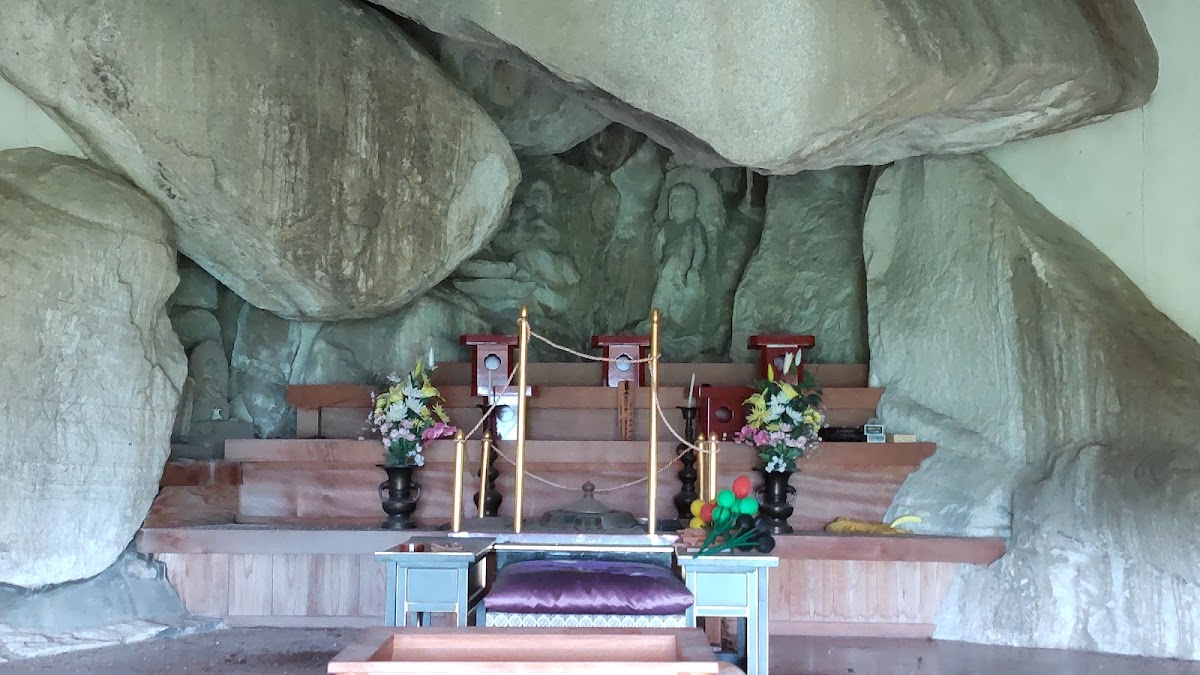
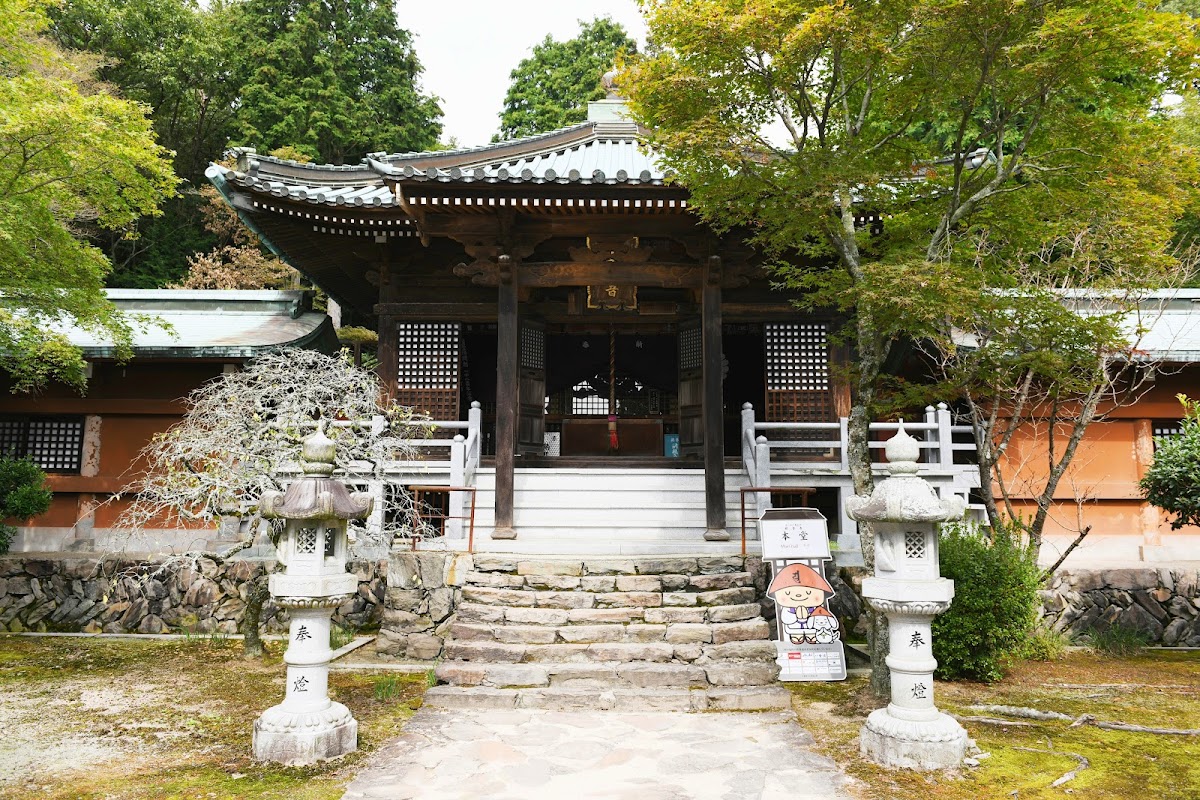
The main hall is a building rebuilt in the late Edo period and houses the principal image, the Thousand-Armed Kannon Bodhisattva. Buddhist services are held inside the hall, and visitors can receive sutra copying and temple stamps here. There is a wide stone staircase in front of the main hall, and the view of the temple grounds from there is also beautiful.
The principal image, the Thousand-Armed Kannon statue, is a hidden Buddha said to have been carved from a sacred tree by Chisho Daishi. It is not usually on public display, but it is sometimes unveiled on special occasions.
Daishido Hall
The Daishido Hall, dedicated to Kobo Daishi, is an important place of worship for pilgrims. Here, pilgrims pay their respects to Kobo Daishi and pray for a safe pilgrimage, embodying the spirit of “two traveling together.” Many offerings and votive tablets hang in front of the Daishido Hall, reflecting the deep faith of the people.
Byakko Keyaki (White Monkey Zelkova)
Within the temple grounds stands a giant zelkova tree called “Byakko Keyaki.” This tree is said to be several hundred years old and is a symbol of Negoro-ji Temple. There are various theories about the origin of the name Byakko Keyaki, but one legend tells of a white monkey that once lived in this tree.
The trunk of this giant tree is thick, and its presence is overwhelming. When you visit the temple grounds, try to feel the power of this ancient tree.
Bell Tower
A temple bell hangs in the bell tower on the temple grounds, and its sound resonates throughout the mountains. As the temple’s hymn states, “The sound of the bell rings in prayer,” the sound of this bell is a symbolic presence at Negoro-ji Temple. Visitors are welcome to ring the bell, and its pure tone is said to cleanse the soul.
Ushioni Statue
A statue of the Ushioni (ox-demon), based on the aforementioned legend, is enshrined on the temple grounds. Its imposing appearance is well worth seeing, and many visitors take commemorative photos. The Ushioni is worshipped as a symbol of protection against evil, and many people clasp their hands together in prayer before the statue.
Five Great Wisdom Kings Hall
There is also a hall enshrining the Five Great Wisdom Kings, worshipped by Kobo Daishi. Centered around Fudo Myoo, the hall houses the five deities: Gosanze Myoo, Gundari Myoo, Daiitoku Myoo, and Kongoyasha Myoo, conveying Negoro-ji Temple’s character as a training ground for esoteric Buddhism.
Famous Autumn Foliage Spot
Negoro-ji Temple is also known as a famous spot for viewing autumn foliage. In autumn, the trees on the temple grounds change color, allowing visitors to enjoy the transition from green to yellow to red. Due to its location on the slopes of Goshikidai, the degree of autumn foliage varies depending on the amount of sunlight, resulting in a variety of colors even at the same time.
The best time to see the autumn leaves is from mid- to late November, attracting many tourists. The autumn foliage viewed from this tranquil mountain temple is exceptionally beautiful.
Cultural Properties
Negoroji Temple houses valuable cultural properties.
Principal Image: Thousand-Armed Kannon Bodhisattva
The principal image, said to have been carved from a sacred tree by Chisho Daishi, is an important Buddhist statue believed to be from the Heian period. Although it is not usually on public display as a hidden Buddha, its miraculous powers have been known since ancient times, attracting many worshippers.
Ancient Documents and Records
Negoroji Temple preserves ancient documents and records that tell the history since its founding. These are valuable resources for the study of the temple’s history and are important for understanding the development of Buddhist culture on Goshikidai. ### Temple Treasures
The temple also possesses treasures such as Buddhist implements, paintings, and calligraphy donated by successive generations. These are not usually on public display, but may be exhibited on special occasions.
Inner Sanctuary
The inner sanctuary of Negoro-ji Temple is located near the summit of Aomineyama Mountain. It is reached by a mountain path about 30 minutes’ walk from the main hall, and is visited by pilgrims seeking deeper faith.
The path to the inner sanctuary is considered a path of ascetic practice, and while there are some steep sections, it allows you to experience the natural beauty of the mountains. The view from the inner sanctuary is magnificent, offering a panoramic view of the Seto Inland Sea and the Sanuki Plain.
The inner sanctuary contains a cave where Kobo Daishi is said to have practiced asceticism, and a place where sacred water springs forth, retaining a strong atmosphere as a sacred site for esoteric Buddhist practice. Those confident in their physical abilities are highly encouraged to extend their trip to the inner sanctuary.
Visiting Information
Visiting Hours
- Temple Stamping Hours: 7:00 AM – 5:00 PM (may vary depending on the season)
- Temple Grounds: Free entry (nighttime visits are discouraged)
Temple Stamping and Goshuin (Seal)
You can receive a Goshuin (seal) in your pilgrimage notebook at the temple stamping office in the main hall. In addition to the Goshuin for the 88 temples of Shikoku, there is also a Goshuin for the inner sanctuary. The fee for receiving a Goshuin is usually 300 yen.
Proper Visiting Etiquette
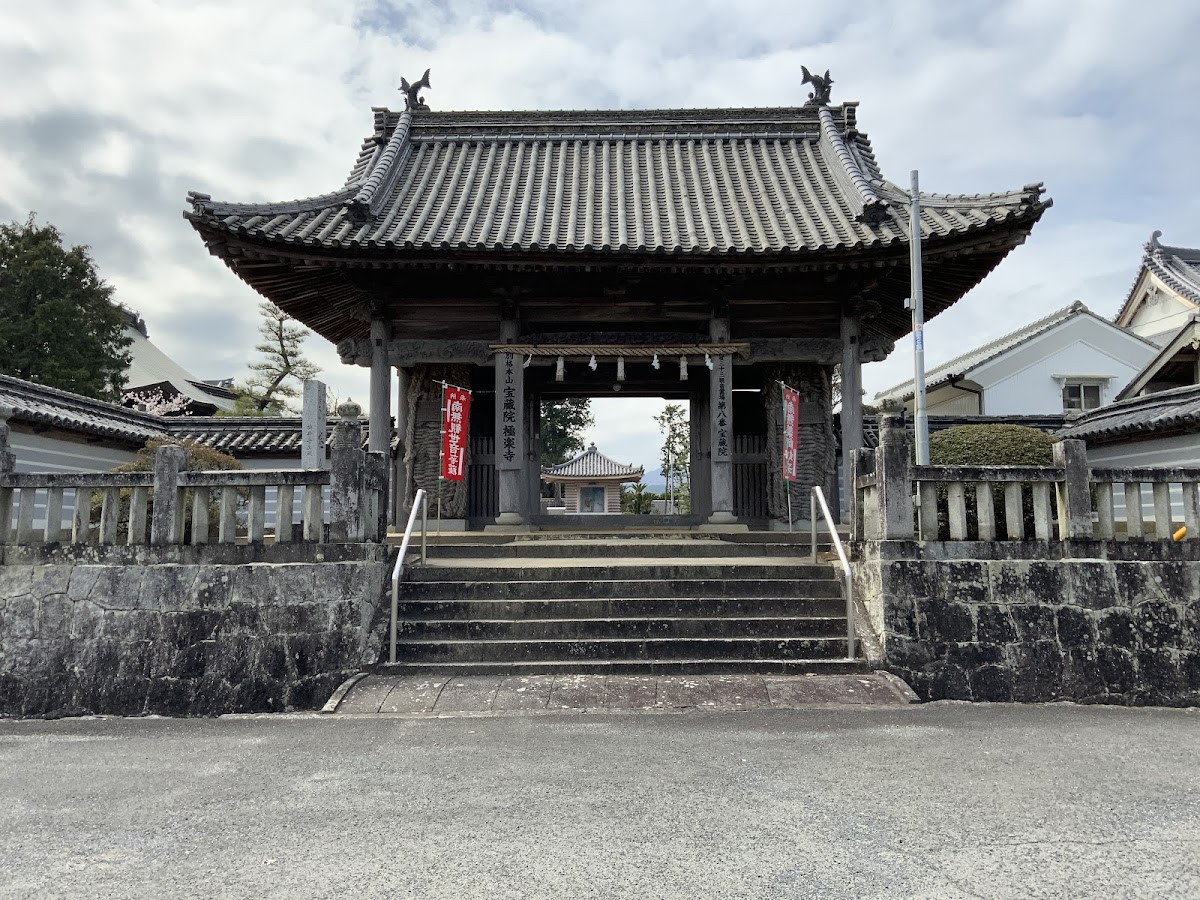
- Bow at the temple gate before entering the grounds.
- Cleanse your hands and mouth at the water basin.
- Ring the bell at the bell tower (please refrain from ringing after 5 PM).
- Perform religious services in the main hall (offer a votive slip, light a candle, offer incense, bow and clasp hands, chant sutras).
- Perform similar services in the Daishi Hall.
- Receive your temple stamp at the sutra office.
- Bow at the temple gate before leaving.
Parking
Negoroji Temple has a free parking lot. There is space for approximately 50 regular cars, and large buses can also be parked. It’s about a 5-minute walk from the parking lot to the main hall, up a gentle slope.
The temple can get crowded during the autumn foliage season and on holidays, so it is recommended to visit with plenty of time to spare.
Access by Transportation
Access by Car
- Takamatsu Expressway: Approximately 20 minutes from Takamatsu-Nishi Interchange
- From Takamatsu City Center: Approximately 30 minutes via National Route 11
- From Sakaide City Center: Approximately 25 minutes via Prefectural Route 180
The route via Goshikidai Skyline offers excellent scenery and is highly recommended. For car navigation, please search for “Negoro-ji Temple” or “1506 Nakayama-cho, Takamatsu City, Kagawa Prefecture”.
Access by Public Transportation
By JR:
- Approximately 40 minutes by taxi from JR Takamatsu Station
- Approximately 30 minutes by taxi from JR Sakaide Station
By Local Bus:
- Take the Kotoden Bus bound for “Negoro-ji Temple” (infrequent service, so prior confirmation is essential)
- Approximately 10 minutes on foot from the nearest bus stop
Due to limited public transportation options, using a private car, taxi, or pilgrimage tour is more common. ### Distance to Previous and Next Temples
- Temple No. 81, Shiramine-ji: Approximately 7km (approximately 15 minutes by car, approximately 2 hours on foot)
- Temple No. 83, Ichinomiya-ji: Approximately 14km (approximately 30 minutes by car)
The journey from Shiramine-ji to Negoro-ji involves walking along mountain paths in the same Goshikidai area. It is important to plan with ample time and physical stamina.
Nearby Attractions
Goshikidai
Goshikidai, where Negoro-ji is located, is a scenic area designated as part of the Seto Inland Sea National Park. Each of the five peaks has an observation deck, offering views of the numerous islands of the Seto Inland Sea and the Seto Ohashi Bridge. Hiking trails are also well-maintained, allowing visitors to enjoy nature while strolling.
Shiramine-ji (Temple No. 81)
Shiramine-ji, the temple preceding Negoro-ji, is also located on Shiramine in Goshikidai. This temple is historically significant, known for housing the tomb of Emperor Sutoku. Many pilgrims visit it in conjunction with Negoro-ji Temple.
Goshikidai Visitor Center
This facility allows you to learn about the nature and history of Goshikidai. Visiting before or after your visit to Negoro-ji Temple will deepen your understanding of the region.
Seto Ohashi Memorial Park
Located about 20 minutes by car from Goshikidai, this park offers close-up views of the Seto Ohashi Bridge. The memorial hall provides detailed information about the construction of the bridge.
Points to Note When Visiting
Clothing and Equipment
- As this temple is located in the mountains, comfortable walking shoes are recommended.
- Due to seasonal temperature variations, it’s advisable to bring a jacket.
- Insect repellent is useful in summer.
- Be careful as the ground can be slippery in rainy weather.
Photography
Photography is generally permitted on the temple grounds, but consideration for the interior of the main hall and other visitors is necessary. Prior permission may be required for the use of tripods or commercial photography.
Manners
- Please maintain quiet within the temple grounds and be considerate of other visitors.
- Please take all your trash with you.
- Smoking is only permitted in designated areas.
- If you are bringing a pet, please refrain from entering the temple grounds or check in advance.
Health Management
As this is a temple located in the mountains, please remember to stay hydrated, especially during the summer. If climbing to the inner sanctuary, please plan your trip according to your physical condition and avoid overexertion.
Annual Events at Negoro-ji Temple
Negoro-ji Temple holds various events throughout the year.
Main Events
- First three days of the New Year: First shrine visit of the year, New Year’s prayers
- Spring Equinox: Equinox memorial service
- April: Flower Festival (Buddha’s Birthday)
- August: Segaki memorial service
- Autumn Equinox: Equinox memorial service
- November: Special pilgrimage period during the autumn foliage season
Please note that event details and dates may change, so we recommend checking before your visit.
Temple Lodgings and Rest Facilities
Negoroji Temple does not have temple lodgings, but there is a rest area on the temple grounds. Pilgrims can take a break here.
There are several guesthouses and inns in the surrounding area, and accommodation is possible at Goshikidai. There are also many accommodations in Takamatsu city and Sakaide city.
Training Experiences at Negoroji Temple
Negoroji Temple may offer general public experiences such as sutra copying and Zen meditation. Please contact the temple directly for details. An experience of calming the mind at a sacred site of esoteric Buddhist practice will be a precious time away from everyday life.
Summary
Negoro-ji Temple is the 82nd temple on the Shikoku Pilgrimage, steeped in history and legend, founded by two high-ranking priests, Kobo Daishi and Chisho Daishi. Located in a naturally rich environment on the slopes of Aomineyama Mountain in Goshikidai, it is also known for the legend of the Ushioni (ox-demon) and as a famous spot for autumn foliage.
While maintaining its unique position as a Tendai sect temple, it continues to welcome many pilgrims as an important temple on the Shikoku Pilgrimage. The temple grounds contain many cultural assets and points of interest that tell of history, and the path to the inner sanctuary remains a place of worship for ascetic practice.
Offering prayers to the Thousand-Armed Kannon in the tranquil mountains, contemplating the legend of the Ushioni, and feeling the changing seasons—a visit to Negoro-ji Temple will surely be a memorable experience. It is a temple that we highly recommend visiting on your Shikoku Pilgrimage journey and when sightseeing in Kagawa Prefecture.
Nestled on the slopes of Mt. Aomine, enveloped in deep green, Negoro-ji Temple, with its history spanning over a thousand years, offers visitors a sense of tranquility and the power of faith. At this sacred site, integrated with the natural beauty of Goshikidai, purify your heart and take a new step forward.