Complete Guide to Katsute Shrine: A Thorough Explanation of the History, Deities, and Reconstruction Status of the Engishiki-Listed Shrine in Yoshino Mountain
What is Katsute Shrine?
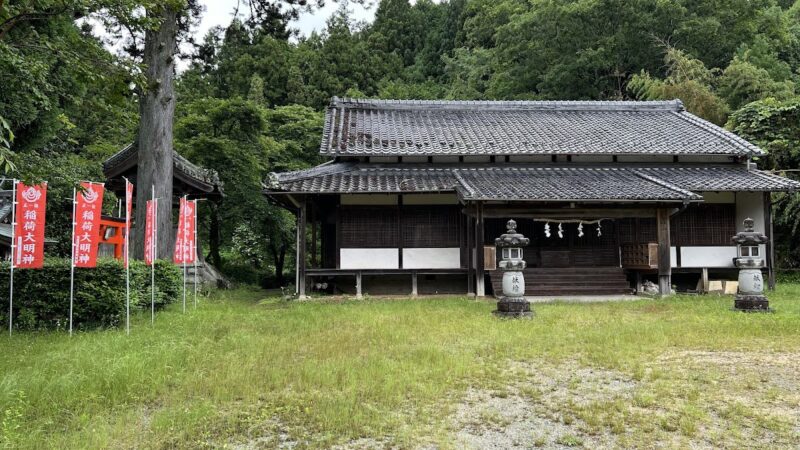
Katte Shrine (Katsute Jinja) is a prestigious shrine located in Yoshino-yama, Yoshino-cho, Yoshino-gun, Nara Prefecture. Formerly known as “Yoshino Yamaguchi Shrine” and “Katte Myojin,” it holds the status of the head shrine of all Katsute Shrines nationwide, as an Engishiki-listed shrine. It is counted as one of the eight Yoshino Myojin shrines and has been considered an important sacred site of faith, serving as a training ground for mountain ascetics on their pilgrimage to Mount Omine.
Located at a key point—the junction of the road leading up Mount Yoshino and the road to Nyoirinji Temple—it has also served as a “Yamaguchi Shrine,” guarding the entrance to the pilgrimage route to Kinpusenji Temple. Revered as a god of military fortune, national protection, family safety, and good fortune and prosperity, it is particularly widely worshipped as a god of “victory” and “performing arts.”
Many parishioners and devotees from the 28 branch shrines throughout Japan visit the main shrine every year, demonstrating the widespread faith it enjoys.
History and Origins of Katte Shrine
Founding and Ancient Records
There are various theories regarding the founding date of Katte Shrine, but according to the *Hiyoji Keitoki*, it was founded in the 6th year of Emperor Kōan’s reign (386 BC). However, this date is based on tradition, and the actual founding date is unknown.
A reliable record is its listing as a major shrine, “Yoshino Yamaguchi Shrine,” in the *Engishiki Jinmyōchō* (compiled in 927). This listing indicates that it was already recognized as a high-ranking shrine in the early Heian period.
Development from the Medieval to the Early Modern Period
During the medieval period, it became widely known as “Katte Myojin” and strengthened its ties with Shugendo (mountain asceticism) as one of the eight Yoshino shrines. Located on the pilgrimage route to Mount Omine, it was considered an important training ground for Shugendo practitioners, attracting many ascetics.
From the Muromachi period to the Sengoku period, it was revered by warlords as a god of victory due to its name “Katte” (meaning “winning”), and many samurai visited to pray for victory in battle.
Changes in the Modern Period
Although the relationship with Shugendo was severed by the Meiji-era separation of Shinto and Buddhism, its status as a center of local faith remained unchanged. Before the war, it was a village shrine, and after the war, it has continued as a religious corporation to this day.
Deities and Divine Status
Main Deity: Amenoshihomimi-no-Mikoto
The current main deity is Amenoshihomimi-no-Mikoto. This noble deity is a child of Amaterasu Omikami and the father of Ninigi-no-Mikoto.
Deities as Seen in Ancient Texts
The *Wakan Sansai Zue* (Illustrated Compendium of Japan and China) records “Katte Shrine, Deity: One seat, Ukeri-no-Mikoto (or Ukenori-no-Mikoto),” and also uses the spelling “Ukeri-no-Mikoto.” While there are various theories regarding the relationship between Ukeri-no-Mikoto and Amenoshihomimi-no-Mikoto, the prevailing theory is that they are different names for the same deity.
Enshrined Deities
In addition to the main deity, the following five deities are enshrined:
- Ōyamatsumi-no-Mikoto: The supreme deity of mountain gods
- Kukunochi-no-Mikoto: The deity of trees
- Konohanasakuya-hime-no-Mikoto: Daughter of Ōyamatsumi-no-Mikoto and the deity of cherry blossoms
- Kokemushi-no-Mikoto: The deity who presides over moss and ground cover plants
- Hanohime-no-Mikoto: The deity who presides over the leaves of plants
These enshrined deities are deeply connected to the rich natural environment of Mount Yoshino and strongly reflect elements of mountain worship and nature worship.
Faith and Blessings of Katte Shrine
God of Victory
Due to its name, “Katte” (meaning “victory”), the shrine has been worshipped since ancient times as a god of victory in competitions and contests. Not only samurai praying for lasting military fortune, but also modern-day athletes, students, business people, and others striving for “victory” in various fields visit the shrine.
God of Performing Arts
Based on the legend of Shizuka Gozen’s dance (described later), the shrine is also widely worshipped as a god of improvement in performing arts. It is an important sacred site for those involved in performing arts such as dance, theater, and music, where they pray for improvement in their skills.
Other Benefits
- National Protection and Guardian Deity: National peace and security, regional peace
- Family Safety: Family health and happiness
- Good Fortune and Prosperity: Business success and success
- Exorcism: Protection from disaster and evil spirits
The Legend of Shizuka Gozen and Katte Shrine
Shizuka Gozen’s Farewell to Yoshitsune
The grounds of Katte Shrine are the setting for an important legend concerning Shizuka Gozen’s farewell to Minamoto no Yoshitsune. In 1185, after the Battle of Dan-no-ura, Yoshitsune, pursued by his brother Minamoto no Yoritomo, fled to Mount Yoshino with his beloved concubine, Shizuka Gozen.
However, to avoid further endangering Shizuka Gozen, Yoshitsune decided to part ways with her on Mount Yoshino. It is said that the place of their farewell was near Katte Shrine.
The Hōraku Dance and the Gosechi Dance
After parting ways with Yoshitsune, Shizuka Gozen was captured by warrior monks of Mount Yoshino. Legend has it that she performed a Hōraku dance in the grounds of Katsute Shrine at that time. This dance, also known as the Gosechi Dance, has been passed down as an episode demonstrating Shizuka Gozen’s exceptional dancing skills.
The story of Shizuka Gozen, later sent to Kamakura, dancing before Yoritomo while reciting a song expressing her longing for Yoshitsune—”Shizu, oh Shizu, Shizu’s coiled thread, I wish I could bring the past to the present”—is famous, but the dance she performed in Yoshino, preceding this event, is preserved at Katsute Shrine.
The Existence of the Dance Mound
Within the shrine grounds is a historical site called the “Dance Mound,” which marks the place where Shizuka Gozen performed her dance. This Dance Mound is an important sacred site supporting the worship of Katsute Shrine as the god of performing arts.
The Legend of Prince Oama and Sodefuriyama Mountain
The Legend of the Celestial Maiden’s Descent
Behind Katsute Shrine lies a mountain called Sodefuriyama (Sleeve-Waving Mountain). A mystical legend related to Prince Oama (later Emperor Tenmu) is associated with this mountain.
Before the Jinshin War (672 AD), during the period when Prince Oama was living in seclusion in Yoshino, he was playing the koto in the shrine building of Katsute Shrine. Legend says that a celestial maiden, drawn by the beautiful melody, descended and danced, waving her sleeves. From this story, the mountain was named “Sleeve-Waving Mountain.”
Emperor Tenmu and Yoshino
Prince Oama achieved victory in the Jinshin War and ascended to the throne as Emperor Tenmu. Emperor Tenmu held Yoshino in high regard and frequently visited the Yoshino Palace. The reverence of Katsute Shrine as a god of “victory” is thought to be influenced by the memory of Emperor Tenmu’s victory.
The legend of Sodefuriyama is an important tradition that demonstrates Katsute Shrine is not merely a local shrine, but a prestigious shrine with deep ties to the Imperial family.
The Position of Katsute Shrine and the Eight Shrines of Yoshino
What are the Eight Shrines of Yoshino?
The Eight Shrines of Yoshino are a collective term for eight important shrines located on Mount Yoshino. In Mount Yoshino, a sacred site of Shugendo (mountain asceticism), these shrines have played an important role as training grounds and centers of faith.
The Yoshino Eight Shrines Myojin consist of the following eight shrines:
- Kinpusen-ji Zaodo
- Yoshino Mizuwake Shrine
- Kinpu Shrine
- Katte Shrine
- Yoshino Jingu
- Nouten Daishin Ryuo-in
- Kizo-in
- Sakuramoto-bo
Role as Yamaguchi Shrine
Katte Shrine, among the Yoshino Eight Shrines Myojin, is also called “Yamaguchi Shrine” because it is located at the entrance to Mt. Kinpu, and has played an important role in guarding the entrance to the sacred area. While Yoshino Mizuwake Shrine is located in the upper part of the mountain (Kami-Senbon), Katte Shrine is located near the entrance to Naka-Senbon and was one of the first shrines to welcome pilgrims.
Relationship with Shugendo
Located on the pilgrimage route to Mt. Omine, Katte Shrine was one of the important training grounds for mountain ascetics (Shugendo practitioners). It is said that the ascetics purified themselves and offered prayers at Katte Shrine before heading into the mountains for their training.
Relationship with Zaō Gongen and Komori Myōjin
Connection with Kinpusen-ji Temple
Katte Shrine has a deep connection with Kinpusen-ji Temple, the central temple of Yoshino Mountain. Zaō Gongen, the principal deity of Kinpusen-ji Temple, is a unique Buddhist deity revered as the principal deity of Shugendō (mountain asceticism).
During the era of syncretism of Shinto and Buddhism, Katte Shrine functioned as part of Kinpusen-ji Temple’s religious network and was closely linked to the worship of Zaō Gongen. Although formally separated after the Meiji Restoration’s separation of Shinto and Buddhism, the connection is still consciously recognized within the overall faith system of Yoshino Mountain.
Connection with Komori Myōjin
Komori Myōjin (Komori Shrine) is also enshrined in Yoshino Mountain, and these shrines have interacted with each other to form the faith of Yoshino Mountain. Each deity possesses a distinct divine status and role, yet they all function to elevate the spirituality of the entire sacred site of Mount Yoshino.
The 2001 Fire and the Path to Reconstruction
The 2001 Fire
On September 27, 2001, tragedy struck Katsute Shrine. A suspicious fire completely destroyed the main hall and other shrine buildings. This fire shocked not only Mount Yoshino but also worshippers throughout Japan.
The loss of the historic shrine buildings, which had existed since the Edo period, was a great loss both culturally and religiously. After the fire, the shrine grounds remained a vacant lot for a long time, with only the stone steps and foundation remaining as a faint reminder of its former glory.
Establishment of the Katsute Shrine Reconstruction Committee
After the fire, calls for reconstruction grew among local residents and worshippers nationwide, leading to the formation of the Katsute Shrine Reconstruction Committee. Reconstruction required a large amount of funding, and fundraising efforts continued.
Current Status of Reconstruction
With the start of the Reiwa era, concrete steps toward reconstruction are progressing. Thanks to support from branches and devotees nationwide, and cooperation from the local community, the path to reconstruction is gradually becoming clearer.
Currently, reconstruction work is underway on the shrine grounds, and efforts continue to restore its former magnificent appearance. Complete reconstruction will still take time, but the wishes of many people have come together, and the restoration of Katsute Shrine is steadily progressing.
Current Status of Worship
Even after the shrine buildings were destroyed by fire, faith in Katsute Shrine has continued uninterrupted. Worshippers can still visit the grounds and offer prayers at the temporary altar. Historical sites such as Sodefuriyama and Maizuka remain, allowing visitors to feel the history and legends.
Access and Visiting Information for Katte Shrine
Location
Address: 2357 Yoshinoyama, Yoshino-cho, Yoshino-gun, Nara Prefecture
Access Methods
Access by Train:
- Get off at Yoshino Station on the Kintetsu Yoshino Line
- Take the Yoshinoyama Ropeway to Yoshinoyama Station (approx. 3 minutes)
- Approximately 15 minutes on foot from Yoshinoyama Station
Access by Car:
- Approximately 50 minutes from Katsuragi IC on the Minami-Hanna Expressway via National Route 169
- During cherry blossom season (late March to mid-April), traffic restrictions are in place, and private car access is limited.
Visiting Hours
The shrine grounds are generally open for free visits. However, it is recommended to avoid visiting at night and to visit during daylight hours.
Nearby Attractions
The area around Katsute Shrine is home to many important historical sites, shrines, and temples of Yoshino Mountain:
- Kinpusen-ji Zaodo: A central landmark of Yoshino Mountain, its main hall, a National Treasure, houses a massive statue of Zao Gongen.
- Nyoirin-ji: A temple associated with Emperor Go-Daigo.
- Yoshimizu Shrine: An important shrine registered as a World Heritage Site.
- Yoshino Mizuwake Shrine: A famous Shikinaisha (shrine listed in the Engishiki) dedicated to the god of fertility.
Cherry Blossom Season
Yoshino Mountain is known as one of Japan’s premier cherry blossom viewing spots. The area around Katsute Shrine, known as Nakasenbon, is also a beautiful area to enjoy cherry blossoms. Every year from late March to mid-April, approximately 30,000 cherry trees color the entire mountain.
The area becomes very crowded during cherry blossom season, so early morning visits or weekday visits are recommended.
Nationwide Katte Shrine Network
Status as the Head Shrine
The Katte Shrine on Mount Yoshino is the head shrine of all Katte Shrines nationwide, and its deities are divided into 28 branch shrines. These branch shrines are distributed throughout Japan, and each region attracts its own devotion.
Major Branch Shrines
Among the Katte Shrines nationwide, the following are some notable shrines:
- Katte Shrine in Shiga Prefecture: The main hall, built in 1400 (Oei 7), is designated as a National Important Cultural Property.
- Katte Shrine in Mie Prefecture: Located in the Iga region, it was established in 1562 (Eiroku 5) by inviting the deity from Mount Yoshino.
- Katte Shrine in Kyoto City: It is worshipped as the local tutelary deity.
Every year, many parishioners and devotees from these branch shrines visit the head shrine, Katte Shrine on Mount Yoshino, to reaffirm their connection to the head shrine.
Annual Events at Katte Shrine
Main Festivals
Katte Shrine holds various festivals throughout the year. Even after the shrine building burned down, traditional rituals have continued.
Grand Festival: The most important festival held once a year, attracting participants from branch shrines throughout the country.
New Year’s Day Festival: A festival to welcome the New Year.
Setsubun Festival: A festival to pray for protection from evil and good fortune.
Connection to Events throughout Yoshino Mountain
As one of the eight Yoshino shrines, Katte Shrine is involved in events held throughout Yoshino Mountain. It has played a particularly important role in events related to Shugendo (mountain asceticism).
Cultural Properties and Historic Sites of Katte Shrine
Maizuka (Dance Mound)
The Maizuka, where Shizuka Gozen is said to have performed her dance, is one of Katte Shrine’s most important historical sites. It is a center of worship as the god of performing arts, and many performing artists visit to pray for improvement in their skills.
Sodefuriyama Mountain
Sodefuriyama Mountain, steeped in the legend of Prince Oama, is a sacred mountain towering behind Katsute Shrine. The entire mountain is considered a sacred area and has been an object of worship since ancient times.
Stone Steps and Pilgrimage Route
The stone steps and pilgrimage route, which escaped destruction by fire, still convey the appearance of the pilgrimage route from the Edo period. Climbing the moss-covered steps is a valuable opportunity to relive the feelings of pilgrims from that era.
Katsute Shrine and Yoshino Mountain as a World Heritage Site
Yoshino Mountain was registered as a UNESCO World Heritage Site in 2004 as part of the “Sacred Sites and Pilgrimage Routes in the Kii Mountain Range.” While Katsute Shrine itself is not included in the constituent properties, it is an important element of the Yoshino Mountain faith system, supporting the value of the World Heritage Site.
Within the religious and cultural layers of Yoshino Mountain as a whole, Katsute Shrine has played an indispensable role as Yamaguchi Shrine and as one of the Eight Yoshino Shrines.
The Significance of Katte Shrine in the Modern Age
Continuing Faith
Despite facing the hardship of the shrine’s destruction by fire, faith in Katte Shrine has continued uninterrupted. This demonstrates the strength of a spiritual connection that transcends physical structures.
Center of the Local Community
Katte Shrine is an important part of Yoshino Town’s cultural identity and a spiritual anchor for local residents. The reconstruction efforts have also played a role in strengthening the bonds of the local community.
Balancing Tourism and Faith
Yoshino Mountain is a popular tourist destination that attracts many visitors throughout the year, but Katte Shrine is both a tourist spot and a living place of faith. Visitors drawn by the legend of Shizuka Gozen and the beautiful nature are simultaneously offered the opportunity to experience traditional Japanese faith.
Summary: The Charm of Katsute Shrine and Expectations for the Future
Katte Shrine is a shrine with multifaceted appeal, possessing the status of an Engishiki-listed shrine, its position as the head shrine of all Katsute Shrines nationwide, its connections to historical figures such as Shizuka Gozen and Prince Oama, and its role as one of the eight Yoshino Myojin shrines.
The 2001 fire was a great loss, but the subsequent efforts to rebuild it became an opportunity to unite the faith and respect for cultural heritage of many people. Thanks to the activities of the Katsute Shrine Reconstruction Committee, reconstruction is progressing little by little.
As a deity of “victory” and “performing arts,” Katsute Shrine remains essential to many people today. Devoted visitors nationwide eagerly await the day when it is completely rebuilt and regains its former magnificent appearance.
When visiting Yoshino Mountain, be sure to visit Katsute Shrine and experience its history, legends, and the hopes for its reconstruction. The lush greenery of Sodefuriyama, the tranquil atmosphere of Maizuka, and the long history etched into the stone steps will surely leave visitors deeply moved.
Katsute Shrine is not only a place that conveys the glory of the past to the present, but also a living cultural heritage site that shows the path of faith continuing into the future.