Hachiman Shrine (Haraguchi) Complete Guide | History, Blessings, Access, and Visiting Information
What is Hachiman Shrine (Haraguchi)?
Hachiman Shrine (Haraguchi) is a historical shrine deeply rooted in the community, and has long been revered by local residents. As the place name Haraguchi suggests, it is located at the entrance and key points of this region, and has played an important role as the guardian deity of the area.
There are said to be approximately 44,000 Hachiman shrines throughout Japan, making it one of the most numerous types of shrines in the country. Among them, the Hachiman Shrine in Haraguchi is cherished across generations as the center of the local community and a spiritual anchor.
What is Hachiman-shin?
Hachiman-shin is one of Japan’s representative deities, often with Emperor Ojin as the principal deity. While deeply revered by the samurai class as a god of military fortune and victory, it has also been widely worshipped as a god of agriculture and industrial development.
History of Hachiman Shrine (Haraguchi)
Origin of Founding
The founding date of Hachiman Shrine (Haraguchi) is passed down through local oral traditions and records. Like many Hachiman shrines, it is believed that this shrine was established during the medieval to early modern period, coinciding with the development of the region and the formation of settlements.
The place name “Haraguchi” often signifies the entrance to a settlement or region, suggesting it may have been located at a transportation hub or boundary. The construction of the shrine in such a location likely served to pray for the safety and prosperity of the region.
Historical Changes
During the Edo period, Hachiman shrines were established as the tutelary deities of each region, functioning as the guardian shrines of villages. Despite the influence of the Meiji-era separation of Shinto and Buddhism and the shrine consolidation policy, it was preserved through the fervent faith of local residents.
Even after the war, it continued to serve as a spiritual pillar of the region, strengthening community bonds through festivals and annual events. Even today, it is carefully maintained by parishioners and devotees.
Deities and Divine Virtues
Main Deities
The main deities enshrined at Hachiman Shrine (Haraguchi) are believed to be the same as those of other Hachiman shrines:
- Emperor Ōjin: The 15th Emperor, and the central deity of Hachiman.
- Hime Ōkami: Often identified as one of the Munakata Three Goddesses.
- Empress Jingū: The mother of Emperor Ōjin.
Benefits and Divine Virtues
The main benefits that can be received at Hachiman Shrine are as follows:
Victory and Success
Due to its nature as a god of war, one can pray for success in various competitive endeavors, such as passing exams, finding employment, and winning in sports.
Protection from Misfortune and Disaster
As a guardian deity of the region, it is believed to have the power to protect oneself from disasters, illnesses, and all kinds of calamities.
Family Safety and Prosperity of Descendants
As a guardian deity of the family, it watches over the safety and prosperity of the family, and you can pray for fertility, safe childbirth, and the healthy growth of children.
Business Prosperity and Abundant Harvest
It also has aspects of a guardian deity of industry, attracting the faith of people who pray for business prosperity and abundant harvests.
Traffic Safety
As a shrine that protects the entrance to the area, many people visit to pray for safe travels and traffic safety.
Highlights of the Shrine Grounds
Shrine Building
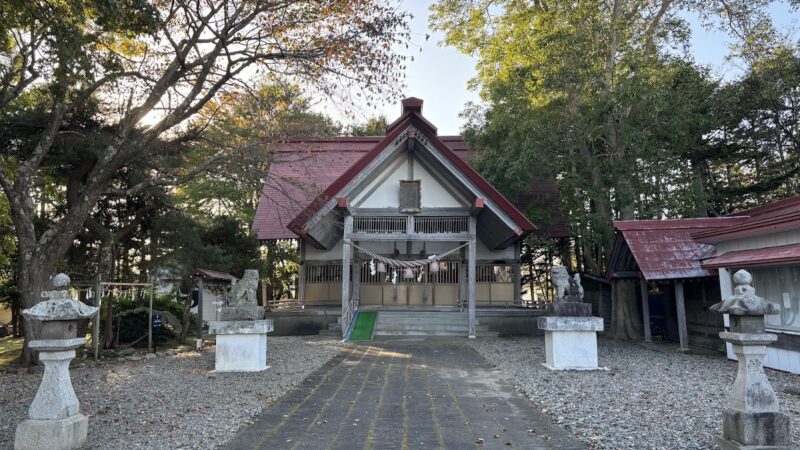
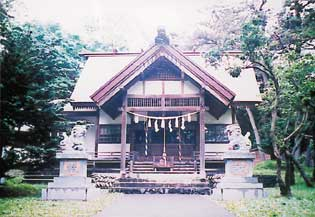
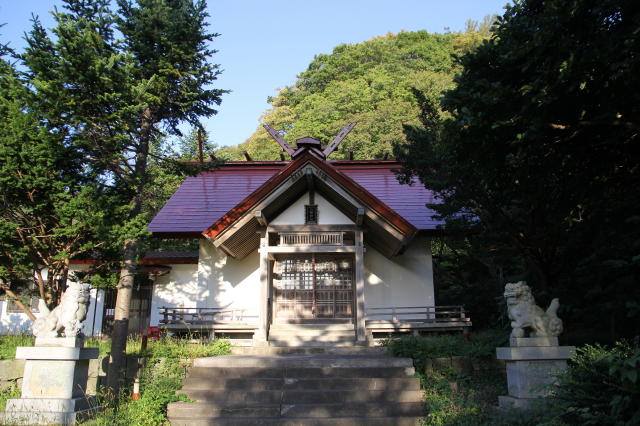
The shrine building of Hachiman Shrine (Haraguchi) has an architectural style that reflects the history of the region. Although small in scale, the carefully maintained shrine building speaks to the deep faith of the local people.
The basic components of shrine architecture, such as the main hall, worship hall, and torii gate, are all in place, quietly welcoming visitors.
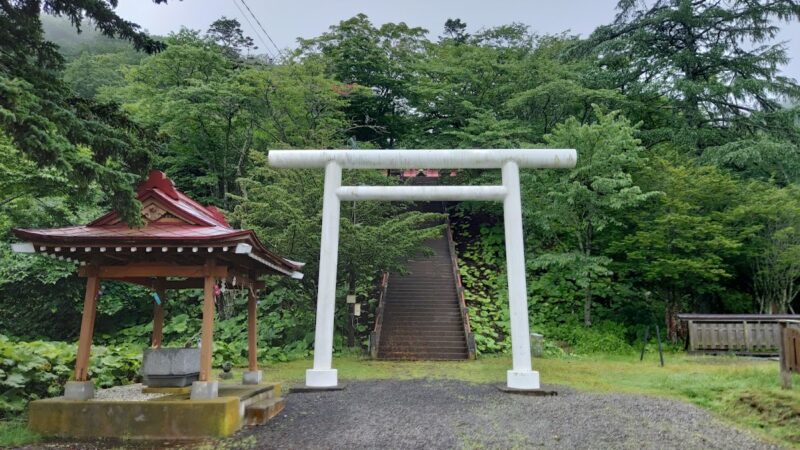
Torii Gate and Approach
A torii gate stands at the entrance to the shrine, and from there, an approach leads to the shrine building. Walking along the approach to the shrine allows you to escape the hustle and bustle of everyday life and purify your mind before approaching the deity.
Sacred Trees and Nature within the Shrine Grounds
Like many shrines, the grounds often contain ancient trees. These sacred trees are witnesses to the shrine’s history and are also cherished as power spots.
The natural environment within the shrine grounds displays beauty throughout the seasons, providing tranquility to visitors.
Komainu (Guardian Dogs)
Komainu, guardian dogs protecting the shrine, are typically placed in front of the main shrine building. Their expressions and forms reflect the characteristics of each era, giving them historical value.
Temizuya (Water Basin)
There is a temizuya for purifying the body and mind before worship. By purifying your hands and mouth with the correct etiquette before worship, you can face the deity with a more reverent heart.
How to Visit and Etiquette
Basic Visiting Etiquette
Here are the basic manners for visiting Hachiman Shrine (Haraguchi):
1. Bowing at the Torii Gate
Bow before passing through the torii gate to show respect for entering the sacred area.
2. How to Walk Along the Path
The center of the path is considered the path of the gods, so it is polite to walk along the sides.
3. Ritual of Washing Hands
- Hold the ladle in your right hand and wash your left hand.
- Switch the ladle to your left hand and wash your right hand.
- Switch the ladle back to your right hand, receive water in your left hand, and rinse your mouth.
- Wash your left hand again.
- Hold the ladle upright, wash the handle, and return it to its original position.
4. Worship at the Main Hall (Two Bows, Two Claps, One Bow)
- Quietly place your offering in the offering box.
- Ring the bell if there is one.
- Bow deeply twice.
- Clap twice.
- Pray sincerely.
- Finally, bow once.
5. Bowing Upon Exit
After leaving the torii gate, turn around and bow towards the shrine.
Attire for Worship
There are no specific dress code requirements, but clean and subdued clothing that reflects the sacred nature of the place is desirable. Avoid extremely revealing or overly flashy clothing.
Photography Etiquette
Photography is generally permitted on the shrine grounds, but please observe the following points:
- Do not take photos in areas where photography is prohibited, such as inside the main hall.
- Be considerate of other worshippers.
- Avoid using flash photography.
- When posting on social media, be careful not to include other people in your photos.
Annual Events and Festivals
Main Annual Events
At Hachiman Shrine (Haraguchi), various Shinto rituals and festivals are held throughout the year. As a local shrine, the following events are commonly held:
New Year’s Day Festival (January 1st)
A festival to celebrate the New Year and pray for peace and prosperity throughout the year. It is bustling with many first-time visitors.
Setsubun Festival (around February 3rd)
A ritual where beans are scattered to ward off evil spirits and invite good fortune. Local children also participate.
Spring Festival (Spring)
A grand spring festival praying for a bountiful harvest and the development of the region.
Summer Festival (Summer)
As a summer tradition in the region, it often includes portable shrine processions and dedication ceremonies.
Autumn Festival (Autumn)
One of the most important festivals, expressing gratitude for the harvest and praying for a bountiful harvest in the coming year.
Shichi-Go-San (Around November 15th)
A ceremony celebrating the growth of children and praying for their healthy development.
Great Purification Ceremony (June 30th & December 31st)
A Shinto ritual to purify and cleanse away the sins and impurities accumulated over the past six months.
Characteristics of the Festival
The festivals of local Hachiman shrines have unique characteristics that reflect the history and culture of the land. Parishioners and local residents work together to support the festivals and pass on the traditions to future generations.
Goshuin (Shrine Seals) and Gifts
About Goshuin
Goshuin are seals and calligraphic inscriptions given as proof of visiting a shrine. While Hachiman Shrine (Haraguchi) may also offer Goshuin (shrine stamps), smaller shrines may not have a resident priest.
Tips for receiving a Goshuin:
- Pray before receiving the Goshuin
- Prepare a Goshuincho (notebook or plain paper is not acceptable)
- Prepare a donation (generally 300-500 yen)
- Be polite and respectful
Items Offered and Amulets
Hachiman Shrine may offer a variety of items:
Various Amulets
- Amulet for protection against misfortune
- Amulet for traffic safety
- Amulet for academic success
- Amulet for family safety
- Amulet for safe childbirth
- Amulet for victory (guaranteed victory)
Talisman/Shrine Talisman
Shrine talismans for enshrining in the household shrine.
Demon-repelling arrows/rakes
Auspicious items given out during New Year’s and festivals.
Access Information
Location
For the exact location of Hachiman Shrine (Haraguchi), please check local maps and municipal information. The place name “Haraguchi” suggests it is located near the entrance to the area.
Transportation Access
Using Public Transportation
The most common way to access the shrine is on foot from the nearest train station or bus stop. Local community buses may also operate.
Using a Car
Depending on the size of the shrine, there may not be a dedicated parking lot. Please consider using nearby parking spaces or public parking lots. Avoid street parking and be considerate of nearby residents.
Visiting Hours
The shrine grounds are generally open 24 hours a day, but the shrine office has limited hours. Generally, it is open from 9:00 AM to around 5:00 PM.
Nearby Attractions
Local History and Culture
The area where Hachiman Shrine (Haraguchi) is located may also contain other historical sites and cultural properties. In addition to visiting the shrine, we recommend enjoying a historical walk through the area.
Natural Environment
The natural environment surrounding the shrine is also one of its attractions. Enjoying the scenery of the four seasons while taking a leisurely stroll will refresh your mind and body.
History and Spread of Hachiman Worship
Origin of Hachiman Worship
Hachiman worship is a unique Japanese faith that originated at Usa Shrine in Oita Prefecture and spread throughout the country. It developed under the protection of the imperial court from the Nara period to the Heian period, and spread throughout the country, especially with the rise of the samurai class.
Nationwide Expansion of Hachiman Shrines
Minamoto no Yoritomo, who founded the Kamakura Shogunate, was a devout follower of Tsurugaoka Hachimangu Shrine in Kamakura, which strengthened Hachiman’s character as a guardian deity of the samurai class. Subsequently, Hachiman shrines were established by samurai and feudal lords throughout the country, leading to the nationwide spread we see today.
Local Communities and Hachiman Shrines
Hachiman shrines are deeply rooted in local communities, worshipped not only as gods of war but also as gods of agriculture and industry. Through festivals, they have strengthened community bonds and played a vital role in the transmission of culture.
The Significance of Shrine Visits
A Spiritual Sanctuary
In modern society, shrines are precious spaces where one can find peace of mind. By escaping the hustle and bustle of daily life and having time to quietly reflect on oneself, one can regain mental balance.
Connection with the Community
Visiting a local shrine is also an opportunity to experience the history and culture of the area. Through shrines, one can deepen their understanding of the region and feel a connection to the community.
Transmission of Traditional Culture
Shrine visits and participation in festivals are important activities for passing on Japan’s traditional culture to future generations. By learning and practicing the customs and practices that have been handed down for generations, one becomes a successor to the culture.
Points to Note When Visiting the Shrine
Manners on the Shrine Grounds
- Do not speak loudly or make noise
- Always take your trash with you
- Take care of the plants and animals on the shrine grounds
- Be mindful of the sacred nature of the place
- Refrain from smoking except in designated areas
Regarding Pets
Generally, it is discouraged to bring pets onto the shrine grounds. Policies vary by shrine, so it is recommended to check in advance.
Precautions Regarding Weather and Season
- Summer: Remember to stay hydrated to prevent heatstroke
- Winter: Dress warmly
- Rainy Weather: Be careful as the ground may be slippery
- Refrain from visiting during severe weather such as typhoons or heavy snow
The Future of Hachiman Shrine (Haraguchi)
Maintenance Challenges
Small local shrines are susceptible to the effects of depopulation and the aging population, making maintenance a challenge. With the cooperation of parishioners and local residents, efforts continue to pass on the shrine to future generations.
Contribution to Regional Revitalization
As a cultural resource of the region, the shrine has the potential to contribute to tourism and regional revitalization. It is hoped that festivals and events will serve as a place for people from both within and outside the region to interact.
Inheritance of Faith
Even in modern times, faith in Hachiman Shrine remains a source of spiritual support for many people. It is hoped that the shrine will continue to be cherished by new generations while valuing its unchanging spiritual values, even as times change.
Summary
Hachiman Shrine (Haraguchi) is a historical shrine deeply rooted in the community, attracting the faith of people for many years. It enshrines Hachiman, the god of military fortune, protection against evil, and guardian deity of the region, bestowing various blessings, and plays a central role in the local community.
In the tranquil atmosphere of the shrine grounds, one can calm their mind and feel a connection with the gods by worshipping with proper etiquette. Participating in annual events and festivals allows you to experience local traditional culture and deepen your bonds as a member of the community.
In modern society, shrines are not merely tourist destinations; they continue to hold significant meaning as spiritual havens and places for the transmission of local culture. When visiting Hachiman Shrine (Haraguchi), why not reflect on its history and traditions and offer your prayers with a sincere heart?
Whether you are a local resident or a first-time visitor, you will find peace of mind in the tranquil grounds of Hachiman Shrine (Haraguchi), where you can experience traditional Japanese faith and culture.