Complete Guide to Fukushima Grand Shrine | A Thorough Explanation of History, Goshuin (Seal Stamps), Annual Festival, and Highlights of the Shrine Grounds
Located in Fukushima Town, Matsumae District, Hokkaido, Fukushima Grand Shrine is a historic shrine dedicated to the deities of Ise Grand Shrine. Founded by travelers from Honshu and deeply connected to the Matsumae Domain, this shrine has a long history as a center of Shinto worship in Hokkaido. This article comprehensively explains everything you need to know for your visit, from the history of Fukushima Grand Shrine, its enshrined deities, annual festival, highlights of the grounds, goshuin information, and access methods.
Basic Information about Fukushima Grand Shrine
Location: 219 Fukushima, Fukushima-cho, Matsumae-gun, Hokkaido
Deities Enshrined: Amaterasu Omikami, Toyouke Omikami
Shrine Rank: Former Village Shrine
Annual Grand Festival: Mid-September every year (4 days from the eve of the festival)
Parking: Available
Shrine Office: The Tokiwai family has served as shrine officials for generations
Fukushima Grand Shrine enshrines the deities of the Inner and Outer Shrines of Ise Grand Shrine, making it an important center of Ise faith in Hokkaido. Located on the hills of Mt. Kagami in the center of Fukushima-cho, it is a shrine with beautiful views overlooking the sea.
History and Origins of Fukushima Grand Shrine
Origin of its Founding and the “Kamuinai” Legend
The founding date of Fukushima Grand Shrine is unknown, but it is said to have begun when a migrant from Honshu brought a sacred amulet from Ise Grand Shrine and enshrined it in a small stream called “Kamuinai” (meaning “God’s Stream” in Ainu). This legend tells of the historical context of the early stages of Hokkaido’s development, where the transmission of Honshu culture and the culture of the indigenous Ainu people intersected.
History of the Reconstruction of Fukushima Grand Shrine and the Tokiwai Family
Tensho 2 (1574): Tokiwai Jibu-no-taifu Fujiwara Takehira, a distant ancestor of the Tokiwai family of Fukushima Village, rebuilt the shrine. The Tokiwai family is known as a lineage that has served as priests of Fukushima Grand Shrine for generations.
Keian 2 (1649) September 16: The shrine building was rebuilt again with the cooperation of the villagers. At this time, the 3rd chief priest, Sasai (Tokiwai) Imamiya Fujiwara Michiharu, served as the chief officiant. By order of Matsumae Takahiro, the 9th lord of the Matsumae domain, the ancient sacred mirror was transferred from Fukuyama Shinmei Shrine (present-day Matsumae Shrine), and a transfer ceremony was held. This event is an important historical fact demonstrating the deep connection between the Matsumae domain and Fukushima Grand Shrine.
Bunka 4 (1807): The shrine suffered a disaster when its buildings were destroyed by fire, but it was rebuilt by relocating the buildings to the present-day “Kagami-yama” site.
Meiji 9 (1876): The shrine’s name was changed from Fukushima Shinmei Shrine to the current “Fukushima Grand Shrine,” and it was designated a former village shrine. This name change was part of the Meiji government’s reorganization of the shrine system, signifying the official recognition of the shrine’s status.
Relationship with the Matsumae Domain and Matsumae Culture
Fukushima Grand Shrine received the patronage of the Matsumae Domain and was heavily influenced by Matsumae culture. The Matsumae Domain was the only domain in Ezo (Hokkaido) and actively adopted Kyoto’s aristocratic culture and Kyoto-style artistic forms. This cultural characteristic is clearly evident in the festival procession of the Fukushima Grand Shrine’s annual festival, which will be discussed later.
Deities and Divine Virtues
Amaterasu Omikami
The deity enshrined at the Inner Shrine of Ise Grand Shrine, and the supreme deity in Japanese mythology. Revered as the ancestral deity of the Imperial Family, she is known as the deified sun. She is believed to bestow divine virtues of national peace and security, abundant harvests, and good fortune.
Toyouke Omikami
The deity enshrined at the Outer Shrine of Ise Grand Shrine, and the goddess who presides over food and grains. As guardian deities of clothing, food, and shelter, they are believed to bestow divine blessings for industrial development, business prosperity, and family safety.
By enshrining these two deities, Fukushima Grand Shrine has attracted the faith of local people as the “Ise of the North.”
Fukushima Grand Shrine Annual Festival and Procession
Overview of the Annual Festival
The Fukushima Grand Shrine Annual Festival is the largest traditional event in Fukushima Town, held annually in mid-September. It takes place over four days, including the eve of the festival and the main festival day, with the procession parading through Fukushima Town for two days. This procession is a valuable intangible folk cultural asset, exhibiting the characteristics of the Matsumae culture from the early pioneering period, influenced by Kyoto culture, and faithfully expressing its ancient style and origins.
Highlights of the Procession
Shikasan: A traditional performing art designated by Fukushima Town, it leads the procession. This procession elegantly depicts the dignified procession of the Matsumae clan lord, and its graceful movements captivate viewers.
Yakko Gyoretsu (Servant Procession): This traditional procession, along with the Shikasan, leads the festival procession. Modeled after the daimyo processions of the Edo period, the sight of participants wielding spears while shouting “Eiya, Eiya!” is breathtaking.
Cultural Value of the Fukushima Grand Shrine Festival Procession
The Fukushima Grand Shrine Festival Procession is registered on the Cultural Heritage Online website and is preserved by the Fukushima Grand Shrine Festival Procession Preservation Society. As a valuable intangible cultural property that conveys the characteristics of Matsumae culture in Hokkaido, efforts are being made to preserve and pass it on. The fact that the culture of the early pioneering period, influenced by Kyoto-style art, has been continuously passed down to the present day can be said to be a symbol of the region’s cultural identity.
Dedication of Matsumae Kagura
At the annual festival, Matsumae Kagura, an important intangible folk cultural property of Hokkaido, is also dedicated. Matsumae Kagura is a form of Shinto ritual dance that developed under the protection of the Matsumae Domain, characterized by its elegant dances influenced by Gagaku (Japanese court music). The dedication of Matsumae Kagura at Fukushima Grand Shrine holds significant meaning in terms of the preservation of Matsumae culture.
Highlights of the Shrine Grounds
Chibusa Hinoki (Breast Cypress)
The most impressive feature of the Fukushima Grand Shrine grounds is the Chibusa Hinoki, a cypress tree over 500 years old. This giant tree is named for the breast-shaped protrusions hanging from its trunk. It is said that the wife of the Matsumae lord also visited this tree to pray for a safe delivery, and it has long been revered as a sacred tree for fertility, safe childbirth, and breastfeeding.
Women praying for increased milk production have offered prayers to this sacred tree, and many visitors still come today. The mystical form created by nature truly evokes a sense of dignity befitting a tree inhabited by a god.
The Sumo Ring on the Shrine Grounds
Fukushima Town is known as the birthplace of two great sumo grand champions, Yokozuna Chiyonofuji (Wolf) and Yokozuna Chiyonoyama. A large sumo ring with spectator seating is installed on the grounds of Fukushima Grand Shrine, demonstrating its deep connection to sumo culture. Strolling through the grounds while remembering Chiyonofuji will be a special experience of visiting Fukushima Grand Shrine.
The Shrine Building and Torii Gate
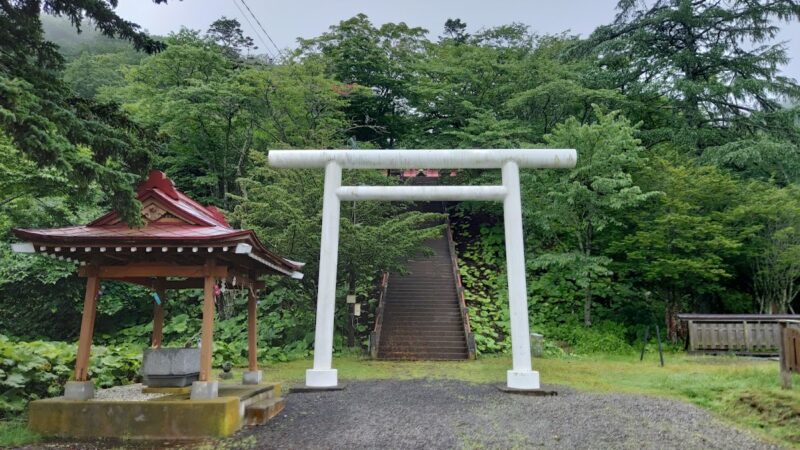
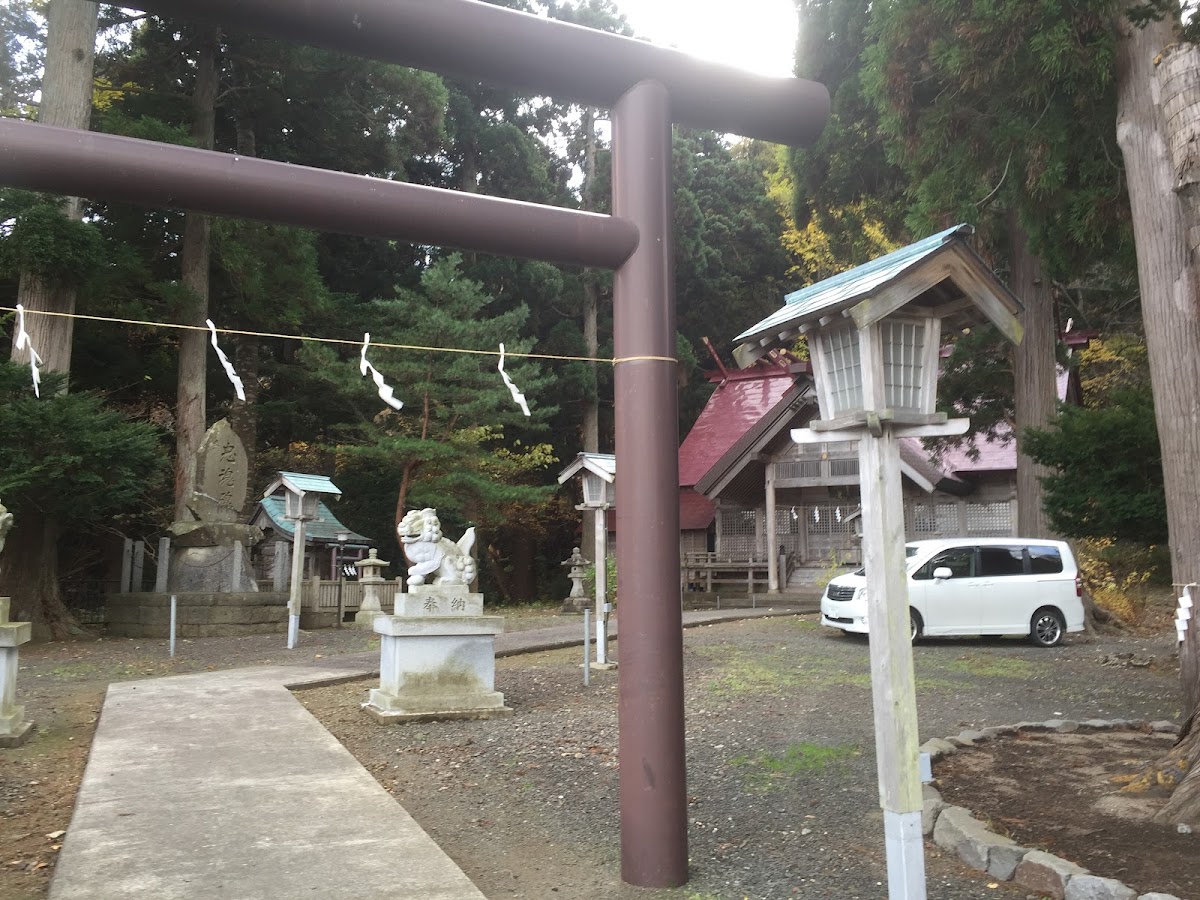
Fukushima Grand Shrine, built on the hills of Kagami-yama, begins with a magnificent brown first torii gate. Climbing the beautifully maintained stone steps, you’ll see towering cypress and cedar trees lining the path. After climbing the stone steps that curve slightly to the right, the majestic shrine building comes into view.
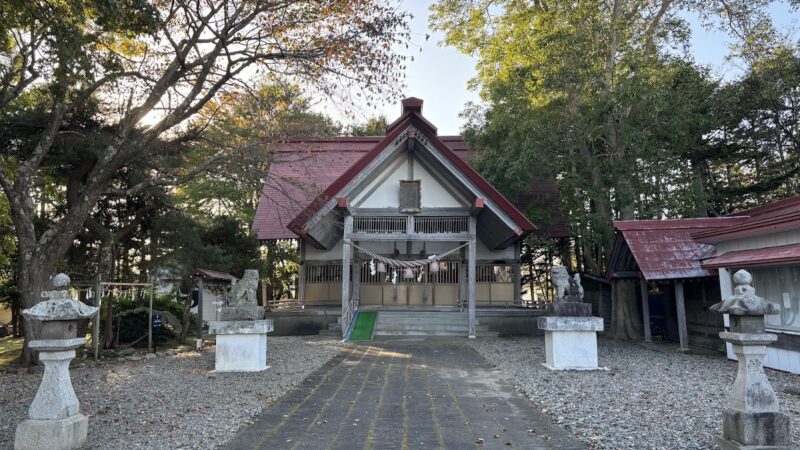
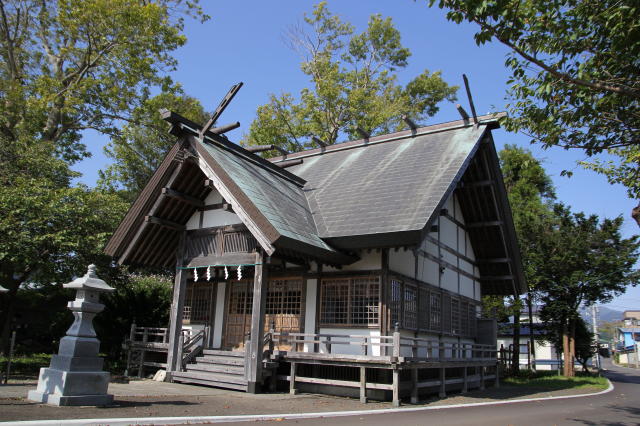
The shrine building is built in the Shinmei-zukuri style, following the style of Ise Grand Shrine, and possesses a simple yet dignified appearance. Located on a hill overlooking the sea, the shrine grounds offer magnificent views, and on clear days, you can see the entire Tsugaru Strait.
Tokiwai Family Shrine Office
Within the shrine grounds is the shrine office of the Tokiwai family, who have served as shrine officials for generations. Since its reconstruction in 1574, the Tokiwai family has maintained a deep connection with Fukushima Grand Shrine, and this historical building is an important symbol of the shrine’s history.
Goshuin (Shrine Seal) Information
About the Issuance of Goshuin
Fukushima Grand Shrine offers goshuin (shrine seals). While you can request them at the shrine office, they may be absent, so it is recommended to contact them in advance if you definitely want a goshuin.
The goshuin features the calligraphy and red seal of “Fukushima Grand Shrine,” a dignified design befitting a shrine that enshrines the deities of Ise Grand Shrine. For those touring shrines in Hokkaido, the goshuin of the historic Fukushima Grand Shrine will be a valuable keepsake.
About Goshuincho (Stamp Books)
Please check with the shrine office regarding the availability of original goshuincho. As a shrine belonging to the Hokkaido Association of Shinto Shrines, there is a possibility that goshuincho with a design characteristic of Hokkaido are available.
Access and Parking Information
Access by Public Transportation
Using Hakodate Bus:
- Approximately 6 minutes on foot from the nearest bus stop, “Fukushima Gyoko-mae”
- Within walking distance from the center of Fukushima Town
Using JR:
- The nearest station is “Shiriuchi Station” on the South Hokkaido Railway, but it is a distance from the station, so you will need to use a bus or taxi.
Access by Car
From Hakodate:
- Approximately 1 hour on National Route 228 towards Matsumae
- Follow the signs in the center of Fukushima Town
From Matsumae:
- Approximately 30 minutes on National Route 228 towards Hakodate
Parking: There is parking space near the shrine. Due to expected crowds during the annual festival, please consider using public transportation.
Nearby Tourist Attractions
Fukushima Town has many attractions besides Fukushima Grand Shrine:
- Yokozuna Chiyonoyama & Chiyonofuji Memorial Hall: A memorial hall celebrating the achievements of two great sumo grand champions
- Seikan Tunnel Memorial Hall: A facility where you can learn about the history of the world’s longest underwater tunnel
- Iwabe Coast: A scenic spot where you can enjoy the beautiful coastline and unique rock formations
Manners and Etiquette for Worship
Worship Etiquette at Shinto Shrines
Fukushima Grand Shrine is a Shinto shrine built in the same style as Ise Grand Shrine. The basic etiquette for visiting a shrine is as follows:
- Bow before passing through the torii gate: As a sign of respect before entering the sacred area.
- Purify yourself at the water basin: Purify your left hand, then your right hand, then your mouth.
- Avoid walking in the center of the path: The center is considered the path of the gods.
- Bow twice, clap twice, and bow once in front of the main hall: This is the basic etiquette for visiting a shrine.
- Bow again at the torii gate when leaving: With gratitude.
Photography Manners
Photography is generally permitted on the shrine grounds, but please note the following:
- Photography inside the main hall may be prohibited.
- Be considerate of other worshippers.
- Photography may be restricted during Shinto rituals such as the annual festival.
- Photograph sacred trees such as the Chichibu Hinoki with respect.
Annual Events of Fukushima Grand Shrine
Main Festivals
- January 1st: New Year’s Day Festival (Celebration of the New Year)
- February (Setsubun): Setsubun Festival
- Spring: Spring Annual Festival
- Mid-September: Grand Annual Festival (Most Important Festival)
- November: Niiname-sai (Harvest Festival)
- December: Great Purification Ceremony
Highlights Other Than the Grand Annual Festival
Even outside of the Grand Annual Festival, Fukushima Grand Shrine exudes a quiet and solemn atmosphere. The large trees within the grounds are particularly beautiful during the seasons of fresh greenery and autumn leaves, making it ideal for photography. In winter, the snow-covered grounds create a mystical landscape.
Fukushima Town and Fukushima Grand Shrine
As a Center of the Local Community
Fukushima Grand Shrine is not merely a tourist spot; it functions as a spiritual pillar for the residents of Fukushima Town. The entire town participates in the Grand Annual Festival, preserving the tradition of the festival procession. This sense of unity demonstrates the valuable strength of community bonds in a depopulated regional city.
A Center of Shinto Worship in Hokkaido
Hokkaido has many shrines dedicated to the deities of Ise Grand Shrine, but Fukushima Grand Shrine is one of the oldest and most prestigious. It belongs to the Hokkaido Association of Shinto Shrines and contributes to the spread of Shinto culture in Hokkaido.
From Showa to Reiwa: The Present State of Fukushima Grand Shrine
Efforts to Protect Cultural Properties
The preservation activities of the festival procession, which has continued since the Showa era, are being continued by the Fukushima Grand Shrine Festival Procession Preservation Society. To pass on its value as an intangible folk cultural property to future generations, efforts are being made to create documentary videos and train successors.
Utilization as a Tourism Resource
In recent years, Fukushima Town has been working to utilize its historical and cultural resources, including Fukushima Grand Shrine, for tourism. Under the slogan “BE HAPPY FUKUSHIMA,” efforts are being made to disseminate information about the annual festival and to develop tourist routes.
Summary: The Significance of Visiting Fukushima Grand Shrine
Fukushima Grand Shrine is a special place where Hokkaido’s history, Matsumae culture, Ise faith, and the strong bonds of the local community are condensed. You can feel the weight of history, having continuously attracted the faith of the people of this region for hundreds of years since its founding.
From the 500-year-old cypress tree, the dignified festival procession, the beautiful grounds overlooking the sea, to its connection to sumo culture that produced two great Yokozuna (grand champions), Fukushima Grand Shrine is filled with many charms that cannot be fully described in a single visit.
When visiting Hokkaido, be sure to extend your trip to Fukushima Town and experience the history and culture of Fukushima Grand Shrine. Visiting during the annual festival, in particular, will be a valuable opportunity to experience the essence of Matsumae culture.
As you clasp your hands together in the tranquil grounds and reflect on the story of the ancient seafarers who arrived in this land, carrying the gods of Ise, you will realize that Fukushima Grand Shrine is not merely a tourist spot, but a place where living history and culture are passed down.