Kawasuso Shrine (Furukawa-cho, Hakodate City, Hokkaido) Complete Guide | History, Deities, Access, and the Secret of Enku Buddha Statues
Kawasuso Shrine (also known as Kawasusogi Shrine), located in Furukawa-cho, Hakodate City, Hokkaido, is a historical shrine founded in 1664 (Kanbun 4) during the early Edo period. Known for the discovery of Enku Buddha statues, a valuable cultural asset in the southern Hokkaido region, this guide provides a detailed explanation of the shrine’s history, enshrined deities, highlights within the grounds, and access methods.
Basic Information on Kawasuso Shrine
Kawasuso Shrine is a shrine belonging to the Hokkaido Shrine Association, and its former rank was Village Shrine. Located in the quiet area of Furukawa-cho, away from the center of Hakodate City, it has long been revered as the local guardian deity.
Location and Access Information
Location: 237 Furukawa-cho, Hakodate City, Hokkaido
Postal Code: 〒040-0000
Telephone Number: 0138-58-2044
Corporate Number: 8440005000506 (Designated October 5, 2015)
Transportation Access
There are several ways to access Kawasawa Shrine:
- Public Transportation: Approximately 50 minutes by Hakodate Bus from JR Hakodate Station, then a 5-minute walk from the Furukawa-cho bus stop.
- Car: Approximately 30 minutes from central Hakodate via National Route 278.
Furukawa-cho is located in the suburbs, away from the city center of Hakodate, so access by private car is convenient. If using the bus, it is recommended to check the timetable in advance as the number of buses is limited.
History and Origins of Kawasaku Shrine
Founding History
Kawasaku Shrine was established in 1664 (Kanbun 4). This period in the early Edo era was a time when development of Ezochi (Hokkaido) was progressing under the rule of the Matsumae Domain. The Furukawa area was a settlement where people engaged in fishing and agriculture lived, and it is believed that the shrine was founded to pray for the peace and abundance of the region.
The name “Kawasaku” is rare nationwide. In Hokkaido, in addition to Furukawa-cho in Hakodate City, there is another shrine with the same name in Fukushima-cho. It is a rare shrine name, with only two shrines bearing it in the entire country. This name is thought to have meaning related to the purification and cleansing of water, suggesting a deep connection to the rivers and water sources flowing through the region.
Changes in the Shrine Building
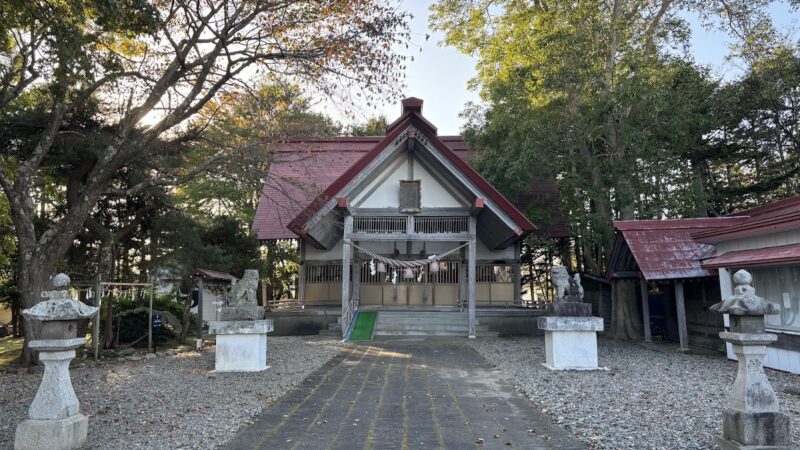
Kawasaku Shrine has a history of over 300 years since its founding, but the current shrine building was rebuilt on August 10, 1967 (Showa 42). The shrine employs the traditional Nagare-zukuri architectural style, with a shrine building area of 34.5 tsubo (113.8 square meters) and a grounds area of 324 tsubo, making it a moderate size for a local village shrine.
Nagare-zukuri is one of the most common styles in Japanese shrine architecture, characterized by its elegant shape with a long, extended roof forming a eaves. This style not only indicates the shrine’s status but also serves the practical function of protecting worshippers from Hokkaido’s harsh climate.
About the Deity: Konohanasakuya-hime
The deity enshrined at Kawasaku Shrine is Konohanasakuya-hime.
About Konohanasakuya-hime
Konohanasakuya-hime is a goddess appearing in Japanese mythology, as recorded in the Kojiki and Nihon Shoki. She is depicted as a beautiful goddess who became the consort of Ninigi-no-Mikoto, known for the descent of the heavenly grandchild.
Divine Virtues
Konohanasakuya-hime is believed to possess the following divine virtues:
- Safe Childbirth and Child-Rearing: In mythology, she safely gave birth to three children in a single night, leading to her worship as a guardian deity of safe childbirth and child-rearing.
- Matchmaking and Marital Harmony: From the story of her marriage to Ninigi-no-Mikoto, she is believed to bring blessings for good relationships and marital harmony.
- Protection from Fire: From the myth of her giving birth amidst a burning birthing hut, she is also revered as a guardian deity against fire.
- Protection from Agriculture and Fisheries: As a goddess who brings fertility and prosperity, she watches over the development of local industries.
In Furukawa Town, a region where fishing and agriculture thrive, Konohanasakuya-hime has been revered as a protector of all aspects of the lives of the local residents.
Annual Festival and Events
Annual Festival Date
The annual festival of Kawasaku Shrine is held every year on August 18th. The annual festival is the most important ritual for the shrine, a ceremony to express gratitude to the enshrined deity and to pray for peace and prosperity in the community.
Parishioners, mainly residents of Furukawa town, gather for the solemn ceremony. Held in the summer, the annual festival also includes prayers for safety in fishing and a bountiful harvest.
Other Annual Events
Besides the annual festival, Kawasaku Shrine is believed to hold the following annual events:
- New Year’s Day Festival (January 1st): A prayer for peace and prosperity throughout the year.
- Setsubun Festival (around February 3rd): A Shinto ritual to ward off evil and invite good fortune.
- Spring Festival: A prayer for the arrival of spring and a bountiful harvest.
- Shichi-Go-San Festival (November): A prayer for the healthy growth of children.
- Great Purification Ceremony (June and December): A Shinto ritual to cleanse away the impurities accumulated over the past six months.
For specific dates and details, we recommend contacting the shrine directly.
Discovery of Enku Buddha Statues: Cultural Assets of Kawasaku Shrine
An essential element in discussing Kawasaku Shrine is the existence of the Enku Buddha statues, discovered on August 29, 1975 (Showa 50).
What are Enku Buddhas?
Enku (1632-1695) was a Shugendo monk in the early Edo period and a legendary Buddhist sculptor said to have carved as many as 120,000 Buddha statues in his lifetime. Enku’s Buddha statues, known as “Enku Buddhas,” are characterized by their simple yet powerful form and are still highly regarded for their artistic merit today.
Discovery at Kawasaku Shrine
On August 29, 1975, Assistant Professor Shibuya of Hakodate National College of Technology discovered an Enku Buddha at Kawasaku Shrine during his research. This discovery holds significant importance for the study of Enku Buddhas in Hokkaido.
Enku is known to have traveled through Ezo (Hokkaido) from 1666 (Kanbun 6) to 1667 (Kanbun 7), and he carved many Buddha statues during this period. Considering that Kawasaku Shrine was founded in 1664, it is highly probable that Enku visited the shrine shortly after its founding and dedicated a Buddhist statue.
Significance of Enku’s Buddhist Statues
Enku’s Buddhist statues remaining in Hokkaido are limited, making the Enku statues at Kawasaku Shrine a valuable cultural asset in the southern Hokkaido region. They are also important historical materials illustrating the historical context of Shinto-Buddhist syncretism, providing clues to understanding the state of faith in Hokkaido during the early Edo period.
Regarding viewing the Enku statues, due to their preservation and management, they may not always be open to the public. Those wishing to view them are advised to contact the shrine in advance.
Relationship between the Parishioner Area and the Local Community
Kawasaku Shrine has 263 parishioner households. As the tutelary deity of the area centered around Furukawa Town, it serves as a spiritual anchor for the local residents.
What are Parishioners?
Parishioners are people who reside within the sphere of influence of a particular shrine and worship that shrine. The parishioners cooperate in the maintenance and management of the shrine and the operation of festivals, deepening the bonds of the local community through the shrine.
Connections with the Community
Furukawa-cho is a quiet area located on the outskirts of Hakodate City, and was formerly part of Zenigamezawa Village. It is an area where industries centered on fishing and agriculture have been practiced, and Kawasaku Shrine has been revered as a guardian presence for the safety and prosperity of the region.
Even today, it functions as a place where local residents gather through annual festivals and events, and where traditional culture is passed down. In rural areas facing declining birth rates and an aging population, the importance of shrines playing a central role in the local community is being re-recognized.
Exploring the Grounds of Kawasaku Shrine
Atmosphere of the Grounds
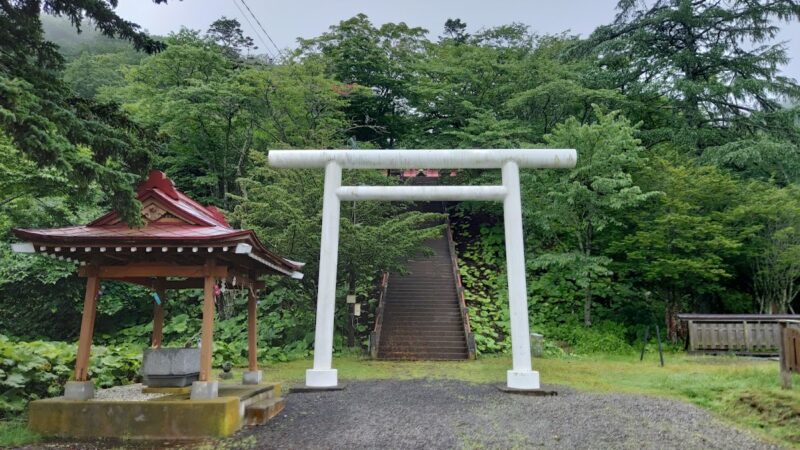
The grounds of Kawasaku Shrine cover an area of 324 tsubo (approximately 1,000 square meters) and exude a quiet and peaceful atmosphere. Surrounded by a rich natural environment, it is a space where one can leave the hustle and bustle of the city and worship in peace.
Features of the Shrine Architecture
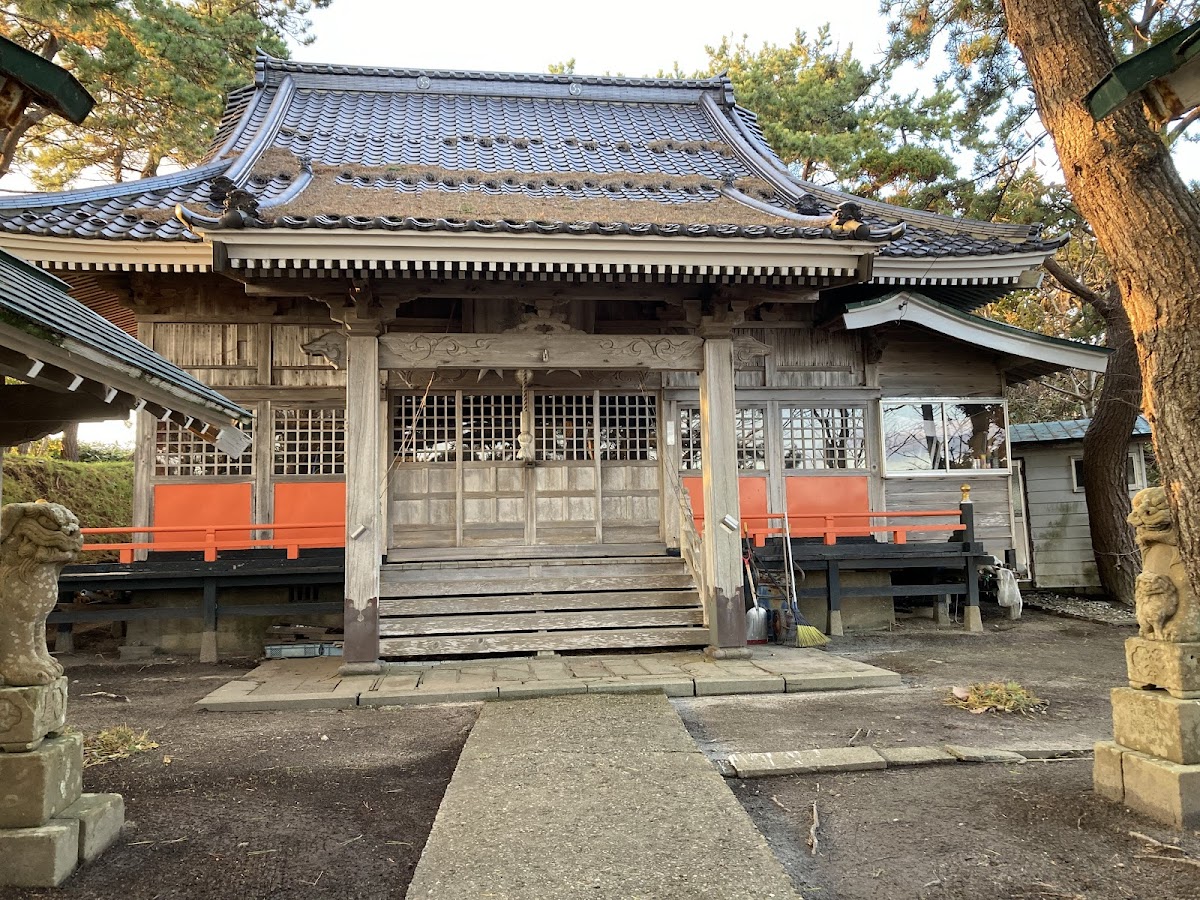
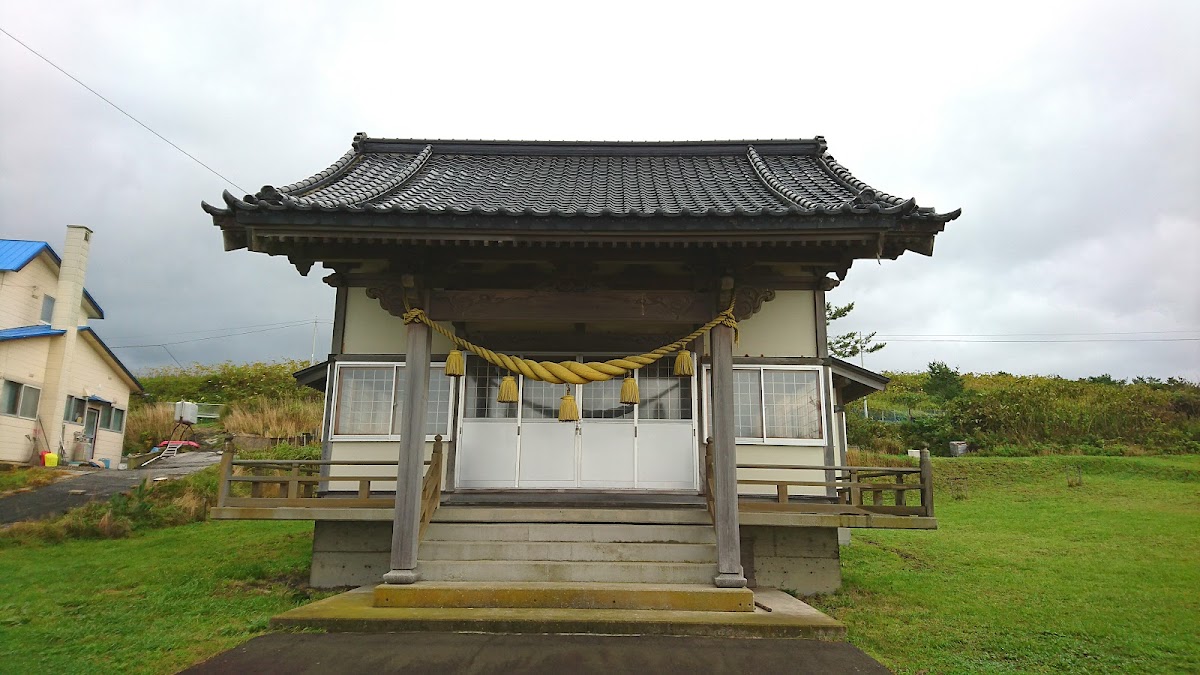
The shrine building, rebuilt in 1967, adopts the traditional Nagare-zukuri style. The graceful curves of the roof, a characteristic of the Nagare-zukuri style, maintain their beautiful form even amidst Hokkaido’s harsh natural environment.
The shrine’s area of 34.5 tsubo (113.8 square meters) is standard for a village shrine, and it appears to be a structure where the main hall and worship hall are integrated. It is a space where the warmth of wooden architecture harmonizes with a sacred atmosphere.
Etiquette for Worship
The basic etiquette for visiting a shrine is as follows:
- Bow before passing through the torii gate.
- Purify your body and mind at the temizuya (water basin) (left hand → right hand → mouth → left hand in that order)
- Walk along the approach to the shrine, avoiding the center.
- Offer your donation in front of the worship hall.
- Worship using the two bows, two claps, one bow method.
- Bow again at the torii gate when leaving the shrine grounds.
By worshipping with a heartfelt devotion in this tranquil environment, you will feel a connection with the enshrined deity.
Hokkaido’s Shrine Culture and Kawasaku Shrine
Characteristics of Shrines in Hokkaido
Hokkaido has 786 shrines, with 56 located within Hakodate City. Many of Hokkaido’s shrines were founded by immigrants from Honshu who invited deities from their hometown shrines, and are deeply intertwined with the history of settlement.
Shrines like Kawasaku Shrine, founded in the early Edo period, are relatively old in Hokkaido. As a place of worship continuing from the Matsumae Domain era, it occupies an important position in the history of Hokkaido’s shrines.
Shrine Culture in Southern Hokkaido
Southern Hokkaido is one of the earliest developed regions in Hokkaido, and many historical shrines exist, centered around Hakodate. Kawasaku Shrine belongs to the Southern Hokkaido branch and plays a part in the regional shrine network.
Unlike large shrines such as Hakodate Hachimangu, Kawasaku Shrine is a small, community-oriented shrine. Because of this, it is close to the local residents and is cherished as a place of daily worship.
Nearby Attractions and Tourist Information
Charms of Furukawa Town
Furukawa Town is located on the outskirts of Hakodate City and boasts a rich natural environment. Facing the Tsugaru Strait, it offers beautiful coastline and fishing port scenery.
Nearby Tourist Spots
When visiting Kawasawa Shrine, we recommend also visiting the following nearby spots:
- Mt. Esan: Known as an active volcano, Mt. Esan offers opportunities for mountain climbing and hiking.
- Todohokke Area: A fishing town where you can enjoy fresh seafood.
- Toi Area: A port town famous for its tuna.
- Yunokawa Onsen: A famous hot spring resort you can stop by on your way back to Hakodate City.
Combining with Hakodate Sightseeing
Although it’s a distance from the center of Hakodate City, combining it with Hakodate sightseeing using a rental car will allow you to enjoy a more fulfilling Hokkaido trip. A recommended itinerary is to visit famous Hakodate tourist spots (Mt. Hakodate, Goryokaku, Motomachi, etc.) and then visit the quiet shrine on the outskirts.
Points to Note When Visiting Kawasawa Shrine
Best Time to Visit
Kawasawa Shrine is open to visitors throughout the year, but each season offers its own unique charm:
- Spring (April-June): Beautiful cherry blossoms and fresh greenery, and a mild climate, ideal for visiting.
- Summer (July-August): The time of the annual festival (August 18th), offering the opportunity to witness local festivals.
- Autumn (September-November): Beautiful autumn foliage, and a peaceful atmosphere for worship.
- Winter (December-March): The shrine amidst a snowy landscape is magical, but caution is needed regarding road conditions.
Useful Items to Bring
- Goshuincho (stamp book): Bring one if you wish to receive a Goshuin (stamp). (It is recommended to check in advance whether they offer stamps.)
- Camera: For photographing the scenery of the shrine grounds and the shrine buildings. (However, remember that this is a sacred place.)
- Offerings: Having small change ready will make things smoother.
- Warm clothing/Rain gear: Dress appropriately for Hokkaido’s climate.
Precautions when visiting the shrine
- Be quiet: The shrine grounds are a sacred place. Please refrain from loud conversations.
- Photography etiquette: Permission may be required to photograph the interior of the main hall or Shinto rituals.
- Take your trash home: To protect the natural environment, please be sure to take your trash home with you.
- Parking: Parking spaces may be limited, so please avoid parking on the street.
How to use the QR code
Nowadays, shrine information can be easily accessed using smartphones. By creating a QR code for Kawasaku Shrine’s location information, the following convenient uses are possible:
How to Use the QR Code
- Integration with Map Apps: You can directly open map apps such as Google Maps from the QR code and use navigation functions.
- Information Sharing: When sharing your visit plans with friends and family, you can easily convey the location by sending the QR code.
- Digital Goshuin (Shrine Seal): Some shrines offer a digital goshuin service using QR codes.
Information Search on Smartphones
By entering the address of Kawasaku Shrine, “237 Furukawa-cho, Hakodate City, Hokkaido,” into your smartphone’s map app, you can search for routes from your current location and check the travel time. If using public transportation, it is convenient to use it in conjunction with a transit app.
Relationship with the Hokkaido Association of Shrines
Kawasaku Shrine belongs to the Hokkaido Association of Shrines, specifically the Southern Hokkaido Branch.
What is the Hokkaido Association of Shrines?
The Hokkaido Association of Shrines is a religious corporation that encompasses shrines within Hokkaido and functions as a local branch of the Association of Shinto Shrines. The organization supports the proper management and operation of shrines, trains Shinto priests, and promotes and raises awareness of Shinto culture.
Role of the Association of Shinto Shrines
- Shrine Registration and Management: Manages information on shrines within Hokkaido and provides official information.
- Shinto Priest Training: Conducts training and workshops to improve the qualifications of Shinto priests.
- Ritual Guidance: Supports the inheritance and proper execution of traditional rituals.
- Information Provision: Disseminates information about shrines and Shinto culture to general visitors.
Official information regarding Kawasaku Shrine can also be found on the Hokkaido Association of Shinto Shrines website.
Summary: The Charm of Kawasaku Shrine
Kawasaku Shrine, with its long history dating back to its founding in 1664, is a warm and welcoming shrine deeply rooted in the community. It enshrines Konohanasakuya-hime no Mikoto as its main deity, bestowing divine blessings closely related to people’s lives, such as safe childbirth, child-rearing, and matchmaking.
Discovered in 1975, the Enku Buddha statue is a valuable cultural artifact that conveys the religious culture of the Edo period and holds significant meaning in understanding Hokkaido’s history. Located in a quiet environment on the outskirts of Hakodate, this shrine offers a peaceful and tranquil experience.
When sightseeing in Hakodate, why not visit Kawasaku Shrine in Furukawa-cho, in addition to the famous spots in the city center? The simple and warm atmosphere of this shrine, preserved by the local people, will surely deepen your travel memories.
Taking time to experience Hokkaido’s shrine culture and paying respects to the historically significant deities will be a precious opportunity to escape the hustle and bustle of modern life and find peace of mind.