Hachiman Shrine (Ishizaki-cho, Hakodate City, Hokkaido) Complete Guide
Hachiman Shrine, located in Ishizaki-cho, Hakodate City, Hokkaido, is a historic shrine that has long been cherished by the local community. While several Hachiman Shrines exist within Hakodate City, the Ishizaki-cho Hachiman Shrine has played a crucial role as a center of community and a place of worship. This article provides detailed information useful for visitors, including the shrine’s history, enshrined deities, blessings, highlights of the grounds, annual events, and access methods.
History and Origins of Hachiman Shrine
Circumstances of Founding and Historical Background
The Ishizaki-cho Hachiman Shrine has walked hand in hand with the development and settlement of the Hakodate region. Hakodate flourished as a base for the development of Hokkaido from the Edo period onward, attracting many immigrants from Honshu. Hachiman, widely worshipped as a god of war and as the guardian deity of agriculture and fishing, is believed to have been enshrined there by people praying for safety and prosperity in their new lives.
Hachiman Shrine is a shrine that has walked hand in hand with the development and settlement of the Hakodate region. The Ishizaki-cho area is located in the western part of Hakodate City and was once a thriving fishing and agriculture region. Hachiman Shrine has played an important role as a spiritual center for local residents and a place to strengthen community bonds.
Changes Since the Meiji Era
With the Meiji era, many shrines were reorganized and consolidated due to the separation of Shinto and Buddhism and the introduction of modern administrative systems. Hachiman Shrine in Ishizaki-cho was also formally recognized as the local guardian shrine during this period, with its shrine rank established.
During the Showa era, the shrine faced various difficulties such as war and natural disasters, but it was protected by the deep faith of the local residents and has been passed down to the present day. During the post-war period of rapid economic growth, the shrine buildings were renovated and the grounds were improved, resulting in its current appearance.
Deep Ties with the Community
Hachiman Shrine is not merely a religious facility; it is a central presence in the Ishizaki-cho community. During events such as the annual festival and New Year’s celebrations, many local residents gather, creating a place for intergenerational exchange. Furthermore, it is a beloved presence in the lives of local people, visited for Shichi-Go-San (a traditional Japanese rite of passage for children) to pray for the healthy growth of children, and for visits at important life milestones.
Deities and Divine Virtues
Main Deity: Emperor Ōjin (Homudawake-no-Mikoto)
The main deity of Hachiman Shrine is Emperor Ōjin, also known as Homudawake-no-Mikoto. Emperor Ōjin was the 15th Emperor and is worshipped as Hachiman-sama at Hachiman shrines and Hachiman-gū throughout Japan.
Emperor Ōjin is known as an emperor of great military prowess and is also said to have contributed to the development of culture. Therefore, he is worshipped as a god of military fortune and good luck in competitions, as well as a god of national peace and industrial development.
Enshrined Deities
Many Hachiman shrines enshrine Emperor Ōjin’s mother, Empress Jingū, and Himegami alongside him. Empress Jingu is worshipped as the goddess of safe childbirth and child-rearing, while Himegami is worshipped as the goddess of matchmaking and family safety.
It is highly likely that these deities are enshrined at the Hachiman Shrine in Ishizaki Town, and the shrine is cherished in the community as a place that bestows diverse divine blessings.
Expected Benefits
The main benefits you can expect at Hachiman Shrine are as follows:
Good Fortune in Competitions and Victory
Due to its nature as a god of war, you can pray for success in various competitions, such as passing exams, finding employment, and winning in sports.
Family Safety and Protection from Misfortune
Many visitors come to pray for the health and happiness of their families and protection from disaster.
Traffic Safety
In today’s car-dependent society, prayers for traffic safety are also an important benefit.
Business Prosperity and Industrial Development
The shrine is also deeply revered by business owners and self-employed individuals who pray for business success and prosperity.
Safe Childbirth and Child-Rearing
When Empress Jingu is enshrined here, people pray for safe childbirth and the healthy growth of their children.
Matchmaking and Successful Relationships
You can also expect blessings for forming good relationships with others.
Highlights of the Shrine Grounds
Shrine Building and Torii Gate
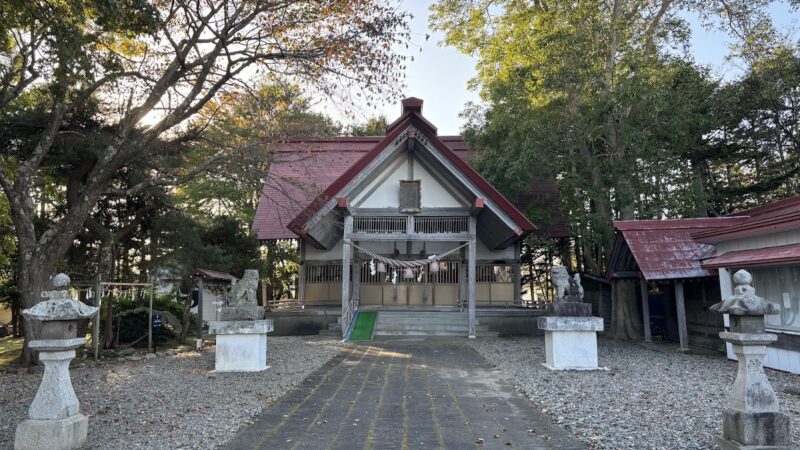
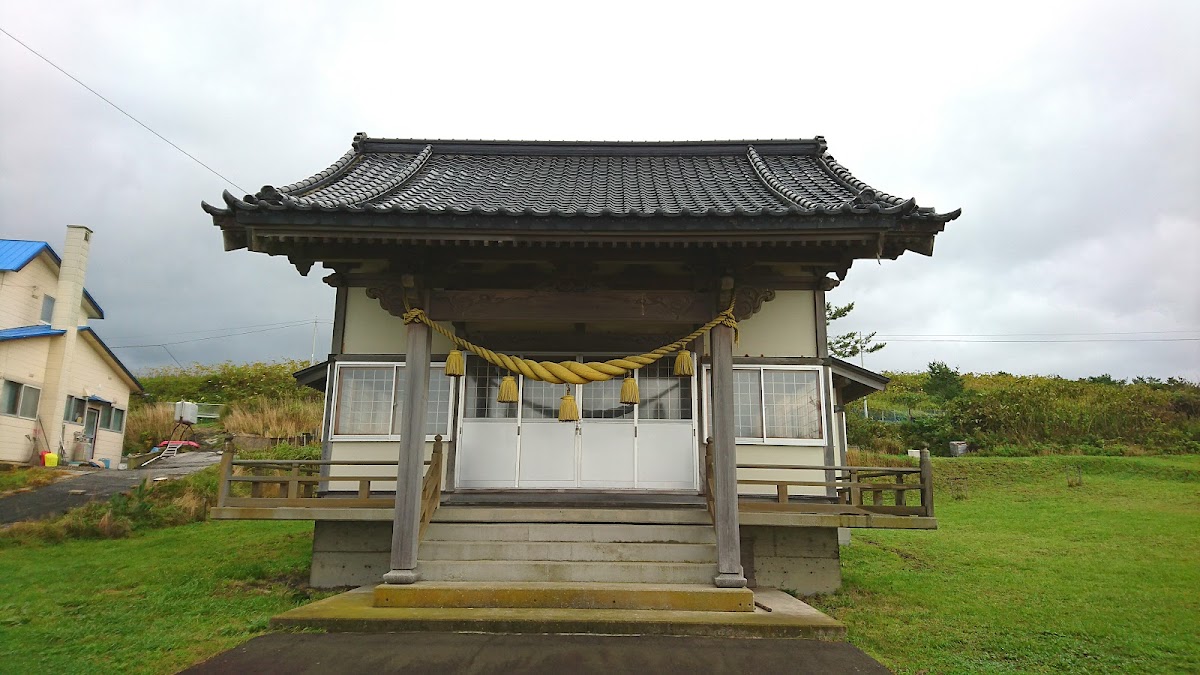
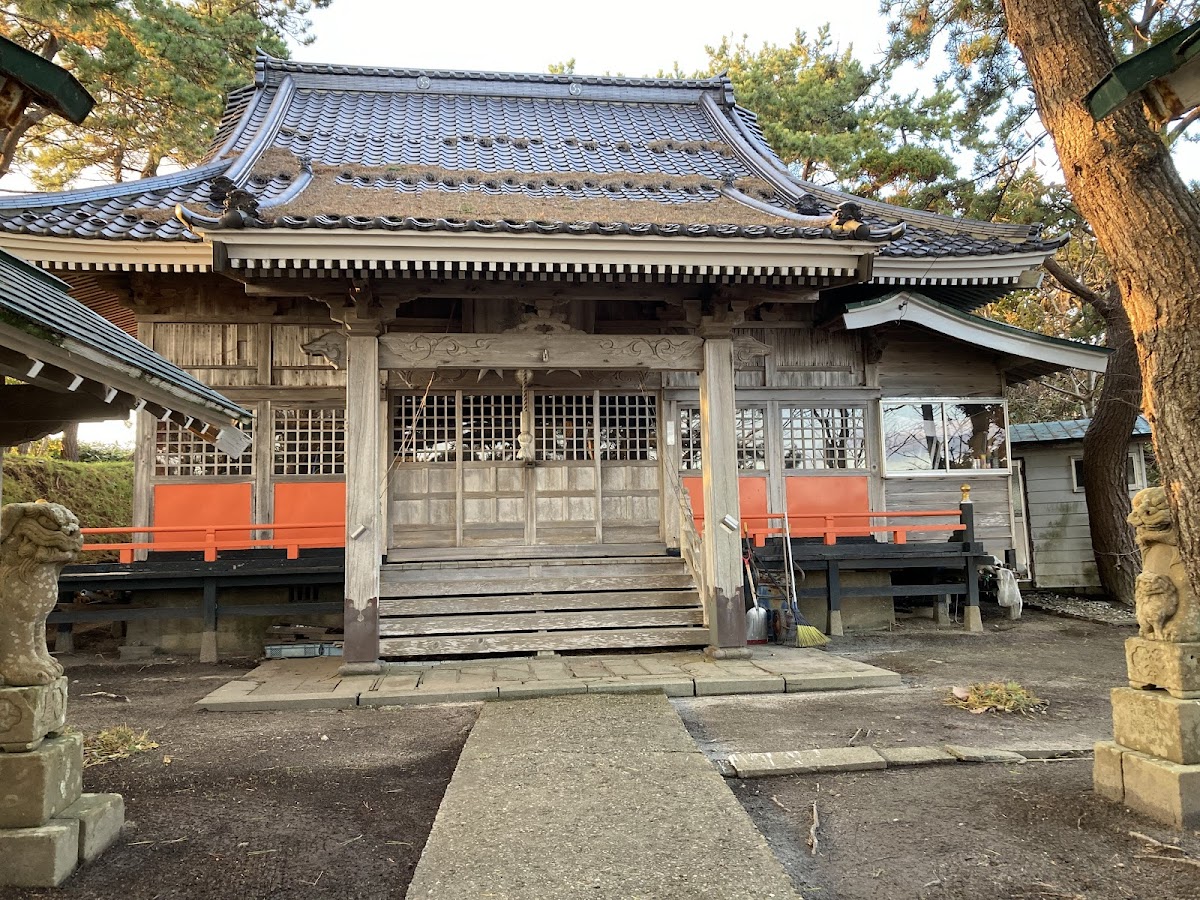
The shrine building of Hachiman Shrine is sturdily constructed to suit Hokkaido’s climate. It is designed to withstand the harsh winter cold and heavy snowfall, and is regularly maintained.
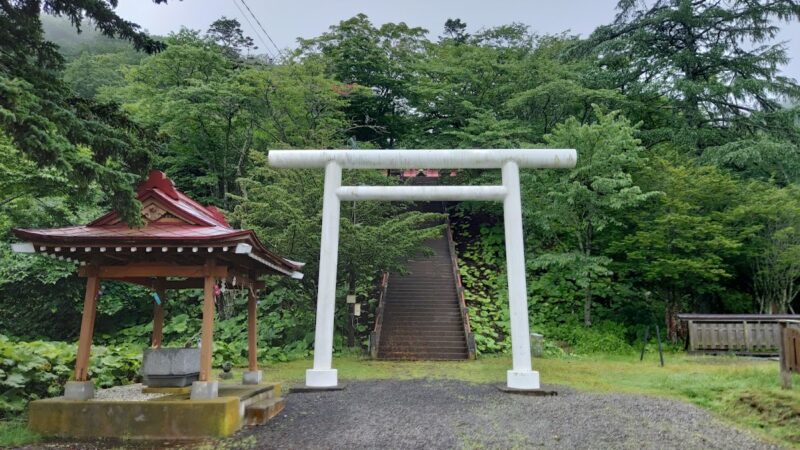
The torii gate welcomes worshippers as the entrance to the sacred area. It is customary to bow when passing through the torii gate, preparing oneself to enter the sacred area.
Water Basin
There is a water basin for purifying oneself before worship. The correct procedure is as follows:
- Take the ladle with your right hand and purify your left hand.
- Switch the ladle to your left hand and purify your right hand.
- Switch the ladle back to your right hand, receive water in your left hand, and rinse your mouth.
- Purify your left hand once more.
- Stand the ladle upright, purify the handle, and return it to its original place.
During winter, the purification fountain may be unavailable to prevent freezing.
Komainu and Stone Monuments
Komainu (guardian lion-dogs) are placed within the shrine grounds, protecting the sacred area. There are also donated stone monuments and memorials, telling the story of the shrine’s history and its connection to the local community. Reading the inscriptions on these monuments allows you to learn about the shrine’s history and the changes in the region.
Shrines within the Precincts
In addition to the main shrine, there may be small shrines or subsidiary shrines within the precincts. These often enshrine various deities, such as Inari shrines and Tenmangu shrines, and you can worship each of them individually.
Natural Environment
The shrine grounds are planted with trees, allowing visitors to experience the changing seasons. Cherry blossoms and fresh greenery in spring, lush greenery in summer, vibrant autumn leaves, and snowy landscapes in winter – each season offers a different view.
Annual Events and Grand Festival
New Year’s Day (Hatsumode)
Hatsumode, the first shrine visit of the new year, is the time of year when the most worshippers visit. From January 1st to the third day, the shrine is bustling with people praying for safety and prosperity in the new year.
Hakodate winters are harsh, so be sure to dress warmly when visiting. Since the shrine grounds are often covered in snow, it is recommended to wear non-slip shoes.
Grand Festival
The Grand Festival is the most important annual event for a shrine. The Grand Festival of Ishizaki-cho Hachiman Shrine is traditionally held in summer or autumn. The specific date is determined by the shrine and the local parishioners’ association.
The following events take place during the annual festival:
Portable Shrine Procession The portable shrine is carried through the community, spreading the divine power of the gods throughout the area.
Offering Performances Various offerings are made, including traditional performing arts and drum performances.
Stalls Stalls line the shrine grounds and surrounding areas, adding to the festive atmosphere.
Shinto Rituals Solemn rituals are performed by Shinto priests.
Shichi-Go-San (7-5-3 Festival)
Around November 15th, Shichi-Go-San visits take place. This is an important event to give thanks for the healthy growth of children and pray for their future safety. Many families can be seen taking commemorative photos.
Other Events
Setsubun Festival (Around February 3rd) Beans are scattered to ward off evil spirits and invite good fortune.
Summer Purification Ceremony (June 30th)
A Shinto ritual to cleanse away the sins and impurities accumulated over the past six months.
Year-End Purification Ceremony (December 31st)
A Shinto ritual to cleanse away the sins and impurities accumulated over the past year, allowing one to welcome the new year with a pure heart.
Etiquette and Manners for Worship
Basic Worship Etiquette
Knowing the correct etiquette for worshipping at a shrine is important for showing respect to the gods.
Two Bows, Two Claps, One Bow
- Stand in front of the offering box and bow slightly.
- Gently place your offering in the box (do not throw it in).
- If there is a bell, ring it.
- Bow deeply twice (two bows).
- Bring both hands together at chest height, slightly lower your right hand, and clap twice (two claps).
- Pray while keeping your hands together.
- Lower your hands and bow deeply once (one bow).
Regarding Attire
While casual attire is acceptable, clean and neat clothing is preferred. If you are receiving a special prayer, please dress appropriately and not too casually.
Hakodate is extremely cold in winter, so warm clothing is essential. Please wear a hat, gloves, scarf, and other warm clothing when visiting.
Regarding Photography
Photography is generally permitted on the shrine grounds, but please note the following:
- Photography inside the main hall is often prohibited.
- Refrain from taking photographs during Shinto rituals, or obtain permission first.
- Be considerate of other worshippers.
- Refrain from using flash photography.
Regarding Pets
Since shrines are sacred places, bringing pets should be avoided in principle. If unavoidable, it is recommended to check with the shrine in advance.
Access Information
Location
Address: Ishizaki-cho, Hakodate City, Hokkaido
Ishizaki-cho is located in the western part of Hakodate City, on the north side of Mount Hakodate and facing Hakodate Bay.
Access by Public Transportation
Using the Hakodate City Tram (Streetcar)
The Hakodate City Tram is a convenient means of transportation within Hakodate City. It is accessible on foot from the nearest tram stop.
- Take the tram from in front of Hakodate Station
- Take the tram bound for “Ishikawa-cho” or “Yachigashira”
- Get off at the nearest tram stop and walk.
The journey takes approximately 15-20 minutes from Hakodate Station.
Using Hakodate Bus
Hakodate Bus routes are also available. There are bus routes that pass through the Ishizaki-cho area, and you can access the shrine on foot from the nearest bus stop. Bus timetables can be checked on the official Hakodate Bus website.
Access by Car
From Hakodate Station
Approximately 10-15 minutes by car from Hakodate Station. Head west on National Route 278 towards Ishizaki-cho.
From Hakodate Airport
Approximately 25-30 minutes by car from Hakodate Airport. Head towards the city center from the airport and access Ishizaki-cho via National Route 278.
Parking Information
The availability and number of parking spaces vary depending on the size of the shrine. For smaller shrines, dedicated parking may not be available, so consider using public transportation. Temporary parking may be provided during events such as annual festivals.
Nearby Tourist Attractions
The following are some tourist attractions near Ishizaki-cho:
Mount Hakodate
A representative tourist spot in Hakodate, you can reach the summit by ropeway. The night view from the summit is famous as the “million-dollar night view.”
Tachimachi Cape
A scenic spot offering panoramic views of the Tsugaru Strait, and also features a monument inscribed with a poem by Ishikawa Takuboku.
Hakodate Park
Known as a famous cherry blossom viewing spot, it is bustling with many visitors in spring.
Yachigashira Onsen
A public bathhouse beloved by locals, where you can enjoy natural hot spring water flowing directly from the source.
Goshuin (Shrine Seals) and Amulets
About Goshuin
Goshuin are given as proof of visiting a shrine, and many people collect them as a memento of their visit. While Hachiman Shrine in Ishizaki-cho may also offer Goshuin (shrine stamps), smaller shrines may not always provide them.
If you wish to receive a Goshuin, please note the following:
- Request it at the reception area after your visit.
- Bring your Goshuincho (stamp book) (they may have pre-printed stamps).
- Prepare the offering fee (usually around 300-500 yen).
- You may not be able to receive a Goshuin if the priest is absent.
Amulets and Items Offered
Hachiman Shrine offers a variety of amulets and items:
Traffic Safety Amulet
An amulet to protect the safety of cars and bicycles.
Academic Success Amulet
An amulet to pray for success in exams and academics.
Family Safety Amulet
An amulet to pray for the health and happiness of the family.
Exorcism Amulet
An amulet for those in their unlucky year or those praying for protection from evil.
Safe Childbirth Amulet
An amulet to pray for a safe childbirth for pregnant women. Health Amulet
This amulet is a charm for wishing for good health and longevity.
It is recommended to replace the amulet with a new one approximately every year. Return the old amulet to the shrine and have it burned in a ceremonial burning.
About Hachiman Shrines in Hakodate
Other Hachiman Shrines in Hakodate City
Besides the Hachiman Shrine in Ishizaki-cho, there are several other Hachiman shrines in Hakodate City. Each has its own unique history and tradition as the guardian deity of its region.
Kameda Hachiman Shrine
This is a particularly old and large Hachiman shrine in Hakodate City.
Other Hachiman Shrines
Small Hachiman shrines are scattered throughout various regions, supporting their respective local communities.
Characteristics of Hachiman Faith
Hachiman faith is widespread throughout Japan, and there are said to be approximately 44,000 Hachiman shrines nationwide. This is the second largest number after Inari shrines.
Hachiman, the god of war, has been widely worshipped not only as a warrior but also as a guardian deity of agriculture and fishing, and a protector of the nation. Especially during the pioneering period of Hokkaido, he became a spiritual anchor for people praying for safety and prosperity in their new lives.
Seasonal Ways to Enjoy
Spring (April-June)
Spring arrives late in Hakodate, with cherry blossoms blooming from late April to May. If there are cherry trees on the shrine grounds, you can enjoy cherry blossom viewing. It’s also the season of fresh greenery, making it a pleasant time to visit the shrine in the crisp air.
During Golden Week, the number of tourists increases, so those who wish to visit in peace are advised to visit on weekdays.
Summer (July-September)
Summer in Hakodate is relatively cool and pleasant. It’s also the time of the annual festival, allowing you to feel the vibrancy of the community.
During the summer holidays, many people returning home visit the shrine, and you can see people visiting their hometown shrine after a long time.
Autumn (October-November)
This is the season of autumn leaves, and the trees in the temple grounds change color, creating a beautiful landscape. It’s also the season for Shichi-Go-San (a traditional Japanese rite of passage for children), and the sight of children in their festive attire is heartwarming.
As temperatures begin to drop, please dress lightly for warmth.
Winter (December-March)
Hakodate winters are characterized by harsh cold and snow. While the shrine amidst the snowscape is breathtakingly beautiful, it’s essential to dress warmly and take precautions against the cold and ensure your footing is secure.
The New Year’s visit period is especially cold, so please dress warmly. The year-end purification ceremony and New Year’s visits are special times that mark the end of the year and the beginning of the new year.
Precautions When Visiting the Shrine
Winter Precautions
In winter in Hakodate, be aware of snow and ice:
- Wear non-slip shoes
- Use handrails if available
- Be especially careful on snow-covered stone steps
- Watch out for snow falling from roofs
- Take sufficient precautions against the cold
Visiting Hours
While visiting the shrine itself is generally possible at any time during the day, there are time restrictions for receiving items and issuing Goshuin (shrine stamps) at the shrine office. Generally, the hours are from 9:00 AM to around 4:00 PM.
During special periods such as New Year’s Day, the hours may be extended.
Emergency Procedures
If you experience illness or an accident while visiting the shrine, contact the shrine office immediately. Also, do not hesitate to call 119 (emergency services) or 110 (police).
Community Connections
Parishioner Organization
Hachiman Shrine is supported by its parishioners (local residents). An organization centered around the parishioners’ representatives is responsible for the maintenance and management of the shrine and the operation of its events.
Residents of the area become parishioners, supporting the shrine and deepening their connection with the local community by participating in events such as the annual festival.
Participation in Local Events
The shrine also functions as a community meeting place and serves as a base for various local events. It is used as a place for intergenerational interaction, such as children’s club activities and neighborhood association meetings.
Volunteer Activities
Volunteer activities by local residents are sometimes carried out to clean and maintain the shrine grounds. Many people participate in these activities as a way of expressing their gratitude to the shrine.
Summary
Hachiman Shrine in Ishizaki-cho, Hakodate City, is a historical shrine deeply rooted in the community and has attracted the faith of many people. It enshrines Emperor Ojin as a god of war and is a shrine that bestows various blessings, including good fortune in competitions, family safety, and traffic safety.
When sightseeing in Hakodate, visiting not only famous tourist spots but also shrines cherished by the local people will allow you to gain a deeper understanding of Hakodate’s history and culture. The time spent calming your mind in the tranquil shrine grounds, offering daily gratitude, and praying for new wishes will add a special touch to your travel memories.
When visiting Ishizaki-cho, be sure to visit Hachiman Shrine and experience the local history and the faith of its people. The beautiful scenery of the four seasons and the warm atmosphere of the community will welcome you.
When visiting, please observe proper etiquette and manners, and remember to show respect to the deities. It is important that each of us cherishes this shrine so that it can be passed down to future generations.
May Hachiman Shrine in Ishizaki-cho, Hakodate City, be a place that brings peace of mind and happiness to all.