Complete Guide to Ishizaki Jinushikai Shrine | A Thorough Explanation of the Stunning Double Cherry Blossoms, History, and Access Information
Ishizaki Jinushikai Shrine, located in Shiraishi-cho, Hakodate City, is known as one of Hokkaido’s premier cherry blossom viewing spots. Every year from mid- to late May, approximately 180 double cherry trees line the approach to the shrine, creating a magnificent pink tunnel that captivates many worshippers and tourists.
This article will comprehensively cover the charm of Ishizaki Jinushikai Shrine, from its historical background and cherry blossom viewing spots to access information and goshuin (shrine stamp) details.
History and Origins of Ishizaki Jinushikai Shrine
The Ishizaki Area, Dating Back to the Kamakura Period
The Ishizaki area in Kameda District is one of the oldest historical regions in Hokkaido. It is a historically significant land where Japanese people had already settled during the Kamakura period (1185-1333), and it occupies an important position in the history of Hokkaido’s development.
In 1910 (Meiji 43), the Otsuki family migrated from Sendai to this historic land, aspiring to develop Hokkaido. They brought with them Sarutahiko-no-Okami and Amaterasu-Omikami, deities they had worshipped in their hometown of Sendai since the Kaei era (1848-1854), and established a shrine, marking the beginning of Ishizaki Jinushikai Shrine.
Deities Enshrined and History of Joint Enshrinement
Ishizaki Jinushikai Shrine enshrines the following three deities:
Sarutahiko-no-Okami
Known as the god of opening paths and guiding things in a positive direction, this deity was perfectly suited to the settlers beginning the development of a new land.
Amaterasu-Omikami
The supreme deity in Japanese mythology and the goddess who governs the sun. She is also revered as the ancestral deity of the Imperial Family.
Watatsumi-no-Okami
As the god of the sea, this deity protects coastal fishing for abundant catches and ensures safety at sea. Because fishing was the main industry in the Ishizaki region, this deity was later enshrined here.
Initially, the shrine enshrined Sarutahiko-no-Okami and Amaterasu-Omikami, but later, Watatsumi-no-Okami was added to pray for abundant catches in coastal fishing. This addition led to the shrine becoming a center of local faith, protecting both development and maritime safety.
Changes in the Shrine Building and its Current Appearance
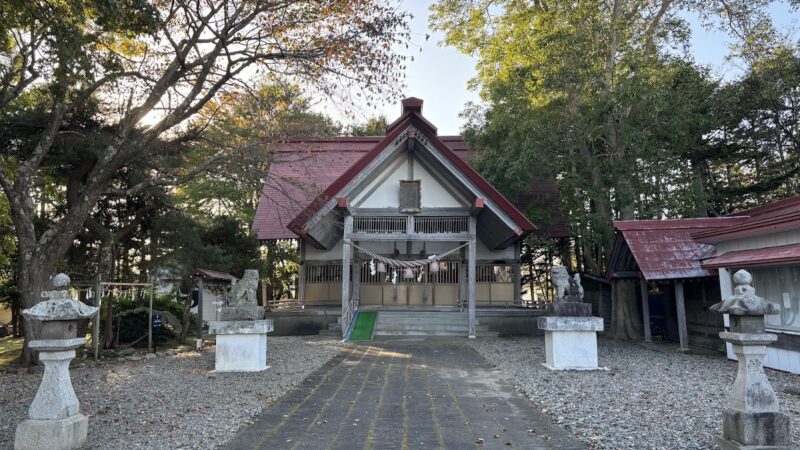
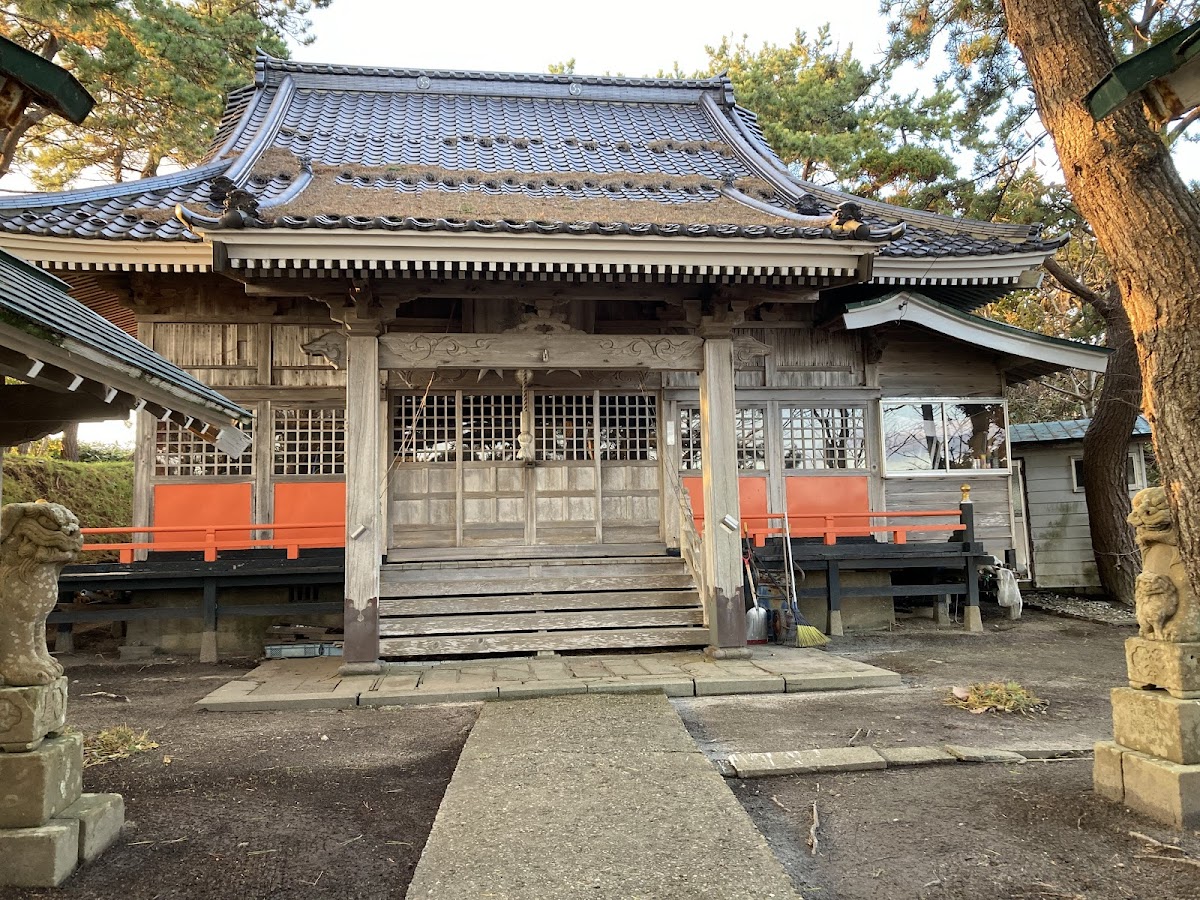
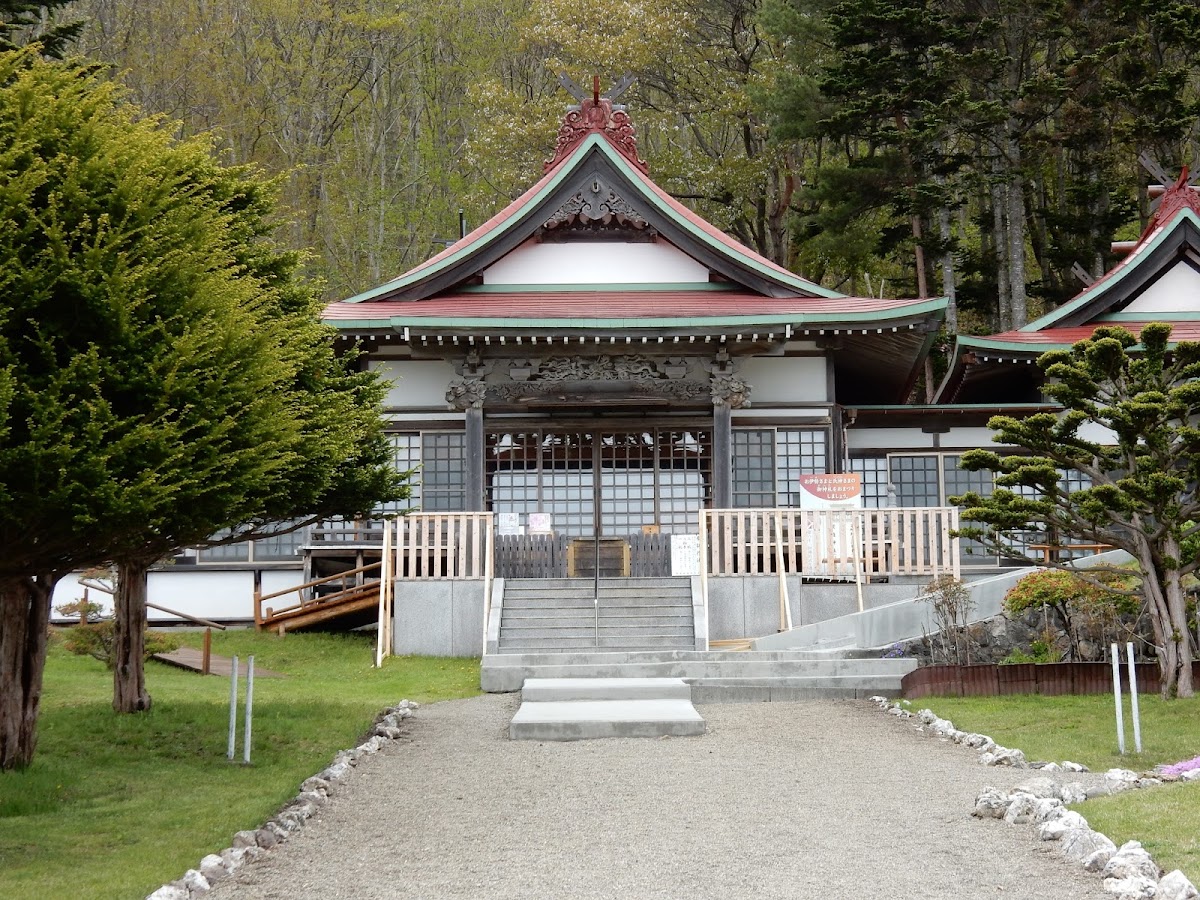
The original shrine building deteriorated over time, but it was rebuilt in 1968 to commemorate the 100th anniversary of its founding (1868). The current shrine building dates from this time and, despite having over 50 years of history, is carefully maintained by its devotees.
During this reconstruction, cherry trees from Matsumae were planted together with the help of the devotees. This is the origin of the double-flowered cherry blossom-lined approach to Ishizaki Jinushikai Shrine, which is a representative feature of the shrine today.
The Greatest Attraction of Ishizaki Jinushikai Shrine: The Double-Flowered Cherry Blossom Approach
A Tunnel of Cherry Blossoms Created by Approximately 180 Trees
The greatest highlight of Ishizaki Jinushikai Shrine is undoubtedly the approximately 180 double-flowered cherry blossom trees that adorn the approach to the shrine. The cherry trees planted on both sides of the single, sloping path leading to the shrine create a breathtaking pink tunnel during the blooming season.
The cherry trees, planted during the reconstruction of the shrine building in 1968, have now grown splendidly, spreading their branches to cover the entire approach. When in full bloom, you are surrounded by cherry blossoms overhead and on both sides, giving you the feeling of walking through a corridor of cherry blossoms.
The Best Time to Enjoy Late-Blooming Double-Flowered Cherry Blossoms
The double-flowered cherry blossoms at Ishizaki Jinushikai Shrine are characterized by blooming about half a month later than Somei Yoshino cherry blossoms. Around the time when Somei Yoshino cherry blossoms begin to fall at Goryokaku Park and other locations in Hakodate City, the cherry blossoms here reach their peak bloom from mid- to late May, making it a popular spot for enjoying the last of the cherry blossoms.
Best Viewing Period: Mid-May to Late May
Cherry Blossom Variety: Double-flowered cherry blossoms (Yaezakura)
Number of Trees: Approximately 180
Yaezakura have more petals than Somei Yoshino cherry blossoms, giving them a fuller appearance and a deeper pink color, creating a more vibrant impression. Their longer blooming period also allows for a more leisurely enjoyment of the blossoms.
From Hidden Gem to Popular Spot
Previously a hidden cherry blossom spot known only to locals, its beauty has spread through word-of-mouth and social media in recent years, attracting many visitors from outside Hakodate City. It remains a popular hidden gem, offering a quiet and peaceful cherry blossom viewing experience without the crowds of places like Goryokaku Park.
Not only are there many cherry trees along the approach to the shrine, but also around the grounds, creating a breathtaking sight when the entire shrine is enveloped in blossoms.
Spectacular Views and Highlights from the Shrine Grounds
Hilltop with Panoramic Views of the Tsugaru Strait
Ishizaki Jinushikai Shrine sits atop a small hill, offering panoramic views of the Tsugaru Strait from its grounds. On clear days, the mountains of Mount Hakodate and the Oshima Peninsula are beautifully depicted like a folding screen painting, allowing visitors to enjoy the spectacular scenery of cherry blossoms, the sea, and the mountains.
Especially during cherry blossom season, the contrast between the pink blossoms and the blue sea is stunning, making it a popular spot for photography. It’s a shrine worth visiting not only for worship but also to enjoy the scenery.
Quiet and Peaceful Atmosphere
Located a little distance from the center of Hakodate city, the shrine grounds are enveloped in a quiet and peaceful atmosphere. Even during cherry blossom season, it’s not as crowded as Goryokaku Park, allowing visitors to enjoy a leisurely visit and stroll.
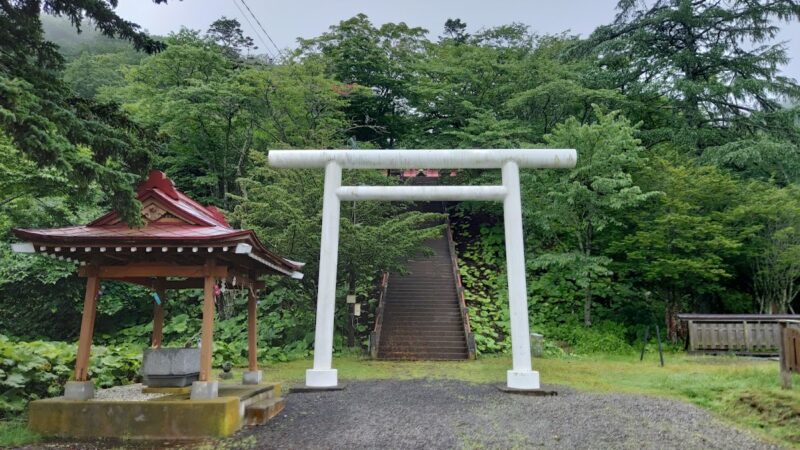
The path leading from the torii gate through the cherry blossom tunnel to the shrine building has a truly sacred atmosphere, befitting a pilgrimage route leading to a sacred space.
Access and Location Information
Basic Information
Location: 248 Shiraishi-cho, Hakodate City, Hokkaido 041-0265
Phone Number: Please contact the Hakodate Branch of the Hokkaido Shrine Association
Visiting Hours: Open all day (Please check the hours of the shrine office)
Access by Car
Ishizaki Jinushikai Shrine is easily accessible by car.
From Hakodate Airport: Approximately 15 minutes
From Hakodate Airport, head towards Esan, away from the city center. Proceed along National Route 278 (Esan National Highway) towards Esan, and after passing Zenigame-cho, there is a road on the left leading towards the mountains.
From Hakodate Station: Approximately 30 minutes
From Hakodate Station, proceed along National Route 278 towards Esan.
Important Note:
The road leading to the shrine is narrow and somewhat winding, which may cause anxiety for first-time visitors. We recommend using a car navigation system or a smartphone map app. You will be surprised by the beauty of the cherry blossom-lined path that suddenly appears before you.
Access by Public Transportation
If using public transportation, you can use Hakodate Bus, but the number of services is limited, so we recommend checking the timetable in advance. You may need to walk from the nearest bus stop.
Parking
There is parking space for visitors near the shrine, but it can get crowded during the cherry blossom season. Especially on weekends and during peak bloom, we recommend visiting earlier in the day.
Goshuin (Shrine Seal) Information
Goshuin (Shrine Seal) Issuance
Goshuin are available at Ishizaki Jinushikai Shrine. Goshuin (temple/shrine stamps) are cherished as a record of one’s connection with a shrine and proof of worship.
Goshuin Issuance: Possible (during shrine office hours)
Offering Fee: Similar to other shrines (approximately 300-500 yen)
When requesting a goshuin, it is recommended to contact the shrine office in advance to confirm their operating hours. Please note that the head priest may be absent, especially outside of cherry blossom season and on weekdays.
About Goshuincho (Goshuin Stamp Books)
Please inquire directly with the shrine regarding the availability of original goshuincho. Many people are visiting Ishizaki Jinushikai Shrine as part of their goshuin collecting trips around Hokkaido.
Enjoying Nearby Tourist Spots
Sightseeing in the Esan Area
Ishizaki Jinushikai Shrine is located on the way from central Hakodate to Esan, making it a recommended visit in conjunction with Esan sightseeing.
Esan: Known as an active volcano and famous for its azaleas. From late May to early June, you can enjoy the spectacular sight of the entire mountainside turning red.
Esan Onsen: There is a hot spring facility where you can bathe while overlooking the sea.
Cherry Blossom Spots in Hakodate
The double-flowered cherry blossoms at Ishizaki Jinushikai Shrine bloom late, allowing you to enjoy them at a different time than other cherry blossom spots in Hakodate.
Goryokaku Park: A representative cherry blossom spot in Hakodate, with approximately 1600 Somei Yoshino cherry trees. The best time to see them is from late April to early May.
Hakodate Park: A historic park opened in 1879, where you can enjoy approximately 420 cherry trees.
Planning a “two-stage cherry blossom viewing” experience—enjoying the Somei Yoshino cherry blossoms at Goryokaku Park and then the double-flowered cherry blossoms at Ishizaki Jinushikai Shrine—is also a good idea.
Manners and Precautions for Visiting a Shrine
Basic Manners for Visiting a Shrine
When visiting Ishizaki Jinushikai Shrine, please observe the following basic manners for visiting a shrine.
- Bow before passing through the torii gate: As a sign of respect before entering the sacred area, bow before the torii gate.
- Walk along the edge of the path: The center of the path is considered the path of the gods, so it is proper to walk along the edge.
- Purify yourself at the water basin: If there is a water basin, purify your hands and mouth before praying.
- Two bows, two claps, one bow: This is the basic way to pray at a shrine.
Precautions during Cherry Blossom Season
Many people visit during the cherry blossom season, but please keep the following points in mind.
- Do not break cherry branches: To protect the beautiful cherry blossoms, please refrain from breaking or damaging the branches.
- Take your trash home: To maintain the beauty of the shrine grounds, please be sure to take your trash with you.
- No trespassing on private property: There are private residences around the shrine. Please do not trespass on private property.
- Be mindful of noise: This is a quiet residential area, so please refrain from loud conversations and noise.
Regarding photography
The cherry blossom-lined approach and the views from the shrine grounds are excellent photo spots, but please be considerate of other visitors. Especially when the approach is crowded, please avoid stopping for long periods to take photos and be considerate of others.
Annual events at Ishizaki Jinushikai Shrine
Grand Festival and major Shinto rituals
Ishizaki Jinushikai Shrine holds various Shinto rituals throughout the year. For detailed schedules, please check the Hokkaido Shrine Association website or contact the shrine directly.
Generally, shrines hold major events such as the New Year’s Day Festival, the Spring Grand Festival, and the Autumn Grand Festival. Especially during the annual festival, local people gather and traditional Shinto rituals are performed.
Also a popular spot for New Year’s visits
Ishizaki Jinushikai Shrine is a popular spot for New Year’s visits, enjoyed by local residents. Its quiet and peaceful atmosphere makes it ideal for those who want to avoid crowds.
In winter, Ishizaki Jinushikai Shrine is covered in snow, offering a different charm than during cherry blossom season. Visiting the shrine amidst a snowy landscape is a unique Hokkaido experience.
Connections with the community and faith
A shrine protecting a fishing town
The Ishizaki region has long been a thriving fishing area, and Ishizaki Jinushikai Shrine, dedicated to Kaizumi-no-Okami, has been a center of faith for fishermen. For those involved in the fishing industry, praying for maritime safety and a bountiful catch, this shrine provides spiritual support.
Conveying the history of pioneering
The history of settlers from Sendai establishing themselves in this area during the Meiji era’s Hokkaido development, along with their faith, is of great significance to Ishizaki Jinushikai Shrine. It also possesses cultural heritage value, conveying the hardships and faith of the pioneers to the present day.
Center of the Local Community
The shrine is not merely a tourist spot; it also serves as a spiritual center of the local community. Ishizaki Jinushikai Shrine is still cherished as a place where local people gather, preserve traditions, and pass them on to future generations.
Visitor Voices and Experiences
Breathtaking Cherry Blossom Tunnel Experience
Many visitors have expressed their awe at the beauty of the cherry blossom tunnel along the approach to the shrine. Comments include, “I was surprised when the double-flowered cherry blossoms suddenly appeared before me in full bloom,” and “Walking through the pink tunnel is an unforgettable experience.”
Quiet and Peaceful Atmosphere
Many visitors appreciate its hidden gem appeal, with comments such as, “It wasn’t crowded like Goryokaku Park, and I could enjoy the cherry blossoms at my leisure,” and “My mind was at peace in the quiet shrine grounds.”
Spectacular Views of the Sea and Cherry Blossoms
Visitors have highly praised the scenery, with comments such as, “The contrast between the Tsugaru Strait and the cherry blossoms visible from the shrine grounds was beautiful,” and “I was satisfied with being able to take photos of the cherry blossoms with Mount Hakodate in the background.”
Summary: The Value of Visiting Ishizaki Jinushikai Shrine
Ishizaki Jinushikai Shrine is a historic shrine with a history of development during the Meiji era, dedicated to the god of the sea. However, above all, the cherry blossom tunnel along the approach to the shrine, created by approximately 180 double-flowered cherry trees that bloom from mid- to late May, boasts some of the most beautiful scenery in Hokkaido.
Located slightly away from the center of Hakodate city, it’s a hidden gem where you can quietly enjoy the cherry blossoms away from the hustle and bustle of tourists, making it well worth a visit. The late-blooming double-flowered cherry blossoms are perfect for enjoying the “last cherry blossom viewing” after the Somei Yoshino cherry blossoms have fallen.
Walking through the cherry blossom tunnel along the approach, gazing at the Tsugaru Strait from atop a small hill, and paying respects at the historic shrine buildings—such a luxurious experience is the charm of Ishizaki Jinushikai Shrine. When you visit Hakodate, be sure to take a short detour to Ishizaki Jinushikai Shrine. Enjoy the beauty of nature and the sea throughout the seasons, not just during cherry blossom season – a truly unique Hokkaido shrine experience awaits you.
The shrine is located at 248 Shiraishi-cho, Hakodate City, Hokkaido. It’s about a 15-minute drive from Hakodate Airport, along National Route 278 heading towards Esan. You can also receive a Goshuin (shrine stamp), so why not make it part of your Hokkaido shrine pilgrimage?