Meshiro Shrine (Niki-cho, Yoichi-gun, Hokkaido) | Complete Guide to History, Deities, and Access
Meshiro Shrine, located in Ginzan, Niki-cho, Yoichi-gun, Hokkaido, is a historic shrine established during the Meiji era, having been invited from Hyogo Prefecture. Founded as a spiritual haven for pioneers who migrated from Honshu to Hokkaido, it continues to attract local devotion to this day. This article provides a detailed overview of Meshiro Shrine, including its history, enshrined deities, grounds, goshuin (shrine stamp) information, and access methods.
Basic Information about Onnadai Shrine
Location: 411, Ginzan 1-chome, Niki-cho, Yoichi-gun, Hokkaido 048-2335
Deity Enshrined: Takamimusubi-no-kami
Annual Festival Date: September 10th
Shrine Style: Shinmei-zukuri
Number of Parishioner Households: Approximately 240 households
Corporate Number: 6430005008205 (Registered with the National Tax Agency: Designated October 5, 2015)
Onnadai Shrine is a shrine belonging to the Hokkaido Shrine Association and is one of five shrines in Niki-cho. Although it is an unmanned shrine, it is carefully preserved by the local community.
History and Origins of Onnadai Shrine
Founded in the Meiji Era
The history of Onnadai Shrine dates back to the Hokkaido pioneering era. In 1895 (Meiji 28), when Takigoro Yamakawa, the founder of the silver mine, emigrated from Honshu to Hokkaido, he invited a divided spirit from the Onnadai Shrine in Kunichi-Kaminomachi, Kinosaki-gun, Tajima Province (present-day Toyooka City, Hyogo Prefecture), his hometown.
By enshrining the guardian deity of his hometown in his new land, Takigoro Yamakawa made it a spiritual pillar for his arduous pioneering life. The emigraters, with their anxieties about leaving their hometown and their hopes for the new land, have cherished and revered the divided spirit of the Onnadai Shrine.
Construction and Development of the Shrine
- 1907 (Meiji 40): Officially Founded
- 1908 (Meiji 41): First Shrine Building Constructed
- 1964 (Showa 39): Current Shrine Building Constructed
Twelve years after the enshrinement in 1895 (Meiji 28), the shrine was officially founded in 1907 (Meiji 40). The following year, the shrine building was constructed, establishing its status as a center of local faith. Later, in 1964 (Showa 39), due to the aging of the previous building, the current shrine building was constructed, and it remains to this day.
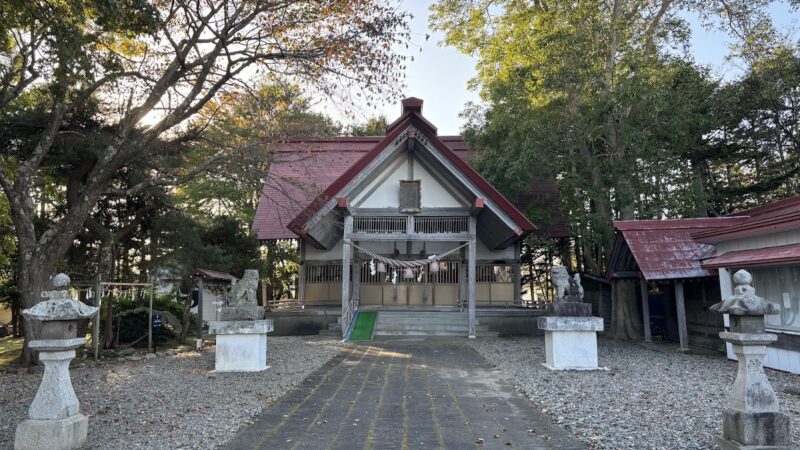
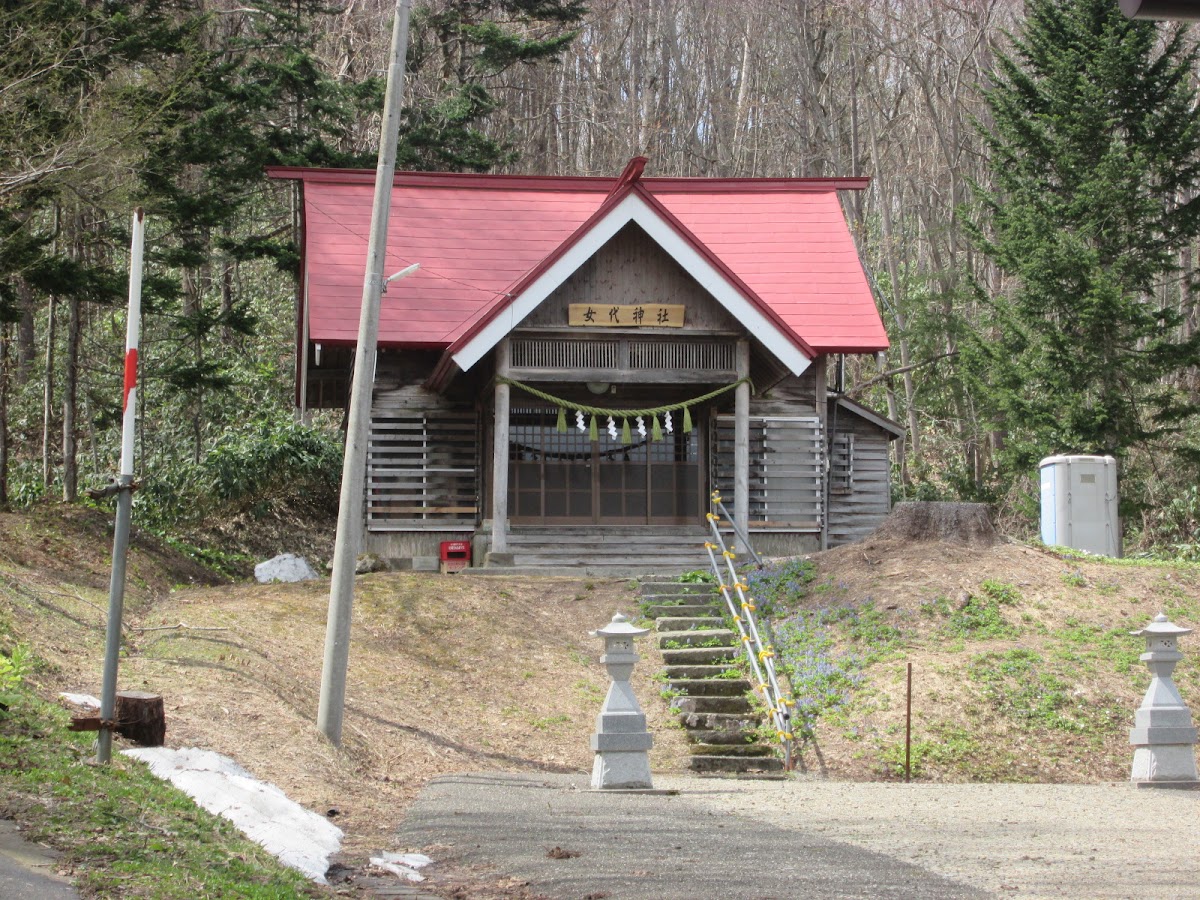
The current shrine building is constructed in the Shinmei-zukuri style, with a building area of 22 tsubo (approximately 73 square meters) and a vast grounds area of 1,380.6 tsubo (4,602 square meters).
About the Deity Enshrined: Takamimusubi-no-kami
The deity enshrined at Onnadai Shrine is Takamimusubi-no-kami. This deity is a highly revered god in Japanese mythology, considered one of the three creation gods who appeared at the time of the creation of heaven and earth.
Divine Virtues of Takamimusubi-no-Kami
Takamimusubi-no-Kami is known as the god of “connection” and is believed to possess the following divine virtues:
- Generation and Development: The power to create and grow all things
- Matchmaking: Connecting people and things
- Protection of Development: Protection of new businesses and land development
- Abundant Harvest: Prosperity and bountiful harvests in agriculture
In the challenge of developing Hokkaido, a new land, the divine virtues of generation and development and protection of development must have been a great source of support for the settlers.
Grounds and Highlights of Onnadai Shrine
The Quiet Guardian Forest of Ginzan
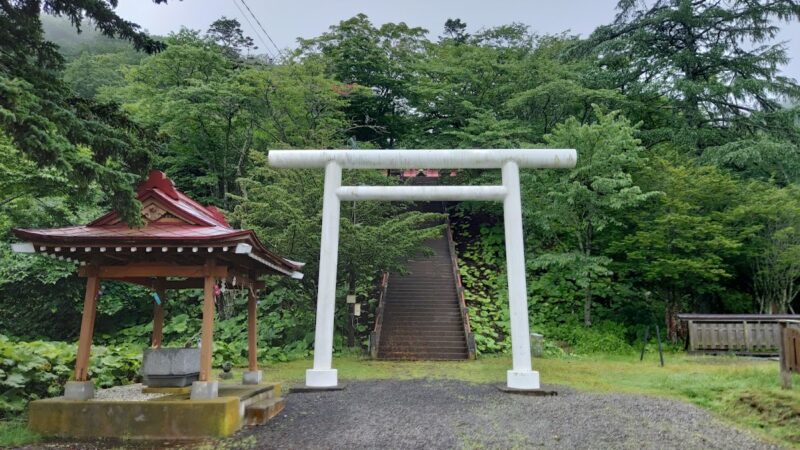
Onnadai Shrine is located in the Ginzan district of Niki Town, in a quiet environment surrounded by nature. The shrine grounds boast a vast area of 4,602 square meters and show different expressions with each season.
In spring, the fresh greenery is beautiful; in summer, it is enveloped in deep green; and in autumn, the autumn leaves color the shrine grounds. In winter, it is enveloped in a solemn atmosphere amidst the snowy landscape typical of Hokkaido.
Shinto Shrine Building
The shrine building, constructed in 1964, is built in the Shinto style, the same style as Ise Grand Shrine. Shinto style is one of the oldest forms of Japanese shrine architecture, characterized by its simple yet dignified construction.
The shrine building has an area of 22 tsubo (approximately 73 square meters), presenting a small yet majestic presence.
About Goshuin (Shrine Seals)
As Onnadai Shrine is an unmanned shrine, goshuin are not issued on the grounds. However, it is possible to obtain a goshuin for Onnadai Shrine.
Where to Obtain Goshuin
Goshuin for Onnadai Shrine can be obtained at Niki Shrine (2-14 Minamimachi, Niki-cho, Yoichi-gun). Niki Shrine is the central shrine of Niki Town and manages the goshuin (shrine stamps) for all the shrines in the town, including Onnadai Shrine.
When visiting Niki Shrine, be sure to mention that you have also visited Onnadai Shrine when requesting a goshuin. Those collecting goshuin are advised to visit Niki Shrine after visiting Onnadai Shrine.
Shrine Visiting Etiquette
Even though it is an unmanned shrine, the proper way to visit is the same as for any other shrine:
- Bow before the torii gate
- Avoid walking in the center of the path
- If there is a water basin, cleanse your hands and mouth
- Perform the “two bows, two claps, one bow” ritual in front of the main hall
- Check the cleanliness of the shrine grounds and take any trash with you.
Access Method
Access by Public Transportation
Using the JR Hakodate Main Line:
- Nearest Station: Ginzan Station
- Approximately 5 minutes on foot from the station
Ginzan Station is a small, unmanned station, but it is the most convenient for accessing Onnadai Shrine. The shrine is within walking distance from the station, and the route is relatively easy to follow.
Using Chuo Bus:
- Nearest bus stop: Ginzan Agricultural Cooperative
- Approximately 15 minutes on foot from the bus stop
If using Chuo Bus from Sapporo or Otaru, get off at the Ginzan Agricultural Cooperative bus stop. It’s a short walk from the bus stop, but you can enjoy the peaceful rural scenery along the way.
Access by Car
From Sapporo:
- Approximately 40 minutes from the Sapporo-Otaru Expressway Otaru IC via National Route 5
- Or use National Route 5 directly
From Otaru:
- Approximately 30 minutes on National Route 5 towards Yoichi/Niki
Parking: There is likely parking space for visitors on the shrine grounds, but it is recommended to check in advance.
Nearby Tourist Attractions
Niki Town is a region where fruit cultivation is thriving, with numerous tourist orchards specializing in cherries, apples, and grapes. In addition to visiting Onnadai Shrine, we recommend enjoying seasonal fruit picking.
- Niki Town Tourist Orchard: Enjoy seasonal fruit picking from cherries in June to apples in October.
- Niki Shrine: This shrine, where you can receive the Goshuin (seal) of Onnadai Shrine, is located in the town center.
- Yoichi Town: The neighboring town of Yoichi is famous as a whiskey town and has tourist facilities such as the Nikka Whisky Yoichi Distillery.
Annual Festival and Events
The annual festival of Onnadai Shrine is held every year on September 10th. The annual festival is the most important festival for the shrine, a Shinto ritual to express gratitude for the past year and pray for a bountiful harvest and safety in the coming year.
Niki Town is a region where agriculture thrives, and the timing of the annual festival coincides with the harvest season. Approximately 240 households of local parishioners gather to pray for a bountiful harvest and peace in the community.
As it is an unmanned shrine, daily religious ceremonies are limited, but it is believed that priests from Niki Shrine visit and perform the ceremonies during the annual festival.
Relationship between Niki Town and Onnadai Shrine
History of Niki Town
Niki Town is a town that developed alongside the development of Hokkaido during the Meiji era. Located in the Yoichi River basin, it is blessed with fertile land and a mild climate, and is known as a region suitable for fruit cultivation.
The Ginzan district is located in the northern part of the town, and mining development was once carried out there. The place name “Ginzan” (silver mine) also tells of this history. Onnadai Shrine is a shrine that has walked hand in hand with the development of this Ginzan district.
As the Center of the Local Community
Currently, Onnadai Shrine has approximately 240 parishioners. Although it is an unmanned shrine, the grounds are cleaned and the shrine building is maintained by local residents.
Through annual festivals and local events, Onnadai Shrine continues to play a role as the spiritual center of the Ginzan district community. The faith in the local deities, which has continued since the pioneering era, has been passed down through generations.
Relationship with Onnadai Shrine in Hyogo Prefecture
The origin of the divided spirit of Onnadai Shrine is Onnadai Shrine in Toyooka City (formerly Kinosaki District), Hyogo Prefecture. Tajima Province has long been a region where Shinto worship is prevalent, and many historically significant shrines exist there.
Immigrants such as Yamakawa Takigoro enshrined the deities of their hometowns in their new home in Hokkaido, making it a source of spiritual support. This was a common phenomenon during the Meiji era’s Hokkaido development, where people who migrated from various regions invited the divided spirits of their hometown shrines and established shrines in their new lands.
Onnadai Shrine can be considered a valuable example of the religious bond connecting Honshu and Hokkaido.
Points and Etiquette for Visiting the Shrine
Best Time to Visit
While Onnadai Shrine is open year-round, the following times are particularly recommended:
- Spring (May-June): Beautiful fresh greenery and mild weather. It’s also cherry-picking season.
- Autumn (September-October): The annual festival is held, and the autumn foliage is beautiful. It’s also apple-picking season.
- Summer (July-August): Enjoy a refreshing visit amidst the lush greenery of the shrine grounds.
Winter (November-March) is snowy, so careful preparation and caution are necessary for visiting.
Guidelines for Visiting Unmanned Shrines
Although Onnadai Shrine is an unmanned shrine, please observe the following points when visiting:
- With Respect: Even without a resident priest, it is a sacred place where deities are enshrined.
- Keep it Clean: Always take your trash with you and avoid littering the shrine grounds.
- Worship Quietly: Worship quietly without shouting or making noise.
- Photography: Taking photographs of the shrine buildings is generally acceptable, but please do so with respect.
- Offering: If there is an offering box, please offer a donation with gratitude.
The Position of Onnadai Shrine in Hokkaido’s Shrine Culture
There are approximately 800 shrines in Hokkaido, most of which were founded during the pioneering period after the Meiji era. Onnadai Shrine is one of them, a typical pioneering shrine founded by immigrants from Honshu who invited a divided spirit from their hometown shrine.
Characteristics of Shrines in Hokkaido
- Recent Founding Period: Most were founded after the Meiji era.
- Divided Spirits from Honshu Shrines: Divided spirits were invited from shrines in the immigrants’ hometowns.
- Guardian Nature of Pioneers: Plays a role in praying for safety and prosperity in new lands.
- Center of Local Communities: Functions as a spiritual anchor for immigrants.
Onnadai Shrine possesses all of these characteristics and is an important presence in understanding Hokkaido’s shrine culture.
Shrines in Niki Town
Niki Town has five shrines, including Onnadai Shrine:
- Niki Shrine: The town’s central shrine (2-14 Minamimachi)
- Onnadai Shrine: Guardian deity of the Ginzan district (1-411 Ginzan)
- Three other shrines
These shrines are still cherished by the local people as spiritual pillars of each community in Niki Town.
Summary
Onnadai Shrine is a valuable shrine that conveys the history of Hokkaido’s development during the Meiji era. It began when Takigoro Yamakawa, who emigrated from Hyogo Prefecture, invited the deity from his hometown, and for over 120 years it has been a place of worship for the people of the Ginzan area.
With Takamimusubi-no-kami as its enshrined deity, Onnadai Shrine offers divine blessings for creation, development, and protection of pioneers, making it a reassuring presence for those embarking on new challenges or reaching milestones in their lives. Although it is an unmanned shrine, it is carefully preserved by the local community, allowing visitors to worship in a quiet and solemn atmosphere.
When visiting Niki Town, why not visit Onnadai Shrine along with fruit picking in the orchards and reflect on the history from the pioneering era? You can obtain a Goshuin (shrine stamp) at Niki Shrine, so we recommend visiting both.
Spend a peaceful moment at Onnadai Shrine, where Hokkaido’s rich nature and the history of pioneering breathe life into the land.