Kamui Shrine Complete Guide | Thorough Explanation of History, Goshuin (Shrine Seals), and Access Information
What is Kamui Shrine?
Kamui Shrine is a shrine located at 10, Raikishi-cho, Shakotan-cho, Shakotan-gun, Hokkaido. Formerly a village shrine, it has been revered by local people since ancient times as a god protecting safety at sea.
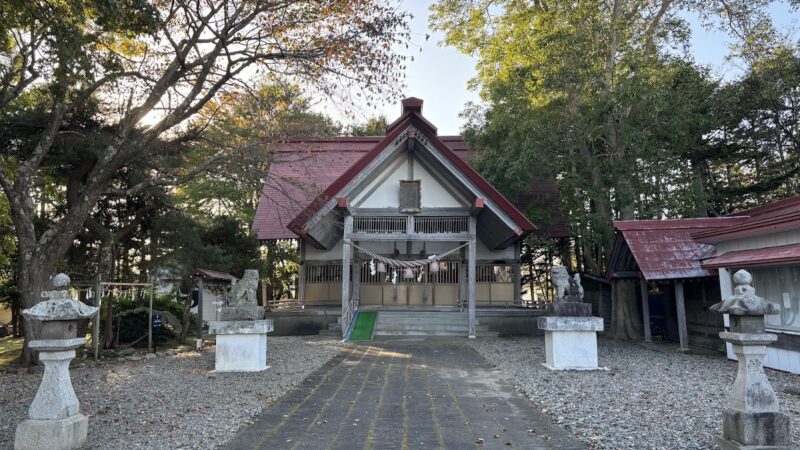
Located on the hillside overlooking the beautiful sea of the Shakotan Peninsula, this shrine, deeply connected to Cape Kamui, is an important presence that conveys the history and culture of Hokkaido to the present day. In particular, the architectural style of the main hall is the Shinmei-zukuri style, which is rare in Hokkaido, and it is a valuable building designated as a prefectural cultural property.
Deities Enshrined at Kamui Shrine
The following four deities are enshrined at Kamui Shrine:
Owatatsumi-no-kami
Owatatsumi-no-kami, known as the god of the sea, is the god who presides over the safety of voyages and the protection of maritime traffic. As one of the principal deities of Kamui Shrine, it has been the object of worship for fishermen and sailors navigating the rough seas of Shakotan.
Shinatsuhiko-no-kami and Shinatsuhime-no-kami
Shinatsuhiko-no-kami and Shinatsuhime-no-kami, gods who control the wind, are worshipped as objects of prayer for safe voyages. In the harsh sea conditions of the Shakotan Peninsula, the worship of wind gods held particular importance.
Toyouke-hime-no-kami
Toyouke-hime-no-kami, the goddess who controls food and grains, is worshipped as a protector of regional abundance and the stability of people’s lives.
These deities remain deeply intertwined with the lives of the people living in Shakotan, a land surrounded by the sea, and continue to be worshipped today.
History and Origins of Kamui Shrine
Legend of Minamoto no Yoshitsune and the Origin of its Founding
The origins of Kamui Shrine are rooted in a legend concerning Minamoto no Yoshitsune. When Yoshitsune fled to Ezo (Hokkaido), he encountered fierce winds and waves at Cape Kamui, preventing his ship from proceeding.
Therefore, Yoshitsune enshrined Owatatsumi-no-kami and Shinato-no-kami at Kamui Rock, which resembles a figure in ceremonial robes and crowns, far offshore from the cape, and prayed for safe passage. It is said that he was then able to pass safely.
This legend forms the basis of the faith at Kamui Shrine, and Kamui Rock itself became the foundation for its reverence as a sacred object.
Connection with the Ainu People
Kamui Rock was also revered as “Kamuy” (god) by the Ainu people. In the Shakotan Peninsula, where many place names derived from the Ainu language remain, Kamui Shrine is a symbolic place where Ainu and Japanese cultures intersect. The names “Shiyakotan Myojin” and “Okamui Myojin” also utilize Ainu place names, demonstrating the cultural layering of this region.
Development during the Edo Period
During the Kanbun era (1661-1673), under the leadership of Fujikura Kinbei, the local administrator of the Matsumae Domain, the number of migrant fishermen increased, further spreading the belief in prayers for safe voyages.
The shrine, originally built in Kamisaki Village, was enshrined as “Shiyakotan Myojin” and “Okamui Myojin,” using Ainu place names, and became a spiritual center for the region.
Changes in the Modern Era
Under the Meiji era’s shrine ranking system, Kamui Shrine was designated a Gosha (village shrine), establishing its position as an important shrine in the region. Since then, the shrine buildings have been rebuilt and repaired, leading to its current appearance.
Located on the hillside overlooking the Kishi district, the current site welcomes worshippers in a tranquil environment surrounded by forest.
Hokkaido Cultural Property Designated Shinmei-zukuri Shrine
What is Shinmei-zukuri?
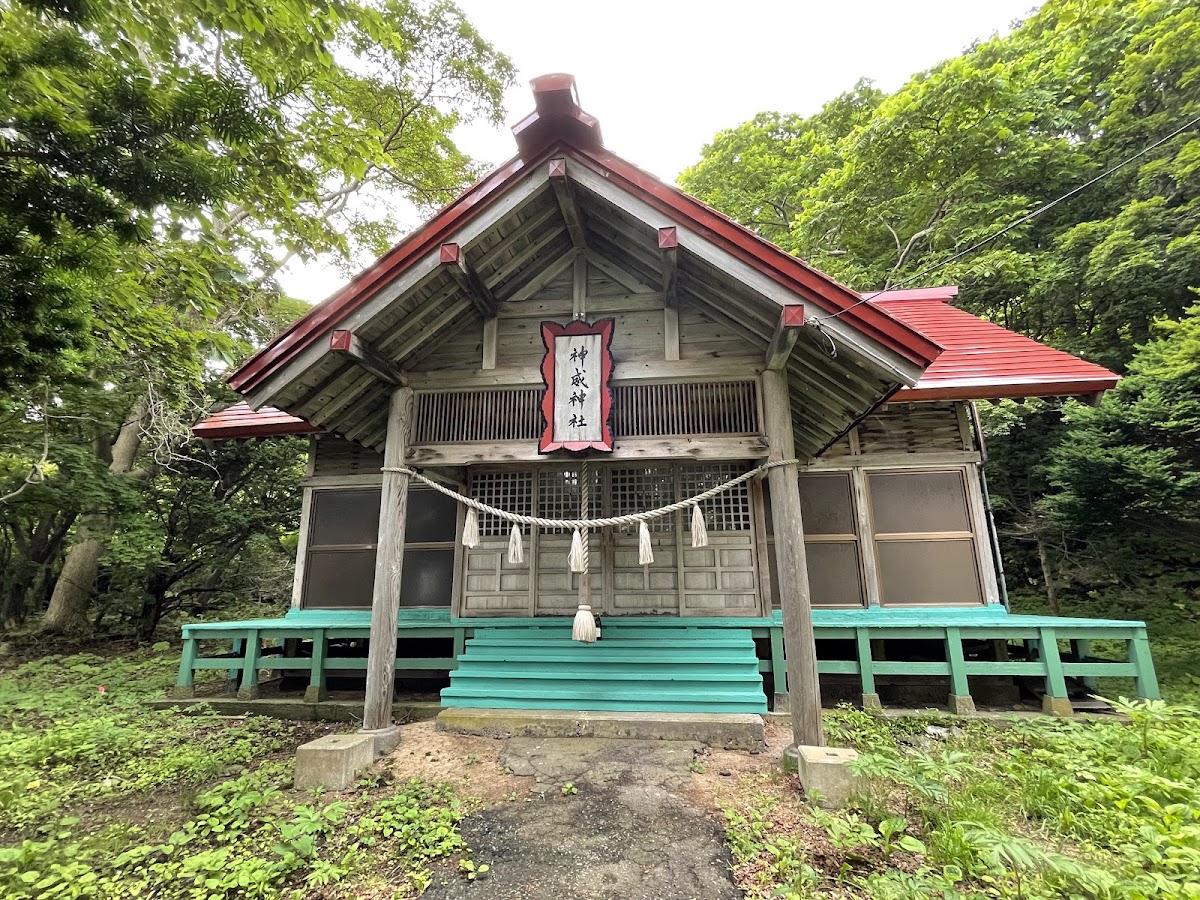
The main hall of Kamui Shrine is built in the Shinmei-zukuri architectural style, a style rarely seen in Hokkaido. Shinmei-zukuri is one of the oldest shrine architectural styles in Japan, exemplified by Ise Grand Shrine, and is characterized by its simple yet dignified beauty.
With its gable roof, flat entrance, and ridge adorned with chigi and katsuogi, the Kamui Shrine’s building possesses typical Shinmei-zukuri features, making it an extremely valuable structure in the Hokkaido region.
Architectural Features
The shrine is constructed using cypress wood and finished with colorful plaster. While the construction date and builder are unknown, its excellent craftsmanship and state of preservation have led to its designation as a Hokkaido cultural property.
The dignified appearance of the shrine buildings leaves a deep impression on visitors, reflecting the high status of the shrine.
Cultural Value
While most shrine architecture in Hokkaido dates back to the pioneering era, the Shinto shrine buildings of Kamui Shrine, built in the Shinmei-zukuri style, are a valuable cultural heritage that conveys the traditional architectural style of Honshu to the northern land.
Its designation as a prefectural cultural property signifies the official recognition of its historical and architectural value, making it an important resource for the study of shrine architecture in Hokkaido.
Highlights of the Shrine Grounds
Stone Lantern from the Second Year of Kaei
Within the shrine grounds stands a stone lantern inscribed with the date of the second year of Kaei (1849). This lantern, with a history of over 170 years, is a witness to history, having watched over the safety of the seas since the late Edo period.
As a valuable cultural asset imbued with the deep faith of the time and the prayers of the people who lived by the sea, it still stands quietly within the shrine grounds.
A Sacred Ground Surrounded by Forest
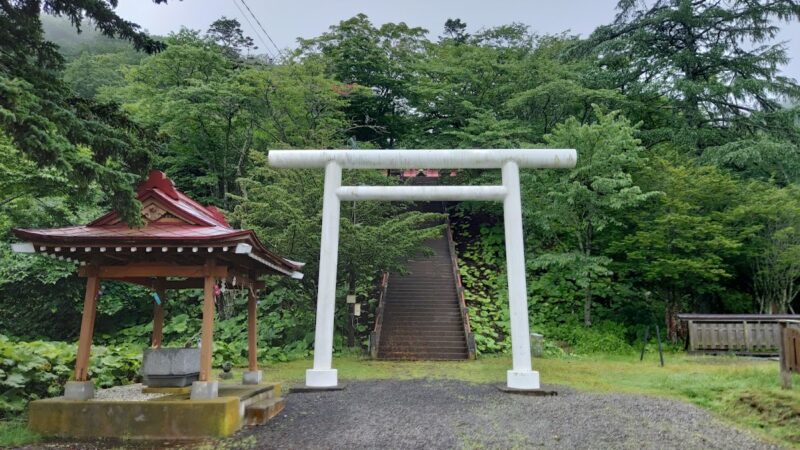
Kamui Shrine is surrounded by a lush forest, and simply walking along the approach to the shrine evokes a refreshing feeling. The sacred grounds, integrated with the nature of Shakotan, offer a peaceful retreat from the hustle and bustle of the city, providing tranquility to visitors.
A View Overlooking the Raigishi District
From the shrine, situated on the hillside, you can overlook the village of Raigishi and the Shakotan Sea. Fishermen of the past likely prayed for safe voyages from this very spot, gazing out at the sea.
Goshuin Information
Goshuin (shrine stamps) are available at Kamui Shrine. These stamps are popular among visitors as a memento of their visit and as proof of their faith.
Features of the Goshuin
The goshuin at Kamui Shrine features the shrine’s name and date of visit written in ink, along with the shrine’s seal. The simple yet powerful calligraphy reflects the shrine’s status as a prestigious local shrine in Hokkaido.
Points to Note When Receiving a Goshuin (Shrine Stamp)
A Goshuin is proof of your visit, so be sure to receive it only after you have completed your prayers. Bring your Goshuincho (stamp book), or in some cases, pre-printed Goshuin may be available.
The shrine office may not always be open, so it is recommended to check in advance.
Annual Festival and Events
The annual festival of Kamui Shrine is held on July 17th. This is the most important festival for the shrine, and once a year, a Shinto ritual is performed to express gratitude to the enshrined deity.
It is an important opportunity for local people to gather and for the faith of Kamui Shrine to be passed down to the next generation through traditional Shinto rituals.
Access Information
Location
10, Raikishicho, Shakotan-cho, Shakotan-gun, Hokkaido 046-0323
Access by Car
From New Chitose Airport
- Approximately 200 minutes by car (approx. 135 km)
- Take the expressway towards Sapporo, then take National Route 5 and National Route 229 to the Shakotan Peninsula.
From Sapporo City
- Approximately 150 minutes by car (approx. 120 km)
- Take National Route 5 towards Otaru, then National Route 229 to the Shakotan Peninsula.
From Otaru City
- Approximately 90 minutes by car (approx. 70 km)
- Use National Route 229 (Shakotan Peninsula Scenic Byway)
Access by Public Transportation
From JR Otaru Station
- Approximately 130 minutes by Hokkaido Chuo Bus “Shakotan Line”
- Get off at the “Kishi” bus stop and walk for about 5 minutes (approximately 500m).
Bus services are limited, so we recommend checking the timetable in advance. Please note that the number of services may be reduced, especially during winter.
Parking
While there is limited space around the shrine, we recommend checking the parking situation for visitors in advance.
Relationship with Cape Kamui
An essential aspect of understanding Kamui Shrine is its deep connection with Cape Kamui.
The Faith of Kamui Rock
Kamui Rock, towering offshore from Cape Kamui, is a sacred site that became the origin of the faith of Kamui Shrine. This rock, said to resemble a figure in ceremonial robes, remains sacred as the place where Owatatsumi-no-kami and Shinato-no-kami were enshrined.
The Stunning Shakotan Blue View
Cape Kamui is a scenic spot known for its crystal-clear blue sea, known as “Shakotan Blue.” After visiting Kamui Shrine, a visit to Cape Kamui will allow you to truly appreciate the deep connection between the shrine’s faith and this beautiful yet harsh sea.
Charenka Trail
Cape Kamui has a walking trail called “Charenka Trail,” which allows you to walk to the tip of the cape. Walking this path while reflecting on the history of Kamui Shrine, which has prayed for safety at sea, will give you a deeper understanding.
Nearby Tourist Attractions
Nature of the Shakotan Peninsula
The Shakotan Peninsula, where Kamui Shrine is located, is designated as part of the Niseko-Shakotan-Otaru Coast National Park, and is attractive for its beautiful coastline and abundant nature. You can enjoy the nature of the Shakotan Peninsula in conjunction with visiting the shrine.
Seafood of Shakotan
Shakotan Town is famous for its seafood, especially fresh sea urchins. Many tourists visit, especially during the sea urchin fishing season from June to August. After offering thanks for safety at sea at Kamui Shrine, enjoying the bounty of Shakotan’s sea is another highlight of your trip.
Shimamui Coast
Selected as one of “Japan’s Top 100 Beaches,” Shimamui Coast is a spectacular spot where you can see the Shakotan Blue sea up close. It’s relatively close to Kamui Shrine, and we recommend visiting both.
Manners and Points for Visiting a Shrine
Etiquette for Visiting a Shrine
The basic etiquette for visiting a shrine is “two bows, two claps, one bow.” Bow once before passing through the torii gate, and walk along the path avoiding the center. Cleanse your hands and mouth at the water basin before proceeding to the main hall, offer your donation, and then perform the two bows, two claps, one bow ritual.
Attire
There are no specific dress code requirements, but please wear clean clothing appropriate for visiting a sacred area. Since it’s located on a hillside, comfortable walking shoes are recommended.
Photography
Photography is generally permitted within the shrine grounds, but there may be restrictions inside the main hall or during religious ceremonies. Please observe proper etiquette when taking photos.
The Charm of Kamui Shrine
The Weight of History
Beginning with the legend of Minamoto no Yoshitsune, its fusion with Ainu culture, the faith of fishermen in the Edo period, and continuing to the present day, Kamui Shrine has a long and rich history. This weight of history is a major part of the shrine’s charm.
Architectural Beauty
The shrine building, built in the Shinmei-zukuri style, which is rare in Hokkaido, has high architectural value and leaves a deep impression on those who see it. The beauty of the shrine, built with cypress wood and plaster, continues to fascinate people across generations.
Harmony with Nature
Located in a quiet environment surrounded by forest and overlooking the sea of Shakotan, it embodies the essence of Japanese shrines, where nature and faith are integrated.
Connection to the Community
Rooted in the community as a local shrine, Kamui Shrine continues to attract the faith of local people, functioning not only as a tourist destination but also as a living place of worship.
Charm Depending on the Season
Spring (April-June)
A beautiful season of fresh greenery as the snow melts. The trees in the shrine grounds are budding, creating a vibrant and life-filled atmosphere.
Summer (July-August)
July, when the annual festival is held, is the most lively time for Kamui Shrine. It’s also the sea urchin fishing season in Shakotan, allowing visitors to truly appreciate the bounty of the sea. The Shakotan Blue sea is at its most beautiful during this season.
Autumn (September-November)
The shrine grounds, adorned with autumn leaves, are exceptionally beautiful. It’s the perfect season for quiet worship in the crisp, clear air.
Winter (December-March)
The shrine grounds, covered in snow, are enveloped in a solemn atmosphere. However, the Shakotan Peninsula experiences harsh winter weather conditions, and road conditions require careful attention. Please check the latest information before visiting.
Summary
Kamui Shrine is a valuable shrine that conveys the history and culture of the Shakotan Peninsula in Hokkaido. Kamui Shrine possesses many attractions, including its ancient history beginning with the legend of Minamoto no Yoshitsune, its fusion with Ainu culture, its rare Shinto-style shrine buildings in Hokkaido, and the reverence for Kamui Rock.
As a god protecting safety at sea, Kamui Shrine has been revered by fishermen since the Edo period and continues to be a spiritual anchor for the local people today.
Visiting Kamui Shrine, nestled amidst the beautiful nature of the Shakotan Peninsula, will allow you to experience the depth of Hokkaido’s history and the prayers of people who live in harmony with the sea. It’s a place you should definitely visit, along with Cape Kamui and the bounty of Shakotan’s seafood.
Praying for safe voyages and daily peace, and reflecting on Shakotan’s history and culture through your visit, will surely be a memorable experience.