Complete Guide to Tomari Inari Shrine: Origins and Benefits of a Historic Shrine in Furubira District, Hokkaido
Tomari Inari Shrine, located in Tomari Village, Furubira District, Hokkaido, is a shrine with a long history and prestige dating back to the Edo period. It enshrines the spirit of Fushimi Inari Shrine in Kyoto and is known as a unique shrine among Hokkaido’s shrines, featuring a main hall constructed entirely of zelkova wood without the use of nails. This article comprehensively explains everything you need to know before visiting Tomari Inari Shrine, including its detailed history, enshrined deities, architectural features, access methods, and benefits.
Basic Information on Tomari Inari Shrine
Tomari Inari Shrine is a shrine located in Tomari Village, Furubira District, Hokkaido. It is a historical shrine that was designated a village shrine in 1875 (Meiji 8). Currently, it is a religious corporation and serves as a center of faith for the local residents.
Location and Access
Location: Tomari Village, Furubira District, Hokkaido
Access Method:
- Take the Chuo Bus bound for Kaminai from Iwanai
- Get off at the Tomari Town Hall bus stop
- Approximately 10 minutes on foot from the bus stop
If using public transportation, it is recommended to check the timetable in advance as the number of buses is limited. Visiting by private car is also possible, and there is parking available nearby.
Shrine Rank and Affiliation
- Former Shrine Rank: Village Shrine (ranked in 1875)
- Affiliation: Hokkaido Shrine Association
- Legal Status: Religious Corporation (established in 1946)
Founding and History of Tomari Inari Shrine
The history of Tomari Inari Shrine is deeply intertwined with the history of Hokkaido’s development. It is a shrine that originated and developed within the unique economic system of Hokkaido during the Edo period, known as the “place contract system.”
Origin of the Shrine
The founding of Tomari Inari Shrine was carried out by Tatsuya Shinsuke (Fukushimaya), a contractor for the Kou trading post. It is said that Tatsuya Shinsuke prayed for the prosperity of his family business and the tranquility of the trading post, and enshrined the sacred seal, a family treasure of the Tatsuya family located in Omi Province, in Tomari (present-day Tomari Village).
A trading post contractor was a merchant who, from the Edo period to the early Meiji era, contracted trading rights from the Matsumae Domain and conducted trade with the Ainu and managed fishing operations. The Tatsuya family (Fukushimaya) was a powerful merchant family that contracted the Kou trading post, and their deep faith led to the establishment of the shrine.
Enshrinement of the Divine Spirit in 1801
After some time had passed since the founding, in 1801 (Kyowa 1), the divine spirit of Fushimi Inari Shrine in Kyoto was enshrined as the principal deity. Fushimi Inari Shrine is the head shrine of all Inari shrines nationwide, and by inviting its divine spirit, Tomari Inari Shrine became part of the legitimate lineage of Inari worship.
Originally worshipped as the god of agriculture and grain, Inari came to be widely worshipped as the god of business prosperity, family safety, and the fulfillment of wishes over time. In the pioneering settlements of Hokkaido, the worship of Inari was an expression of the earnest wishes of people hoping for abundant harvests and business prosperity.
Enshrinement in 1844
In 1844, two more divine spirits were enshrined.
- Branch spirit of Sanuki Konpira Shrine: A branch spirit of Konpira-gu Shrine in Kagawa Prefecture. Konpira-jin, known as the guardian deity of maritime safety and navigation, was a very important object of worship in Tomari Village, which is surrounded by the sea.
- **Division of the Ōwatatsumi-no-kami of Harima Province’s Kai Shrine: Ōwatatsumi-no-kami is the deity of the Kai Shrine in Hyogo Prefecture. As a god of the sea, he protects the safety of those engaged in fishing and ensures bountiful catches.
Through these enshrines, Tomari Inari Shrine, while centered on Inari worship, established a form of worship suited to the characteristics of this region, enshrining gods related to the sea.
Notable Main Hall Architecture
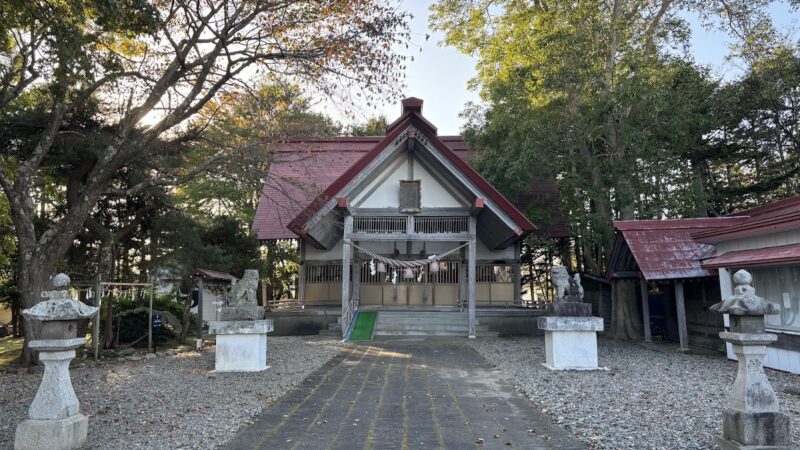
One of the most distinctive features of Tomari Inari Shrine is its main hall architecture. Built in 1862 (Bunkyū 2), this main hall is a valuable cultural asset, a culmination of architectural skill and faith.
Main Hall Construction in 1862 (Bunkyū 2)
In 1862 (Bunkyū 2), the main hall construction project began thanks to the efforts of the site contractor, Tatsuya Shinbei, the manager, Masukawa Ichirobei, and the village headman, Wadaya Rikizō.
Construction History:
- Client: Ordered and commenced construction in Shiokoshi, Dewa Province (present-day Yamagata Prefecture)
- Materials: Carved zelkova wood used
- Transportation Method: Transported by sea to Hokkaido via cargo ships
- Construction Technique: Nail-free, wedge-jointed construction using zelkova wood
Nail-Free, All-Zelkova Wood Construction Technique
The most distinctive feature of the main hall is its traditional woodworking technique: “nail-free, wedge-jointed construction using zelkova wood.”
Technical Features:
- Wedge Fixing: A technique that uses wedges to secure the wood, achieving a strong structure without the use of metal.
- All-Zelkova Wood Construction: By using zelkova wood throughout, durability and aesthetics are achieved.
- Carved Decoration: Exquisite carvings by craftsmen from Dewa Province are applied.
This architectural technique represents the pinnacle of traditional Japanese temple carpentry skills, and even after more than 150 years, it maintains its beauty and robustness. Its preservation over such a long period under the harsh climate of Hokkaido speaks volumes about the high level of architectural skill.
Changes in the Worship Hall
In contrast to the main shrine, the worship hall has changed over time.
- Meiji Era: The worship hall was remodeled.
- Showa 16 (1941): Expansion and renovation were carried out.
The worship hall is a place where worshippers offer prayers, and it has been renovated to meet the needs of the times. While the main shrine retains its Edo period appearance, the worship hall has undergone modern renovations prioritizing functionality.
Deities and Blessings
Tomari Inari Shrine enshrines multiple deities, each believed to bestow different blessings.
Main Deity: Inari Okami
Inari Okami is a general term for the Inari deities, centered around Ukanomitama no Okami.
Main Blessings:
- Abundant harvest
- Business prosperity
- Family safety
- Industrial development
- Fulfillment of wishes
Inari deities are said to derive their name from “Inari” (rice harvest), and were originally agricultural deities. However, since the Edo period, they have also been widely worshipped as deities of commerce. During the Hokkaido pioneering era, they became a source of support for people hoping for success in their new land.
Enshrined Deity: Konpira-jin
Konpira-jin, invited from Sanuki Konpira Shrine, is the guardian deity of maritime safety and navigation.
Main Benefits:
- Maritime Safety
- Navigational Safety
- Prosperous Fishing
- Traffic Safety
Tomari Village is a fishing town facing the Sea of Japan, and the protection of Konpira-jin was essential for those who made their living from the sea. Even today, it attracts the faith of those involved in fishing and shipping.
Enshrined Deity: Owatatsumi-no-kami
Owatatsumi-no-kami, invited from Harima-no-kuni Kaijinja Shrine, is a sea god appearing in Japanese mythology.
Main Benefits:
- Protection from Maritime Disasters
- Abundant Catch
- Protection from Water Disasters
- Safety at Sea
Owatatsumi-no-kami is a sea god born from the divine creation of Izanagi and Izanami, and is revered as the being who governs the sea itself. Along with Konpira-sama, it plays an important role as a guardian deity for people involved with the sea.
Developments since the Meiji Era
Designated as a Village Shrine in 1875 (Meiji 8)
In 1875 (Meiji 8), Tomari Inari Shrine was designated as a village shrine. This meant that it was officially recognized as the central shrine of the village under the modern shrine system established by the Meiji government.
With this designation as a village shrine, Tomari Inari Shrine gained the following significance:
- Establishment of official status
- Improvement of its status as a shrine
- Strengthening of its religious centrality in the region
Incorporation as a Religious Corporation in 1946 (Showa 21)
In 1946 (Showa 21), after World War II, Tomari Inari Shrine became a religious corporation. This indicates that, due to the post-war religious system reforms, shrines restarted as religious corporations independent of the state.
With this incorporation as a religious corporation:
- Acquisition of independent legal personality
- Establishment of an autonomous management system
- Building new relationships with the local community
And it continues to function as a center of faith in the region to this day. ## Annual Events at Tomari Inari Shrine
Tomari Inari Shrine holds various Shinto rituals throughout the year. As a shrine in Hokkaido, it is characterized by festivals that cherish local traditions and the changing seasons.
Main Annual Events
Hatsumode (January 1st-3rd)
The shrine is bustling with worshippers praying for happiness and safety in the new year. Many people visit to pray for business prosperity and family safety.
Hatsuumasai (First Horse Day of February)
One of the most important festivals for Inari shrines. This festival commemorates the founding date of Fushimi Inari Taisha and prays for a bountiful harvest and business prosperity.
Reitaisai (Summer)
The most important annual event of the shrine, celebrated by all local residents. A portable shrine procession and offering ceremonies may also be held.
Autumn Grand Festival (Autumn)
This festival expresses gratitude for the harvest and prays for a bountiful harvest in the following year.
Great Purification Ceremony (June & December)
This Shinto ritual purifies and cleanses away the sins and impurities accumulated over the past six months.
The History of Tomari Village and the Role of the Shrine
To understand Tomari Inari Shrine, it is important to know the historical background of Tomari Village.
The Place Contract System and Tomari Village
During the Edo period, the Matsumae Domain in Hokkaido (then known as Ezo) adopted a place contract system. A “place” refers to a trading area, and contractors received trading rights for specific areas from the Matsumae Domain, engaging in trade with the Ainu and managing fishing operations.
The Tatsuya family (Fukushima-ya), who contracted for the Kou place (the area including Tomari Village), greatly contributed to the economic development of this region. The founding of Tomari Inari Shrine was not merely the construction of a religious facility, but also a symbol of the development and prosperity of this region.
Shrines and Local Communities
Tomari Inari Shrine has functioned as a spiritual pillar of the local community from the pioneering era to the present day.
The Role of the Shrine:
- Center of faith
- Venue for local events
- Point of community unity
- Hub for cultural transmission
- Symbol of historical identity
Especially in the pioneering land of Hokkaido, shrines served as a spiritual anchor for people who had left their hometowns and became the core of community formation in their new land.
Characteristics of Inari Faith
Understanding the basic characteristics of Inari faith before visiting Tomari Inari Shrine will allow for a deeper pilgrimage experience.
Symbols of Inari Shrines
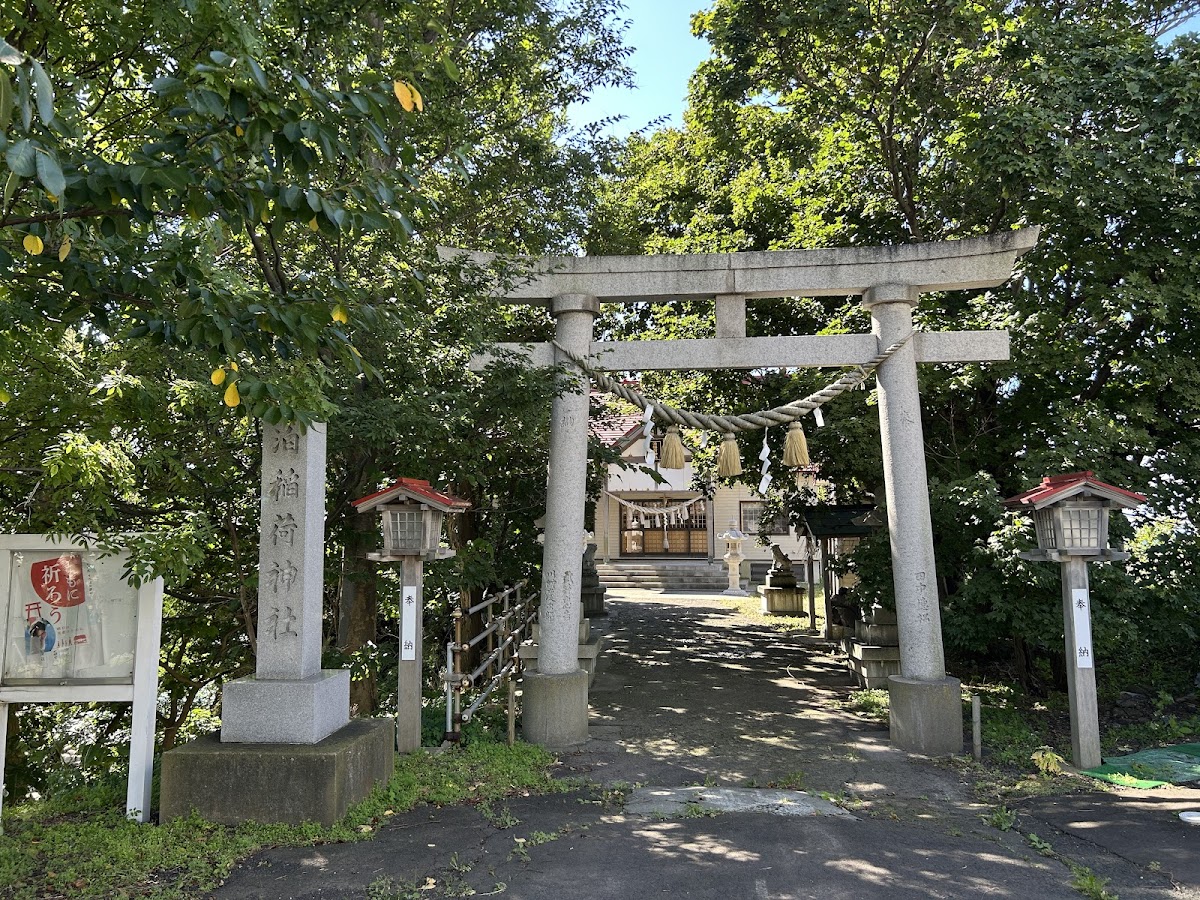
Red Torii Gate
A distinctive symbol of Inari shrines. Red is considered a symbol of protection against evil and vitality, indicating the entrance to the sacred area.
White Fox (Divine Messenger)
White foxes, considered messengers of the Inari god, are seen at many Inari shrines. The fox is not the Inari god itself, but rather a being that conveys the will of the god.
Connections to Inari Faith Across Japan
Tomari Inari Shrine received its divine spirit from Fushimi Inari Taisha in Kyoto and is part of a network of approximately 30,000 Inari shrines throughout Japan.
Relationship with Fushimi Inari Taisha:
- The head shrine, founded in 711 AD
- The central figure among all Inari shrines nationwide
- The source of the divine spirit of Tomari Inari Shrine
Due to this connection, Tomari Inari Shrine, despite being located in Hokkaido, inherits the tradition of Inari faith throughout Japan.
Manners and Etiquette for Visiting the Shrine
We will guide you through the basic etiquette for visiting Tomari Inari Shrine.
Basic Etiquette for Visiting a Shrine
- When passing through the torii gate: Bow before entering the shrine grounds.
- Purification at the water basin:
- Take the ladle with your right hand and purify your left hand.
- Switch the ladle to your left hand and purify your right hand.
- Switch the ladle back to your right hand, receive water in your left hand, and rinse your mouth.
- Finally, stand the ladle upright to purify the handle.
- Worship at the main hall:
- Place your offering in the offering box.
- Ring the bell.
- Bow twice, clap twice, and bow once.
- Silently state your wish.
Attire for Visiting a Shrine
There are no specific dress code requirements, but it is desirable to wear clothing that reflects the sacred nature of the place.
- Clean attire
- Avoid excessive exposure
- Remove hats and sunglasses in front of the main shrine
Nearby Attractions
When visiting Tomari Inari Shrine, we recommend also visiting the tourist spots around Tomari Village.
Nature of Tomari Village
Scenery of the Sea of Japan
Tomari Village faces the Sea of Japan, offering beautiful coastline and sunset views.
Benten Island
A symbolic island of Tomari Village, well worth visiting in conjunction with a shrine visit.
Nearby Tourist Attractions
Shakotan Peninsula
A peninsula characterized by its crystal-clear waters and towering cliffs, popular as a driving route.
Kaminai Village
An adjacent village with tourist resources such as Nishinokawara and hot springs.
Iwanai Town
A town serving as an access point, featuring Iwanai-dake mountain, hot springs, and art museums.
Position in Hokkaido’s Shrine Culture
Tomari Inari Shrine holds a special place in the history of shrines in Hokkaido.
Shrine Architecture of the Pioneer Era
While many shrines in Hokkaido were built during the pioneering period after the Meiji Restoration, Tomari Inari Shrine has a history dating back to the Edo period. In particular, the main hall, built in 1862 (Bunkyu 2), is among the oldest existing shrine buildings in Hokkaido and is historically valuable.
Cultural Connections with Honshu
The construction of the main hall, commissioned from Dewa Province (Yamagata Prefecture), is evidence of cultural exchange between Hokkaido and Honshu. The large-scale project, involving the transportation of zelkova wood by cargo ships, speaks to the economic power and deep faith of the time.
Regional and Universal Characteristics
Tomari Inari Shrine combines the universal Inari faith, which enshrines the deity of Fushimi Inari Taisha in Kyoto, with the regional characteristic of enshrining sea gods. This duality symbolizes the unique characteristics of Hokkaido’s shrine culture.
Tomari Inari Shrine in the Modern Era
Engagement with the Community
Even in modern times, Tomari Inari Shrine plays a central role in the local community. Relationship with Parishioners
Maintained and managed by local residents (parishioners), who conduct annual events and cleaning activities.
Value as a Tourist Resource
It is attracting attention as a tourist resource, both as a historical building and as a regional cultural heritage site.
Value as a Cultural Property
The main shrine, constructed entirely of zelkova wood without the use of nails, is important from the perspective of architectural technology history. Future protection through cultural property designation is expected.
Challenges of Preservation and Succession
Maintaining the main shrine, which is over 160 years old, is a major challenge for the community. Various efforts are needed, including the transmission of traditional architectural techniques, securing restoration technology, and financial support.
Summary: The Charm of Tomari Inari Shrine
Tomari Inari Shrine, located in the small village of Tomari, Furubira District, Hokkaido, is a valuable example of the essence of Japanese shrine culture.
Historical Value:
- Founded during the Edo period
- Connected to Hokkaido’s unique history of the “place contract system”
- Ranked as a village shrine in 1875 (Meiji 8)
Architectural Value:
- Main hall constructed entirely of zelkova wood without the use of nails
- Exquisite carvings by craftsmen from Dewa Province
- A building with over 150 years of history
Religious Value:
- Invitation of a divine spirit from Fushimi Inari Taisha
- Enshrinement of Konpira-jin and Owatatsumi-no-kami
- Continuation of a deeply rooted local faith
Cultural Value:
- A witness to the history of Hokkaido’s development
- A symbol of cultural exchange with Honshu
- The core of regional identity
Visiting Tomari Inari Shrine is not merely sightseeing; it will be a valuable experience that touches upon Hokkaido’s history, traditional Japanese architecture, and the faith of the local people. Combined with the beautiful scenery of the Sea of Japan, we highly recommend a visit.
We hope that through your visit to the shrine, you will feel the weight of history and the beauty of tradition, and reaffirm the value of the cultural heritage that we, living in the modern age, should inherit. Tomari Inari Shrine, a spiritual pillar of the community that has continued from the past to the present and into the future, will undoubtedly continue to be protected and cherished by many people.