Ozawa Shrine (Kyowa-cho, Iwanai-gun, Hokkaido) Complete Guide | History, Deities, Access, and Goshuin Information
Ozawa Shrine, located in Ozawa, Kyowa-cho, Iwanai-gun, Hokkaido, is a historic shrine founded during the Taisho era at the request of local pioneers. The shrine, situated on a small hill on Momijiyama, remains a beloved guardian deity of the Ozawa area. This article comprehensively covers the detailed history, enshrined deities, highlights of the grounds, access methods, and Goshuin information, providing helpful information for those considering a visit.
Basic Information on Ozawa Shrine
Location and Access Overview
Location: 1200 Ozawa, Kyowa-cho, Iwanai-gun, Hokkaido
Ozawa Shrine is located in the Ozawa district of Kyowa-cho, at the base of the Shakotan Peninsula. While relatively easy to access, about a 10-minute walk from Ozawa Station on the JR Hakodate Main Line, its mountaintop location gives it a tranquil atmosphere.
Shrine Rank and Annual Festival Date
- Former Shrine Rank: Village Shrine
- Annual Festival Date: September 15th
- Religious Corporation: Became a religious corporation in 1946 (Showa 21)
Ozawa Shrine has been recognized as an important shrine in the region, having been designated a shrine receiving offerings of sacred food and cloth in 1919 (Taisho 8).
Deities Enshrined at Ozawa Shrine
Ozawa Shrine enshrines three deities. Let’s take a closer look at the divine virtues of each.
Hondawake-no-Mikoto
This is the divine name of Emperor Ojin, and he is widely worshipped as Hachiman-sama. Known as the god of military success, national protection, and industrial development, he was a particularly important deity in Hokkaido during the pioneering period. He was invited from the Hachiman Shrine in western Yae, which was later merged with Ozawa Shrine.
Takeminakata-no-kami
A deity known as the principal deity of Suwa Grand Shrine, possessing characteristics of a god of war, agriculture, and hunting. In the harsh natural environment of the pioneering era, he was worshipped as an object of prayer for abundant harvests and the safety of the region. He was enshrined here from the Suwa Shrine in Shimohira.
Uganomitama-no-mikoto
The formal name of Inari, widely worshipped as the god of abundant harvests and business prosperity. He was enshrined here from the Inari Shrine in Kunifutomi, in the hope of the development of Ozawa Village based on agriculture.
These three deities, each originally enshrined from different shrines, are now enshrined in a single shrine as the guardian deities of the entire Ozawa area.
History of Ozawa Shrine
Circumstances of its Founding (Late Meiji to Early Taisho Period)
As the settlement of Ozawa Village progressed, around 1908 (Meiji 41), there was no officially recognized shrine in the area. The settlers strongly felt the need for a shrine to serve as a spiritual anchor, and a group of initiators, led by Kimura Torataro, began preparations for its establishment.
It was decided to build the shrine on Momijiyama, the center of Ozawa Village, and the land was donated by Mr. Yagi Daishiro. Yamamura Naomatsu and four others took the lead, working to raise funds while preparing for the shrine’s founding.
Consolidation and Approval of Founding (Taisho 6-8)
In September 1917 (Taisho 6), Yamamura Naomatsu and others formally applied for the establishment of the shrine. At this time, a plan was made to consolidate the three shrines scattered throughout the Ozawa area.
- Kunifuji Inari Shrine
- Yaesei Hachiman Shrine
- Shimohira Suwa Shrine
Ozawa Shrine was established by merging these three shrines, and its establishment was officially permitted on July 29, 1918 (Taisho 7). At the same time, it received the honor of being ranked as a village shrine, and in November of the following year, 1919 (Taisho 8), it was designated a shrine receiving offerings of sacred food and cloth. This was an important designation indicating the shrine’s status, signifying the official recognition of Ozawa Shrine’s importance in the region.
Developments since the Showa Era
In 1946 (Showa 21), with the enactment of the Religious Corporations Law after the war, Ozawa Shrine started anew as a religious corporation.
On April 1, 1955 (Showa 30), Ozawa Village merged with Maeda Village and Hatsusoku Village to form Kyowa Village (later Kyowa Town). As a result, the location of Ozawa Shrine became Ozawa, Kyowa-cho, Iwanai-gun, and remains so to this day.
Highlights of the Shrine Grounds
Features of the Approach
The approach to Ozawa Shrine is a charming path leading from the foot of the mountain to the shrine building.
First Torii Gate: A faded vermilion torii gate welcomes visitors. Turning left from here, the gravel path begins.
Shrine Name Stone Monument: A large shrine name stone monument stands on the left side of the approach, giving a sense of the history of Ozawa Shrine.
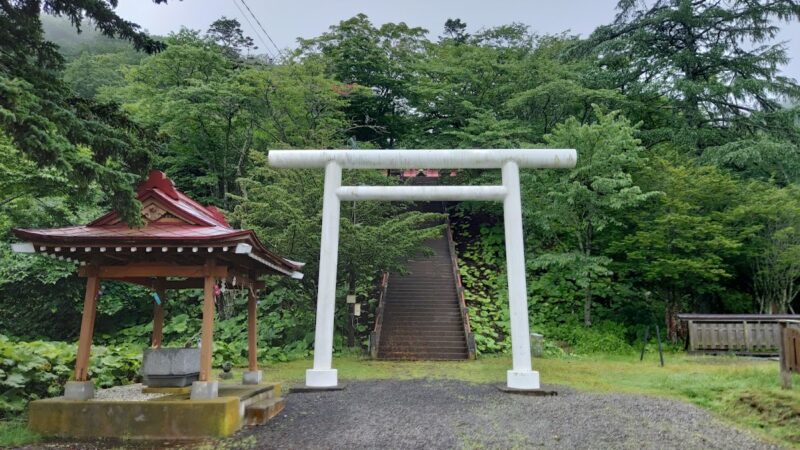
Second Torii Gate: After proceeding about 100 meters, the approach turns right, and after passing through a tunnel of lush greenery, the gray second torii gate appears. A tranquil atmosphere, surrounded by nature, permeates the area.
Third Torii Gate: After passing through the second torii gate and turning right and ascending, the vermilion third torii gate comes into view.
Shrine Buildings and Grounds
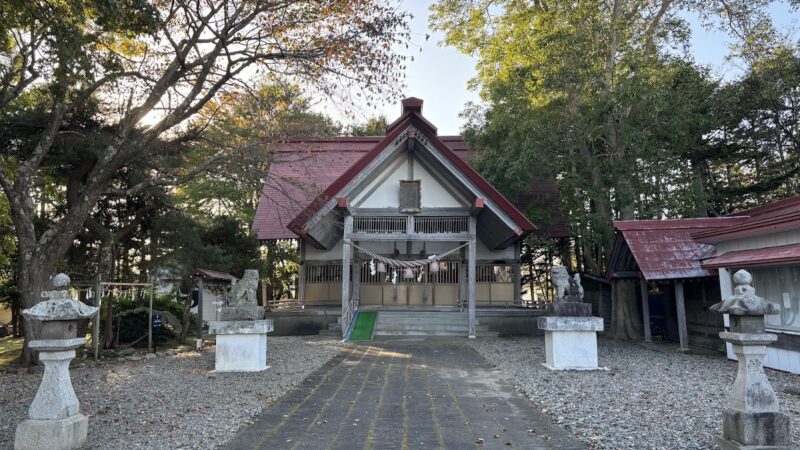
Upon reaching the top of the approach to the shrine, you will arrive at a gravel-covered plaza.
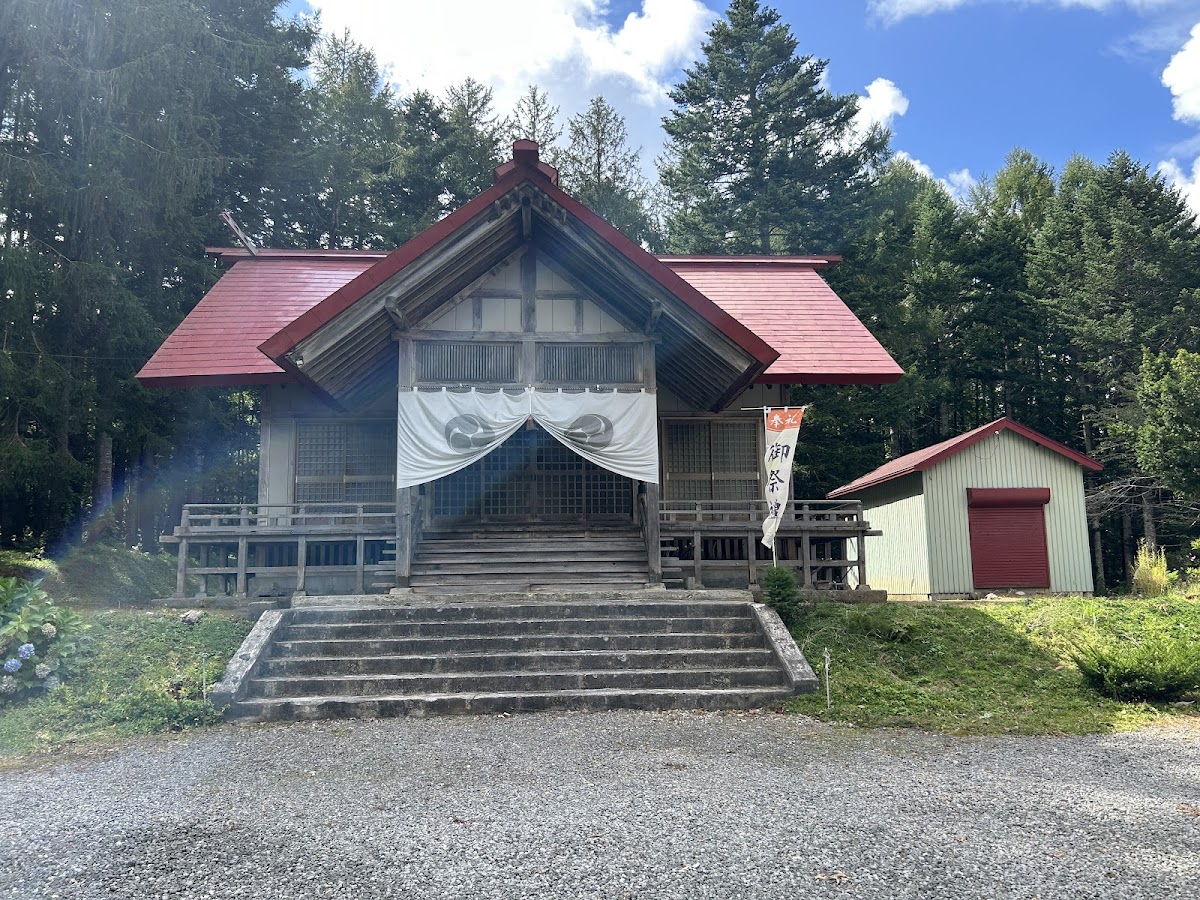
Shrine Building: The shrine building, characterized by its red roof, stands atop a concrete staircase. Flowerbeds with tulips, moss phlox, and other flowers are maintained on both sides of the staircase, welcoming visitors with beautiful blooms throughout the seasons. The interior of the shrine building is spacious and kept clean, indicating meticulous maintenance.
Shrine Office: A large and impressive shrine office stands to the left of the shrine building. Goshuin (shrine stamps) can be obtained here.
Water Basin: A simple stone water basin is located on the right side of the grounds.
Peace Monument: A stone monument commemorating peace stands near the water basin.
Lawn and Gazebo: A lawn and gazebo are located at the back right of the grounds. It has a garden-like atmosphere, providing a space to relax after visiting the shrine.
About the Back Approach
In addition to the main approach, Ozawa Shrine also has a back approach, allowing you to drive close to the shrine. This back approach is convenient for those with mobility issues or during bad weather. The route involves crossing a bridge over the Horikabu River and then climbing a small hill.
How to Access Ozawa Shrine
Access by Train
From JR Hakodate Main Line Ozawa Station
- Get off at Ozawa Station and walk for about 10 minutes.
- The route from the station to the shrine is relatively easy to follow.
Access by Bus
From Sapporo
- Take the Hokkaido Chuo Bus “Express Niseko” from JR Sapporo Station (Sapporo Station Terminal).
- Get off at the “Ozawa” bus stop and walk for about 10 minutes.
From Otaru
- Take the Niseko Bus “Otaru Line” bound for Niseko Station (Express) from JR Otaru Station.
- Get off at the “Ozawa” bus stop and walk for about 10 minutes.
From Kutchan
- Take the Niseko Bus “Ozawa Line” bound for Iwanai Terminal from JR Kutchan Station.
- Get off at the “Ozawa” bus stop and walk for about 10 minutes.
Access by Car
From the town center of Kyowa along National Route 276, head towards the Ozawa area. You can drive close to the shrine using the back approach. For car navigation, please search for “1200 Ozawa, Kyowa-cho, Iwanai-gun, Hokkaido” or “Ozawa Shrine.”
Goshuin (Shrine Seal) Information
Ozawa Shrine offers Goshuin. While you can request them at the shrine office, the head priest may be absent, so it is recommended to contact them in advance if you definitely want a Goshuin.
The Goshuin features the calligraphy of “Ozawa Shrine” and the shrine’s seal, and many people cherish it as a memento of their visit.
Annual Events at Ozawa Shrine
Annual Festival (September 15th)
The most important festival at Ozawa Shrine is the Annual Festival. Held annually on September 15th, it brings together local people to express their gratitude to the gods. It is an important event where prayers are offered for a bountiful harvest, community safety, and family well-being.
Other Festivals
As a shrine belonging to the Hokkaido Association of Shinto Shrines, various festivals are held throughout the year. Traditional Japanese Shinto rituals such as Hatsumode (first shrine visit of the year), Setsubun Festival, and Natsukoshi no Oharae (summer purification ceremony) support the local faith.
About Kyowa Town
Kyowa Town, where Ozawa Shrine is located, is in Iwanai District, in the western part of the Shiribeshi General Subprefectural Bureau of Hokkaido. Situated in the Iwanai Plain at the base of the Shakotan Peninsula, it is known as a region where agriculture thrives.
Kyowa Town’s Local Products
- Watermelon: A representative local product of Kyowa Town
- Melon: Sweet and delicious melons are cultivated here
- Sweet Corn: Popular for its high sugar content
- Potatoes: A local product typical of Hokkaido
These local products are also popular as return gifts for hometown tax donations, symbolizing the richness of Kyowa Town’s agriculture.
Tourist Attractions in Kyowa Town
Keio Nishimura Memorial Museum: This museum houses approximately 5,300 oil paintings by Keio Nishimura, an internationally renowned painter from Kyowa Town.
Shinsennuma Marsh: Said to be the most beautiful lake in the Niseko mountain range, this marsh is a popular spot for nature lovers.
Horonai Railway Memorial Park: The former Horonai Station of the JNR Iwanai Line, which closed its doors in 1985 after 73 years of operation, is preserved in its original state, attracting railway enthusiasts and history buffs.
When visiting Ozawa Shrine, visiting these tourist attractions in conjunction will allow you to experience the charm of Kyowa Town more deeply.
Manners and Precautions for Visiting a Shrine
Basic Worship Etiquette
- When passing through the torii gate: Bow before entering the shrine grounds.
- Walking along the approach: The center of the approach is considered the path of the gods, so walk along the sides.
- Water purification ritual: Purify your body and mind at the water basin.
- Etiquette at the main hall: Two bows, two claps, and one bow are the basic rituals.
Precautions for Visiting a Shrine
- As the shrine is located on a mountaintop, comfortable walking shoes are recommended.
- The approach is a tunnel of greenery; insect repellent is recommended during the summer.
- In winter, there is a possibility of snow and ice, so please be careful of your footing.
- The shrine office may be unattended, so those wishing to receive a Goshuin (shrine stamp) should check in advance.
Shrines around Ozawa Shrine
Besides Ozawa Shrine, there are other shrines located in Kyowa Town.
Kamoegawa Shrine
Location: 239-16 Hatsutari, Kyowa-cho, Iwanai-gun
This shrine, located in the Hatsutari district of Kyowa-cho, is a place of local worship, similar to Ozawa Shrine. It is approximately a 2-hour and 40-minute walk (about 8km) from Ozawa Station.
Summary
Ozawa Shrine is a historical shrine located in Ozawa, Kyowa-cho, Iwanai-gun, Hokkaido. Founded during the Taisho era at the request of local pioneers, it was created by merging three shrines. It enshrines three deities: Homutawake-no-Mikoto, Takeminakata-no-Kami, and Ukanomitama-no-Mikoto, and continues to be revered as the guardian deity of the region.
The approach to the shrine, situated on a small hill on Momijiyama, is a charming path that passes through three torii gates and a tunnel of greenery. The shrine grounds are meticulously maintained, with flowerbeds and a lawn area providing a space for visitors to relax.
Its convenient location, just a 10-minute walk from Ozawa Station on the JR Hakodate Main Line, is a major draw. It’s also accessible by bus from Sapporo, Otaru, and Kutchan. Even those traveling by car can reach close to the shrine via the back entrance.
Since they offer Goshuin (shrine stamps), it’s recommended for those who enjoy visiting shrines. When you visit Kyowa Town, be sure to pay your respects at Ozawa Shrine, where the town’s history and faith thrive. Combining a visit to Kyowa Town’s local specialties (a thriving agricultural area), the Nishimura Keio Memorial Museum, and other tourist attractions like Shinsennuma Marsh will make for a more fulfilling trip.