Complete Guide to Kutchan Shrine | A Thorough Explanation of History, Goshuin (Shrine Seals), Access Information, and Festivals
Kutchan Shrine, located in Kutchan-cho, Abuta-gun, Hokkaido, is a historic shrine that has walked hand in hand with the development of the area during the Meiji era. Situated on a hill overlooking Mount Yotei, it is cherished by the local residents as the guardian shrine of Kutchan-cho. This article comprehensively explains everything you need to know before visiting Kutchan Shrine, from its founding to the present day, including its enshrined deities, goshuin information, access methods, and annual festivals.
Basic Information on Kutchan Shrine
Location: 476 Yahata, Kutchan-cho, Abuta-gun, Hokkaido
Former Shrine Rank: Gosha (Village Shrine)
Annual Festival Date: July 28th
Kutchan Shrine is located on a hill approximately 4.5 km from Kutchan Station, offering a superb location with magnificent views of Mount Yotei, also known as Ezo Fuji. The view from the shrine grounds is beautiful in every season, and in winter, the snow-covered Mount Yotei presents a majestic sight.
History and Founding of Kutchan Shrine
Meiji Era Settlement and Shrine Founding
The history of Kutchan Shrine is closely intertwined with the history of Hokkaido’s settlement. On April 2, 1896 (Meiji 29), four men—Kenjiro Nuibe, Sataro Bandai, Yasujiro Yamamoto, and Yahei Yamamoto—who settled in the Kutchan wilderness, took the lead in discussions with the other settlers.
Feeling the need for a guardian deity to provide spiritual support as they proceeded with the difficult task of settlement, the settlers decided to invite a divided spirit of Hondawake-no-Mikoto from Iwashimizu Hachimangu Shrine in Kyoto. Initially enshrined in a small shrine in Buitausu (present-day Toyooka area), it was moved to its current location on September 3 of the same year.
Changes in the Shrine Name
Kutchan Shrine has changed its name over time since its founding.
- 1896 (Meiji 29): At the time of founding
- August 17, 1952 (Showa 27): Renamed “Kutchan Hachiman Shrine” following the enforcement of the Religious Corporations Law
- October 27, 1966 (Showa 41): Renamed to the current “Kutchan Shrine”
This name change was intended to clarify its character as a general guardian shrine enshrining a wider range of deities, not just Hachiman worship.
Recovery from Fire
In the history of Kutchan Shrine, the events of November 5, 1965 (Showa 40) are particularly noteworthy. The shrine suffered a major disaster when its main hall was completely destroyed by fire due to careless handling of a bonfire. However, thanks to the strong faith and cooperation of the local residents, it was rebuilt the following year, 1966 (Showa 41). The experience of overcoming this difficulty further strengthened the bonds within the local community.
Relocation of the Temporary Shrine
In 1959 (Showa 34), the temporary shrine (Tongu) was relocated to Minami 1-jo Higashi 2-chome, Kutchan-cho. The temporary shrine is a place where the portable shrine (mikoshi) temporarily stays during festivals, playing an important role during the annual festival. Even today, it remains the Kutchan Shrine Temporary Shrine, located in the town center, and is bustling with many worshippers during festivals.
About the Enshrined Deities
Kutchan Shrine enshrines many deities, including the main deity. This is a characteristic form of combined enshrinement found in Hokkaido shrines, a result of the convergence of various beliefs throughout the history of settlement.
Main Deity
Honda-wake-no-mikoto
The main deity, invited from Iwashimizu Hachimangu Shrine, is the divine spirit of Emperor Ojin. He is worshipped as a god of military fortune and a god of national protection, and is also revered as a guardian deity of all industries, including agriculture, fishing, and commerce.
General Abe no Hirafu
A historical figure who was a military commander during the Asuka period and is said to have led an expedition to Hokkaido. Shrines that enshrine Abe no Hirafu as their main deity are rare throughout Japan, making this a significant feature of Kutchan Shrine. He is worshipped as a pioneer of northern development and as a god of safe voyages.
Enshrined Deities
Amaterasu Omikami
The supreme deity in Japanese mythology and the ancestral deity of the Imperial family. She is worshipped as the sun goddess, the source of life, and a symbol of national peace and security.
Oyamatsumi no Kami
Known as the god of mountains, this deity holds particular significance in Kutchan, overlooking Mount Yotei. They are also the guardian deities of agriculture, forestry, and mining.
Ukemochi-no-kami
The goddess of food and grains, presiding over abundant harvests. She has been worshipped in agricultural settlements as an object of prayer for bountiful harvests.
Sugawara no Michizane
A Tenjin-sama worshipped nationwide as the god of learning. Many worshippers visit to pray for success in exams and academic achievement.
Okuninushi-no-Mikoto
Known as the god of matchmaking and good fortune, he played a central role in the myth of nation-building.
Kotoshironushi-no-Kami
Worshipped as the god of business prosperity and maritime safety. He is the son of Okuninushi-no-Mikoto.
Ame-no-Uzume-no-Mikoto
Known as the goddess of performing arts and skills, she is a goddess who played an active role in the Amano-Iwato myth.
Oyamakui-no-Kami
A god worshipped as the god of mountains and agriculture, he is a central deity in the Hiyoshi, Hie, and Sanno faiths.
Tamahime Inari-Okami
A deity of Inari faith, worshipped as the god of business prosperity and abundant harvests.
The presence of these diverse deities reflects the history of Kutchan, which has welcomed settlers from various regions and respected their respective beliefs.
Shrines within the Precincts and Shrines under the Same Management
Kutchan Shrine has several shrines within its precincts and as subsidiary shrines outside the precincts.
Yotei-san Shrine (Subsidiary Shrine outside the Precincts)
Yotei-san Shrine occupies an important position as a subsidiary shrine outside the precincts of Kutchan Shrine. Mount Yotei has been revered as a sacred mountain since ancient times, and this shrine carries on that faith.
Kutchan Shrine Tongu
As mentioned above, the Tongu, located at Minami 1-jo Higashi 2-chome, Kutchan-cho, is an important base for the procession of the portable shrine during the annual festival. Because it is located in the center of town, it is a familiar place of worship for many townspeople.
Goshuin Information
Kutchan Shrine offers several types of goshuin (shrine stamps). For worshippers who enjoy collecting goshuin, the ability to receive multiple goshuin in a single visit is a major attraction.
Goshuin Available
- Kutchan Shrine Goshuin: The goshuin of the main shrine
- Goshuin of Subsidiary Shrines: The goshuin of the subsidiary shrines enshrined within the grounds
- Goshuin of Other Shrines: The goshuin of other shrines managed by Kutchan Shrine
Goshuin are available at the shrine office. Many people receive a Goshuin (temple/shrine stamp) as proof of their visit and as a memento of their trip. Even if you don’t have a Goshuincho (stamp book), you may be able to receive a pre-printed Goshuin.
Points to Note When Receiving a Goshuin
- It is polite to receive the Goshuin after completing your prayers.
- Visit during the shrine office’s reception hours (usually 9:00 AM to 5:00 PM, but this may vary depending on the season).
- Having small change ready for the offering fee will make the process smoother.
- Remember that a Goshuin is “proof of prayer,” not a stamp rally.
Access Information
Here’s how to access Kutchan Shrine. It’s approximately 4.5 km from Kutchan Station, so choosing the right mode of transportation is important.
Access by Public Transportation
From JR Hakodate Main Line “Kutchan Station”
- Using Donan Bus: Take a Donan Bus from in front of Kutchan Station, get off at the nearest bus stop, and walk.
- Using a Taxi: Approximately 10 minutes by taxi from Kutchan Station.
- Walking: Approximately 60 minutes (suitable for those with good stamina).
If using Donan Bus, routes and timetables vary depending on the season, so it is recommended to check in advance. Especially in winter, the number of buses may decrease.
Access by Private Car
From Sapporo
- Approximately 2 hours via the Sapporo-Otaru Expressway and National Route 5.
- Enter “476 Yahata, Kutchan-cho, Abuta-gun” or “Kutchan Shrine” into your car navigation system.
From Niseko
- Approximately 15 minutes via National Route 5.
Parking: There is parking space for visitors on the shrine grounds. During peak seasons such as New Year’s Day and annual festivals, we recommend arriving early.
Winter Access Precautions
Kutchan Town is known as a heavy snowfall area. Please note the following points when visiting during winter (November to March):
- Winter tires (studded tires) are essential.
- Visibility is poor during snowfall, so allow ample time for travel.
- Snow accumulates on the shrine grounds, so wear non-slip shoes.
- Consider refraining from visiting on blizzard days.
Annual Festivals and Events
Kutchan Shrine holds various festivals and events throughout the year.
Major Annual Events
New Year’s Day Festival/First Shrine Visit (January 1st-3rd)
This is the most important event for welcoming the New Year. For three days, from January 1st to January 3rd, amulets and talismans are distributed, and the shrine is bustling with many worshippers. During the first shrine visit period, amazake (sweet rice wine) may be served.
Setsubun Festival (around February 3rd)
Beans are scattered to ward off evil and pray for good fortune. It’s a lively event with participation from local children.
Kinensai Festival (February 17th)
An important festival to pray for a bountiful harvest in the coming year, coinciding with the arrival of spring.
Reisai Festival (July 28th)
The most important annual event at Kutchan Shrine, featuring a portable shrine procession. The shrine parades through the town and makes its way to the temporary shrine, making it a grand festival. Local residents participate to liven up the festival, and stalls and other attractions add to the festive atmosphere.
Shichi-Go-San Festival (around November 15th)
A celebration of children’s growth and prayers for their healthy development. Many families visit the shrine.
Niiname-sai (November 23rd)
This is a festival to give thanks for the autumn harvest and to offer the new grain to the gods.
Oharai (June 30th & December 31st)
This is a Shinto ritual to purify oneself of sins and impurities accumulated over the past six months, and is held twice a year.
Monthly Festival
Monthly festivals are held on the 1st and 15th of each month, where prayers are offered for daily peace and the well-being of the community.
Highlights of Kutchan Shrine
Spectacular View of Mount Yotei
The greatest highlight of Kutchan Shrine is undoubtedly the magnificent view of Mount Yotei from the shrine grounds. Mount Yotei, at an altitude of 1,898m, is also known as “Ezo Fuji,” and its neat conical shape is reminiscent of Mount Fuji.
From the shrine’s elevated vantage point, you can enjoy a panoramic view of Mount Yotei, which displays different expressions in each season: the contrast of lingering snow and fresh greenery in spring, the lush green mountain in summer, the vibrant autumn foliage, and the pure white snow cover in winter. This is a truly special experience.
Shrine Architecture
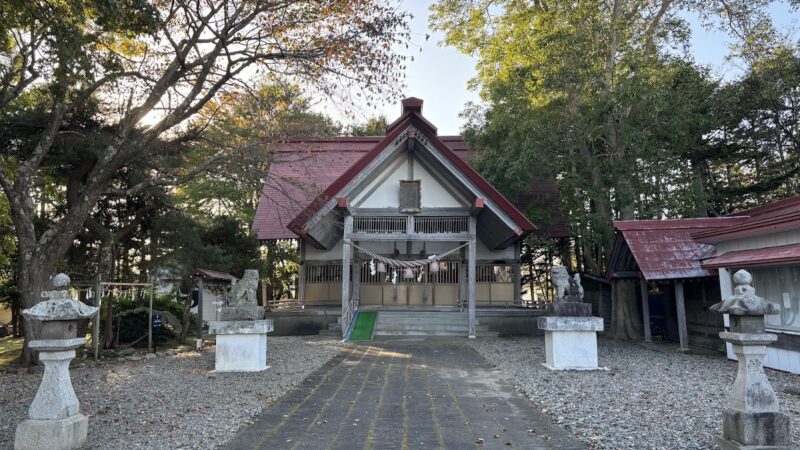
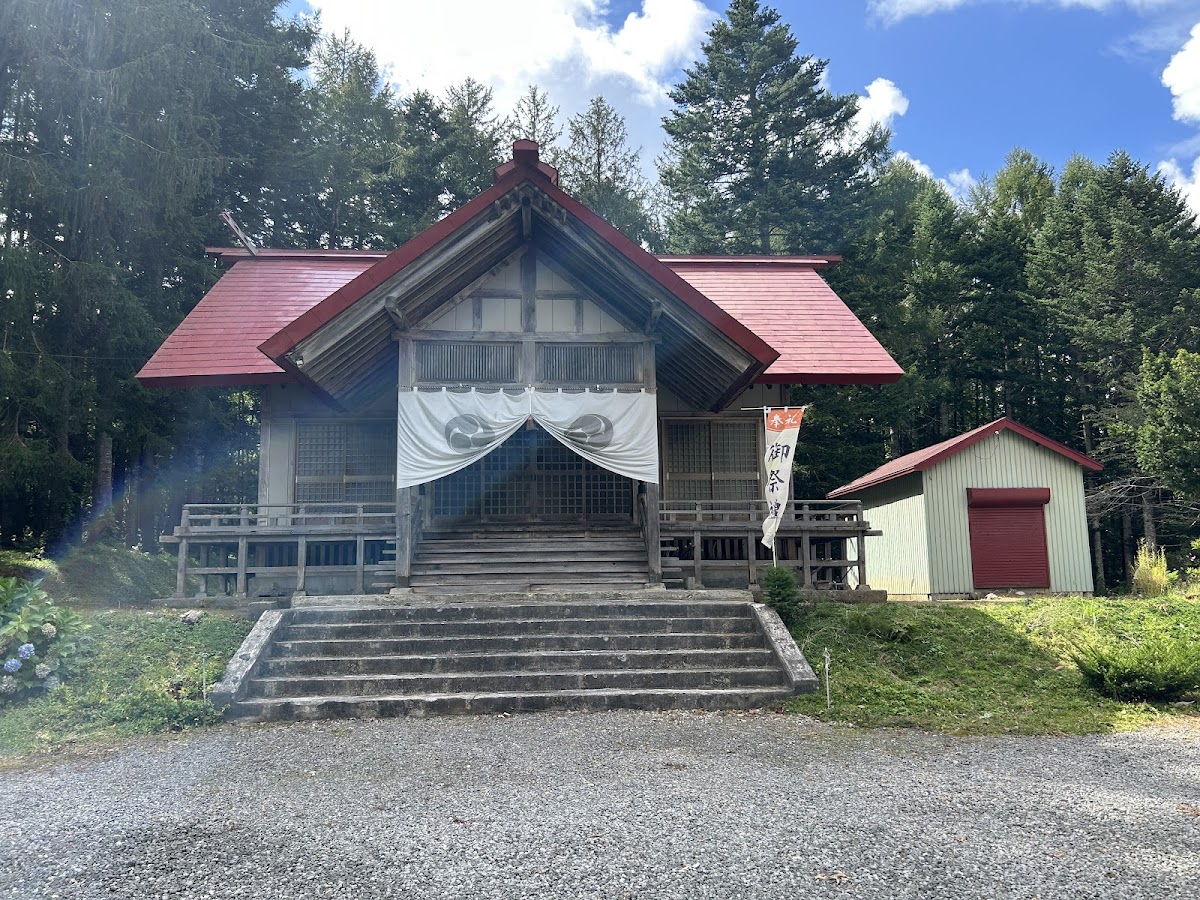
Rebuilt in 1966, the shrine building follows traditional shrine architectural styles while being adapted to Hokkaido’s climate and environment. The steeply pitched roof, characteristic of heavy snowfall areas, incorporates ingenious features to withstand the weight of snow.
Nature within the Shrine Grounds
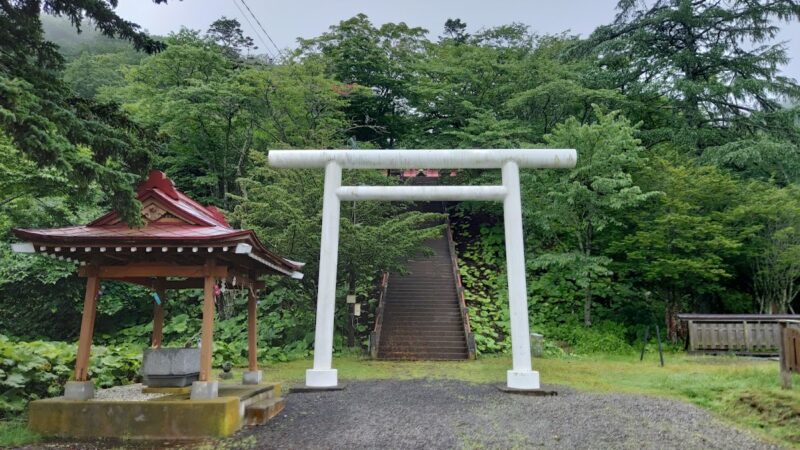
Located on a hilltop, the shrine grounds are surrounded by abundant nature. Cherry blossoms bloom in spring, and the autumn leaves are beautiful, allowing visitors to enjoy the changing expressions of nature throughout the seasons.
Relationship between Kutchan Town and the Shrine
Kutchan Shrine is not merely a religious facility; it has functioned as the center of the Kutchan town community.
History of Settlement and Spiritual Support
During the Meiji era’s pioneering period, Kutchan Shrine served as a spiritual anchor for the settlers who forged a new path in a harsh natural environment. The joint maintenance and management of the shrine also played a role in strengthening community bonds.
Center of Local Events
Shrine events, including the annual festival, are valuable opportunities for local residents to gather together. The procession of the portable shrine during the annual festival, in particular, is a traditional event passed down through generations and is an important cultural asset of the town.
Role as a Tourism Resource
In recent years, the Niseko area has developed into an international resort destination, and Kutchan Town welcomes many tourists. Kutchan Shrine has also become a tourist resource, offering views of Mount Yotei and a place to experience traditional Japanese culture.
Manners and Points for Visiting a Shrine
Basic Worship Etiquette
- Bow before passing through the torii gate.
- Purify yourself at the water basin: Purify in the following order: left hand → right hand → mouth → handle of the ladle in your left hand.
- Avoid walking in the center of the path: The center is considered the path of the gods.
- Etiquette in front of the main hall: Two bows, two claps, and one bow are the basics.
Clothing
There are no particularly strict dress code regulations, but it is desirable to dress appropriately for a sacred place. Avoid overly revealing clothing even in summer. In winter, take proper precautions against the cold.
Photography
Photography is generally permitted on the shrine grounds, but consideration should be given to avoiding disturbing other worshippers or those participating in religious ceremonies. Permission may be required to photograph inside the shrine buildings.
Nearby Tourist Attractions
When visiting Kutchan Shrine, we recommend also visiting nearby tourist attractions.
Niseko Area
Kutchan Town is one of the central areas of the Niseko area. In summer, you can enjoy activities such as rafting, hiking, and golf, while in winter, you can enjoy skiing and snowboarding on world-famous powder snow.
Mount Yotei
Mount Yotei, one of Japan’s 100 Famous Mountains, is a popular spot for hiking enthusiasts. There are multiple hiking trails, and the Kutchan course is a relatively easy route to access.
Niseko View Plaza Roadside Station
This roadside station sells fresh local agricultural products and specialty goods. It is about a 15-minute drive from Kutchan Shrine.
Arishima Memorial Museum
This memorial museum is associated with the writer Arishima Takeo and is a historical site where the Declaration of Farm Liberation was issued in 1922 (Taisho 11).
Kutchan Shrine and Hokkaido Shrine Association
Kutchan Shrine is one of the shrines belonging to the Hokkaido Shrine Association. The Hokkaido Shrine Association is the organization that oversees shrines throughout Hokkaido, playing a role in the maintenance and management of shrines, the training of Shinto priests, and the promotion of Shinto culture.
The Hokkaido Shrine Association’s website contains information on shrines throughout Hokkaido, including Kutchan Shrine, which can be helpful when visiting.
Summary
Kutchan Shrine is the main guardian shrine of Kutchan Town, and has walked hand in hand with the history of development during the Meiji era. It enshrines Homutawake-no-Mikoto, who was invited from Iwashimizu Hachimangu Shrine, as its principal deity, and also enshrines many other gods, including the rare general Abe no Hirafu.
Located on a hill overlooking Mount Yotei, the shrine grounds offer a superb location to enjoy the beautiful scenery of each season. Several types of goshuin (shrine stamps) are available, making them a memorable souvenir of your visit.
Annual events, including the annual festival, are important cultural events for the local community, and the portable shrine procession at the annual festival on July 28th is particularly grand. During the New Year’s pilgrimage period, the shrine is bustling with many worshippers, overflowing with people coming to offer prayers for the new year.
Access is convenient by taking a Donan Bus or taxi from Kutchan Station, or by private car. Considering that it is a heavy snowfall area in winter, be sure to prepare adequately before visiting.
When visiting Kutchan Town, be sure to visit Kutchan Shrine and enjoy the magnificent view of Mount Yotei while reflecting on the history of its development. The time spent quietly offering prayers in the sacred atmosphere of the shrine grounds will surely become a special memory.