Complete Guide to Rusutsu Shrine: A Thorough Explanation of History, Deities, Visiting Information, and Goshuin (Shrine Seals)
Rusutsu Shrine, located in Rusutsu Village, Abuta District, Hokkaido, is a historical shrine founded during the Meiji era. As the tutelary deity of Rusutsu Village, known for the Rusutsu Resort, it is deeply revered by the local residents. This article provides a detailed explanation of Rusutsu Shrine’s historical background, deities, visiting information, and access methods.
Basic Information on Rusutsu Shrine
Location and Access
Location:
229 Rusutsu, Rusutsu Village, Abuta District, Hokkaido 048-1731
Rusutsu Shrine is located on a small hill just off Hokkaido Prefectural Road 66 (Iwanai-Toya Line) from National Route 230. It’s easy to find using the Satsudora Rusutsu store along the national highway as a landmark. It’s also close to the 230 Rusutsu Roadside Station, making it a convenient stop for tourists.
Access Information:
- Approximately 20 minutes by car from JR Hirafu Station
- Approximately 90 minutes by car from New Chitose Airport
- Approximately 2 hours from Sapporo city via National Route 230
The spacious grounds are surrounded by nature, allowing visitors to enjoy the scenery of each season. In winter, the snow-covered main hall creates a fantastical atmosphere.
Annual Festival and Events
Annual Festival Date: September 15th
At Rusutsu Shrine, various Shinto rituals are performed, centered around the annual festival. The annual festival is an important event where local residents gather together to pray for a bountiful harvest and peace in the community.
Deities Enshrined at Rusutsu Shrine
Three deities are enshrined at Rusutsu Shrine.
Amaterasu Omikami
The supreme deity in Japanese mythology and the sun goddess considered the ancestral deity of the Imperial family. It is believed to bestow divine blessings of national peace and security, abundant harvests, and good fortune.
Emperor Ōjin
The 15th Emperor, he is enshrined as Hachiman-sama in Hachiman shrines throughout Japan. Known for his divine blessings of long-lasting military success, victory, and protection against evil, he is deeply involved in the history of the founding of Rusutsu Shrine as a Hachiman shrine.
Ōnamuchi-no-Ōkami
Another name for Ōkuninushi-no-Mikoto, he is revered as the god of nation-building. He bestows divine blessings of matchmaking, business prosperity, healing from illness, and protection of agriculture and fishing. He is a god deeply connected to the development of Hokkaido.
History of Rusutsu Shrine
Founded in the Meiji Era
The history of Rusutsu Shrine begins in July of Meiji 27 (1894). The shrine’s origins lie in Viscount Kato Yasuaki receiving a divided spirit from the Kume Village Hachiman Shrine in his former territory, the Ozu Domain of Iyo Province (present-day Ehime Prefecture), and establishing a shrine to enshrine it as the tutelary deity of the Kato family’s Rusutsu farm.
The Meiji era marked the beginning of full-scale development in Hokkaido, and many settlers migrated from Honshu in search of a new life. Viscount Kato Yasuaki also established a farm in Rusutsu as part of his land reclamation project, and founded the shrine as a spiritual pillar for the settlers.
Initially, it began as a small shrine serving as the guardian deity of the residents of the Kato farm, but as development progressed, it became the center of faith for the local residents. Even amidst the wave of Westernization after the Meiji Restoration, the shrine continued to play its role as the center of the local community.
Development in the Taisho Era and the Movement for Elevation to Village Shrine Status
In June 1915 (Taisho 4), a significant movement occurred among influential local figures. To commemorate the enthronement ceremony of Emperor Taisho, a movement was launched to rebuild the Rusutsu Hachiman Shrine and elevate it to the status of a village shrine.
This movement aimed at the development of the region and the improvement of the shrine’s status. In September of Taisho 4 (1915), the shrine building was constructed, and two more deities (Amaterasu Omikami and Onamuchi no Okami) were enshrined. As a result, the Rusutsu Shrine evolved from merely a local farm shrine to the tutelary shrine of the entire Rusutsu village.
For the local residents, the shrine became a spiritual anchor, strengthening its role as a spiritual support that helped them overcome the hardships of pioneering together.
Changes and Mergers in the Showa Era
In the Showa era, the Rusutsu Shrine underwent further changes. The Hachiman Shrines and Kotohira Shrines, which had been scattered throughout the village without official rank, were merged, establishing its position as the central shrine of Rusutsu village.
The consolidation of shrines was a result of the Meiji government’s policy of reorganizing shrines, but it ultimately unified local beliefs and streamlined the maintenance and management of the shrines. The history and beliefs of multiple shrines were consolidated into Rusutsu Shrine, resulting in a shrine with a more diverse range of divine blessings.
Historical Background of Rusutsu Village
Hokkaido Development and Rusutsu Village
The development of Rusutsu Village began in earnest in the late Meiji era. The name is said to originate from the Ainu word “Ru-Su” (meaning “the road leads to the beach”), and it was a place where people had traveled since ancient times.
Under the Meiji government’s Hokkaido development policy, settlers gathered from various parts of Honshu, clearing primeval forests to create farmland. Facing the harsh natural environment, the settlers built a new foundation for their lives.
Viscount Kato Yasuaki and Farm Management
Viscount Kato Yasuaki was a descendant of the former lord of the Ozu Domain and actively participated in the development of Hokkaido. By establishing a farm in Rusutsu and developing organized agricultural management, he made a significant contribution to the region’s development.
The Viscount’s enshrinement of a divided spirit from his hometown’s Hachiman Shrine, which he himself worshipped, went beyond mere religious conduct and played a crucial role in the spiritual stability of the settlers and the formation of a local community. This sense of community centered on the local deity became the strength that helped overcome the difficulties of pioneering.
Architecture and Grounds of Rusutsu Shrine
Features of the Shrine Building
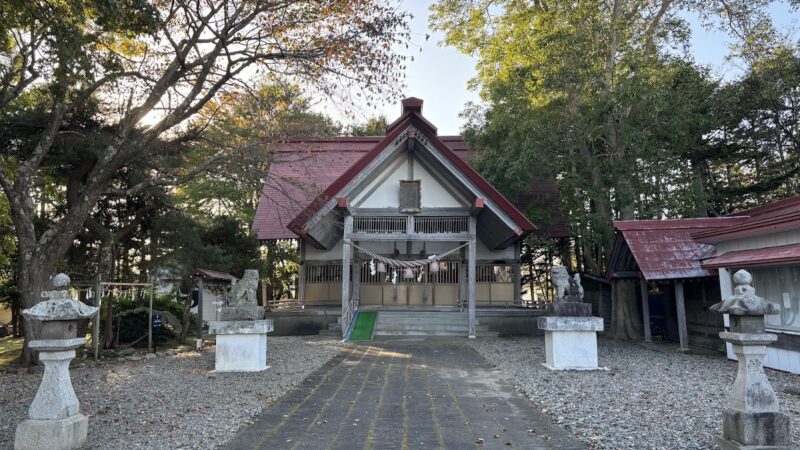
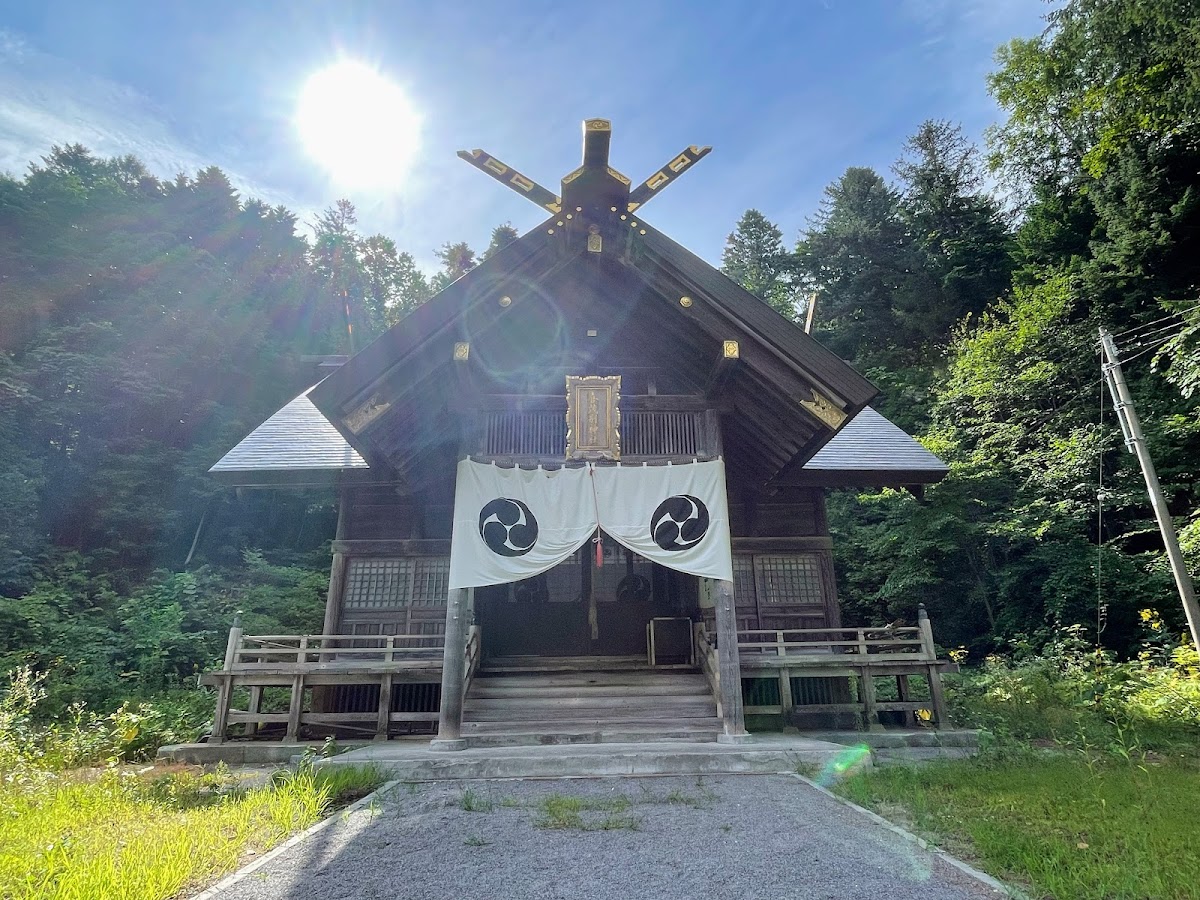
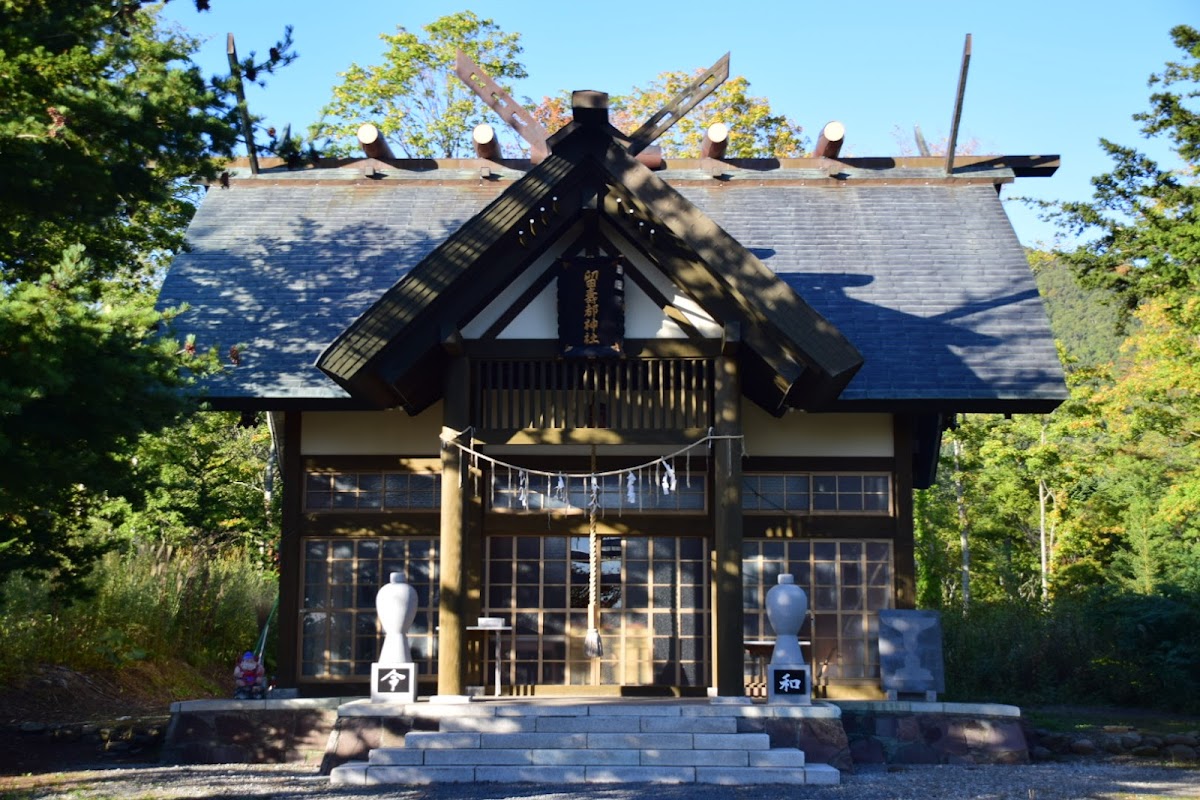
The Rusutsu Shrine building is based on a structure built during the Taisho era. It is designed to adapt to Hokkaido’s climate, exhibiting structural considerations unique to heavy snowfall areas.
The worship hall follows the traditional wooden shrine architectural style, possessing a simple yet solemn atmosphere. In winter, it is covered in deep snow, its appearance standing amidst a world of white is mystical.
Environment of the Shrine Grounds
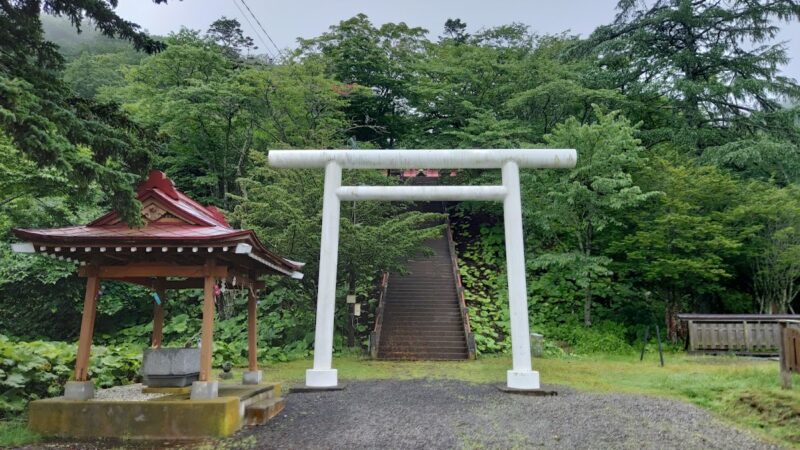
Located on a small hill, the shrine grounds are a tranquil space surrounded by nature. The spacious grounds offer a sense of openness, providing peace of mind to visitors.
From spring to autumn, you can enjoy the lush greenery and the sounds of birdsong while you pray. In winter, the area is covered in snow, allowing you to enjoy the changing scenery of each season.
How to Worship and Goshuin Information
Worship Etiquette
Worship at Rusutsu Shrine follows the general etiquette for visiting a shrine.
- Bow before passing through the torii gate
- Avoid walking in the center of the path
- Purify your body and mind at the water basin
- Bow twice, clap twice, and bow once in front of the main hall
- Bow once again at the torii gate on your way back
You can pray in a peaceful environment, calming your mind.
About Goshuin
Rusutsu Shrine offers Goshuin (shrine stamps). The shrine office handles this, and the offering fee is 300 yen for Rusutsu Shrine only, and 500 yen for both Rusutsu Shrine and Makari Shrine.
Rusutsu Shrine also handles the goshuin (shrine stamp) of Makari Shrine, making it convenient for visitors to the nearby shrines. However, the availability of pre-printed goshuin may vary depending on the time of year, so it is recommended to check in advance.
Shrine Office Hours
The shrine office hours may vary from day to day. If you want to be sure to receive a goshuin, it is recommended to check in advance through the Hokkaido Shrine Association or the Rusutsu Village Office.
Rusutsu Shrine’s Connection to the Community
Role as a Local Guardian Deity
Rusutsu Shrine, as the local guardian deity of Rusutsu Village, is deeply involved in the life rituals of the local residents. It is a popular place for prayer at important life events such as a baby’s first shrine visit, Shichi-Go-San (a traditional rite of passage for children), exorcism, and weddings.
For parishioners and worshippers, shrines are not merely religious institutions, but symbols of regional identity and a cornerstone of spiritual culture passed down through generations.
Connections to Local Events
Annual shrine events, including the annual festival, are important opportunities to unite the local community. Many residents participate in the festivals, which serve as a place to reaffirm tradition and community bonds.
The sense of community that has continued since the pioneering era is still carried on today through community activities centered around the shrine.
Tourism in Rusutsu Resort and Rusutsu Village
Rusutsu Village as a Tourist Destination
Rusutsu Village is known as one of Hokkaido’s leading resort areas. Rusutsu Resort attracts many tourists throughout the year, serving as a ski resort in winter and an activity facility in summer.
The rich natural environment surrounded by Mount Yotei and the Niseko mountain range makes it an ideal location for outdoor sports enthusiasts.
Combining Sightseeing and Shrine Visit
Rusutsu Shrine is located near the 230 Rusutsu Roadside Station along National Route 230, making it easily accessible during sightseeing. Visiting the shrine during your resort stay allows you to experience the historical and cultural aspects of the tourist destination.
Beyond enjoying the natural scenery, experiencing the local spiritual culture will lead to a deeper travel experience.
Divine Virtues and Faith at Rusutsu Shrine
Main Divine Virtues
The following divine virtues are expected from the three deities enshrined at Rusutsu Shrine:
Amaterasu Omikami:
- National peace and security
- Abundant harvests
- Good fortune and prosperity
- Family safety
Emperor Ojin (Hachiman):
- Long-lasting military success
- Prayer for victory
- Protection from evil
- Traffic safety
Oonamuchi no Okami:
- Matchmaking
- Business prosperity
- Healing from illness
- Protection of agriculture and fisheries
- Land development
These divine virtues have been closely intertwined with the lives of local residents from the pioneering era to the present day.
Characteristics of shrines in pioneering areas
Many shrines in Hokkaido were founded by people who migrated from Honshu and invited the divided spirits of their hometown shrines. Rusutsu Shrine is a typical example.
The settlers found spiritual stability in their lives in unfamiliar lands by worshipping the gods of their hometowns. At the same time, by enshrining deities of land development, such as Ōkuninushi-no-Ōkami, they prayed for success in the new land.
This form of faith represents an important aspect of the history of Hokkaido’s development.
Relationship with surrounding shrines
Relationship with Makari Shrine
Rusutsu Shrine has a deep relationship with Makari Shrine in the neighboring Makari Village, and they jointly issue Goshuin (shrine seals). The two shrines are geographically close and historically closely related.
Like Rusutsu Village, Makari Village was a region that underwent development during the Meiji era, and the shrine was founded around the same time.
Relationship with the Hokkaido Association of Shrines
Rusutsu Shrine belongs to the Hokkaido Association of Shrines and is part of the Hokkaido shrine network. Through the Association, it receives support such as the dispatch of Shinto priests, guidance on rituals, and support for the maintenance and management of the shrine.
Detailed information about Rusutsu Shrine is available on the Hokkaido Association of Shrines website, where you can check its origins and enshrined deities.
Practical Advice for Visiting Rusutsu Shrine
Best Time to Visit
Spring (April-June):
The fresh greenery after the snowmelt is beautiful. However, there may still be some snow in April.
Summer (July-August):
The most pleasant season, allowing you to enjoy the lush greenery of the shrine grounds. Ideal for combining with activities at Rusutsu Resort.
Autumn (September-October):
Mid-September, when the annual festival is held, is recommended. The autumn foliage is also beautiful.
Winter (November-March):
While you can see a fantastical landscape covered in snow, caution is needed when visiting due to snow accumulation. Visiting while enjoying winter sports is also possible.
Clothing and Items to Bring
- Comfortable walking shoes (warm clothing and non-slip measures are essential in winter)
- Seasonal clothing (a light jacket is useful even in summer)
- Camera (to record the beautiful scenery)
- Goshuincho (stamp book) (if you wish to receive a Goshuin stamp)
Estimated Time Required
While visiting the shrine itself takes about 15-30 minutes, it’s a good idea to allow a little more time if you want to enjoy the surrounding nature. A plan of about one hour, including a break and shopping at Michi-no-Eki 230 Rusutsu, is recommended.
Cultural Value of Rusutsu Shrine
Significance in the History of Hokkaido Development
Rusutsu Shrine is a valuable cultural heritage site that conveys the history of Hokkaido’s development. The history of the region, from the Meiji-era settlement to the present day, is etched into the shrine’s history.
The founding by Viscount Kato Yasuaki, the movement by local influential figures to elevate it to a village shrine, and the consolidation of unranked shrines—each event reflects the social conditions and stages of regional development at the time.
Inheritance of Spiritual Culture
Shinto shrines are not only physical structures but also mechanisms for the inheritance of spiritual culture. Through rituals, annual events, and worship practices, values and worldviews passed down through generations are preserved.
In modern society, opportunities to experience such traditional spiritual culture are precious. A visit to Rusutsu Shrine will go beyond mere sightseeing and become an experience that touches the depths of Japanese culture.
Summary: The Charm of Rusutsu Shrine
Since its founding in 1894 (Meiji 27), Rusutsu Shrine has existed as the spiritual center of Rusutsu Village for nearly 130 years. Beginning with the enshrinement of a divided spirit from Iyo Province by Viscount Kato Yasuaki, it underwent construction and expansion of the shrine buildings during the Taisho era, and merger during the Showa era, resulting in its current form.
As a shrine dedicated to Amaterasu Omikami, Emperor Ojin, and Onamuchi no Okami, it possesses a wide range of divine virtues, from national peace and security to individual happiness. This shrine is a spiritual pillar for the pioneers who challenged the harsh natural environment of Hokkaido, and even today it is cherished as the tutelary deity of the local residents.
Conveniently located along National Route 230, it’s an easily accessible shrine for those visiting Rusutsu Resort. It’s close to the Rusutsu Roadside Station (Michi-no-Eki 230), allowing visitors to enjoy the changing seasons while paying their respects.
The shrine also offers Goshuin (shrine stamps), and you can receive the Goshuin of Makari Shrine at the same time, making it a great choice for those enjoying shrine pilgrimages. The spacious grounds provide a calming space, allowing you to quietly offer prayers away from the hustle and bustle of tourism.
Visiting Rusutsu Shrine will be a valuable opportunity to connect with the history of Hokkaido’s development and experience Japanese spiritual culture. When you visit Rusutsu, be sure to stop by this historic shrine.