Honme Shrine: A Complete Overview of a Historic Shrine in Fukagawa City, Hokkaido
About Honme Shrine
Honme Shrine is a shrine located in Otoemachi, Fukagawa City, Hokkaido. Belonging to the Hokkaido Shrine Association, it has long been revered by local residents as the guardian deity of the region. Having overcome numerous challenges from the Meiji to Showa eras, it is a valuable example of the faith of the Hokkaido pioneering period.
Honme Shrine, which has developed alongside Honme Village (present-day Honme district, Otoemachi, Fukagawa City), plays a central role in the local community, and various religious ceremonies are held throughout the year.
History of Honme Shrine
Founding History
The exact founding date of Honme Shrine is unknown, but it is said to have begun with the establishment of the shrine by Heiji Omiya, a pioneer of Honme Village. Initially a place of personal worship, it gradually came to be worshipped by the entire village and became the center of local faith.
In the early days of Hokkaido’s settlement, shrines served as a spiritual anchor and a vital place for strengthening community bonds for people living in a harsh natural environment. Honme Shrine was one such shrine.
Records show that the shrine grounds were donated by Seitaro Shikaya, indicating that the shrine was maintained through the cooperation of local residents.
Relocation and Reconstruction in the Meiji Era
In August 1898 (Meiji 31), Honme Shrine received permission to relocate and rebuild, moving from 1 Oruiishi, Honme Village to its current location. This relocation is thought to have been carried out considering the village’s development, transportation convenience, and the convenience of local residents.
However, just 11 years after the relocation, on June 9, 1909 (Meiji 42), a major disaster struck when strong winds completely destroyed the shrine buildings and other structures. Hokkaido’s harsh climate conditions were a constant threat to wooden buildings.
In the face of this crisis of complete destruction, 79 devotees made donations, and the shrine was rebuilt on November 20th of the same year. This reconstruction in just five months demonstrated the deep faith and unity of the local residents towards the shrine.
Development during the Taisho Era: Elevation to Village Shrine
On September 10th, 1924 (Taisho 13), a significant turning point occurred for Honme Shrine. The Inari Shrine, which was the village shrine of Atsuse Village, was merged with Honme Shrine. This merger further strengthened Honme Shrine’s position as the center of faith in the region.
On October 1st of the same year, the shrine’s name was officially changed to “Honme Shrine,” and it was elevated to the rank of village shrine. This elevation to village shrine signified the official recognition of the shrine’s status, indicating that the importance of the shrine in the region was institutionally established.
As a village shrine, Honme Shrine took on the role of a public place of worship in the region, becoming the center of important village events and festivals.
History Since the Showa Era
During the Showa era, Honme Shrine experienced the turbulent times of the pre-war, wartime, and post-war periods. During the war, many parishioners went off to war, and rituals were performed at the shrine to pray for their continued military success. After the war, as the era shifted from reconstruction to a period of rapid economic growth, the role of the shrine changed along with the changes in the local community.
Currently, as a shrine belonging to the Hokkaido Shrine Association, it continues to function as a spiritual center for local residents while preserving traditional Shinto rituals. Despite facing modern challenges such as depopulation and an aging population, the shrine’s maintenance and the continuation of its traditions are being carried out through the cooperation of parishioners and devotees.
Deities and Divine Virtues
Main Deity
The information regarding the deities enshrined at Honme Shrine is official based on the records of the Hokkaido Shrine Association. Like many shrines in Hokkaido, it is believed that the enshrined deities reflect the history of the pioneering era.
It is presumed that multiple deities were enshrined at the time of the shrine’s reconstruction in 1909 (Meiji 42) and again during the merger with the Inari Shrine in 1924 (Taisho 13). With the merger of the Inari Shrine, it is possible that deities of abundant harvests and business prosperity, such as Ukanomitama-no-kami, are also enshrined.
Divine Virtues
The following divine virtues are believed to be associated with Honme Shrine:
- Abundant Harvests: Prayers for the development of local industries, primarily agriculture.
- Family Safety: Protection of family health and peaceful living.
- Business Prosperity: Development of the local economy and success of businesses.
- Protection from Misfortune and Bringing Good Fortune: Warding off disasters and inviting good fortune.
- Traffic Safety: Protection of safe travel in modern society.
These divine virtues reflect wishes closely related to the lives of local residents from the pioneering era to the present day.
Highlights of the Shrine Grounds
Shrine Building
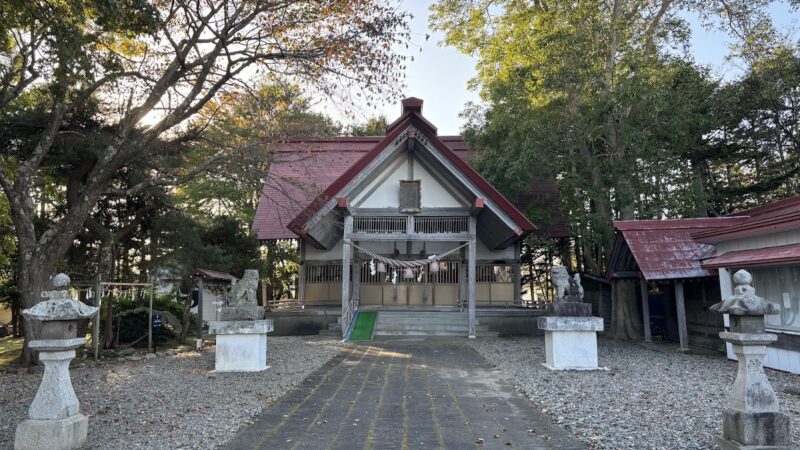
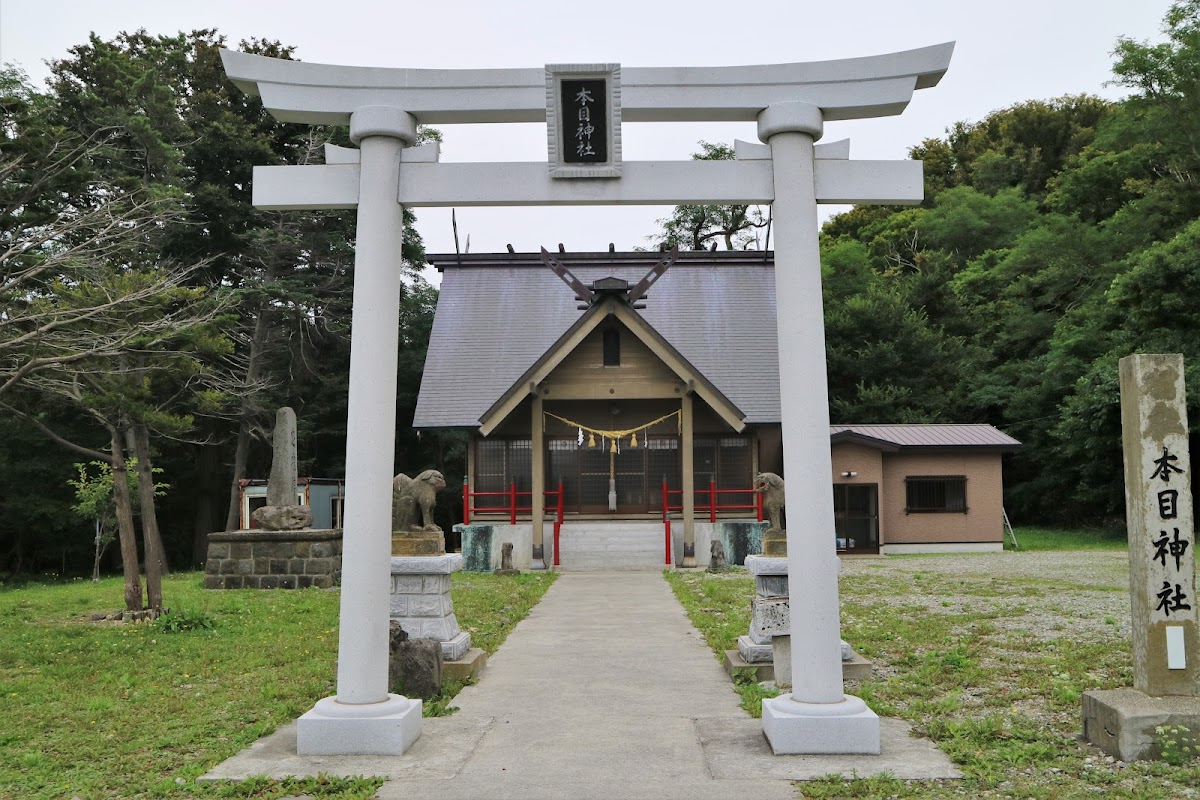
The current shrine building has been maintained through several repairs since its reconstruction in 1909 (Meiji 42). Its structure is designed to withstand Hokkaido’s harsh climate, combining the beauty and robustness of wooden architecture.
The style of the shrine building is simple yet dignified, as seen in many shrines in Hokkaido, and is characterized by its integrated structure of the worship hall and main sanctuary.
Natural Environment of the Shrine Grounds
The grounds of Honme Shrine are surrounded by Hokkaido’s rich natural environment. Visitors can enjoy the beautiful scenery of each season: fresh greenery in spring, deep green in summer, autumn leaves in fall, and snowscapes in winter.
In particular, among the trees planted on the grounds are ancient trees that have grown alongside the history of the shrine, creating a sacred atmosphere. These trees are living witnesses that have observed the changes in the region’s natural environment.
Stone Monuments and Memorials
Stone monuments and memorials that tell the history of the shrine are erected on the grounds. Monuments commemorating important events, such as the reconstruction monument from 1909 (Meiji 42) and the monument commemorating its elevation to a village shrine in 1924 (Taisho 13), play a role in passing on the history of the shrine to future generations.
Furthermore, memorials to war dead have also been erected, giving the shrine a function as a place to preserve the history of the region and the memories of its people.
Annual Events and Festivals
Grand Festival
The Grand Festival, the most important festival of Honme Shrine, is held at a fixed time each year. During the Grand Festival, traditional Shinto rituals such as the portable shrine procession and the dedication of Kagura (sacred dance) are performed, making it an important event where local residents gather together.
The Grand Festival is also an opportunity to strengthen the bonds of the local community and functions as a place for intergenerational exchange. In recent years, the scale has tended to shrink due to the effects of the declining birthrate and aging population, but efforts to preserve the traditions continue.
First Shrine Visit of the New Year
Many parishioners and local residents visit the shrine for the first shrine visit of the New Year. Hatsumode (the first shrine visit of the year) to pray for safety and prosperity throughout the year is a traditional Japanese religious event that remains popular with many people today.
From New Year’s Day to the third day of the year, New Year’s prayers are offered at shrines, and worshippers are given sacred sake and lucky charms.
Other Annual Events
Honme Shrine also holds the following annual events:
- Spring Festival: A festival celebrating the arrival of spring and praying for a bountiful harvest.
- Summer Purification Ceremony: A Shinto ritual to purify oneself of the impurities accumulated over the past six months and pray for good health.
- Autumn Festival: A festival expressing gratitude for the harvest and celebrating a bountiful harvest.
- Year-End Purification Ceremony: A Shinto ritual to purify oneself of the impurities accumulated over the past year and prepare for the New Year.
These events provide an opportunity to experience traditional Japanese beliefs and the changing seasons.
Location and Access
Location
Honme Shrine
- Address: Honme area, Otoe-cho, Fukagawa City, Hokkaido
- Affiliation: Hokkaido Shrine Association
Access Methods
Access by Car
The most convenient way to access Honme Shrine is by car. From Fukagawa city center, take National Route 12 towards Otoe-cho. If using a car navigation system, you can set your destination by entering “Honme Shrine” or the address.
The shrine has parking spaces for visitors, but congestion is expected during major events such as the annual festival, so it is recommended to visit with plenty of time to spare.
Access by Public Transportation
The nearest station is Fukagawa Station on the JR Hakodate Main Line. From the station, you will need to take a local bus or taxi, but since the number of services is limited, it is recommended to check the timetable in advance.
Precautions When Visiting the Shrine
- The shrine grounds are a sacred place, so please maintain silence and observe proper etiquette when visiting.
- During winter, there is snow, so please wear non-slip shoes and watch your step.
- Please take all your trash with you.
- Photography is permitted, but please be considerate of those performing religious ceremonies or other visitors.
Hokkaido’s Shrine Culture and Honme Shrine
Hokkaido Development and Shrines
Shrines in Hokkaido have a unique history that differs from those south of Honshu. Many shrines were built with the full-scale development that began in the Meiji era. The pioneers sought solace in their harsh pioneering lives by inviting branch shrines from their hometowns or creating new shrines.
Honme Shrine is one such shrine from the Hokkaido pioneering period, and it continues to convey the faith and love for the region of the pioneers.
Relationship with the Hokkaido Shrine Association
Honme Shrine belongs to the Hokkaido Shrine Association. The Hokkaido Shrine Association is an organization that oversees shrines throughout Hokkaido, carrying out activities such as shrine maintenance, training of Shinto priests, and promotion of Shinto.
The Hokkaido Shrine Association’s website contains information on shrines throughout Hokkaido, including Honme Shrine, allowing visitors to learn about the history and festivals of each shrine.
Role in the Local Community
Even in modern times, Honme Shrine plays an important role in the local community. Amidst depopulation and an aging population, the shrine continues to provide a place for people to interact, serving as the center of the local community.
Through festivals and events, intergenerational exchanges are fostered, and the region’s traditional culture is passed down. Furthermore, the cooperation of local residents is essential for the maintenance of the shrine, and community bonds centered around the shrine are nurtured.
Manners and Etiquette for Visiting a Shrine
How to Pass Through the Torii Gate
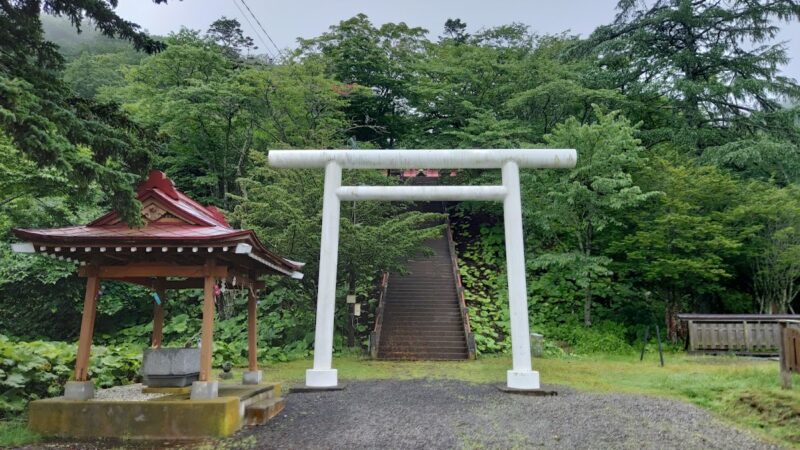
When visiting a shrine, first bow before the torii gate. The torii gate is the boundary separating the sacred realm from the secular world, and it shows respect for entering the realm of the gods. When passing through a torii gate, it is considered proper etiquette to walk along the sides, avoiding the center.
Proper Procedure for Washing Your Hands
As you proceed along the approach to the shrine, you will find a water basin for washing your hands. Here, you purify your mind and body before praying:
- Take the ladle in your right hand and purify your left hand.
- Switch the ladle to your left hand and purify your right hand.
- Take the ladle back in your right hand, receive water in your left hand, and rinse your mouth.
- Purify your left hand once more.
- Hold the ladle upright and pour water over the handle to purify it.
- Return the ladle to its original position.
Proper Worship at the Main Hall
Once you approach the main hall, pray using the following procedure:
- Place your offering in the offering box.
- If there is a bell, ring it.
- Bow twice (bowing deeply twice).
- Clap your hands twice.
- Pray with all your heart.
- Bow once (bowing deeply once).
This is called “two bows, two claps, one bow,” and it is the basic etiquette for visiting a shrine.
The Future and Preservation Activities of Honme Shrine
Value as a Cultural Property
Honme Shrine is a valuable cultural heritage site that tells the history of Hokkaido’s pioneering era. Its history—relocation in the Meiji era, complete destruction and reconstruction, and consolidation and elevation to village shrine status in the Taisho era—holds significant meaning as part of Hokkaido’s pioneering history.
The shrine’s architecture, grounds, and the traditional festivals and events are valuable historical materials that tell the story of the region’s history and culture, and are assets that should be passed down to future generations.
Challenges of Preservation and Succession
Modern local shrines face challenges such as a decline in parishioners due to the low birthrate and aging population, financial difficulties, and a lack of people to carry out traditional festivals. Honme Shrine is also grappling with these challenges while working to maintain the shrine and pass on its traditions.
Cooperation from local residents, support from the government, and the understanding and support of the general public are essential for the preservation and succession of the shrine.
Contribution to Regional Revitalization
Shrines have value as places to learn about the region’s history and culture, as well as as tourist resources. By widely disseminating information about the history and culture of Honme Shrine, we can increase interest in the region and contribute to its revitalization.
An increase in visitors to the shrine can also have a positive ripple effect on the local economy. Furthermore, it provides an opportunity to convey the region’s history and culture to migrants from urban areas and younger generations, fostering a sense of attachment to the community.
Summary
Honme Shrine is a historic shrine located in Otoemachi, Fukagawa City, Hokkaido, with a history dating back to the Meiji era. Beginning with its founder, Heiji Omiya, it has a history that includes its complete destruction and reconstruction in 1909 (Meiji 42), and its elevation to village shrine status in 1924 (Taisho 13), leading to its present state.
As the local guardian deity, it offers divine blessings for abundant harvests, family safety, and business prosperity, and various Shinto rituals are performed throughout the year. It continues to play an important role as a valuable cultural heritage site that conveys the faith of the Hokkaido pioneering era, and as a center of the local community.
When visiting Fukagawa City, we highly recommend visiting Honme Shrine to experience the history of Hokkaido’s pioneering and the region’s religious culture. By joining your hands in prayer in the tranquil temple grounds, you can feel the hardships and faith of the pioneers, as well as the history of the region up to the present day.