Complete Guide to Shibui Shrine | History, Deities, and Access Information for a Historic Shrine in Tomari Village, Hokkaido
Shibui Shrine, located in Tomari Village, Koyu District, Hokkaido, is a historic shrine founded in 1850 (Kaei 3). Situated in the Shibui district of Tomari Village, facing the Sea of Japan, it has long been a place of worship for local residents. This article comprehensively introduces all the information you need to know before visiting Shibui Shrine, including its detailed history, enshrined deities, grounds, and access methods.
Basic Information on Shibui Shrine
Shibui Shrine is located in Tomari Village, Koyu District, in the Shiribeshi region of Hokkaido, near the Chazu Tunnel along National Route 229.
Location
1 Shibui, Horikabu Village, Tomari Village, Koyu District, Hokkaido 045-0202
Deity Enshrined
Ukanomitama-no-Mikoto
Shrine Rank and History
As a local shrine equivalent to a village shrine, it is worshipped as the guardian shrine of the Shibui district of Tomari Village.
Jurisdiction
It belongs to the Hokkaido Shrine Association and is officially registered as a shrine.
History and Origin of Shibui Shrine
From Founding to the Meiji Era
The history of Shibui Shrine dates back to the end of the Edo period, in the 3rd year of Kaei (1850). Founded by the pioneer Miyashita Jinbei, this shrine was built as a spiritual center for the people who settled in this area at that time.
Even before the full-scale development of Hokkaido, people engaged in fishing lived in this area, and a shrine was needed as a place to pray for safety at sea and a bountiful catch. Jinbei Miyashita, as a local leader, dedicated himself to the establishment of a shrine that would serve as a spiritual pillar for the residents.
Shrine Consolidation in the Meiji Era
In 1910 (Meiji 43), due to the Meiji government’s policy of shrine consolidation, Shibui Shrine was merged with Horikabu Shrine. This policy, based on the principle of “one shrine per town/village,” led to the consolidation of many small shrines nationwide.
Tomari Village was no exception; the deity of Shibui Shrine was moved to Horikabu Shrine, and its activities as an independent shrine were suspended for approximately 40 years. However, the feelings for “Shibui Shrine” always remained in the hearts of the local residents.
Reconstruction in the Showa Era and the Present
In 1949 (Showa 24), in the new era after the end of the war, Shibui Shrine was rebuilt at the strong request of the residents of the Shibui district, separated from Horikabu Shrine. A shrine building was constructed at its current location, and it was revived as an independent shrine after approximately 40 years.
This reconstruction demonstrated the strong unity of the local community and represented the strong will of people to protect local traditions and beliefs even during the chaotic post-war period.
More than 70 years after its reconstruction, Shibui Shrine is still carefully preserved as the guardian shrine of the region, and many residents visit to worship at the annual festival.
About the Deity
The deity enshrined at Shibui Shrine is Ukanomitama-no-Mikoto.
About Ukanomitama-no-Mikoto
Ukanomitama-no-Mikoto is a god of grain and food appearing in Japanese mythology, and is generally known as “O-Inari-san.” The name “Ukanomitama” means “the spirit of rice stored in the storehouse,” and is believed to bestow blessings such as abundant harvests, business prosperity, and family safety.
Why is it enshrined at Shibui Shrine?
During the pioneering period of Hokkaido, securing food was of paramount importance to the settlers. In the Shibui district, where agriculture and fishing formed the basis of livelihood, worshipping Ukanomitama-no-Mikoto, the deity of food, was a natural choice.
Furthermore, Inari worship was widely practiced among common people from the Edo period onward, and it is believed that pioneers who migrated from Honshu to Hokkaido brought their beliefs from their homeland with them.
The Name “Shibui Inari Shrine”
The official name is “Shibui Shrine,” but because the enshrined deity is Ukanomitama-no-Mikoto, it is sometimes called “Shibui Inari Shrine.” Especially during the annual festival, the name “Shibui Inari Shrine Festival” is used, and both names are used interchangeably in the region.
Shrine Grounds and Highlights
Features of the Shrine Building
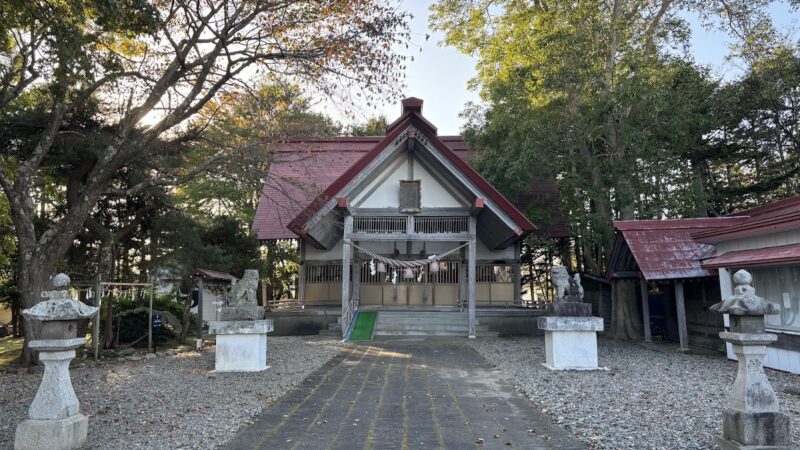
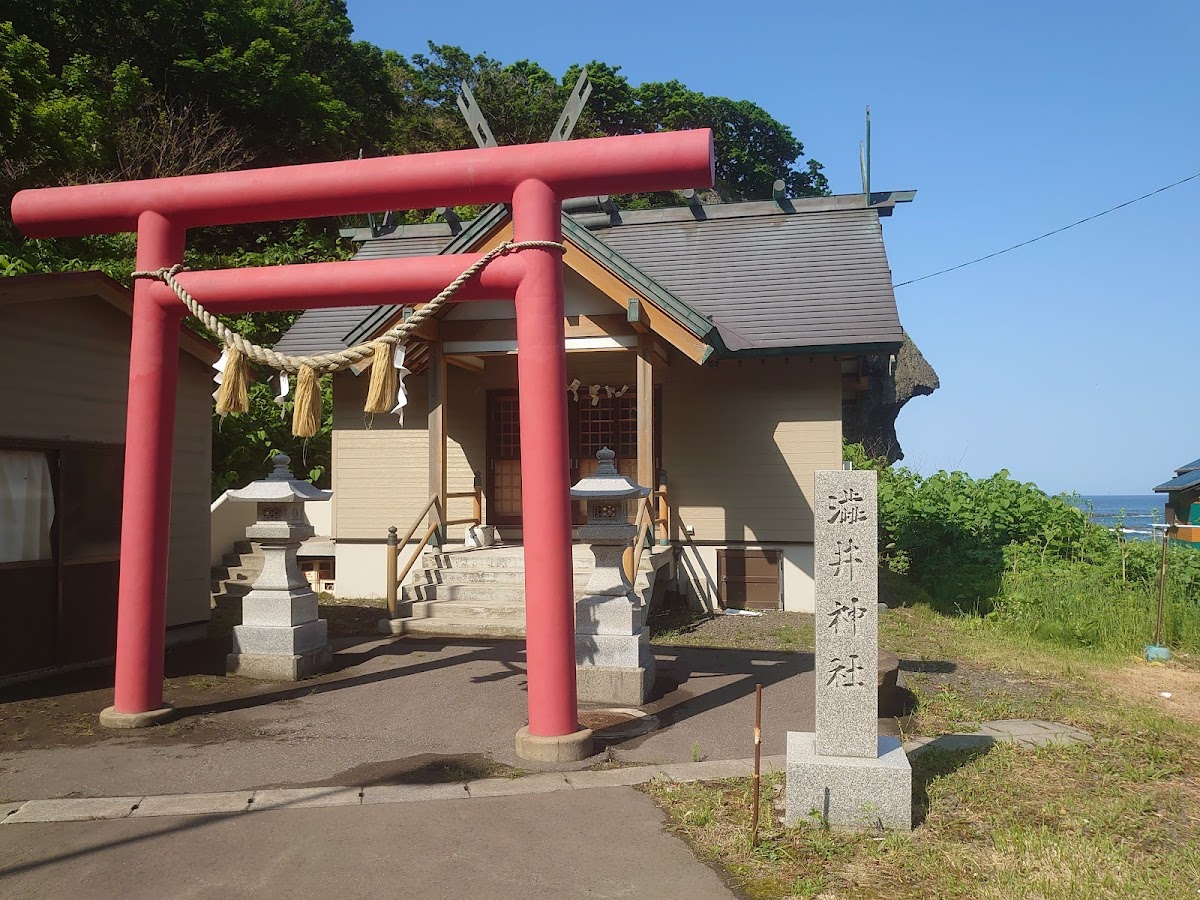
Shibui Shrine is a relatively small shrine built on flat land. The shrine building, constructed during its reconstruction in 1949, is designed to suit Hokkaido’s climate, boasting a robust structure capable of withstanding heavy snowfall and strong winds.
The shrine building incorporates new architectural styles, maintaining elements of traditional shrine architecture while prioritizing practicality.
Atmosphere of the Shrine Grounds
Despite its location along National Route 229, the shrine grounds are enveloped in a tranquil atmosphere. The unique environment, where one can worship while feeling the sea breeze from the Sea of Japan, evokes the history of a region that has lived in harmony with the sea.
The shrine grounds are meticulously maintained by local residents and are impeccably clean. It is clear from the state of the grounds that this small shrine is beloved by the community.
Surrounding Environment
The Chazu Tunnel is located very close to the shrine, and it is situated slightly towards the sea from the entrance on the Tomari Village Office side. The surrounding area is a mix of residential areas and coastline, showcasing the typical landscape of Tomari Village, where fishing and daily life are closely intertwined.
Access Methods
Access by Car
From Sapporo
Approximately 2 hours and 30 minutes from Sapporo city via National Route 5. Pass through Otaru City and proceed towards the Shakotan Peninsula on National Route 229 (commonly known as the Oiwake Soran Line). Upon entering Tomari Village, please check the seaside near the Tomari Village Office exit of the Chazu Tunnel.
From Otaru
From Otaru city, head north on National Route 229 for approximately 1 hour and 30 minutes. This is a scenic route along the coastline of the Shakotan Peninsula.
Parking
There is no dedicated large-scale parking lot, but there are spaces available for parking around the shrine. During festivals or other times when congestion is expected, please consider using parking lots at nearby public facilities.
Access by Public Transportation
Nearest Station
The nearest station is JR Hakodate Main Line “Ozawa Station,” but the shrine is over 15km away, making walking impractical.
Bus
Hokkaido Chuo Bus operates local buses to Tomari Village, but the number of services is limited. Direct buses from Sapporo and Otaru are infrequent, so it is recommended to check the timetable in advance.
Taxi
While you can take a taxi from Ozawa Station or Iwanai Town, the fare will be expensive. Renting a car is the most convenient option.
Notes on Access
- During winter (November to March), snow and icy roads are common, so winter tires and chains are essential.
- National Route 229 runs along the coast, so it may be closed during strong winds or high waves.
- Visibility is poor in some areas near the Chazu Tunnel, so caution is advised for first-time visitors.
Annual Events and Festivals
Shibui Inari Shrine Festival
The most important annual event at Shibui Shrine is the Shibui Inari Shrine Festival, held every year. In Tomari Village, shrine festivals are held at five shrines: Horikabu Shrine, Koshinai Shrine, Sakazuki Shrine, and Tomari Shrine. The Shibui Inari Shrine Festival is one of them.
Dates
It is usually held from mid-to-late June (dates vary each year, so it is recommended to check with the Tomari Village Office).
Festival Details
Local residents gather for a Shinto ritual. While not large in scale, it is considered an important event for strengthening community bonds. Prayers are offered for fishing safety, abundant catches, regional prosperity, and the health of residents.
Other Events
New Year’s Visit
On New Year’s Day, local residents visit the shrine for New Year’s prayers. Since it is the harsh winter season in Hokkaido, please dress warmly for your visit.
Daily Visits
Even outside of the annual festival period, local residents visit the shrine regularly. Fishermen, in particular, often visit to pray for safety before setting out to sea.
About Tomari Village
Tomari Village, where Shibui Shrine is located, is a small village with a population of approximately 1,500 people, situated on the Sea of Japan side of the Shiribeshi region of Hokkaido.
Characteristics of Tomari Village
Geography
Located on the southern side of the Shakotan Peninsula, it is a naturally rich area surrounded by beautiful coastlines and mountains. The village name is said to originate from the presence of a good harbor where ships could moor.
Industry The main industry is fishing, with seafood such as sea urchins, abalone, and Atka mackerel being particularly famous. It is also known for the Hokkaido Electric Power Company’s Tomari Nuclear Power Plant.
Tourism The village boasts highly transparent waters known as “Shakotan Blue,” fresh seafood, and hot springs, making them popular tourist attractions. In the summer, tourists visit to enjoy swimming and diving.
Horikabu Village Area
Horikabu Village, where Shibui Shrine is located, is a district within Tomari Village. While it was an independent village from the Edo period to the Meiji period, it now remains as a large administrative division of Tomari Village. Shibui is a sub-district (aza) within Horikabu Village.
Surrounding Shrines and Temples
Horikabu Shrine
This shrine has a deep historical connection to Shibui Shrine. From 1910 to 1949, Shibui Shrine was enshrined together with Horikabu Shrine. Even today, it remains one of the main shrines in Tomari Village, attracting the faith of the local community.
Tomari Shrine
This shrine is located in the center of Tomari Village and serves as the guardian shrine for the entire village. We recommend visiting it when you are in Tomari Village.
Koshinai Shrine
The guardian shrine of the Koshinai district of Tomari Village. Like Shibui Shrine, it is a community-oriented shrine.
Sakazuki Shrine
A shrine located in the Sakazuki district of Tomari Village. Situated near Sakazuki Beach, it is visited by beachgoers during the summer.
Manners and Etiquette for Visiting Shrines
When visiting Shibui Shrine, please observe basic shrine visiting manners.
Basic Shrine Visit Etiquette
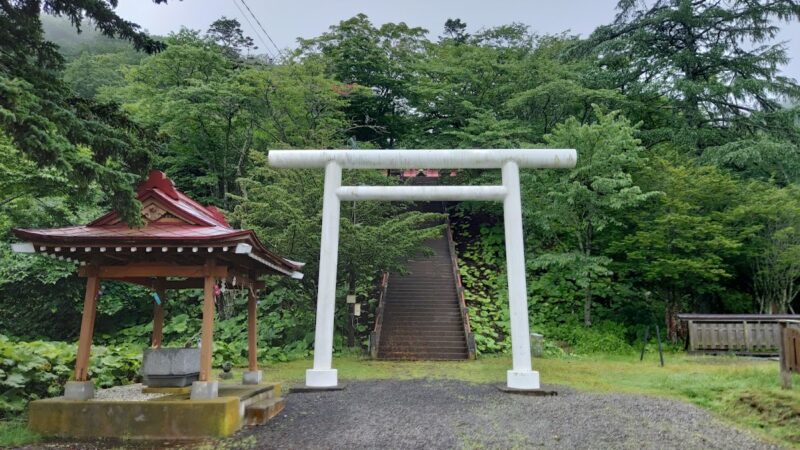
- Bow Before Passing Through the Torii Gate
As a sign of respect before entering the sacred area, bow before the torii gate.
- Walking Along the Path
The center of the path is considered the path of the gods, so walk along the sides.
- Purification at the Water Basin
If there is a water basin, purify your left hand, then your right hand, and then your mouth.
- Worship at the Main Hall
- Quietly place your offering in the offering box.
- Ring the bell if there is one.
- Bow twice, clap twice, bow once.
- Bow Upon Exit
After leaving the torii gate, turn around and bow once.
Considerations Specific to Small Shrines
Small local shrines like Shibui Shrine may not have a resident priest. If you wish to obtain a goshuin (shrine stamp) or amulet, it is recommended to inquire with the Hokkaido Shrine Association or the Tomari Village Office in advance.
Photography
Photography Etiquette
Photography at shrines is generally permitted, but please observe the following etiquette.
- Please refrain from taking photos of the main shrine and sacred areas.
- Please be considerate and avoid including other worshippers in your photos.
- When using a tripod, please be careful not to disturb others.
- When taking photos during religious ceremonies, please follow the instructions of the Shinto priests and other staff.
Photo Spots
- Exterior of the shrine
- Torii gate and approach to the shrine
- View of the Sea of Japan from the shrine grounds
- Seasonal scenery (cherry blossoms, fresh greenery, autumn leaves, snowscapes, etc.)
Best Time to Visit
Spring (April-June)
The snow is melting, and it’s a beautiful season of fresh greenery. The annual festival is held in June, allowing you to experience local traditional events.
Summer (July-August)
This is the time to enjoy Hokkaido’s short summer. It’s also the swimming season, making it ideal to visit in conjunction with sightseeing around Tomari Village.
Autumn (September-October)
The autumn leaves are beautiful, and seafood is delicious. There are fewer tourists, allowing for a peaceful visit.
Winter (November to March)
Due to heavy snowfall, access becomes difficult, but the shrine amidst the snowy landscape is magical. Sufficient equipment and safety precautions are necessary when visiting in winter.
Nearby Tourist Spots
Here are some nearby spots to visit when you come to Shibui Shrine.
Sakazuki Beach
A representative beach of Tomari Village. Enjoy the crystal-clear “Shakotan Blue” sea. Snorkeling and diving are popular, although only available during the summer.
Benkei Cape
A cape associated with the legend of Musashibo Benkei, a retainer of Minamoto no Yoshitsune. From the observation deck, you can enjoy a magnificent panoramic view of the Sea of Japan.
Tomari Onsen Fureai Hiroba
A day-trip hot spring facility. Relaxing in the hot springs after visiting the shrine is highly recommended.
Tomari Village Local History Museum
A facility where you can learn about the history and culture of Tomari Village. Exhibits include materials on the history of fishing and the pioneering era.
Shakotan Peninsula
If you venture beyond Tomari Village, you’ll find numerous scenic spots on the Shakotan Peninsula. Cape Kamui and Shimamui Coast are among Hokkaido’s most representative scenic locations.
Frequently Asked Questions
Q1: Can I get a Goshuin (temple/shrine stamp)?
A: Shibui Shrine is a small shrine and does not have a resident priest. Therefore, we do not usually offer Goshuin. If you wish to receive a Goshuin, we recommend contacting the Hokkaido Shrine Association or the managing shrine in advance.
Q2: Is there parking?
A: There is no large dedicated parking lot, but there is space to park around the shrine. However, please be considerate and avoid obstructing other traffic.
Q3: When is the annual festival held?
A: The “Shibui Inari Shrine Festival” is held annually from mid-to-late June. The specific dates vary each year, so we recommend checking with the Tomari Village Office.
Q4: Can I visit the shrine in winter?
A: Visiting the shrine is possible, but due to heavy snowfall and icy roads, winter tires or studded tires are essential. Please also take sufficient precautions against the cold.
Q5: Are there any historical records or information boards for the shrine?
A: Whether there are detailed historical records on the grounds depends on the time of your visit. More detailed information can be found on the Hokkaido Shrine Association website.
Summary
Shibui Shrine is a historic shrine located in the Shibui district of Tomari Village, Hokkaido. For over 170 years since its founding in 1850, it has been a center of faith for local residents. Its history, including a merger during the Meiji era and reconstruction in 1949, speaks to the strong bonds of the local community.
The small but carefully maintained grounds, the history of enshrining Ukanomitama-no-Mikoto, and its unique location overlooking the Sea of Japan evoke the history of Hokkaido’s development and faith. Combining a visit to Tomari Village with sightseeing on the Shakotan Peninsula will make your Hokkaido trip even more fulfilling.
When you visit Tomari Village, be sure to pay your respects at Shibui Shrine and experience the local history and culture. The peaceful grounds and the feeling of the Sea of Japan breeze while praying will be a precious experience you can’t get in the city.