Complete Guide to Sakaemachi Shrine (Yoichi-cho, Yoichi-gun, Hokkaido) | History, Deities, and Access Information
Sakaemachi Shrine, located in the Sakaemachi district of Yoichi-cho, Yoichi-gun, Hokkaido, is a shrine that has been cherished by the local community for many years. This article provides detailed information you should know before visiting, including the deities enshrined at Sakaemachi Shrine, its history, the features of the shrine buildings, the dates of the annual festival, and access methods.
Basic Information about Sakaemachi Shrine
Sakaemachi Shrine is located at 1025 Sakaemachi, Yoichi-cho, Yoichi-gun, Hokkaido, and belongs to the Hokkaido Shrine Association. Yoichi-cho is located midway between Otaru City and Niseko Town, and is a scenic town known for its whiskey and wine production.
Location and Contact Information
- Address: 1025 Sakaemachi, Yoichi-cho, Yoichi-gun, Hokkaido
- Phone Number: 0134-23-0785
- Jurisdiction: Hokkaido Shrine Association
The Sakaemachi area is located in a quiet residential area of Yoichi-cho, and the shrine grounds are a beloved place of relaxation for local residents.
Deity and Divine Virtues
Oyamatsumi-no-kami
The deity enshrined at Sakaemachi Shrine is Oyamatsumi-no-kami. Oyamatsumi-no-kami is a mountain god appearing in Japanese mythology, and is a historically significant deity mentioned in the Kojiki and Nihon Shoki.
Oyamatsumi-no-Kami is considered the child deity of Izanagi-no-Mikoto and Izanami-no-Mikoto, and has been revered as the god who governs the mountains. Its divine virtues are wide-ranging.
Divine Virtues
- Protection of Mountains: Brings safety and abundant blessings to mountains and forests
- Safety at Sea: Protects the safety of maritime traffic
- Abundant Harvest: Prayers for agricultural prosperity and bountiful harvests
- Family Safety: Protects the health and peace of the family
- Business Prosperity: Guides the development and prosperity of businesses
Yoichi Town is a region surrounded by the sea and mountains, and has long been a center of fishing and agriculture. Historically, the town has worshipped Oyamatsumi-no-Kami to pray for the protection of local industries and the safety of its residents.
Features of the Shrine Building and Grounds
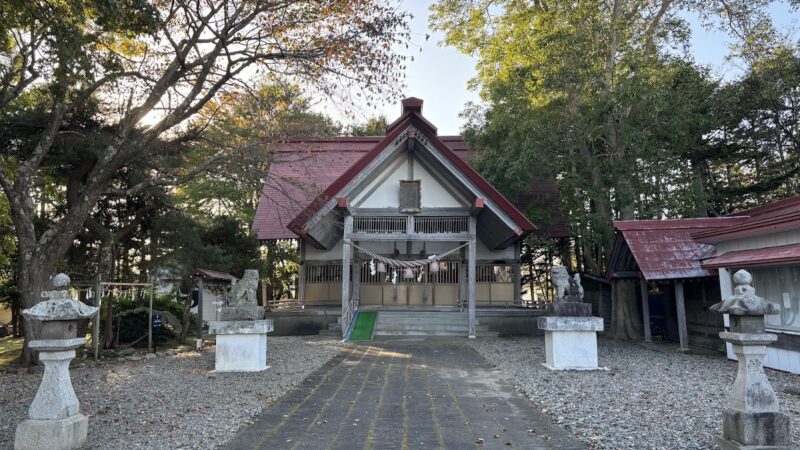
Shinmei-zukuri Style Shrine Building
The shrine building of Sakaemachi Shrine is constructed in the Shinmei-zukuri style. Shinmei-zukuri is one of the oldest styles of Japanese shrine architecture, characterized by its simple and pure beauty, exemplified by Ise Grand Shrine.
Main Features of Shinmei-zukuri:
- Gable roof
- Hirairi (entrance on the long side of the building)
- Chigi and Katsuogi (decorative roof elements) on the roof
- Raised floor structure
- Simple and linear beauty
Size of the Grounds
- Shrine Building Area: 30 tsubo (approximately 99 square meters)
- Grounds Area: 292.5 tsubo (975.0 square meters)
The grounds, approximately 975 square meters, are spacious enough for a local shrine, allowing for a quiet and peaceful atmosphere for worship. The shrine grounds are planted with trees, creating an environment where visitors can experience the changing seasons.
Number of Parishioner Households
Sakaemachi Shrine has 38 parishioner households. Though small, it is a shrine deeply rooted in the community and is carefully preserved by its parishioners. It has been passed down through generations as a spiritual anchor for the local community.
Annual Festival and Events
Annual Festival Date
Sakaemachi Shrine’s annual festival is held on September 11th. The annual festival is the most important event for the shrine, a day to express gratitude to the enshrined deity once a year.
The following rituals are performed during the annual festival:
- Kensen (Offering of Food and Drink): Offering of food and drink to the gods
- Norito Sojo (Recitation of Prayers): The Shinto priest recites prayers
- Tamagushi Houten (Offering of Sacred Branches): Attendees offer sacred branches
- Naorai (Feast): A meal held after the rituals
Annual Events at Shrines in Hokkaido
Shrines in Hokkaido perform annual events adapted to the climate and environment, which differ from those in Honshu. It is believed that Sakaemachi Shrine also performs rituals according to local customs.
- New Year’s Day Festival (January 1st): A festival celebrating the New Year
- Setsubun Festival (around February 3rd): A ritual to ward off evil spirits by scattering beans
- Spring Festival: Celebrating the arrival of spring
- Autumn Festival (September 11th): Expressing gratitude for the harvest
- Shichi-Go-San Festival (November): Celebrating the growth of children
- Great Purification Ceremony (June & December): Purifying oneself of sins and impurities accumulated over the past six months
Access Information
Access by Public Transportation
Sakaemachi Shrine can be accessed using public transportation.
If using the JR Hakodate Main Line:
- Get off at Yoichi Station on the JR Hakodate Main Line.
- Take the Chuo Bus bound for Otaru.
- Get off at the Sakaemachi bus stop.
- A short walk from the bus stop.
Yoichi Station is approximately 1 hour and 10 minutes from Sapporo Station by express train, and approximately 20 minutes from Otaru Station. Yoichi Town is a relatively easily accessible area within Hokkaido.
Access by Car
From Sapporo:
- Approximately 70km from central Sapporo, about 1 hour and 30 minutes by car.
- Approximately 1 hour via the Sapporo-Otaru Expressway if using the expressway.
From Otaru:
- Approximately 20km from central Otaru, about 30 minutes by car.
- Use National Route 5.
From Niseko:
- Approximately 50km from Niseko Town, about 70 minutes by car.
We recommend contacting the shrine directly before your visit to inquire about parking availability.
History and Culture of Yoichi Town
Overview of Yoichi Town
Yoichi Town is located in Yoichi District, under the jurisdiction of the Shiribeshi General Subprefectural Bureau of Hokkaido, with a population of approximately 18,000 (as of 2024). It faces Ishikari Bay and is situated in a naturally rich environment with mountains in the background.
Historical Background
The history of the Yoichi District is long. In 1803, during the late Edo period, Mamiya Rinzo conducted a survey of the western Ezo (Hokkaido) coast. In 1807, it became a shogunate-controlled territory, and in 1821, it returned to the Matsumae Domain.
Since the Meiji era, the number of immigrants from Honshu has increased, and the town has developed primarily through agriculture and fishing. Herring fishing, in particular, was thriving, and luxurious buildings known as “herring palaces” were constructed.
Yoichi Town’s Local Products
Yoichi Town is known for its thriving fruit cultivation and is famous for the following local products:
- Whiskey: Home to the Nikka Whisky Yoichi Distillery, it is famous as a mecca for whiskey.
- Wine: Numerous local wineries exist, including Yoichi Wine.
- Apples: One of Hokkaido’s leading apple-producing regions.
- Grapes: Various varieties are cultivated, including grapes for wine.
- Cherries: A popular taste of early summer.
Surrounding Shrines and Temples
In addition to Sakaemachi Shrine, many other shrines and temples exist in Yoichi Town and the surrounding area.
Main Shrines in Yoichi Town
Sankichi Shrine
- Approximately 1 hour 8 minutes on foot from Sakaemachi Shrine (5.4 km)
- One of Yoichi Town’s representative shrines
Meiji Shrine
- Approximately 1 hour 21 minutes on foot from Sakaemachi Shrine (6.4 km)
- A shrine that conveys the pioneering spirit of the Meiji era
Temples in Yoichi Town
Honganryoku-ji Temple
- Location: 465 Irifune-cho, Yoichi-gun, Yoichi-cho
- A Jodo Shinshu Buddhist temple
Hoon-ji Temple
- Location: 145 Irifune-cho, Yoichi-gun, Yoichi-cho
- The center of Buddhist faith in the region
Shrines in Neighboring Municipalities
Ranshima Shrine
- Approximately 37 minutes on foot from Sakaemachi Shrine (3 km)
- Located in the Ranshima district of Otaru City
Oshoro Shrine
- Approximately 49 minutes on foot (3.9 km) from Sakaemachi Shrine
- Located in the Oshoro district of Otaru City
Niki Shrine
- Approximately 2 hours and 38 minutes on foot (7.8 km) from Sakaemachi Shrine
- Located in Niki-cho
Shioya Shrine
- Approximately 2 hours and 44 minutes on foot (8.3 km) from Sakaemachi Shrine
- Located in the Shioya district of Otaru City
Visiting these shrines is one way to enjoy the Yoichi and Otaru area.
Etiquette for Worship
Knowing the correct etiquette for worshipping at a shrine will allow you to offer a more heartfelt prayer.
Basic Worship Etiquette
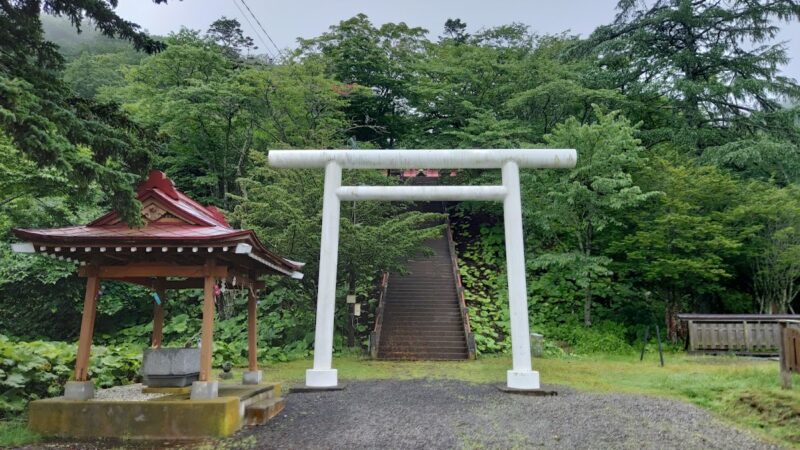
- Bow Before Passing Through the Torii Gate
- Bow lightly before entering the sacred area.
- Walk along the edge of the path, as the center is the path for the gods.
- Purify at the Water Basin (Temizuya)
- Hold the ladle in your right hand and purify your left hand.
- Switch the ladle to your left hand and purify your right hand.
- Switch the ladle back to your right hand, receive water in your left hand, and rinse your mouth.
- Finally, purify the handle of the ladle.
- Worship at the Main Hall
- Gently place your offering in the offering box.
- Ring the bell if there is one.
- Worship using the “Two Bows, Two Claps, One Bow” method.
- Bow deeply twice (Two Bows)
- Clap your hands twice (Two Claps)
- Bow deeply once (One Bow)
- When Leaving
- After leaving the torii gate, turn around and bow.
Customs Unique to Shrines in Hokkaido
Shrines in Hokkaido may have slightly different customs and require different considerations than those in Honshu:
- Winter Visits: Be careful of snow and ice, and watch your footing.
- Cold Weather Protection: Sufficient cold weather protection is necessary during winter.
- Water Basin: May be unavailable during winter due to freezing.
Points to Note When Visiting Sakaemachi Shrine
Best Time to Visit
Sakaemachi Shrine is open for visits throughout the year, but each season offers its own unique charm.
Spring (April-June)
- A beautiful season of fresh greenery as the snow melts.
- Mild temperatures make it easy to visit the shrine.
Summer (July-August)
- Enjoy Hokkaido’s short summer.
- The orchards in Yoichi Town are also at their best.
Autumn (September-November)
- There is a special atmosphere due to the annual festival (September 11th).
- A beautiful season of autumn leaves.
- The whole town comes alive during the fruit harvest season.
Winter (December-March)
- A tranquil atmosphere amidst the snowy landscape.
- Caution is needed when walking.
Clothing and Items to Bring
- Clothing: Clean clothing appropriate for visiting the shrine.
- Shoes: Comfortable walking shoes (non-slip shoes in winter).
- Warm Clothing: Hokkaido has lower temperatures than Honshu, so take appropriate cold weather precautions for the season.
- Camera: Photography is permitted on the shrine grounds, but please remember that it is a sacred place.
Combining a visit with sightseeing in Yoichi Town
We recommend visiting Yoichi Town’s tourist spots in conjunction with a visit to Sakaemachi Shrine.
Nikka Whisky Yoichi Distillery
- Free tours available (reservations required)
- Learn about the whisky manufacturing process
- Enjoy tastings (except for drivers)
Yoichi Space Museum
- A space-themed facility in Yoichi Town, the birthplace of Mamoru Mohri, Japan’s first astronaut.
Yoichi Winery
- Manufacture and sell wine using locally grown grapes
- Tastings and purchases available
Former Shimo-Yoichi Customs House
- Designated as a Hokkaido Tangible Cultural Property
- Learn about the history of the Edo period
Yoichi Fishing Port Morning Market
- Purchase fresh seafood
- Experience local food culture
About the Hokkaido Shrine Association
Sakaemachi Shrine belongs to the Hokkaido Shrine Association. The Hokkaido Shrine Association, as a regional branch of the Association of Shinto Shrines, oversees shrines throughout Hokkaido and strives to promote shrines and spread Shinto culture.
Role of the Hokkaido Shrine Association
- Comprehensive oversight and guidance of shrines in Hokkaido
- Training and education of Shinto priests
- Provision of information on shrines
- Activities to promote Shinto culture
- Creation of leaflets and promotional materials
- Public relations through TV commercials
- Introduction and promotion of Gagaku (Japanese court music)
- Introduction of annual events in Hokkaido
The Hokkaido Shrine Association’s website provides information on shrines throughout Hokkaido, the basics of Shinto rituals, and materials such as the Imperial Rescript on Education, allowing for in-depth learning about shrine culture.
Summary
Sakaemachi Shrine is located at 1025 Sakaemachi, Yoichi-cho, Yoichi-gun, Hokkaido, and enshrines Oyamatsumi-no-kami. It has a Shinto-style shrine building, and its annual festival is held on September 11th. Cherished and protected by 38 parishioners, it serves as a spiritual anchor for the local community.
Accessible by Chuo Bus from JR Yoichi Station, it can be visited in conjunction with sightseeing in Yoichi Town. Why not take a moment to calm your mind and offer prayers in the tranquil grounds, while experiencing the rich nature and culture of Yoichi Town, known for its whiskey, wine, and fruits?
As part of a tour of shrines in Hokkaido, and as a way to learn about the history and culture of Yoichi Town, a visit to Sakaemachi Shrine will be a valuable experience. Though a small shrine rooted in the community, it is imbued with faith passed down through generations and the warm feelings of the local people.
When visiting Yoichi Town, be sure to visit Sakaemachi Shrine and pray to Oyamatsumi-no-kami for safe travels and daily peace.