Complete Guide to Yuni Shrine | History, Goshuin (Shrine Seal), and Visiting Information in Yuni Town, Hokkaido
Yuni Shrine, located in Yuni Town, Yubari District, Hokkaido, is a historic shrine that has walked hand in hand with the development of the area during the Meiji era. Surrounded by lush green forests, the shrine grounds are enveloped in the beauty and tranquility of nature throughout the seasons, offering visitors a moment of healing. This article provides a detailed introduction to Yuni Shrine, including its history, enshrined deities, goshuin information, highlights for visitors, and access methods.
Basic Information on Yuni Shrine
Yuni Shrine is located at 330 Honcho, Yuni Town, Yubari District, Hokkaido. Its former shrine rank was Gosha (village shrine). While located in the center of Yuni Town, it sits on a small hill, creating a sacred space enveloped in a deep forest.
Location and Access
Location: 330 Honcho, Yuni-cho, Yubari-gun, Hokkaido
Phone Number: Please inquire through the Hokkaido Shrine Association
Annual Festival Date: September 8th
Yuni Shrine is approximately a 15-minute walk from Yuni Station on the JR Muroran Main Line. If coming by car, it is approximately 5 minutes from the Yuni Parking Area on the Hokkaido Expressway, accessible from National Route 234. A parking lot is available on the shrine grounds and is free for visitors.
Deities Enshrined
Yuni Shrine enshrines three deities.
- Amaterasu Omikami: The supreme deity in Japanese mythology, revered as the ancestral deity of the Imperial family and the sun goddess.
- Ōnamuchi no Kami: Another name for Ōkuninushi no Kami, known as the god of nation-building, matchmaking, and abundant harvests.
- Honda Wake no Mikoto: A deified form of Emperor Ōjin, worshipped as the god of military success and victory in competitions.
These enshrined deities are worshipped in Hokkaido, a pioneering land, as guardians of the safety and prosperity of the settlers and the development of the region.
History of Yuni Shrine
The history of Yuni Shrine is deeply intertwined with the history of Hokkaido’s development. Let’s take a closer look at its changes from the Meiji era to the present day.
Founding and Development in the Meiji Era
**In February 1892 (Meiji 25), with the development of Yuni Village, the shrine was established as a small shrine of the Yubari Shrine, the general guardian shrine of the Yubari County development, through the efforts of representatives Kameji Morohashi and Son’ichi Hasegawa, and initiator Ryo Yoshizaki. This was the beginning of Yuni Shrine.
In May 1893 (Meiji 26), Uhachi Sato, from Yamagata Prefecture, was appointed as the first chief priest, and the shrine was officially founded. Chief Priest Sato worked diligently to elevate the shrine from an unranked shrine to a village shrine and then a regional shrine, laying the foundation for the shrine’s management.
On December 1, 1903 (Meiji 36), Yamagata Hachiman Shrine was founded, and another Hachiman Shrine was built in the Fushimi area. However, in December 1911 (Meiji 44), these shrines were merged into Yuni Shrine. Following this merger, the shrine building was relocated and rebuilt, and its establishment was officially recognized on September 8, 1904 (Meiji 37).
Relocation during the Taisho Era
On July 21, 1917 (Taisho 6), the shrine building of Yuni Shrine was constructed at its current location, and the relocation took place. This relocation meant that Yuni Shrine was now situated on a small hill at the current address of 330 Honmachi, establishing its position as a spiritual pillar of the community.
Development during the Showa Era
During the Showa era, development of the Yuni Shrine grounds progressed. In August 1936 (Showa 11), a torii gate was erected, and on October 24 of the same year, a water basin was dedicated. These stone structures remain on the grounds today, conveying the depth of faith at that time.
Throughout the Showa era, Yuni Shrine continued to develop as the guardian shrine of the region, along with the increase in the number of parishioners. Even during the post-war reconstruction period, it played an important role as a spiritual center for the local residents.
Yuni Shrine in the Heisei and Reiwa Eras
In the Heisei era, Yuni Shrine focused on improving the environment of its grounds and maintaining its shrine buildings, creating an environment where worshippers could comfortably visit. It remains affiliated with the Hokkaido Shrine Association and continues to preserve the region’s traditions and culture.
In the Reiwa era, Yuni Shrine continues to be a central presence in the local community through its annual festivals and seasonal rituals. While the number of parishioners has changed with the times, faith in and respect for the shrine have been passed down through generations.
Guide to the Grounds of Yuni Shrine
The grounds of Yuni Shrine are a tranquil space surrounded by a lush forest. We will introduce the highlights in order, from the approach to the shrine buildings.
The First Torii Gate and Approach
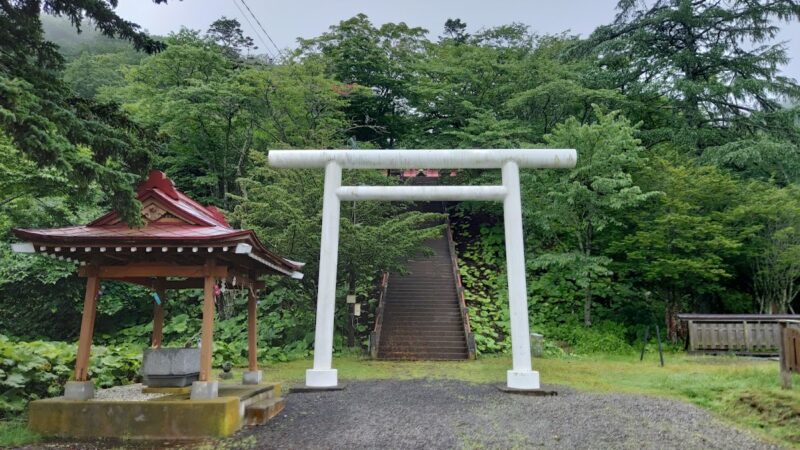
The first torii gate of Yuni Shrine stands at a corner where the road makes a right-angle turn. Interestingly, a unique arrangement of a convex mirror between the torii gate and the shrine’s name marker creates a scene unique to Hokkaido, where modern traffic coexists with the traditional shrine space.
Passing through the torii gate, a stone staircase appears, leading into a deep forest. This staircase is the approach to the shrine grounds, and with each step you climb, you feel yourself moving away from the hustle and bustle of everyday life and approaching a sacred space.
Stone Staircase and Forest Walking Trail
The stone staircase of the approach passes through a lush forest. You can enjoy the beauty of nature throughout the seasons: fresh greenery in spring, deep green in summer, autumn leaves in fall, and snowscapes in winter. Walking trails are also maintained in this forest, and you can see people enjoying forest bathing in addition to their worship.
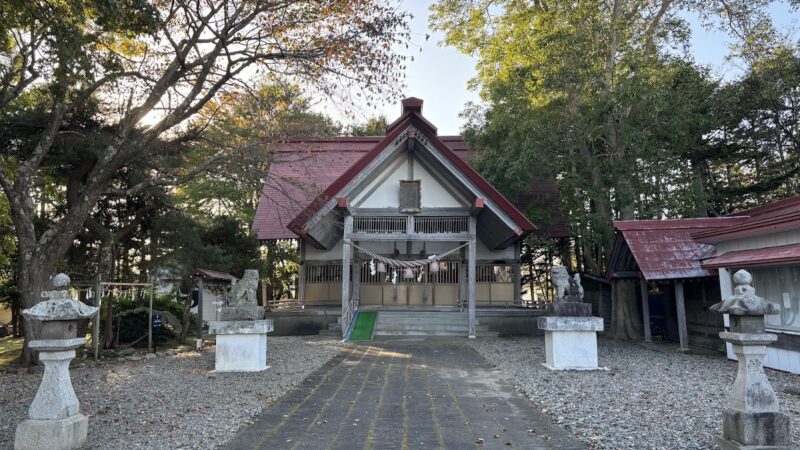
Upon reaching the top of the stone staircase, the view opens up, and you arrive at the shrine’s plaza. From here, a magnificent scene unfolds, lined with numerous lanterns and guardian lion-dogs.
Komainu (Guardian Lion-Dogs) and Lanterns
Several guardian lion-dogs (komainu) are placed throughout the shrine grounds, each imbued with the era in which they were dedicated and the feelings of the donors. These lion-dogs serve as guardians of the sacred area and delight visitors with their artistic value as stone sculptures.
Numerous lanterns, including the shrine lanterns, adorn the grounds, creating a particularly magical atmosphere at dusk and during festivals. Many lanterns, including one dedicated in 1936 (Showa 11), possess historical value.
Water Basin and Horse Statue
The water basin at the water basin where visitors purify themselves before worship was dedicated on October 24, 1936 (Showa 11). This basin has a history of over 80 years, having cleansed the hands of many worshippers.
Near the water basin is a statue of a horse. This statue is said to represent gratitude to the horses that worked alongside people during the pioneering era and faith in the god of agriculture. Horses were an indispensable part of Hokkaido’s pioneering history, and this horse statue is a valuable cultural asset that conveys that history to the present day.
Shrine Building and Worship Hall
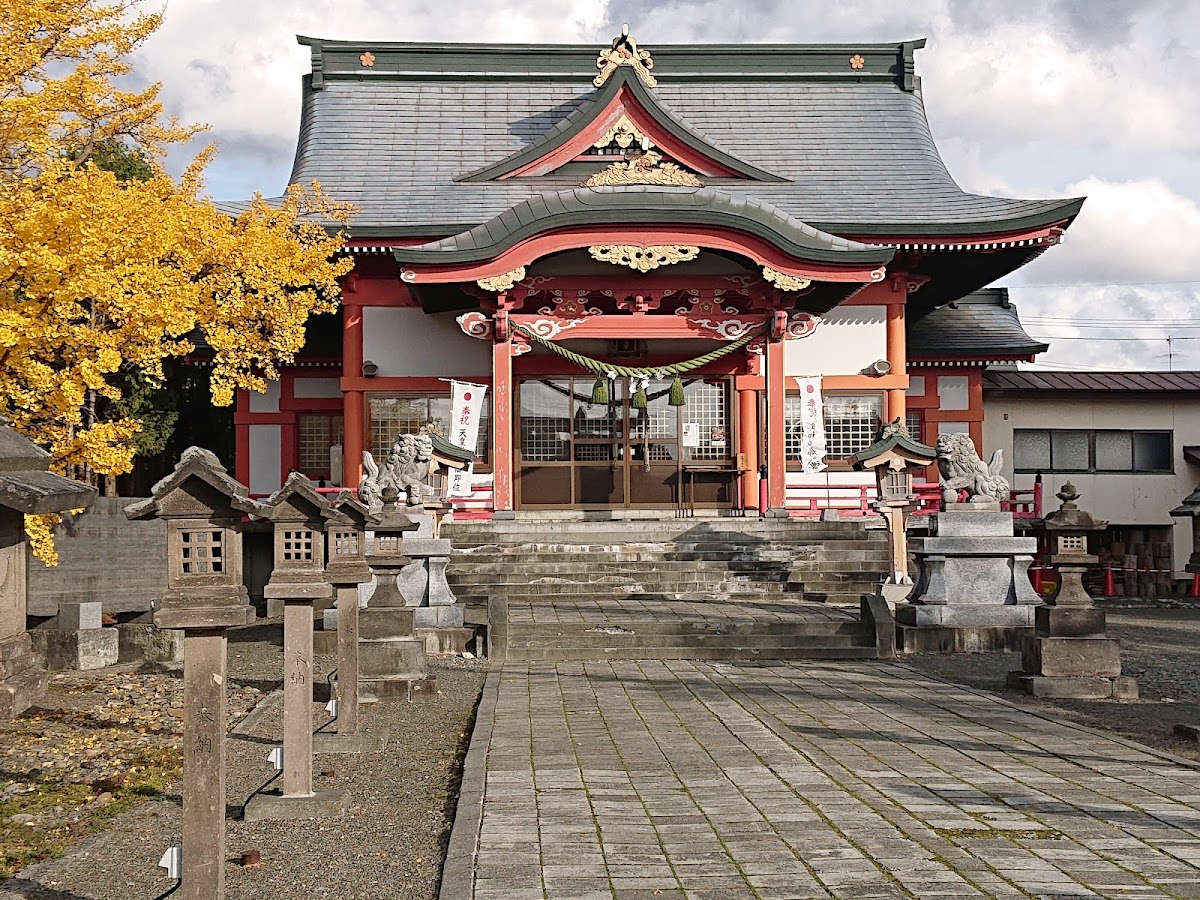
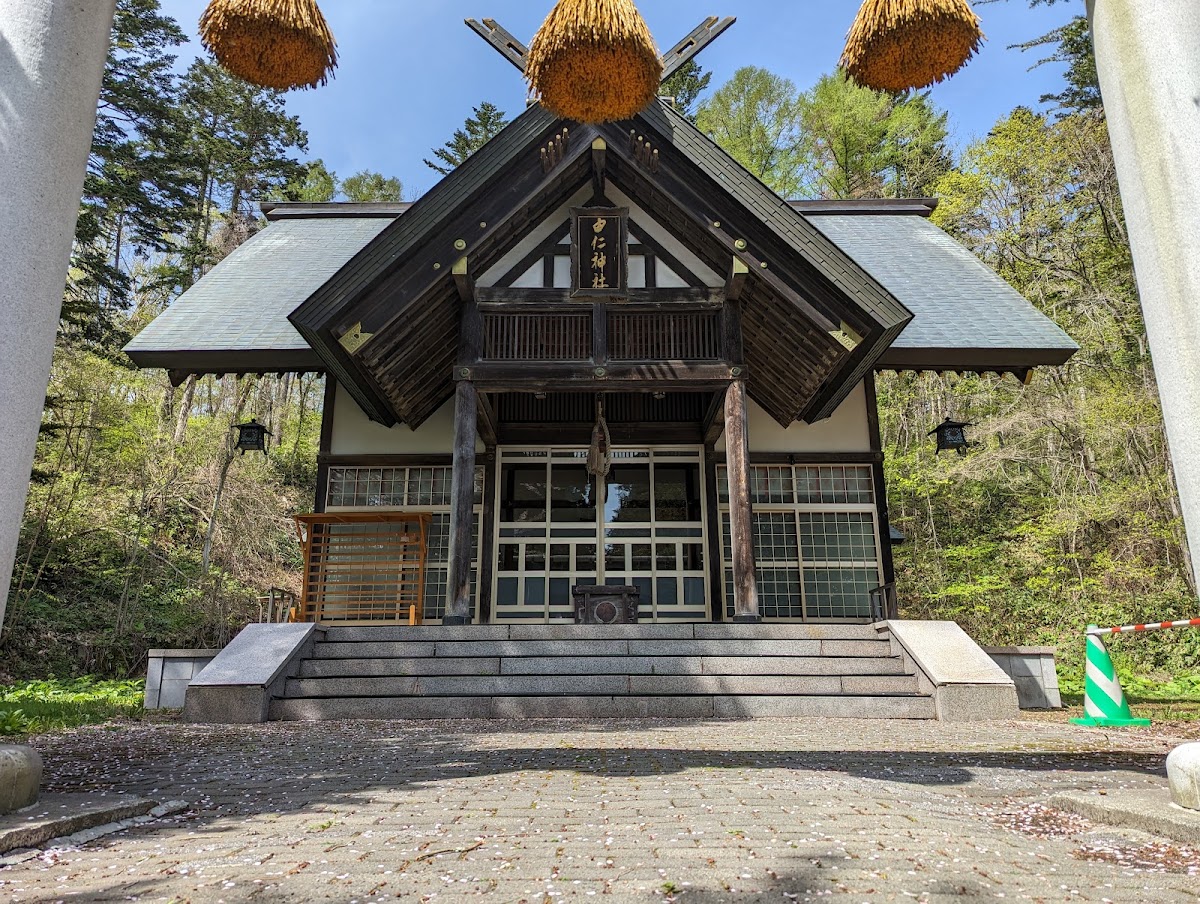
The shrine building of Yuni Shrine has maintained its dignified appearance since its relocation to its current location in 1917 (Taisho 6), despite undergoing several repairs. The plaque in the worship hall reads “Yuni Shrine,” quietly welcoming visitors.
The architectural style of the shrine building is adapted to Hokkaido’s climate, characterized by its sturdy structure that can withstand heavy snowfall. Inside the worship hall, Shinto rituals such as the annual festival and monthly festivals are held, making it a place of prayer for the local people.
Memorials on the Shrine Grounds
Various memorials, including a fire-fighting memorial, are erected on the shrine grounds. These memorials are important historical documents recording the region’s history and the lives of its people, telling the story of Yuni Town’s development.
The monument bearing the names of those who contributed to the maintenance of the shrine is inscribed on the monument to the large torii gate, demonstrating the strong bonds of the local community and their deep faith.
Information on Yuni Shrine’s Goshuin (Shrine Seal)
You can receive a goshuin at Yuni Shrine. Goshuin are popular among many visitors as proof of their visit and as a tangible representation of their connection to the shrine.
Regarding the Issuance of Goshuin
Goshuin at Yuni Shrine are available at the shrine office. However, since there may not always be a resident priest, it is recommended that those who wish to be sure to receive a goshuin contact the Hokkaido Shrine Association or the main shrine in advance.
The goshuin features the calligraphy of “Yuni Shrine,” the shrine’s seal, and the date of visit. Simple yet dignified, this goshuin will add a touch of elegance to your goshuincho (goshuin stamp book) collection.
Regarding Goshuincho (Goshuin Stamp Books)
Please inquire at the shrine office during your visit regarding the availability of Yuni Shrine’s original goshuincho. Many people visit Yuni Shrine as part of their pilgrimage to collect Goshuin (shrine stamps) in Hokkaido, and it’s a popular shrine on Goshuin information websites like Omai-ri.
Annual Events at Yuni Shrine
Yuni Shrine holds various Shinto rituals and events throughout the year. These events are important opportunities to pass on the region’s traditional culture and deepen the bonds with parishioners and visitors.
Annual Festival (September 8th)
The most important Shinto ritual at Yuni Shrine is the annual festival, held every year on September 8th. This day commemorates the day the shrine was officially established on September 8th, 1904 (Meiji 37), and holds special significance for the shrine.
During the annual festival, a solemn Shinto ritual is performed, attended by representatives of the parishioners and local community members. Prayers are offered for a bountiful harvest, the safety of the region, and the prosperity of the parishioners, and gratitude is expressed to the gods for the past year.
New Year’s Day Festival
On January 1st, the start of the new year, the New Year’s Day Festival (Saitansai) is held. Many worshippers visit for their first shrine visit of the year, praying for happiness and good health in the coming year. The shrine grounds are bustling with visitors, making it the most lively time of the year.
Passing Through the Reed Ring (Nagoshi no Oharai)
From the end of June to the beginning of July, the “Nagoshi no Oharai” (Summer Purification Ceremony) is held to purify oneself of the impurities accumulated over the past six months. During this time, a reed ring is set up on the shrine grounds, and worshippers pass through it to purify their minds and bodies, praying for good health and protection from illness for the remaining half of the year.
Passing through the reed ring is a traditional event based on an ancient poem that says, “Those who perform the summer purification ceremony in the month of Minazuki (June) will have their lives extended by a thousand years,” and it attracts many worshippers.
Monthly Festival
Every month, a monthly festival (Tsukinami-sai) is held, offering prayers for daily peace and gratitude to the gods. Representatives of the parishioners and local officials attend, praying for the safety and prosperity of the community.
The Charms and Highlights of Yuni Shrine
Yuni Shrine possesses many attractions, not only in its historical value but also in its natural environment and cultural aspects.
A Tranquil Space Surrounded by Nature
The greatest charm of Yuni Shrine is its tranquil environment surrounded by lush green forests. It’s an ideal place to escape the hustle and bustle of the city and refresh mind and body, a precious shrine where you can enjoy forest bathing while praying.
The beauty of nature throughout the seasons is also a highlight. The fresh green of spring, the deep green of summer, the autumn foliage, and the snowy landscape of winter all show different expressions depending on the season you visit. Especially during the autumn foliage season, the shrine grounds are dyed in red and yellow, offering a fantastical beauty.
Cultural Assets that Tell the History of Development
The stone structures and monuments remaining on the shrine grounds are valuable cultural assets that tell the history of Hokkaido’s development. The torii gate, water basin, and fire-fighting memorial, erected in 1936 (Showa 11), tell the story of the faith and affection for the region held by the people of that time.
The horse statue expresses the hardships of the pioneering era and gratitude for the horses that supported them, and is attracting attention as a culturally significant work unique to Hokkaido.
Center of the Local Community
Yuni Shrine is not merely a religious facility, but a central presence in the local community. Through its annual festivals and events, it serves as a place for intergenerational exchange, deepening community bonds.
The athletic field adjacent to the shrine serves as a playground for local children, demonstrating the shrine’s close connection to the lives of the local people.
Yuni Town and Yuni Shrine
Yuni Town is a town of approximately 5,000 people located in Yubari District, Hokkaido. Agriculture is its main industry, with a particularly thriving production of vegetables such as onions and tomatoes.
History of Yuni Town
The name of Yuni Town is said to originate from the Ainu word “Yuni” (hot spring). Hot springs flowed in this area even before the start of settlement in the Meiji era, and were used by the Ainu people.
From the 1880s onwards, full-scale settlement began, and farmland was opened by settlers from Yamagata and Niigata prefectures. The history of Yuni Shrine is intertwined with this history of settlement, and the shrine played an important role as a spiritual pillar for the settlers.
Tourist Attractions in Yuni Town
When visiting Yuni Shrine, we recommend also visiting other tourist attractions in Yuni Town.
- Yuni Garden: Hokkaido’s largest English-style garden, where you can enjoy flowers of all seasons.
- Yuni Town Health and Wellness Center: A complex facility equipped with hot springs and sports facilities.
- Fushimidai Park: A nature park equipped with a park golf course and campground.
By combining these spots with Yuni Shrine, you can fully experience the charm of Yuni Town.
Detailed Access Information to Yuni Shrine
This section provides detailed information on how to access Yuni Shrine by mode of transportation.
Access by Public Transportation
By JR:
- Get off at JR Muroran Main Line “Yuni Station,” approximately 15 minutes on foot.
- From Sapporo Station to Yuni Station: approximately 50 minutes by express train, approximately 1 hour 20 minutes by local train.
By Bus:
- Get off at Chuo Bus “Yuni Honmachi” bus stop, approximately 5 minutes on foot.
Access by Car
From Sapporo:
- Approximately 5 minutes from “Yuni PA (Parking Area)” on the Hokkaido Expressway.
- Approximately 1 hour via National Route 234.
From Chitose/Tomakomai:
- Approximately 40 minutes heading north on National Route 234.
Parking:
- Free parking available on the shrine grounds (several spaces).
- Temporary parking may be provided during events such as festivals.
Map and Landmarks
Yuni Shrine is located in the Honmachi district, the center of Yuni Town. Located approximately a 10-minute walk from the Yuni Town Hall, it boasts easy access from the town center.
The first torii gate stands along the road, marked by a convex mirror. Beyond the torii gate is a parking lot, from which you ascend stone steps to reach the shrine grounds.
Manners and Precautions When Visiting
When visiting Yuni Shrine, please observe the following manners and precautions.
Basic Etiquette for Visiting a Shrine
- How to Pass Through the Torii Gate: Bow before passing through the torii gate and avoid walking in the center of the path (the center is considered the path of the gods).
- How to Wash Your Hands: Wash your left hand, then your right hand, then your mouth at the water basin, and finally wash the handle of the ladle.
- How to Bow: The basic method is two bows, two claps, one bow (two bows, two claps, one bow).
Points to Note on the Shrine Grounds
- Maintain Silence: The shrine grounds are a sacred place, so please refrain from speaking loudly.
- Photography: Photography is generally permitted on the shrine grounds, but please obtain permission before taking photos inside the shrine buildings or during religious ceremonies.
- Bringing Pets: It is recommended to check in advance whether pets are allowed.
- Smoking and Eating: Please refrain from smoking or eating on the shrine grounds.
Seasonal Precautions
Winter (November to March):
- The stone steps and approach to the shrine may be frozen or covered in snow, so please wear non-slip shoes.
- Please take sufficient precautions against the cold.
Summer (June to August):
- As it is in a forest, insect repellent is recommended.
- Remember to stay hydrated to prevent heatstroke.
Yuni Shrine and the Hokkaido Association of Shinto Shrines
Yuni Shrine is one of the shrines belonging to the Hokkaido Association of Shinto Shrines. The Hokkaido Association of Shinto Shrines is an organization that oversees shrines in Hokkaido, providing support for shrine management, training Shinto priests, and promoting Shinto culture.
The Role of the Hokkaido Association of Shinto Shrines
The Hokkaido Association of Shinto Shrines protects and preserves Hokkaido’s Shinto culture through the following activities:
- Support for Shrine Management: Support for the maintenance and management of each shrine and the operation of events
- Training of Shinto Priests: Support for obtaining Shinto priest qualifications and implementation of training
- Public Relations: Dissemination of Shinto culture through leaflets and TV commercials
- Promotion of Gagaku: Activities to preserve and promote Gagaku, a traditional form of music
- Support for Annual Events: Support for the execution of annual events and Shinto rituals in Hokkaido
Yuni Shrine also maintains traditional shrine management through the Hokkaido Association of Shinto Shrines’ network, fostering cooperation and information exchange with other shrines.
Summary: Experience the Charm of Yuni Shrine
Yuni Shrine is a historic shrine that has walked hand in hand with the community from the Meiji era’s Hokkaido development to the present day. It possesses multifaceted charms, including its tranquil grounds surrounded by lush forests, cultural assets that tell the history of development, and its role as a center of the local community.
The three enshrined deities—Amaterasu Omikami, Ōkuninushi-no-Kami, and Homutawake-no-Mikoto—receive and watch over the various wishes of worshippers. Receiving a Goshuin (temple/shrine stamp) while experiencing the history and culture of Yuni Town will surely be a memorable experience.
Why not visit this place of worship, which has continued since the pioneering era, while enjoying the beauty of nature in every season? Yuni Shrine is a special place where the history, nature, and prayers of the people of Hokkaido are in harmony.
When you visit Yuni Town, be sure to visit Yuni Shrine and feel its tranquility and the weight of history firsthand. A precious time to escape the hustle and bustle of the city and refresh your mind and body awaits you.