Complete Guide to Nakashibetsu Shrine: A Thorough Explanation of History, Goshuin (Shrine Seals), and Access Information
Nakashibetsu Shrine, located in Nakashibetsu-cho, Shibetsu City, Hokkaido, is an important shrine that conveys the history of the Meiji era’s pioneering efforts. This article provides a detailed explanation of Nakashibetsu Shrine, from its founding history and enshrined deities to its annual festival dates, how to obtain goshuin (shrine seals), access information, and highlights of the shrine grounds, including its value as a regional cultural heritage site.
Basic Information on Nakashibetsu Shrine
Nakashibetsu Shrine is located 9-sen Nishi, Nakashibetsu-cho, Shibetsu City, Hokkaido, and is a shrine cherished as a center of faith for the local residents.
Location and Contact Information
Location: 9-sen Nishi, Nakashibetsu-cho, Shibetsu City, Hokkaido
Postal Code: 095-0063
Latitude and Longitude: 44.153679, 142.456689
Management: Affiliated with the Hokkaido Shrine Association
Telephone Number: Managed using the telephone number of Shibetsu Shrine
Deities Enshrined
The following deities are enshrined at Nakashibetsu Shrine:
- Hachiman-Ōkami (Emperor Ōjin)
- Hakutai-Ōkami
- Jūnisha-Ōkami
- Amaterasu Ōmikami (Amaterasu Ōmikami)
These deities were invited and enshrined together in prayer for the safety of the settlers and the prosperity of the region.
Annual Festival Date
The annual festival of Nakashibetsu Shrine is held on a designated day each year and is an important festival where local residents gather. The annual festival includes Shinto rituals praying for a bountiful harvest and peace in the region.
History of Nakashibetsu Shrine: 120 Years of Progress with the Development of Hokkaido
Founded in the Meiji Era (1901)
The history of Nakashibetsu Shrine dates back to the era of Hokkaido’s development. On November 3, 1901 (Meiji 34), the deity Hachiman-Okami was invited from the village shrine Hachiman Shrine, located in Hiratani, Kaminaka-cho, Naka-gun, Tokushima Prefecture (present-day), and enshrined in a small shrine.
The settlers from Tokushima Prefecture welcomed the guardian deity of their homeland to their new land, finding spiritual support during the harsh pioneering life. Hachiman-Okami is known as the god of military fortune and victory, and was a reassuring presence for those facing the difficult task of development.
Invitation and Joint Enshrinement from Multiple Shrines
On June 15, 1901 (Meiji 34), the same year as the shrine’s founding, Shirato Okami was enshrined from Shirato Shrine. Furthermore, on August 15 of the same year, Junisha Okami was invited from Unai Shrine. This indicates that settlers in the Nakashibetsu area came from multiple regions.
By enshrining the guardian deities of their respective regions, the pioneers from different areas united and formed a new community. Later, Amaterasu Omikami was also enshrined, becoming the current enshrined deity.
Changes in the Shrine’s Name
Initially founded as “Hachiman Shrine,” it was renamed “Nakashibetsu Shrine” as the region developed. This renaming signifies its transformation from a shrine of a single pioneering settlement to the guardian shrine of the entire Nakashibetsu area.
Construction and Development of the Shrine Building
From the small shrine at the time of its founding, a more magnificent shrine building was constructed as the number of parishioners and worshippers increased. As settlement progressed and the number of households increased, the shrine was also developed as a central presence in the community.
Centennial Celebration (2001)
In 2001 (Heisei 13), a grand centennial celebration was held to commemorate the 100th anniversary of the shrine’s founding. This festival served as an important milestone, commemorating the hardships of the pioneers who settled the area and passing on the region’s history to future generations.
Grounds and Highlights of Nakashibetsu Shrine
Approach and Torii Gate
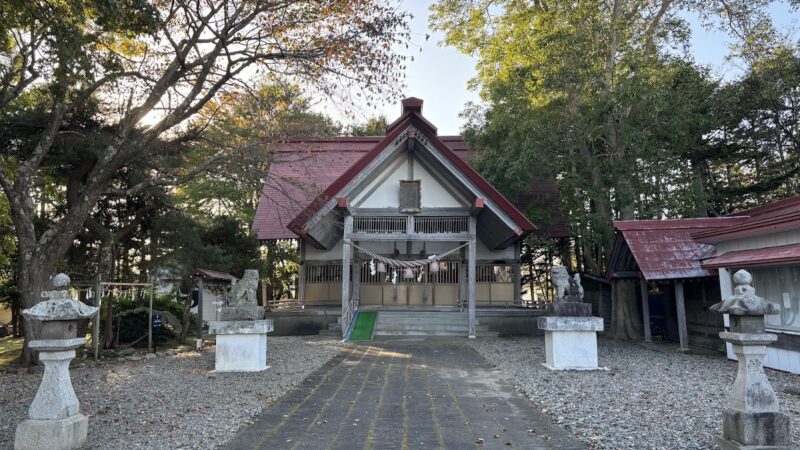
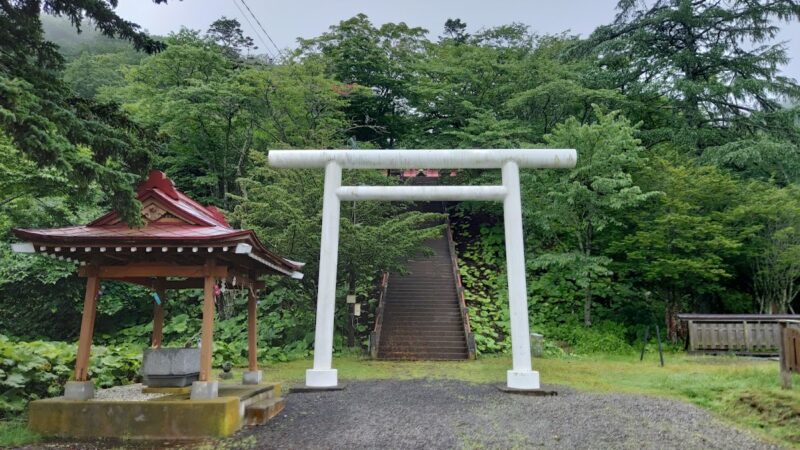
Located along Prefectural Road 61, Nakashibetsu Shrine is characterized by its gravel approach and red torii gate. As you proceed along the approach, you can feel the tranquil atmosphere of the sacred grounds that have been protected since the pioneering era.
Giant Trees on the Shrine Grounds
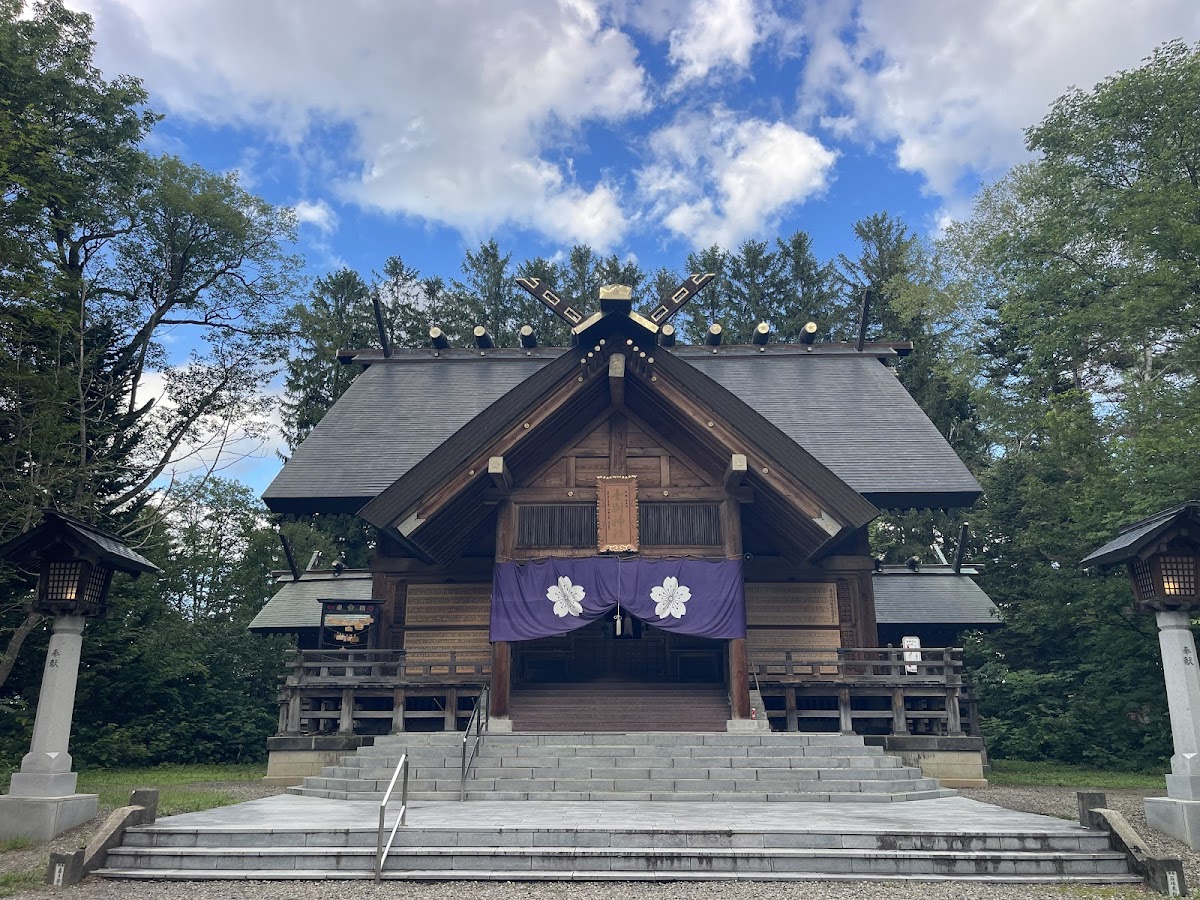
The shrine grounds are lined with giant trees such as Yezo spruce, Sakhalin fir, rowan, and maple. These trees have grown over 100 years, serving as living witnesses to the history of the shrine.
The Yezo spruce and Sakhalin fir, species unique to Hokkaido, have endured the harsh winter cold, contributing to the shrine’s majestic atmosphere. The rowan trees display beautiful autumn foliage, creating a scenic landscape that changes with the seasons, alongside the maple trees.
Komainu and Lanterns
Relatively new komainu (guardian lion-dogs) and lanterns are installed within the shrine grounds. These were donated by local residents, demonstrating that Nakashibetsu Shrine is still loved and cherished by the local people.
Despite being an old shrine, regular maintenance and donations ensure that Nakashibetsu Shrine remains consistently clean and beautiful, a characteristic of the shrine.
About the Shrine Office
Nakashibetsu Shrine has a shrine office, but there are no resident priests; it is unmanned. This is a common practice among local shrines in Hokkaido, where one priest manages multiple shrines.
About the Goshuin (Shrine Seal) of Nakashibetsu Shrine
How to Obtain a Goshuin
Those wishing to receive a Goshuin from Nakashibetsu Shrine can do so by following these steps:
- Contact Kamishibetsu Shrine by Phone: Since Nakashibetsu Shrine is unmanned, please first contact Kamishibetsu Shrine by phone.
- Consult with the Chief Priest: Discuss the method of receiving the Goshuin with the chief priest.
- Mail-in Service: Generally, the Goshuin will be mailed to you at a later date.
The Hokkaido Shrine Association website lists the phone number for Shibetsu Shrine as the phone number for Nakashibetsu Shrine, suggesting that the shrine may be under the jurisdiction of either Shibetsu Shrine or Kamishibetsu Shrine.
Points to Note When Receiving a Goshuin (Shrine Stamp)
- It is important to contact the shrine by phone in advance to confirm availability.
- If receiving by mail, please follow the instructions of the head priest regarding the mailing of the goshuincho (stamp book) and the method of sending the offering.
- Please understand that this is an unmanned shrine and respect the head priest’s schedule.
Access to Nakashibetsu Shrine
Access by Car
Nakashibetsu Shrine is located along Prefectural Road 61, making access by car the most convenient.
From the center of Shibetsu City:
- Head north on Prefectural Road 61
- Estimated time: Approximately 15-20 minutes
- Parking: Parking space available on the shrine grounds (free)
Access by Public Transportation
Nearest Station: JR Soya Main Line, Shibetsu Station
Due to the distance from Shibetsu Station, access by public transportation is not easy. We recommend using a rental car or taxi.
Pilgrimage to Surrounding Shrines
The following shrines are also located within Shibetsu City:
- Shibetsu Shrine: The central shrine of Shibetsu City
- Kami-Shibetsu Shrine: Manages the issuance of Goshuin (shrine seals) at Naka-Shibetsu Shrine
- Tayori Shrine: Located in Tayori-cho, Shibetsu City
A “Shibetsu City Shrine Pilgrimage,” visiting these shrines, is a good opportunity to learn about Hokkaido’s shrine culture.
History and Development of the Naka-Shibetsu Area
History of Development in Naka-Shibetsu
The Naka-Shibetsu area, as part of Shibetsu City, began full-scale development in the late Meiji era. Many settlers came from Shikoku, mainly Tokushima Prefecture, and cultivated farmland in a harsh natural environment.
Although the number of households was small at the beginning of development, the settlement gradually developed through community formation centered around the shrine.
The Religious Life of the Settlers
In the development of Hokkaido, shrines played a role beyond mere religious facilities. For settlers, shrines served:
- Spiritual Support: A spiritual pillar for those who had left their hometowns
- Community Center: A place for residents to interact through festivals
- Cultural Transmission: A place to pass on the traditions and culture of their hometown to future generations
- Foundation of Mutual Support: A place to cultivate community bonds that fostered mutual assistance in times of difficulty
Nakashibetsu Shrine also played these roles and made a significant contribution to the formation of the local community.
Hokkaido’s Shrine Culture and Nakashibetsu Shrine
Characteristics of Hokkaido Shrines
Hokkaido shrines have characteristics that differ from those of shrines on Honshu:
- Establishment Period: Many were founded after the Meiji era.
- Relationship with Settlement: Established alongside the settlement of pioneers.
- Deities of Origin: Deities from the settlers’ hometowns were enshrined.
- Frequency of Consolidation: Multiple shrines are often merged.
- Management System: One chief priest often oversees multiple shrines.
Nakashibetsu Shrine embodies these characteristics and is an important presence for understanding Hokkaido’s shrine culture.
Relationship with the Hokkaido Association of Shrines
Nakashibetsu Shrine belongs to the Hokkaido Association of Shrines. The Hokkaido Association of Shrines is an organization that oversees shrines throughout Hokkaido and also engages in activities to promote shrine culture, such as providing information on Shinto rituals, annual events, and gagaku (ancient Japanese court music).
The Hokkaido Shrine Association’s website provides information on various shrines throughout Hokkaido, including Nakashibetsu Shrine, which can be helpful when planning your visit.
Points to Note When Visiting Nakashibetsu Shrine
Etiquette for Visiting
When visiting Nakashibetsu Shrine, please observe the following basic etiquette:
- Bow before passing through the torii gate
- Walk along the edge of the path (the center is the path for the gods)
- Purify yourself at the water basin (if available)
- Bow twice, clap twice, and bow once in front of the main hall
- Bow once again at the torii gate on your way out
Best Time to Visit
Nakashibetsu Shrine is beautiful in every season, but the best times to visit are:
- Spring (May-June): The fresh greenery is beautiful, allowing you to fully enjoy Hokkaido’s short spring.
- Autumn (September-October): The autumn foliage of rowan and maple trees is magnificent.
- Annual Festival Day: You can experience the atmosphere of a local festival.
During winter (December to March), there may be snow, making access difficult, so please pay attention to the weather when planning your visit.
Regarding Photography
Photography is generally permitted on the shrine grounds, but please keep the following points in mind:
- Remember that this is a sacred place.
- Do not disturb other visitors.
- Be mindful of areas where photography is prohibited, such as inside the main hall.
- Please be considerate when posting on social media.
Tourism in Shibetsu City and Nakashibetsu Shrine
About Shibetsu City
Shibetsu City is located in the northern part of Hokkaido, in the northern part of the Kamikawa region. Agriculture is its main industry, and it is particularly known for sheep farming. It also has tourist attractions such as Suffolk Land, a sheep theme park, and Shibetsu Onsen (hot springs).
Places to Visit Alongside Nakashibetsu Shrine
When visiting Nakashibetsu Shrine, the following spots will make your trip even more fulfilling:
- Shibetsu City Museum: Learn about the history of the region and the history of its development.
- Sheep and Clouds Hill: A symbolic tourist spot in Shibetsu City.
- Teshio River: Hokkaido’s second largest river, boasting beautiful natural scenery.
- Shibetsu Onsen: A hot spring facility to soothe your travel fatigue.
Summary: The Value and Charm of Nakashibetsu Shrine
Nakashibetsu Shrine is a valuable cultural heritage site that conveys the history of Hokkaido’s development. With a history of over 120 years since its founding in 1901 (Meiji 34), it began when settlers from Tokushima Prefecture invited the gods of their homeland.
The enshrined deities are Hachiman-Okami, Shirato-Okami, Junisha-Okami, and Amaterasu-Omikami, and it has played an important role as a spiritual pillar for the pioneers and as the center of the local community.
Although currently an unmanned shrine, the ancient trees within the grounds and the relatively new guardian lion-dogs and lanterns convey that it is still cherished by the local residents. Goshuin (shrine stamps) can be obtained through Kamishibetsu Shrine, making them a commemorative item for your visit.
Located along Hokkaido Prefectural Road 61, it’s a relatively easy-to-access shrine, making it a must-visit when in Shibetsu City. For those interested in Hokkaido’s shrine culture and pioneering history, or those seeking tranquility in a peaceful shrine, Nakashibetsu Shrine is well worth a visit.
With its seasonal natural beauty, ancient trees over 100 years old, and sacred grounds imbued with the spirit of the pioneers, Nakashibetsu Shrine is a special place where you can experience Hokkaido’s history and culture.