Complete Guide to Ishikura Inari Shrine | The Charm and Visiting Information of Hakodate’s Historic Inari Shrine
Located in Shinminato-cho, Hakodate City, Hokkaido, Ishikura Inari Shrine is a historic shrine that received a divided spirit from Fushimi Inari Taisha in Kyoto during the Bunka era (1804-1818). Its official name is “Sho-ichii Ishikura Inari Shrine,” and it has attracted the faith of local people for over 200 years. This article provides a detailed explanation of Ishikura Inari Shrine’s history, enshrined deities, highlights of the grounds, inner sanctuary, and access methods.
History and Origins of Ishikura Inari Shrine
From Founding to the Present
The history of Ishikura Inari Shrine dates back to the Edo period. During the Bunka era (1804-1818), a divided spirit was invited from Fushimi Inari Taisha in Kyoto, and initially, a small shrine was established in Ishikurasawa, Zenigamezawa Village, for worship. This period coincided with the reign of Tokugawa Ienari, the 11th shogun of the Edo shogunate, and was also a time when the development of Hokkaido was in full swing.
Later, in May 1914 (Taisho 3), a shrine was built at 33-3 Nakano, Zenigamezawa Village (the current location) through a consultation among the villagers of Minato Village (present-day Shinminato Town). This is the current location of the main hall of Ishikura Inari Shrine. The fact that it was relocated and built by the unanimous will of the local residents indicates that it played an important role as the center of local faith even at that time.
About the First Rank of the Divine Title
Ishikura Inari Shrine holds the highest rank of “First Rank of the Divine Title.” First Rank of the Divine Title is the highest rank bestowed by the Imperial Court upon the enshrined deity of a shrine, and it originates from the fact that Ukanomitama-no-Okami, the enshrined deity of Fushimi Inari Taisha, holds the First Rank of the Divine Title. This divine rank indicates that Ishikura Inari Shrine is a historically significant shrine that formally received a divided spirit from Fushimi Inari Taisha.
Relationship with Fushimi Inari Taisha
Ishikura Inari Shrine received a divided spirit from Fushimi Inari Taisha in Kyoto, the head shrine of approximately 30,000 Inari shrines nationwide. Fushimi Inari Taisha is said to have been founded in 711 (Wado 4) and is a representative Japanese shrine known for its divine blessings of business prosperity, abundant harvests, and family safety.
Ishikura Inari Shrine has played an important role in conveying the divine power of Fushimi Inari Taisha to Hokkaido. Receiving a divided spirit means receiving a portion of the spiritual power of the main shrine’s deity, and it is believed that Ishikura Inari Shrine possesses the same divine blessings as Fushimi Inari Taisha.
Deities and Divine Virtues
Main Deity: Ukanomitama-no-Okami
The deity enshrined at Ishikura Inari Shrine is Ukanomitama-no-Okami. In Japanese mythology, this deity is revered as the god of grain and food, and the name “Inari” is said to originate from “Inari” (rice harvest).
In the Kojiki (Records of Ancient Matters), Ukanomitama-no-Okami is described as the child of Susanoo-no-Mikoto and Kamu-Oichihime, and possesses the characteristics of an agricultural god who brings abundant harvests. Over time, this deity also came to be widely worshipped as a god of business prosperity and industrial development.
Divine Virtues and Faith
Ishikura Inari Shrine is believed to possess the following divine virtues:
- Business Prosperity: Many worshippers visit to pray for business success and prosperity.
- Abundant Harvest: Prayers can be offered for abundant harvests in all industries, including agriculture and fishing.
- Family Safety: The shrine protects the health and peaceful lives of families.
- Good Fortune and Prosperity: The shrine possesses the divine virtue of opening up good fortune and inviting blessings.
- Industrial Development: The shrine watches over the development and prosperity of local industries.
Especially in the port city of Hakodate, the shrine has been deeply revered by people involved in the shipping and fishing industries, and has been cherished as a shrine deeply connected to the development of local industries.
Highlights of the Shrine Grounds
Shrine Building and Torii Gate
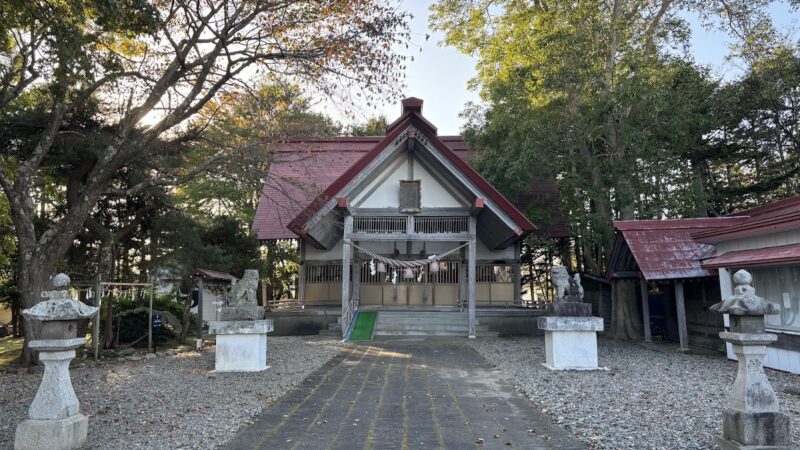
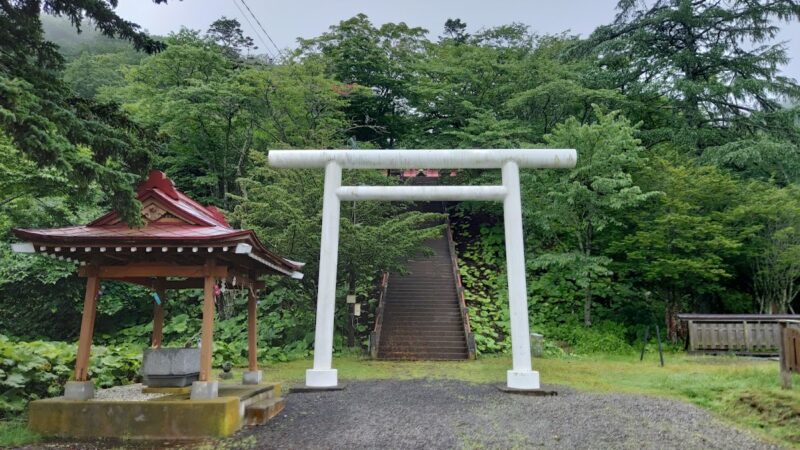
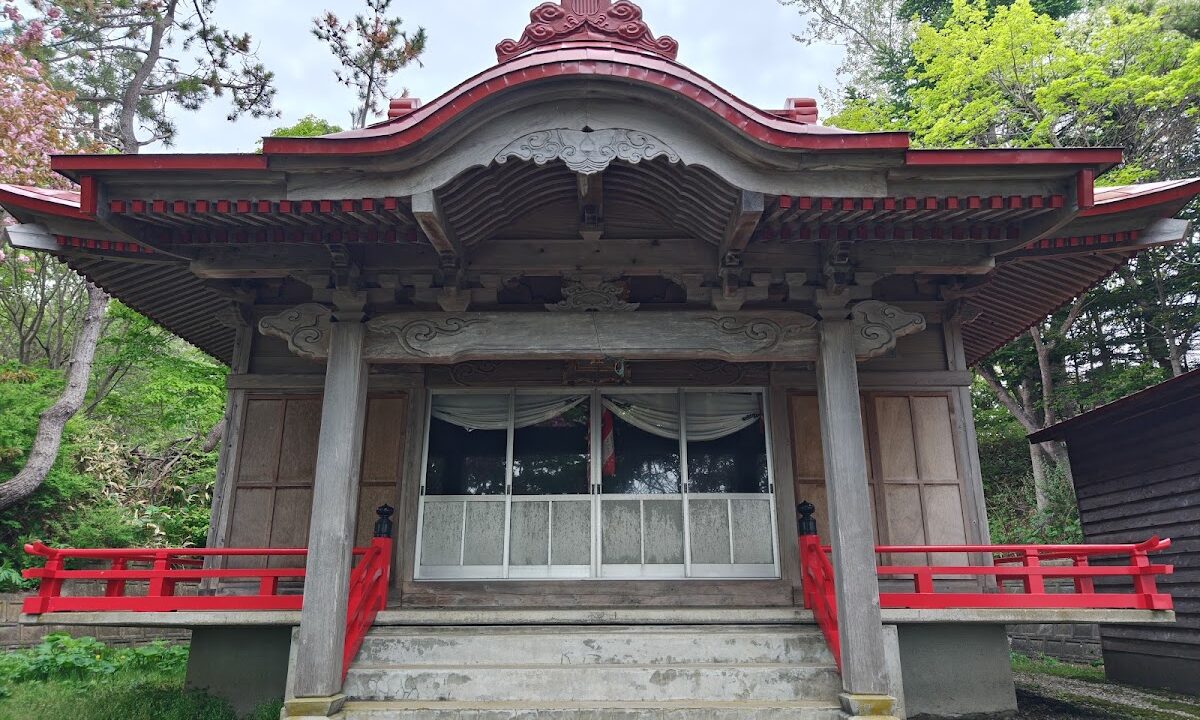
Within the grounds of Ishikura Inari Shrine stands a shrine building constructed in 1914 (Taisho 3). The vermilion torii gates, a characteristic feature of Inari shrines, line the approach to the shrine, marking the entrance to the sacred area. Beyond the torii gates, a slightly steep stone staircase leads to the main hall.
These steps also serve as a purification ritual for worshippers, and with each step, one feels a sense of moving away from the secular world and approaching the sacred realm. Lush trees grow on both sides of the steps, and especially in summer, the dappled sunlight creates a beautiful and mystical atmosphere.
Komainu and the Divine Messenger Fox
The divine messenger (shinshi) of Inari shrines is considered to be the fox. Within the grounds of Ishikura Inari Shrine, there are statues of foxes serving the enshrined deity. Among worshippers, there is a custom of offering red cloth to these fox statues, a testament to the depth of their faith.
There are several theories as to why foxes are considered messengers of Inari shrines, but the most likely explanation is that foxes, which exterminate mice that damage crops, came to be revered as messengers of Inari, the god of abundant harvests.
Natural Environment of the Shrine Grounds
The grounds of Ishikura Inari Shrine are blessed with the natural beauty of Hakodate. In spring, new greenery sprouts; in summer, deep green covers the grounds; in autumn, the leaves turn beautifully; and in winter, a snowscape envelops the sacred area in tranquility. Being able to experience the changing seasons while visiting is one of the shrine’s charms.
Especially in summer, the sight of trees filling the area beyond the torii gate is breathtaking, with only dappled sunlight filtering through the leaves, creating a fantastical atmosphere. This rich natural environment creates a peaceful space for worship, far removed from the hustle and bustle of the city.
Ishikura Inari Shrine’s Inner Sanctuary
History of the Inner Sanctuary
Ishikura Inari Shrine has an inner sanctuary located in the mountains, separate from the main shrine. In fact, the history of this inner sanctuary is older than that of the main shrine, dating back to 1647 (Shoho 4), during the time of Tokugawa Iemitsu, the third shogun of the Edo shogunate.
While the main shrine is located along National Route 278 on the coastline, the inner sanctuary is situated further into the mountains. This arrangement reflects the ancient connection between the shrine and mountain worship, suggesting that the inner sanctuary may have been the origin of the faith.
Path to the Inner Sanctuary
The path leading to the inner sanctuary is lined with red torii gates, a symbol of Inari shrines. This row of torii gates is reminiscent of the Senbon Torii (thousand torii gates) of Fushimi Inari Taisha, leaving a deep impression on visitors.
As you proceed along the mountain path, you enter deeper into the forest, and the atmosphere becomes increasingly mystical. The path to the inner sanctuary is not merely a pilgrimage route, but rather a path of spiritual practice where one can feel oneness with nature and purify their soul.
Visiting the Inner Sanctuary
At the inner sanctuary, you can worship in a more tranquil environment. Located on the mountainside, it offers views of Hakodate city and the sea, creating a special space where you can deepen your dialogue with the gods amidst nature.
There are said to be four worship areas in total, including the area around the main shrine, and you can receive divine blessings at each location. If you have the time, we highly recommend extending your visit to the inner sanctuary for a deeper religious experience.
Annual Festivals and Events
Annual Festival Date
The annual festival of Ishikura Inari Shrine is held on the first Horse Day of the third month of the lunar calendar. Hatsuma (first Horse Day) refers to the first Horse Day of February (March in the lunar calendar), and it is the most important festival day for Inari shrines.
The origin of the Hatsuumasai festival stems from the fact that the deity enshrined at Fushimi Inari Taisha Shrine descended to earth on the first day of the Horse in February of the 4th year of the Wado era (711 AD). Inari shrines throughout Japan hold their annual festivals on this day, praying for a bountiful harvest and business prosperity.
Other Annual Events
In addition to the annual festival, Ishikura Inari Shrine also holds other annual events commonly observed at shrines in Hokkaido:
- New Year’s Day Festival: Prayers for happiness and peace in the new year
- Setsubun Festival: Prayers for protection from evil and for good fortune
- Summer Purification Ceremony: Purification of sins and impurities accumulated over the past six months
- Autumn Grand Festival: Giving thanks for the bountiful autumn harvest
- Year-End Purification Ceremony: Purification of sins and impurities accumulated over the past year and preparation for the new year
These festivals are closely intertwined with the lives of the local people and are important events that mark the changing seasons.
Access and Visiting Information
Location
Address: 328 Shinminato-cho, Hakodate City, Hokkaido
Postal Code: 〒042-0935
Access by Public Transportation
Nearest Station: Yunokawa Station, Hakodate City Tram
While it’s a bit of a walk from the station, it’s relatively easy to access by bus.
Access by Bus:
- Using Hakodate Bus
- Nearest Bus Stop: Shiodomarigawabashi
- Approximately 1-2 minutes walk from the bus stop
The Shiodomarigawabashi bus stop is approximately 103 meters from the shrine, and the shrine’s torii gate is visible immediately upon alighting. If accessing by bus from Hakodate Station or Yunokawa Onsen, it is recommended to check the timetable in advance.
Access by Car
Along National Route 278: From Hakodate city center, head east on National Route 278. Upon entering the Shinminato-cho area, you will see signs for Ishikura Inari Shrine.
Parking: There is parking space for visitors on the shrine grounds or nearby, but it may be full during peak times such as festivals.
From Hakodate Airport: Approximately 20-25 minutes by car
From JR Hakodate Station: Approximately 15-20 minutes by car
From Yunokawa Onsen Hot Springs: Approximately 10 minutes by car
Visiting Hours and Precautions
Ishikura Inari Shrine is generally unmanned. Therefore, visiting during daylight hours is recommended.
Visiting Hours: From sunrise to sunset (approximate)
Shrine Office: Not staffed permanently, so services such as Goshuin (shrine stamps) may not be available.
Admission Fee: Free
Notes for Visiting:
- The stone steps are steep, so comfortable shoes are recommended.
- In winter, there is a possibility of snow and ice, so please be careful.
- If heading to the inner sanctuary, it is a mountain path, so please dress appropriately and allow ample time.
- This is a sacred area, so please worship in silence.
Nearby Tourist Attractions
Yunokawa Onsen
Yunokawa Onsen, located about 10 minutes by car from Ishikura Inari Shrine, is one of Hakodate’s leading hot spring resorts. A plan to relax and soothe your fatigue in the hot springs after visiting the shrine is highly recommended. Hot spring inns located along the coast offer views of the Tsugaru Strait, and the area boasts beautiful night views.
Hakodate Tropical Botanical Garden
This botanical garden in the Yunokawa Onsen area is famous for its monkeys bathing in the hot springs during winter. Visiting Ishikura Inari Shrine in conjunction with this will enhance your Hakodate sightseeing experience.
Hakodateyama and the Night View
The night view from Hakodateyama, known as one of the world’s three greatest night views, is a highlight of Hakodate sightseeing. A popular day plan involves visiting Ishikura Inari Shrine in the morning, sightseeing in Hakodate city in the afternoon, and enjoying the night view from Hakodateyama in the evening.
Goryokaku Park
Goryokaku, which tells the history of the late Edo period, is a representative tourist attraction of Hakodate. It attracts many tourists, especially during cherry blossom season. It is about a 20-minute drive from Ishikura Inari Shrine.
The Charm and Significance of Visiting Ishikura Inari Shrine
A Faith Rooted in the Community
Ishikura Inari Shrine has been a center of faith for the local residents of Hakodate for over 200 years. As evidenced by the fact that the construction of the shrine building in 1914 was decided by villagers’ consultation, it has played an important role as a central figure in the local community.
Even today, locals visit the shrine during New Year’s celebrations and annual festivals, praying for business prosperity and family safety. In Hakodate, a bustling tourist destination, this shrine quietly continues to exist as a spiritual anchor for the community.
Misunderstanding as a Haunted Spot
Some refer to it as a “scaredy-cat shrine” and treat it as a haunted spot, but this is a complete misunderstanding. Ishikura Inari Shrine is a venerable Inari shrine that received a divided spirit from Fushimi Inari Taisha, and it is a sacred place that has long been cherished by the local people.
It is thought that such rumors arose from the fact that it is an unmanned shrine, has an inner sanctuary in the mountains, and has a mystical atmosphere with a series of torii gates. However, in reality, it is a place of worship visited by many worshippers. We hope you will understand that it is a sacred space where you can receive divine blessings if you visit with a reverent heart.
Hokkaido Development and Shrines
The history of Ishikura Inari Shrine is intertwined with the history of Hokkaido’s development. Founded during the Bunka era, it falls within the transitional period from the Matsumae Domain era to the Meiji-era Hokkaido Development Commission era.
The people involved in the development of Hokkaido, praying for stability in their lives and the development of industry amidst the harsh natural environment, invited deities from Honshu to the shrine. Ishikura Inari Shrine is a crystallization of the faith of these pioneers and an important cultural heritage site in telling the history of Hokkaido.
The Significance of Worship in Modern Times
In modern society, visiting shrines has significance that goes beyond mere tourism or leisure. Leaving the hustle and bustle of everyday life, quieting the mind in a sacred space surrounded by nature, and reflecting on oneself leads to spiritual refreshment.
Ishikura Inari Shrine, despite being located in the tourist city of Hakodate, maintains a tranquil environment for worship. Visiting it between sightseeing will add depth to your trip and create a memorable experience.
Manners and Etiquette for Worship
How to Pass Through the Torii Gate
The torii gate of a shrine is a boundary separating the secular world from the sacred realm. When passing through a torii gate, the proper etiquette is to bow before entering. Since the center of the approach to the shrine is considered the path of the gods, it is considered preferable to walk slightly to the side.
Proper Ritual at the Water Basin
Before visiting a shrine, purify your body and mind at the water basin. Since Ishikura Inari Shrine is an unmanned shrine, you will need to check the condition of the purification fountain facilities upon your visit, but the basic purification ritual is as follows:
- Take the ladle with your right hand and purify your left hand.
- Switch the ladle to your left hand and purify your right hand.
- Take the ladle back into your right hand, receive water in your left hand, and rinse your mouth.
- Purify your left hand once more.
- Hold the ladle upright, let water flow over the handle, and return it to its original place.
Worship Etiquette at the Main Hall
The basic worship etiquette in front of the main hall is “two bows, two claps, one bow”:
- Place your offering in the offering box.
- If there is a bell, ring it.
- Bow deeply twice.
- Clap your hands twice at chest height.
- Pray with your hands clasped together.
- Finally, bow deeply once.
Photography Etiquette
Photography is generally permitted on the shrine grounds, but please note the following:
- Do not take photos in areas where photography is prohibited, such as inside the main hall.
- Be considerate of other worshippers.
- When posting on social media, remember to show respect to the shrine.
- Be mindful of the sacred nature of the place.
Summary: The Value of Ishikura Inari Shrine
Ishikura Inari Shrine, while located in the tourist city of Hakodate, has quietly preserved the faith of the local community. With a history of over 200 years since its founding during the Bunka era, and over 370 years including the history of the inner sanctuary, this shrine is a valuable cultural heritage that tells the story of Hokkaido’s pioneering history.
As a venerable Inari shrine that received a divided spirit from Fushimi Inari Taisha, it continues to welcome worshippers seeking divine blessings for business prosperity, abundant harvests, and family safety. Although it is an unmanned shrine, this maintains a tranquil environment for worship, allowing visitors to find peace of mind in a sacred space integrated with nature.
When visiting Hakodate, why not visit not only famous tourist spots, but also local shrines like this one? A visit to Ishikura Inari Shrine will surely add depth to your travel memories. Extending your trip to the inner sanctuary will allow you to enjoy a deeper religious experience and a connection with nature.
As an officially recognized shrine belonging to the Hokkaido Shrine Association, and as a place that preserves the history and culture of the region, Ishikura Inari Shrine is well worth a visit. Please visit with reverence and receive its divine blessings.