Jogyoji Temple (Kamakura City, Kanagawa Prefecture) Complete Guide | History and Benefits of a Nichiren Buddhist Temple Famous for Cancer Prevention
Located in Omachi, Kamakura City, Kanagawa Prefecture, Jogyoji Temple is a Nichiren Buddhist temple known nationwide for its benefits in preventing cancer and healing illnesses. Founded in 1313 (Showa 2) during the late Kamakura period, this ancient temple boasts a history of over 700 years and is also known for its connections to Minamoto no Yoritomo and the Hojo clan. This article provides a detailed introduction to Jogyoji Temple, including its history, highlights within the temple grounds, access information, and goshuin (temple stamp) information.
Basic Information on Jogyoji Temple
Jogyoji Temple, also known as Hokyuzan Daizenin, is a Nichiren Buddhist temple located a 12-minute walk from the east exit of Kamakura Station. While a quiet temple nestled in a residential area, its history and spiritual power have attracted many worshippers since ancient times.
Temple Name: Jogyoji Temple
Mountain Name: Hokyuzan
Temple Name: Daizenin
Sect: Nichiren Buddhism
Principal Image: The Three Treasures and Founders
Founder: Nichihan Shonin
Established: Showa 2 (1313)
Address: 2-8-17 Omachi, Kamakura City, Kanagawa Prefecture
History and Origins of Jogyoji Temple
Established at the End of the Kamakura Period
Jogyoji Temple was founded in Showa 2 (1313) by Nichihan Shonin, one of the nine senior priests of the Nichiren sect. Nichihan Shonin is known as a leading disciple of Nichiren Shonin and greatly contributed to the propagation of Nichiren Buddhism in Kamakura.
From its founding, Jogyoji Temple played an important role as a place of prayer for the recovery of members of the Minamoto and Hojo clans from illness. In particular, its function as a center of faith against illness within the samurai society of the Kamakura Shogunate has led to the ongoing belief in “cancer prevention.”
The Episode of Minamoto no Yoritomo and Hojo Masako
A noteworthy aspect of Jogyoji Temple’s history is the legend surrounding Minamoto no Yoritomo and Hojo Masako. It is said that when Minamoto no Yoritomo, the founder of the Kamakura Shogunate, was suffering from a severe boil, his wife, Hojo Masako, prayed for his recovery at this temple, and his illness was miraculously cured.
This miraculous event became famous, and since then, Jogyoji Temple has become widely known as a place of prayer for healing from illness, especially skin diseases and tumors. The current belief in “cancer prevention” is thought to have developed from this historical background.
Development as a Nichiren Buddhist Temple
Kamakura is an important place for the Nichiren sect, and it is where Nichiren Shonin himself conducted missionary activities. Jogyoji Temple, as one of the Nichiren Buddhist temples in Kamakura, has supported local faith throughout its long history.
During the Edo period, the temple grounds were developed, forming the foundation of the temple complex seen today. Even after the Meiji Restoration, it continued to attract the faith of local people, and especially from the Showa period onward, it became nationally known as a temple for “cancer prevention.”
Highlights of the Temple Grounds
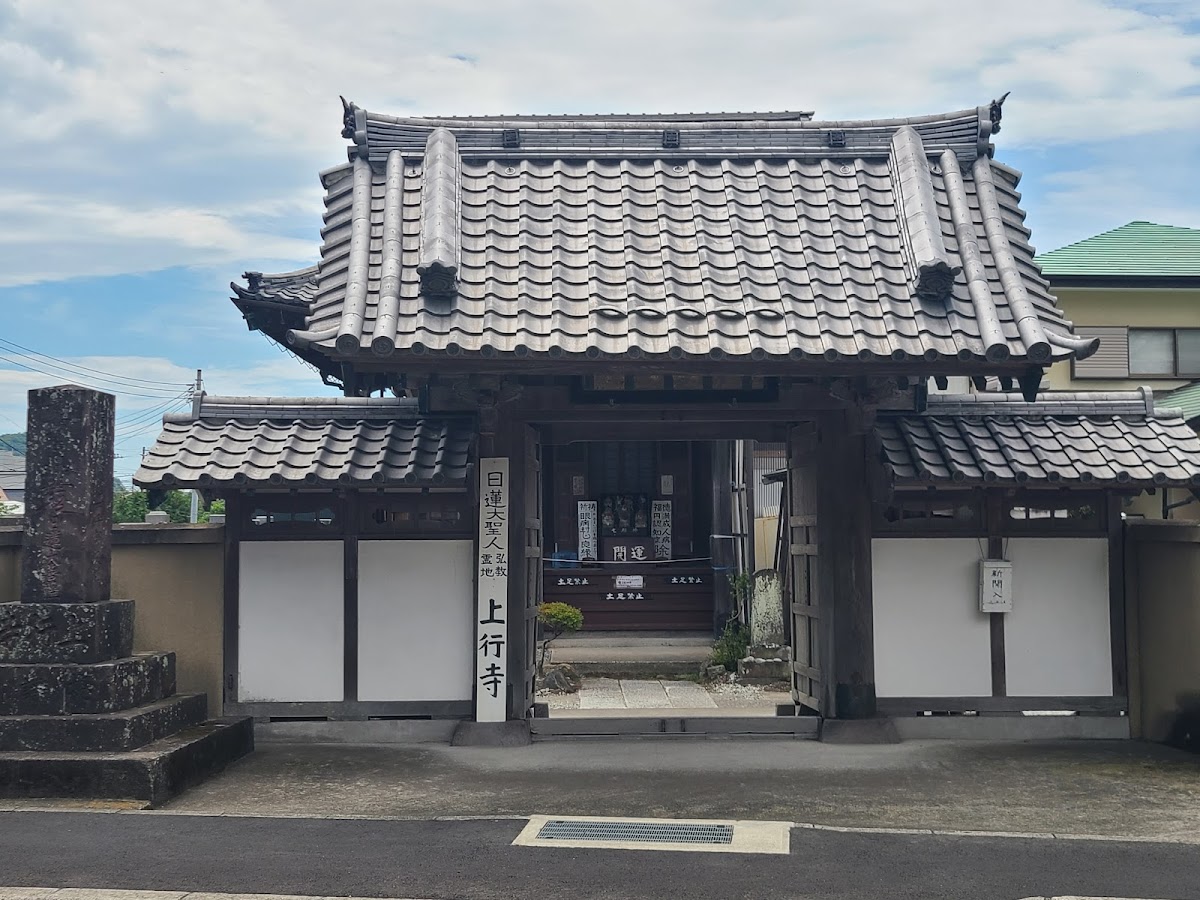
Main Gate
The main gate of Jogyoji Temple stands quietly amidst a residential area. Its unassuming appearance makes it difficult to recognize as a temple at first glance, but upon passing through the gate, a tranquil atmosphere unfolds within the temple grounds.
The main gate features intricate carvings, said to be the work of Hidari Jingoro, a renowned Edo-period craftsman. The meticulously carved decorations delight visitors.
Main Hall
The main hall of Jogyoji Temple was originally the Hokke-do Hall of Myohoji Temple, a famous temple in Kamakura, which was relocated here. The Three Treasures of the Founding Buddha (Shakyamuni Buddha, Many Treasures Buddha, and Nichiren Shonin) are enshrined as the principal deities, and worshippers can quietly offer their prayers.
Inside the main hall, various Buddhist statues and mandalas representing the faith of the Nichiren sect are enshrined, creating a solemn atmosphere. The architectural style also has a historical charm, making it a valuable example of Kamakura temple architecture.
Kasamori Inari Shrine
The most important shrine on the temple grounds is Kasamori Inari. “Kasa” refers to skin diseases and swellings, and this Inari shrine is believed to have miraculous powers for healing illnesses, especially skin diseases and tumors.
Deeply connected to the legend that Minamoto no Yoritomo’s boil was healed here, Kasamori Inari is now a central figure in the faith of those seeking protection against cancer. Many worshippers pray for healing and good health before this shrine.
Migawari Kishimojin and Jogyo-do Hall
Within the temple grounds is Jogyo-do Hall, which enshrines Migawari Kishimojin. Kishimojin is known as the guardian deity of children, but at Jogyoji Temple, as the name “substitute” suggests, she is worshipped as a being who takes on the suffering of worshippers.
At the Jogyodo Hall, people earnestly offer prayers for liberation from illness and suffering. While Kishimojin worship is common in Nichiren Buddhist temples, the Kishimojin at Jogyoji Temple is known for its particularly miraculous powers.
Guardian Hall
Within the temple grounds is a building called the Guardian Hall, where the history of faith related to Minamoto no Yoritomo still lives on. Many worshippers visit this place as it is where Hojo Masako prayed for her husband’s recovery from illness.
Benefits of Jogyoji Temple
Cancer Prevention and Healing
The most famous benefit of Jogyoji Temple is “cancer prevention.” Even with the advancements in modern medicine, cancer remains a serious problem for many people. At Jogyoji Temple, you can pray for healing from cancer and all other illnesses.
Prayers from all over Japan visit the temple seeking protection from cancer, praying for recovery, prevention of recurrence, and successful surgeries. Many reports of wishes being granted have been received, and its miraculous powers are widely known.
Traffic Safety and Protection from Misfortune
Besides prayers for cancer prevention, Jōgyōji Temple also offers prayers for traffic safety and protection from misfortune. The Nichiren Buddhist Goma ritual is believed to have powerful miraculous effects, and many people visit to pray for protection from various calamities.
Liberation from All Suffering
Through the faith in Kasamori Inari and Migawari Kishimojin, Jōgyōji Temple has become a place where people pray not only for relief from illness but also for liberation from all kinds of suffering. People suffering from various hardships such as emotional distress, relationship problems, and financial difficulties visit the temple seeking solace.
Goshuin (Temple Seal) Information
Goshuin (temple seals) are available at Jōgyōji Temple. The powerful calligraphy characteristic of Nichiren Buddhist temples makes the goshuin a popular memento of the visit.
The temple’s official seal (Goshuin) bears the temple name “Hōkyūzan Jōgyōji” and sometimes includes the Nichiren Buddhist mantra “Namu Myōhō Renge Kyō.” When requesting a Goshuin, please complete your prayers at the main hall before speaking to the temple office.
Goshuin Reception Hours: Usually 9:00 AM to 4:00 PM (may vary)
Offering Fee: Approximately 300-500 yen
*Bringing your Goshuincho (stamp book) is recommended. Also, if the head priest is absent, you may not be able to receive a Goshuin. Therefore, if you wish to be sure to receive a Goshuin, it is recommended to call ahead to confirm.
Access Methods
Access by Train
Walking from JR Yokosuka Line/Enoshima Electric Railway “Kamakura Station”
- Exit Kamakura Station East Exit
- Proceed along Wakamiya-oji Street towards Tsurugaoka Hachimangu Shrine
- Pass in front of Honkaku-ji Temple and head towards Omachi
- Arrive at Jogyoji Temple in approximately 12 minutes on foot
Jogyoji Temple is approximately 900 meters from Kamakura Station. Proceed along Wakamiya-oji Street and enter the residential area of Omachi; Jogyoji Temple will appear in a quiet setting. The route is easy to follow, and other temples and shrines are scattered along the way, making it a pleasant visit while enjoying a stroll through Kamakura.
Access by Bus
Take the Keikyu Bus bound for “Nagoe” from bus stop #3 at the east exit of Kamakura Station, and get off at the “Nagoe” bus stop. It’s approximately a 1-minute walk from there. Using the bus is convenient for those who have difficulty walking or who want to save time.
Access by Car
It’s about a 15-minute drive from the Asahina Interchange on the Yokohama-Yokosuka Expressway. However, since Jogyoji Temple does not have its own parking lot, you will need to use a nearby coin-operated parking lot. Roads in Kamakura are narrow and can be congested during peak tourist season, so using public transportation is recommended.
Manners and Precautions for Visiting
Visiting Hours
Jogyoji Temple is generally open for daytime visits, but the gates may be closed in the early morning or after sunset. To ensure you can visit, aim for the period between 9:00 AM and 4:00 PM.
Requesting Prayers
If you wish to request formal prayers for protection against cancer or recovery from illness, it is recommended to contact the temple in advance to make a reservation. You can also confirm details such as prayer fees and duration.
Photography
Photography is generally permitted on the temple grounds, but you should refrain from taking pictures inside the main hall or during prayers. Also, please be considerate of other visitors.
Please observe quiet worship
Jogyoji Temple is located in a residential area and is a temple where many worshippers earnestly pray for recovery from illness. Please refrain from loud conversations and noisy behavior, and strive to worship quietly.
Nearby Attractions
Honkakuji Temple
This is a head temple of the Nichiren sect, located about a 5-minute walk from Jogyoji Temple. Also known as “Higashi Minobu,” it is known for housing a portion of the remains of Nichiren Shonin. It is bustling with activity during the “Hatsu Ebisu” festival in New Year’s.
Myohonji Temple
This is one of the largest Nichiren sect temples in Kamakura, about a 10-minute walk from Jogyoji Temple. Known as a temple associated with the Hiki clan, it boasts magnificent temple buildings within its vast grounds.
Ankokuronji Temple
This temple is known as the place where Nichiren Shonin wrote “Rissho Ankoku Ron” (Treatise on Establishing Righteousness and Securing the Peace of the Nation), about a 15-minute walk from Jogyoji Temple. The flowers are beautiful throughout the seasons, and the autumn foliage is particularly spectacular. ### Yakumo Shrine
This shrine is famous for warding off evil spirits and is located about a 5-minute walk from Jogyoji Temple. It is known as the oldest shrine in Kamakura dedicated to warding off evil spirits.
Recommended Itinerary for Visiting Jogyoji Temple
Half-Day Course: Temple and Shrine Tour in the Omachi Area
- Kamakura Station → 5-minute walk → Hongakuji Temple (30 minutes)
- Hongakuji Temple → 10-minute walk → Myohonji Temple (40 minutes)
- Myohonji Temple → 5-minute walk → Jogyoji Temple (30 minutes)
- Jogyoji Temple → 5-minute walk → Yakumo Shrine (20 minutes)
- Yakumo Shrine → 10-minute walk → Kamakura Station
Duration: Approximately 3 hours
Full-Day Course: Famous Temples Tour in Eastern Kamakura
This course includes visiting Tsurugaoka Hachimangu Shrine and Kamakura-gu Shrine in the morning, followed by a tour of temples and shrines in the Omachi area after lunch. At Jogyoji Temple, you can offer heartfelt prayers for protection against cancer, and afterwards, you can visit Ankokuronji Temple and Myohonji Temple to learn deeply about the history of Nichiren Buddhist temples in Kamakura.
Jogyoji Temple’s Annual Events
Oeshiki Ceremony
Nichiren Buddhist temples hold a memorial service called “Oeshiki” around October 13th, the anniversary of Nichiren Shonin’s death. Jogyoji Temple also holds a grand ceremony at this time every year, with many parishioners in attendance.
Setsubun Festival
In February, the Setsubun Festival is held, attracting many worshippers praying for protection from evil and good fortune. Events such as bean-throwing are sometimes held.
Jogyoji Temple Reviews and Reputation
The following are some comments from people who have visited Jogyoji Temple:
Quiet and Peaceful Atmosphere
“Unlike the famous tourist temples of Kamakura, it’s nice to be able to pray in peace. I visited to pray for protection against cancer, and I was able to pray calmly and sincerely.”
Highly Effective
“I prayed for the recovery of a family member from illness, and the surgery was successful. I also visited to express my gratitude.”
Difficult to Find
“Because it’s located in a residential area, I got a little lost the first time I visited. The signs are small, and the exterior doesn’t look like a temple, so I recommend checking the map carefully.”
Wonderful Goshuin (Temple Seal)
“I received a Goshuin with powerful calligraphy. I’m also grateful for the head priest’s courteous service.”
Prayer Experiences at Jogyoji Temple
Many visitors find peace of mind through prayer at Jogyoji Temple. When faced with a disease like cancer, relying on the power of faith alongside modern medical treatment is by no means meaningless.
Many people report that praying at the tranquil grounds of Jogyoji Temple, offering prayers to the Kasamori Inari and Migawari Kishimojin, alleviates their anxieties and gives them the strength to face treatment with a positive attitude.
People with various hopes and desires visit Jogyoji Temple: some pray for the recovery of family members, others for their own health, and still others for the success of their surgeries. Many report feeling a sense of relief after their visit.
The Position of Jogyoji Temple in Kamakura
While Kamakura boasts numerous temples and shrines, Jogyoji Temple stands out for its specific benefit of “cancer prevention.” While it lacks the glamour of a typical tourist temple, it is an indispensable place of prayer for those earnestly seeking recovery from illness.
In the history of Nichiren Buddhism, Kamakura is an important sacred site, and Jogyoji Temple, with its history spanning over 700 years, has continuously supported the faith of the region.
Summary
Jogyoji Temple is an ancient Nichiren Buddhist temple located in Omachi, Kamakura City, Kanagawa Prefecture. It was founded in 1313 by Nichihan Shonin. Due to its miraculous healing powers dating back to the time of Minamoto no Yoritomo and Hojo Masako, it is now nationally known as a temple for “cancer prevention.”
Within the temple grounds, the Kasamori Inari and Migawari Kishimojin are enshrined, and it is believed to offer blessings for healing from cancer and all other illnesses, traffic safety, and protection from misfortune. Its convenient location, just a 12-minute walk from Kamakura Station, and its tranquil environment make it an attractive place for worship.
If you are suffering from illness, praying for good health, or praying for the safety of a loved one, please visit Jogyoji Temple. The power of faith nurtured by over 700 years of history will surely bring peace to your heart.
When visiting Kamakura, we recommend visiting not only famous tourist temples but also local places of worship like this one. A visit to Jogyoji Temple will be a valuable opportunity to truly experience the history and depth of faith of Kamakura.