Complete Guide to Matsuo Shrine: A Thorough Explanation of History, Deities, and Blessings, from the Head Shrine to Branch Shrines Nationwide
Matsuo Shrine (Matsuo Jinja, Matsunoo Jinja) is a venerable shrine with numerous locations throughout Japan. Its head shrine is Matsuo Taisha in Nishikyo-ku, Kyoto City, and it has long been revered by brewers as the god of sake brewing. This article provides a comprehensive explanation of Matsuo Shrine, from its history and origins to its enshrined deities, divine virtues, major Matsuo Shrines nationwide, and a guide to visiting.
What is Matsuo Shrine?: A Nationwide Lineage of Faith
Matsuo Shrine is a general term for shrines with “Matsuo” in their name, and many of them were founded by inviting deities from Matsuo Taisha in Kyoto. Matsuo Taisha Shrine is considered one of the oldest shrines in Kyoto. It is said that in 701 AD, under the imperial command of Emperor Monmu, Hata no Imiki Tori constructed the shrine buildings.
Its origins lie with the Hata clan, immigrants to Japan, who worshipped it as their family’s tutelary deity. The shrine originated from rituals performed at a sacred rock on Mount Matsuo (223 meters above sea level). Later, branch shrines were established in Tanba, Settsu, Etchu, Kai, Totomi, Hoki, and Buzen provinces, where Matsuo Taisha’s estates were located. Furthermore, it was enshrined throughout Japan as the guardian deity of sake brewing.
Characteristics of Matsuo Shrine
- Head Shrine: Matsuo Taisha, Arashiyama Miyacho, Nishikyo-ku, Kyoto City
- Main Deity: Oyamakui-no-mikoto
- Center of Worship: Guardian deity of sake brewing and brewing industries
- Distribution Area: Branch shrines exist throughout Japan
- Historical Background: Expansion through the Hata clan’s worship of their tutelary deity and the manorial system
Matsuo Taisha: History and Origins of the Head Shrine
History of Founding
The origins of Matsuo Taisha date back to ancient times. Located in the western part of the Kyoto Basin, at the western end of Shijo Street, it is believed to have begun when residents living in this area enshrined the spirit of Mount Matsuo as their guardian deity.
In the first year of the Taiho era (701 AD), Hata no Imiki Tori, acting on an imperial order from Emperor Monmu, invited the spirit of Mount Matsuo and established a shrine. The Hata clan was a family that immigrated from the Korean Peninsula. They excelled in technologies such as sericulture, weaving, civil engineering, and irrigation, and made significant contributions to the development of the Kyoto Basin. Matsuo Taisha Shrine, as the tutelary shrine of the Hata clan, developed alongside the prosperity of the family.
Shrine Rank and Status
Matsuo Taisha Shrine boasts a historically high rank:
- Shikinaisha (Myojin Taisha): An ancient shrine listed in the Engishiki Jinmyocho (a list of shrines compiled in the Heian period).
- Twenty-Two Shrines (Upper Seven Shrines): One of the twenty-two shrines particularly revered by the imperial court.
- Kanpei Taisha: The highest rank in the Meiji era’s shrine ranking system.
- Beppyo Jinja: An important shrine in the current Association of Shinto Shrines.
Highlights of the Shrine Grounds
There are many highlights within the grounds of Matsuo Taisha Shrine:
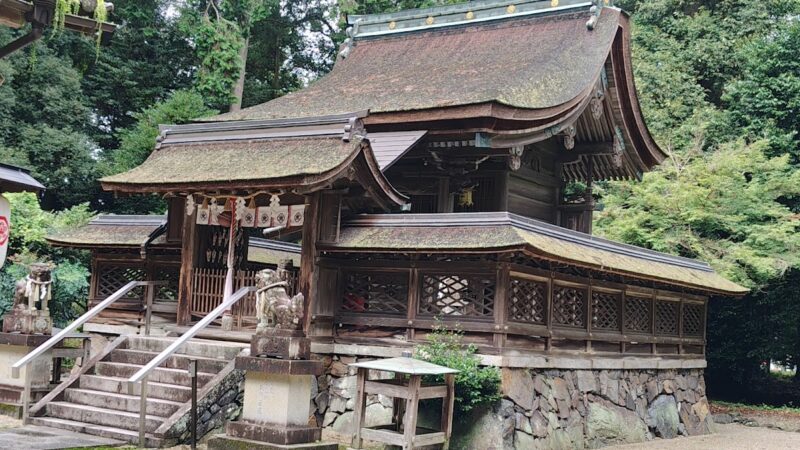
Main Hall (Important Cultural Property): An early Muromachi period building with a unique style known as “Matsuo-zukuri.”
Divine Statue (Important Cultural Property): A life-sized divine statue, believed to be from the early Heian period, is preserved here.
Reikame-no-Taki Waterfall and Kame-no-I Well: This is a spring of pure water located within the shrine grounds. It is believed that sake brewers who add this water to their brewing water will prevent spoilage.
Dedication of Sake Barrels: Sake barrels donated by sake brewers from all over Japan are piled high within the shrine grounds, demonstrating the deep faith in the shrine as the god of sake brewing.
Famous Spot for Japanese Kerria: From April to May, the Japanese kerria flowers that color the shrine grounds golden are a well-known spring spectacle of Matsuo Taisha Shrine.
Primeval Forest of Mount Matsuo: Mount Matsuo, a sacred place for worshipping divine spirits and once considered a restricted area, retains valuable primeval forests including Castanopsis sieboldii, Castanopsis cuspidata, and Cleyera japonica. The Uncaria rhynchophylla, designated a natural monument of Kyoto City, also grows here.
Deities and Divine Virtues: Gods Enshrined at Matsuo Shrine
Main Deity: Oyamakui-no-Mikoto
Oyamakui-no-Mikoto is the main deity enshrined at most Matsuo Shrines. The “kui” in his name means “stake,” and he is considered a powerful god who controls mountains by driving stakes into them. He also has characteristics as a god who presides over agriculture, especially water management.
Oyamakui-no-Mikoto is also enshrined at Hiyoshi Taisha Shrine on Mount Hiei and is widely worshipped as the god of mountains, agriculture, and sake brewing.
Other Deities
At Matsuo Taisha Shrine and other Matsuo Shrines throughout the region, the following deities are sometimes enshrined alongside Oyamakui-no-Mikoto:
Ichikishima-hime-no-Mikoto: One of the main deities of Matsuo Taisha Shrine. Known as the goddess of water and performing arts.
Itakeru-no-Mikoto: God of abundant catches, business prosperity, good fortune, and protection against evil.
Ukanomitama-no-Mikoto: God of bountiful harvests residing in rice.
In some regions, even more deities may be enshrined through the merging of deities. At Matsuo Shrine in Matsusaka City, Mie Prefecture, as many as 29 deities are enshrined through this merging.
Divine Virtues (Benefits)
The main divine virtues of Matsuo Shrine are as follows:
- Safety in Brewing and Prosperity in Sake Brewing: The most famous benefit, worshipped by sake brewers nationwide.
- Business Prosperity: Development and prosperity of business.
- Good Fortune and Happiness: Increased luck and the arrival of happiness.
- Protection from Evil: Repelling disasters.
- Protection from Agriculture: Abundant harvests and agricultural development.
- Flood Control Safety: Protection from floods.
- Healthy Growth of Children: Prayers for the healthy growth of children.
Major Matsuo Shrines Nationwide
Matsuo Shrine in Fuchu City, Tokyo
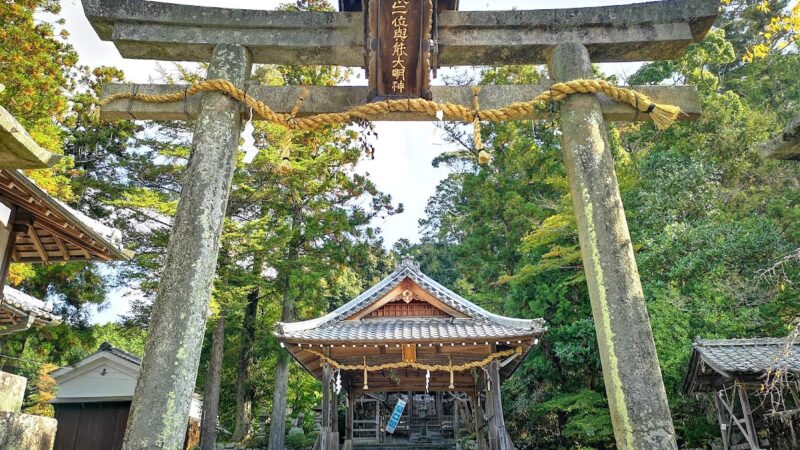
Matsuo Shrine, located within the grounds of Okunitama Shrine, was established in 1800 (Kansei 12) at the request of brewers in Musashi Province, and was invited from Matsuo Taisha Shrine in Kyoto. The torii gate, erected in 1807 (Bunka 4), bears the names of the brewers who donated it, conveying the deep faith of sake brewers at that time.
Matsuo Shrine, Matsusaka City, Mie Prefecture
Located in Matsusaka, Ise Province, Matsuo Shrine is a historic shrine where 29 deities are enshrined. Ōyamakui-no-Mikoto is the principal deity, and many other deities, including Isotakeru-no-Mikoto and Ukanomitama-no-Mikoto, are also enshrined.
It has been supported by the local community as a shrine where people pray for the growth and health of children. It is cherished as a sacred forest where people pray for children to enjoy abundant food and grow up strong and healthy.
Matsuo Shrine, Takarazuka City, Hyogo Prefecture
This ancient shrine is said to have been founded during the Anwa era (968-970). It was founded to worship Sakanoue no Tamuramaro, the Seii Taishogun (Commander-in-Chief of the Expeditionary Force against the Barbarians), as a god of war. It is also called “Matsuomaru Shrine” because Tamuramaro’s childhood name was Matsuomaru.
The main hall is designated as a cultural property of Takarazuka City, and the grounds, which contain a Japanese yew (Ichii-gashi), are designated as a natural environment conservation area.
Matsuo Shrine in Fukui City, Fukui Prefecture
Located in Jūzaki-chō, Fukui City, it is known for its traditional lion dance performances. It is an important shrine that preserves the local festival culture.
Matsuo Shrines in Other Regions
Matsuo Shrines exist throughout Japan, mainly in areas where Matsuo Taisha had manors or in regions where sake brewing is thriving. Each region has cultivated its own unique history and beliefs.
Festivals and Annual Events
Major Festivals of Matsuo Taisha
Shinkōsai (Divine Procession Festival): A festival with a history of over 1000 years, held on the first Sunday after April 20th. The portable shrine is paraded through the parish area, and the ceremony is conducted with great fanfare.
Kankōsai (Return Ceremony): An important festival held together with the Shinkōsai (Procession Ceremony), this is the ceremony in which the portable shrine returns to the shrine.
Reitaisai (Annual Grand Festival): As the most important festival of the year, it attracts many worshippers.
Festivals at Matsuo Shrines in Various Regions
Matsuo Shrines in various regions hold a variety of festivals that reflect the characteristics of each area:
- New Year’s Day Festival: A festival to welcome the New Year
- Dondo-bi Festival: A traditional event where New Year’s decorations are burned
- Annual Festival: The most important festival of the year at each shrine
- Lion Dance Dedication: A dedication of traditional local performing arts
- Memorial Festival: A festival to comfort ancestors and war dead
Visiting Information and Access
Access to Matsuo Taisha (Head Shrine)
Location: 3 Arashiyama Miyacho, Nishikyo-ku, Kyoto City
Transportation Access:
- Approximately 3 minutes on foot from Matsuo Taisha Station on the Hankyu Arashiyama Line
- Immediately after alighting at Matsuo Taisha-mae bus stop on the Kyoto City Bus
- Approximately 30 minutes by car from Kyoto Station
Visiting Hours: Grounds are freely accessible (Shrine office is open from 9:00 to 17:00)
Parking: Parking available for visitors
Etiquette for Visiting
Basic etiquette for visiting Matsuo Shrine:
- Bow before passing through the torii gate
- Purify yourself at the water basin: Purify your left hand, right hand, and mouth in that order.
- Bow twice, clap twice, and bow once in front of the main hall
- Offer your donation
- Pray: Pray with all your heart.
- Bow once after passing through the torii gate
About Prayers
Many Matsuo Shrines accept various types of prayers:
- Family safety
- Business prosperity
- Protection from evil
- Traffic safety
- Success in examinations
- Safe childbirth
- First Shrine Visit for a Newborn
- Shichi-Go-San Ceremony
Advance reservations may be required, so please inquire at the shrine office of each shrine.
Deep Connection Between Matsuo Shrine and the Sake Brewing Industry
Faith as the God of Sake Brewing
There are several factors behind Matsuo Shrine becoming known nationwide as the “God of Sake Brewing.”
First, the Hata clan excelled in sake brewing techniques. The Hata clan, immigrants from the continent, brought advanced brewing techniques and contributed to the development of Kyoto’s sake brewing industry.
Second, the sacred water of “Kame-no-i” spring within the grounds of Matsuo Taisha Shrine. A belief arose that using this water in sake brewing would prevent spoilage, leading sake brewers from all over the country to visit the shrine.
Spread of Faith by Brewers
During the Edo period, brewers in various regions invited a divided spirit from Matsuo Taisha Shrine and established Matsuo Shrines in their local areas. Like Matsuo Shrine in Fuchu City, Tokyo, the deep faith of local brewers is still evident today, as evidenced by their collaborative efforts in building the shrine and inscribing their names on the torii gate.
Even today, sake breweries across Japan dedicate sake barrels to Matsuo Taisha Shrine, praying for safe brewing. The numerous sake barrels piled up on the shrine grounds demonstrate the continuous transmission of this faith to the present day.
Cultural Properties and Natural Environment of Matsuo Shrine
Important Cultural Properties
Matsuo Taisha Shrine possesses valuable cultural properties designated as important national cultural properties:
- Main Hall: An early Muromachi period building, exhibiting a unique style known as Matsuo-zukuri
- Divine Statue: A life-size divine statue believed to be from the early Heian period
These cultural properties are important resources for understanding the history of Japanese shrine architecture and divine statue sculpture.
Preservation of the Natural Environment
Matsuo Mountain has been considered a sacred place for worshipping deities and a restricted area since ancient times. Therefore, the natural state has been preserved without human intervention, and a valuable old-growth forest remains.
- Castanopsis sieboldii forest: A rare old-growth evergreen forest in the Kyoto Basin
- Sakaki: A sacred tree used in Shinto rituals
- Uncaria rhynchophylla: A rare plant designated as a natural monument of Kyoto City
These natural environments are valuable assets that Matsuo Taisha Shrine has protected for many years, and they hold significant importance from the perspective of biodiversity conservation.
Connection with the local community
As a guardian forest
Matsuo Shrine has served as a “guardian forest” in each region, becoming a spiritual center of the local community. Through festivals, it has strengthened community bonds, watched over the healthy growth of children, and functioned as a place to pray for the safety and prosperity of the region.
Inheritance of traditional culture
Matsuo Shrine’s festivals, including lion dances and portable shrine processions, are important opportunities to pass on the region’s traditional culture to the next generation. Through these festivals, regional identity is preserved and community bonds are strengthened.
Modern Role
Even today, Matsuo Shrine plays an important role as a spiritual center for the local people. It is a beloved place for prayers at life’s milestones, such as New Year’s visits, Shichi-Go-San (a traditional rite of passage for children), and exorcisms, as well as a place to pray for daily health and happiness.
Summary: The Charm and Value of Matsuo Shrine
Matsuo Shrine is a prestigious shrine with a history of over 1300 years, with its head shrine being Matsuo Taisha in Kyoto, and branches spreading throughout Japan. It has attracted the fervent devotion of brewers as the god of sake brewing, and has also garnered faith from people for its broad divine blessings in agriculture, business prosperity, and the healthy growth of children.
Its historical development, beginning with the Hata clan’s worship of its tutelary deity, expanding through the manorial system, and being established by sake brewers, is a prime example of how Shinto worship spread in Japan.
Matsuo Shrine is a precious place that conveys Japan’s history, culture, and nature to the present day, boasting buildings and statues designated as Important Cultural Properties, a valuable natural environment including natural monuments, and festivals that have continued for over 1,000 years.
Matsuo Shrines throughout Japan have carved out their own unique histories in each region, continuing to play an important role as spiritual pillars of their communities and places for the transmission of traditional culture.
When visiting Matsuo Taisha in Kyoto, why not reflect on its 1,300-year history while touching the sake barrels, kerria flowers, and sacred water within the shrine grounds? Furthermore, visiting a Matsuo Shrine in your own area and experiencing its unique history and beliefs may lead to new discoveries.