Hachiman Shrine (Suwa City, Nagano Prefecture) Complete Guide: History, Deities, Goshuin (Shrine Seal), and Access Information
In Suwa City, Nagano Prefecture, there is a Hachiman Shrine that is beloved by the local people. While the Suwa region is known for its Suwa Grand Shrine, the Hachiman Shrine is also an important shrine that conveys the history and culture of the region to the present day. This article provides a detailed explanation of the Hachiman Shrine in Suwa City, including its history, enshrined deities, highlights of the grounds, visiting information, and access methods.
What is a Hachiman Shrine?: The Center of Hachiman Worship in Suwa City
The Hachiman Shrine is one of approximately 44,000 shrines throughout Japan that enshrine the Hachiman deity. The Hachiman Shrine in Suwa City has long been a spiritual pillar of the local community, attracting the faith of its residents.
About Hachiman Deity
Hachiman deity, with Emperor Ojin as its principal deity, is widely worshipped as the god of military fortune and victory. Furthermore, Hachiman is revered as the guardian deity of agriculture and fishing, and as a god of protection against misfortune and good fortune, and is known as a deity with a wide range of divine virtues.
In the Suwa region, while the worship of Suwa Grand Shrine is central, Hachiman worship is also deeply rooted in the community, and Hachiman shrines serve as places of daily worship for residents.
History of Hachiman Shrines: Hachiman Worship Rooted in the Land of Suwa
Origin of Founding
The founding period of Hachiman shrines in Suwa City varies depending on local traditions and records, but it is believed that many Hachiman shrines were established by local samurai and residents during the medieval to early modern periods.
Hachiman worship spread among the samurai class as the tutelary deity of the Minamoto clan, and later permeated among the common people. In the Suwa region, it is presumed that Hachiman worship gathered the faith of samurai groups, including the Suwa clan, and eventually became established as the guardian deity of the entire region.
History of the Suwa Region and Hachiman Shrines
The Suwa region has formed its own unique sphere of faith centered around Suwa Grand Shrine since ancient times. In the Middle Ages, this region was ruled by the Suwa clan and had close ties with the Takeda clan. Within this historical context, the Hachiman Shrine functioned as a place to pray for military success and the peace and security of the region.
During the Edo period, it developed as part of the Takashima Domain, and the Hachiman Shrine played a central role in festivals and annual events as the local tutelary deity.
Developments since the Modern Era
While many shrines were affected by the Meiji-era separation of Shinto and Buddhism and the policy of consolidating shrines, the Hachiman Shrine has been maintained to this day, supported by the strong faith of the local residents.
Even as times changed from Showa to Heisei and Reiwa, it remains a beloved place of worship for important life events such as New Year’s visits, Shichi-Go-San (a traditional rite of passage for children), and exorcisms.
Deities and Divine Virtues
Main Deity: Emperor Ōjin (Homudawake no Mikoto)
The main deity of Hachiman shrines is Emperor Ōjin, also known as Hondawake no Mikoto. Known as the 15th Emperor, he is remembered in history for his contributions to the introduction of continental culture and the strengthening of the nation.
Enshrined Deities
Many Hachiman shrines enshrine the following deities alongside Emperor Ōjin:
- Empress Jingū: The mother of Emperor Ōjin, known for the legend of the conquest of the Three Kingdoms of Korea.
- Himegami: A goddess considered the consort of Hachiman.
These deities are generally enshrined together as the “Three Hachiman Deities.”
Divine Virtues
The main divine virtues you can pray for at Hachiman Shrine are as follows:
- Long-lasting Military Fortune and Good Luck in Competitions: Due to its nature as a god of war, prayers are offered for victory in sports, exams, business, etc.
- Protection from Misfortune and Good Fortune: To ward off misfortune and invite good fortune.
- Family Safety: To protect the health and peace of the family.
- Traffic Safety: For safe travels and blessings for vehicles.
- Child-rearing and Safe Childbirth: Through the divine virtues of Empress Jingu, protection for safe childbirth and child-rearing.
- Abundant Harvests and Business Prosperity: For the development of agriculture and commerce.
Highlights of the Shrine Grounds
Main Hall and Worship Hall
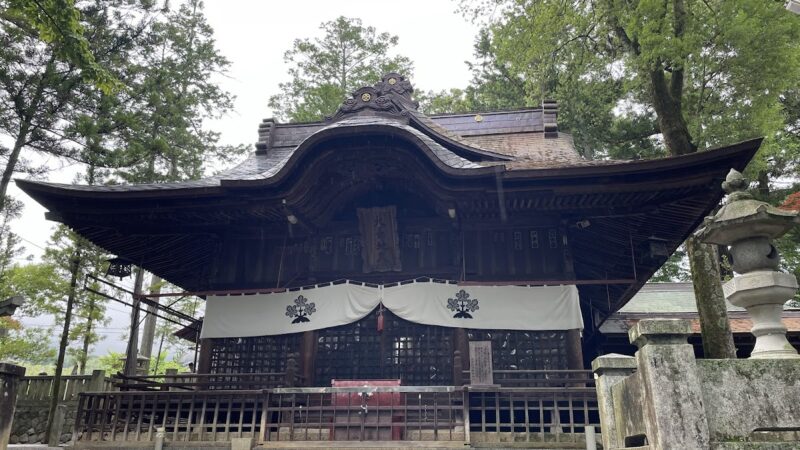
The main hall and worship hall of Hachiman Shrine preserve the traditional style of shrine architecture in the region. Although not large in scale, the carefully maintained shrine buildings reflect the faith of the local people.
Torii Gate and Approach
Passing through the torii gate at the entrance of the shrine, the approach leads to the main hall. Walking along the approach, the time spent shifting your mind from everyday life to the sacred realm, is an important preparation for worship.
Komainu (Guardian Dogs)
The komainu, guardian dogs (komainu) standing in front of the worship hall, are sacred beasts that protect the shrine. Their expressions and forms reflect the characteristics of the era in which they were dedicated, making them cultural assets that tell the story of the region’s history.
Subsidiary Shrines
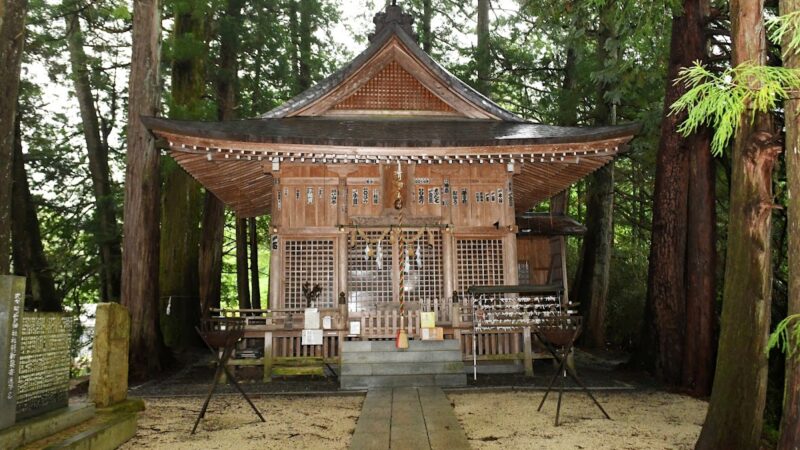
Within the grounds of a Hachiman shrine, there may be small shrines and subsidiary shrines in addition to the main shrine. These demonstrate the diversity of local beliefs, and you may find Inari shrines or Tenjin shrines, among others.
Sacred Trees
The large trees standing within the shrine grounds are sacred trees that have watched over the shrine for many years. These trees, some hundreds of years old, are revered as sacred in themselves.
Shrine Office/Amulet Shop
This is where you can receive goshuin (shrine stamps) and amulets. Since staff may not always be present, it is recommended to check in advance. ## How to Worship and Etiquette
Basic Worship Procedure
- Bow at the Torii Gate: Bow before passing through the torii gate to prepare yourself to enter the sacred area.
- Purify at the Water Basin: If there is a water basin, purify your hands and mouth.
- Walk the Path: The center of the path is considered the path of the gods, so walk along the sides.
- Worship in Front of the Main Hall: Worship using the two bows, two claps, and one bow method.
- Exit the Torii Gate: After exiting the torii gate, turn around and bow.
Two Bows, Two Claps, One Bow Method
- Bow deeply twice (two bows).
- Bring both hands together at chest height, slightly pull back your right hand, and clap twice (two claps).
- Bring both hands together and pray.
- Bow deeply once (one bow).
Things to Remember When Worshiping
- Please dress in clean attire.
- Please be quiet within the shrine grounds.
- Please take photographs only in permitted areas.
- Please refrain from bringing pets, or check in advance.
Annual Events and Festivals
Grand Festival
At Hachiman shrines, the annual Grand Festival is held once a year. The date varies depending on the shrine, but it is often held in the autumn, and prayers are offered for a bountiful harvest and for the peace and prosperity of the community.
The Grand Festival includes a procession of the portable shrine and dedication ceremonies, making it an important event where people from the community gather.
First Shrine Visit of the New Year
Many worshippers visit the shrine for their first shrine visit of the year. It is an important event to pray for safety and peace throughout the year and to report the start of the new year to the gods.
Other Annual Events
- Setsubun Festival: Around February 3rd, a ritual to ward off evil spirits, including bean-throwing.
- Natsukoshi no Harae: June 30th, a Shinto ritual to purify oneself of the impurities accumulated over the past six months.
- Shichi-Go-San: Around November 15th, a celebration of children’s growth.
- Oharai: December 31st, a New Year’s ritual to purify oneself of the impurities accumulated over the year.
Goshuin (Shrine Seal) Information
About Goshuin
Goshuin may be available at Hachiman Shrine. However, since there may not be a resident priest or it may only be available on specific dates and times, it is recommended to check in advance.
Etiquette for Receiving a Goshuin (Temple/Shrine Seal)
- Complete your prayers first: The goshuin is proof of your prayers, so always receive it after praying.
- Prepare a goshuin notebook: Prepare a dedicated goshuin notebook.
- Prepare the offering: Generally, around 300 to 500 yen.
- Request politely: Politely request, “May I receive a goshuin?”
- Express gratitude: After receiving it, say “Thank you very much.”
Pre-written Goshuin
If a Shinto priest is not always present, pre-written goshuin may be available. Check at the reception area or shrine office.
Amulets and Items Offered
Main Amulets
The following amulets are offered at Hachiman shrines (may vary by shrine):
- Victory Amulet: For success in competitions such as exams and matches
- Exorcism Amulet: For those in their unlucky year or those seeking protection from misfortune
- Traffic Safety Amulet: For safe driving and cycling
- Family Safety Amulet: For the health and peace of the family
- Safe Childbirth Amulet: For safe childbirth for pregnant women
- Academic Success Amulet: For academic success
How to Handle Amulets
- Wear them at all times or place them in an important location
- Replace them with new ones approximately every year
- Return old amulets to the shrine (for burning)
Access Information
Location
Suwa City, Nagano Prefecture (Specific addresses vary by Hachiman shrine)
Access by Public Transportation
Using the JR Chuo Main Line:
- The nearest stations are Kami-Suwa Station or Shimo-Suwa Station.
- From the station, you can walk, or take a bus or taxi.
- The specific travel time varies depending on the shrine’s location.
If using a local bus:
- You may be able to use local bus routes such as the Karin-chan Bus (Suwa City Community Bus).
Access by Car
If using the expressway:
- Approximately 10-20 minutes from the Chuo Expressway “Suwa IC” (varies depending on the shrine).
- Access is also possible from the Chuo Expressway “Suwa-Minami IC”.
Car Navigation Settings:
- Search by shrine name “Hachiman-sha” or address.
- If a phone number is available, you can also search by phone number.
Parking
Depending on the size of the shrine, there may or may not be a dedicated parking lot. During events such as New Year’s visits and annual festivals, temporary parking lots may be set up nearby.
Please be sure to use the designated parking lot, as street parking will cause inconvenience to the neighborhood.
Nearby Tourist Attractions
Suwa Grand Shrine
A representative shrine of the Suwa region, consisting of four shrines: Kamisha Honmiya, Kamisha Maemiya, Shimosha Akimiya, and Shimosha Harumiya. Easily accessible from Suwa City, it’s a shrine worth visiting.
Lake Suwa
The largest lake in Nagano Prefecture, offering beautiful scenery throughout the seasons. There are various ways to enjoy the lake, including lakeside walks, pleasure boat rides, and summer fireworks displays.
Takashima Castle
A castle ruin located in the center of Suwa City, also known as “Suwa’s Floating Castle.” Currently, a reconstructed keep has been built, and it serves as a museum where you can learn about the history of Suwa City.
Katakura-kan
A hot spring facility in the early Showa period, designated as a National Important Cultural Property. It’s famous for its 1.1-meter-deep “Thousand-Person Bath,” and day trips to enjoy the bath are still available.
Suwa City Museum
A museum exhibiting the history and culture of the Suwa region. From archaeological materials to folklore artifacts, you can learn about the history of Suwa through a wide range of exhibits.
Notes on Visiting
Visiting Hours
Generally, the shrine grounds are open for worship at any time during the day, but the reception hours of the shrine office may be limited. If you wish to obtain a Goshuin (shrine stamp) or amulet, it is recommended to check in advance.
Dress Code
There are no specific dress code requirements, but as it is a sacred place, please dress in clean and respectful attire.
Photography
Photography is generally permitted on the shrine grounds, but it may be restricted inside the main hall or during religious ceremonies. If unsure, please check with a Shinto priest.
Accessibility Information
Some shrines have steps or stairs, making wheelchair access difficult. It is recommended to check in advance.
Hachiman Shrine and the Local Community
Parishioner Organization
Hachiman Shrines are supported by the parishioner organization as the local guardian deity. The parishioners are involved in the maintenance and management of the shrine and the operation of festivals, playing a role in strengthening community ties.
Center of Community Events
Events at the Hachiman Shrine, such as the annual festival and New Year’s visits, are valuable opportunities for local people to gather. They contribute to community revitalization as a place for intergenerational exchange.
Preservation of Traditional Culture
Through festivals and annual events at the shrine, the region’s traditional culture is passed down to the next generation. Children carrying portable shrines and performing sacred dances foster a love for their hometown.
Religious Culture of the Suwa Region
Coexistence of Suwa and Hachiman Faith
In the Suwa region, while the ancient Suwa faith remains deeply rooted, the Hachiman faith, which spread from the medieval period onward, has also taken root. The coexistence of these two faiths demonstrates the diversity and tolerance of Japanese religious culture.
Relationship with the Onbashira Festival
The Onbashira Festival, the largest festival in the Suwa region, is a Shinto ritual of Suwa Grand Shrine, but the entire region is enveloped in a festive atmosphere. Hachiman Shrine is also positioned within this cultural background as part of the region.
Influence of Mountain Worship
The Suwa region is surrounded by mountains such as Yatsugatake and Kirigamine. Ancient mountain worship has influenced the region’s religious culture, and this influence can be seen in the worship of Hachiman Shrine.
Seasonal Charms of Hachiman Shrine
Spring (March-May)
During cherry blossom season, cherry blossoms bloom in the shrine grounds and along the approach, allowing visitors to enjoy both worship and cherry blossom viewing. It is also a beautiful season of fresh greenery, and worshipping in the refreshing air is exceptional.
Summer (June-August)
The lush green grounds provide a cool space to alleviate the summer heat. Shinto rituals such as the Natsukoshi no Harae (Summer Purification Ceremony) are held, expressing gratitude for the safety of the past six months and praying for good health for the remaining six months.
Autumn (September-November)
This is the season for the annual festival, and the shrine grounds are filled with the lively atmosphere of the festivities. It’s also a beautiful time for autumn foliage, with colorful trees adorning the grounds. Many families visit for Shichi-Go-San (a traditional Japanese rite of passage for children).
Winter (December-February)
The snow-covered shrine grounds are enveloped in a tranquil atmosphere. The shrine is bustling with many visitors for Hatsumode (the first shrine visit of the New Year), and comes alive with people coming to pray for the new year. The Setsubun Festival is also an important winter event.
Prayers and Supplications at Hachiman Shrine
Individual Prayers
Hachiman Shrine may accept prayers for individuals and families. The main types of prayers offered are as follows:
- Exorcism prayer
- Family safety prayer
- Traffic safety prayer
- Business prosperity prayer
- Success in examinations prayer
- Safe childbirth prayer
How to apply for prayer
- Make a reservation by phone in advance (required if a Shinto priest is not permanently stationed)
- Fill out the application form at the shrine office on the day of your visit
- Pay the offering fee (the amount varies depending on the type of prayer)
- Receive the prayer at the main shrine or worship hall
First shrine visit and Shichi-Go-San
You can also celebrate your child’s growth with a first shrine visit and Shichi-Go-San at Hachiman Shrine. Visiting the local guardian shrine is an important ceremony that strengthens the bond between the child and the community.
Cultural assets and historical value of Hachiman Shrine
Shrine architecture
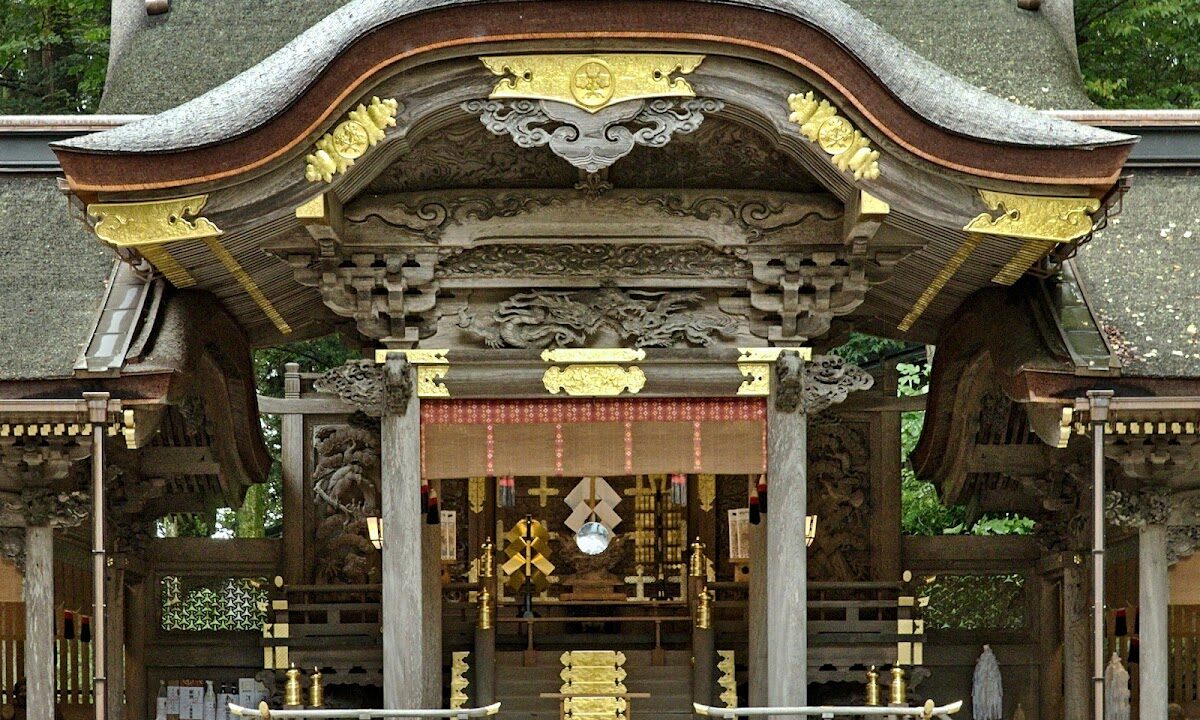
The shrine buildings of Hachiman Shrine are valuable cultural assets that convey the traditional architectural techniques of the region to the present day. Even though it may not be large in scale, the craftsmanship of the artisans shines through in the detailed carvings and decorations.
Votive Items
Within the shrine grounds, there are stone lanterns, guardian lion-dogs, and votive tablets donated by successive generations of parishioners and devotees. These are carefully preserved as evidence of the region’s history and faith.
Ancient Documents and Records
Ancient documents and records passed down at the shrine are valuable resources for studying the region’s history. They offer insights into local history, including records of festivals and changes in the land.
Manners and Etiquette When Visiting Hachiman Shrine
Manners on the Shrine Grounds
- Be Quiet: Do not speak loudly or make noise.
- Refrain from Smoking and Eating: Refrain from smoking and drinking outside of designated areas.
- Take Your Trash Home: Keep the shrine grounds clean.
- Do Not Harm Plants: The plants and trees on the shrine grounds are sacred.
- Do Not Enter Areas Other Than Designated Areas: Do not enter areas where entry is prohibited.
Mindset When Visiting
Shrines are sacred places where gods reside. Remember that they are places of worship, not just tourist attractions, and visit with respect.
Frequently Asked Questions
Q: Do I need a reservation to visit Hachiman Shrine?
A: Reservations are not required for regular visits. However, if you wish to receive a prayer or a Goshuin (shrine stamp), it is recommended to contact the shrine in advance to confirm.
Q: How much should I prepare as an offering? **
A: Amulets typically cost around 500 to 1,000 yen, and Goshuin (temple/shrine stamps) around 300 to 500 yen. The offering fee for prayers varies depending on the content, so please check in advance.
Q: Can I bring pets such as dogs to Hachiman Shrine?
A: Generally, it is discouraged to bring pets to shrines. If you absolutely want to bring one, we recommend checking with the shrine in advance.
Q: Is it possible to have a wedding ceremony at Hachiman Shrine?
A: Depending on the size and facilities of the shrine, it may be possible to hold a Shinto wedding ceremony. Please contact the shrine directly for details.
Q: When should I go for an exorcism during my unlucky year?
A: Exorcisms for unlucky years are generally performed from New Year’s Day to Setsubun (the day before the beginning of spring). However, many shrines accept visitors throughout the year, so please visit at a time that is convenient for you** ## Summary: Finding Peace of Mind at Hachiman Shrine
Hachiman Shrine in Suwa City, Nagano Prefecture, has long been a place of worship deeply rooted in the community, serving as a spiritual haven for people. While not a large shrine like Suwa Grand Shrine, its strong ties to the local community and warm atmosphere are its charm.
Hachiman, known as the god of military fortune and victory, continues to watch over us in various aspects of life, such as exams, job hunting, and sports. It is also a popular place to pray for peace in daily life, including family safety and traffic safety.
When you visit Suwa City, be sure to stop by Hachiman Shrine. The time spent praying in its quiet grounds will be a precious moment to escape the hustle and bustle of everyday life and reflect on yourself.
Combining a visit to Hachiman Shrine with other tourist spots like Lake Suwa and Suwa Grand Shrine will create a memorable trip that allows you to experience the local faith and culture. May Hachiman Shrine be a place where you can find peace of mind.