Miyazaki Shrine Complete Guide | History, Benefits, and Visiting Information for the Shrine Dedicated to Japan’s First Emperor
Miyazaki Shrine, located in Jingu, Miyazaki City, Miyazaki Prefecture, is a venerable shrine dedicated to Emperor Jimmu, Japan’s first emperor. Founded in Hyuga, the starting point of Emperor Jimmu’s eastern expedition, it has long been known as “Emperor Jimmu’s Shrine” or “Emperor Jimmu’s Mausoleum.” Today, it is a major tourist attraction in Miyazaki Prefecture and a popular power spot visited by many worshippers.
This article comprehensively covers everything you need to know before visiting Miyazaki Shrine, including its history, origins, enshrined deities, highlights within the grounds, annual rituals, and access information.
Table of Contents
- Basic Information about Miyazaki Shrine
- Changes in the Shrine’s Name and History
- Deities and Blessings
- History and Founding Legends
- Highlights of the Shrine Grounds
- Architectural Style of the Shrine Buildings
- Introduction to Subsidiary Shrines
- Annual Rituals and Festivals
- The Charm of the Yabusame Ritual
- Cultural Properties and Treasures
- Access and Visitor Information
- Frequently Asked Questions
Basic Information about Miyazaki Shrine
Location: 2-4-1 Jingū, Miyazaki City, Miyazaki Prefecture
Shrine Rank: Former Kanpei Taisha (Grand Imperial Shrine), currently a Beppyo Jinja (Special Shrine) of the Association of Shinto Shrines
Main Deity: Emperor Jimmu (Emperor Jimmu)
Associated Deities: Ugayafukiaezu-no-Mikoto, Tamayorihime-no-Mikoto
Annual Festival Dates: October 26th and 27th
Visiting Hours: Grounds are freely accessible (Shrine office is open from 9:00 to 17:00)
Parking: Free parking available (approximately 300 spaces)
Miyazaki Shrine is located in the northern part of Miyazaki City, and its vast grounds are surrounded by a lush forest. It is open to visitors throughout the year, and is especially crowded with many worshippers during the first three days of the New Year and during the annual festival.
Changes in Shrine Name and History
The name of Miyazaki Shrine has changed over time.
From Ancient Times to the Edo Period
From its founding to the Edo period, it was called “Jinmu Tenno-gu,” “Jinmu Tenno-sha,” and “Jinmu Tenno Gobyō.” Locally, it was affectionately known as “Jinmu-sama” and was revered in the feudal society centered around the samurai class.
Renaming in the Meiji Era
After the Meiji Restoration, the shrine’s name was changed in accordance with the establishment of the shrine system.
- 1873 (Meiji 6): Renamed “Miyazaki Shrine”
- 1878 (Meiji 11): Renamed “Miyazaki-gu”
- 1884 (Meiji 17): Ranked as a Kanpei Taisha (Grand Imperial Shrine)
Receiving the “Jingu” Title in the Taisho Era
1913 (Taisho 2): The “Jingu” title was granted, and the shrine became “Miyazaki Jingu,” establishing its current name.
The granting of the “Jingu” title signifies a deep connection with the Imperial Family and high status. Since the Meiji era, Miyazaki Jingu has grown into a nationally revered shrine, occupying an important position as a shrine symbolizing Japanese history and the Imperial Family.
Deities and Benefits
Main Deity: Emperor Jimmu (Emperor Jimmu)
Emperor Jimmu is the first emperor of Japan, appearing in Japanese mythology. According to the Kojiki and Nihon Shoki, he led an eastward expedition from Hyuga (present-day Miyazaki) to Yamato (present-day Nara) and was enthroned at Kashihara Palace.
Enshrined Deities
Ugayafukiaezu-no-Mikoto
Father of Emperor Jimmu. Born to Toyotama-hime-no-Mikoto, daughter of the sea god, and raised in Hyuga.
Tamayori-hime-no-Mikoto
Mother of Emperor Jimmu. Younger sister of Toyotama-hime-no-Mikoto, and consort of Ugayafukiaezu-no-Mikoto.
Benefits
Miyazaki Shrine is believed to offer the following benefits:
Family Safety and Marital Harmony
Since the parents of Emperor Jimmu, Ugayafukiaezu-no-Mikoto and Tamayorihime-no-Mikoto, are enshrined together, the shrine offers blessings for family harmony and marital bliss.
Safe Childbirth and Fertility
Tamayorihime-no-Mikoto is also known as the goddess of safe childbirth, and many worshippers visit to pray for safe childbirth and fertility.
Prayers for Victory and Success
In commemoration of Emperor Jimmu’s successful eastern expedition, the shrine attracts a constant stream of worshippers praying for success in exams, job hunting, and victory in sports.
Good Fortune and Business Prosperity
As the ancestral deity of Japan’s founding, the shrine also offers blessings for success in new businesses and good fortune.
History and Founding Legend
Founding Legend
The exact founding date of Miyazaki Shrine is unclear, but according to shrine tradition, it is said to have begun when Takeiwatatsu-no-Mikoto, a grandson of Emperor Jimmu, was appointed governor of Kyushu (responsible for governing Kyushu) and established a shrine to honor the virtues of his grandfather, Emperor Jimmu.
Takeiwatatsu-no-Mikoto is also known as the principal deity of Aso Shrine in Kumamoto and is a god with deep ties to the Kyushu region.
Emperor Jimmu and the Land of Hyuga
Emperor Jimmu was born and raised in Hyuga Province (present-day Miyazaki Prefecture) and embarked on his eastern expedition at the age of 45. Hyuga was both the starting point and the homeland of Emperor Jimmu. Therefore, it is natural that a shrine dedicated to Emperor Jimmu was established in this area.
Relationship with Kofun (Ancient Burial Mounds)
Behind Miyazaki Shrine lies the Koguya Kofun (ancient burial mound), once believed to be the tomb of Emperor Jimmu. While now considered a Kofun period (ancient burial mound) site, it has a long history of being revered as a sacred place.
History up to the Edo Period
Until the Edo period, it was primarily worshipped by samurai families and cherished as a guardian deity of the region. However, its national recognition was limited.
Development after the Meiji Restoration
After the Meiji Restoration, its national importance as a shrine dedicated to Emperor Jimmu was recognized, and it was ranked as a Kanpei Taisha (a high-ranking government-supported shrine). During the Showa era, the shrine buildings were renovated, resulting in its current magnificent appearance. In particular, the large-scale construction project during the Showa period improved the grounds, creating a system to accommodate many worshippers.
Highlights of the Shrine Grounds
Miyazaki Shrine boasts a vast area of approximately 170,000 square meters, surrounded by abundant nature.
Approach to the Shrine
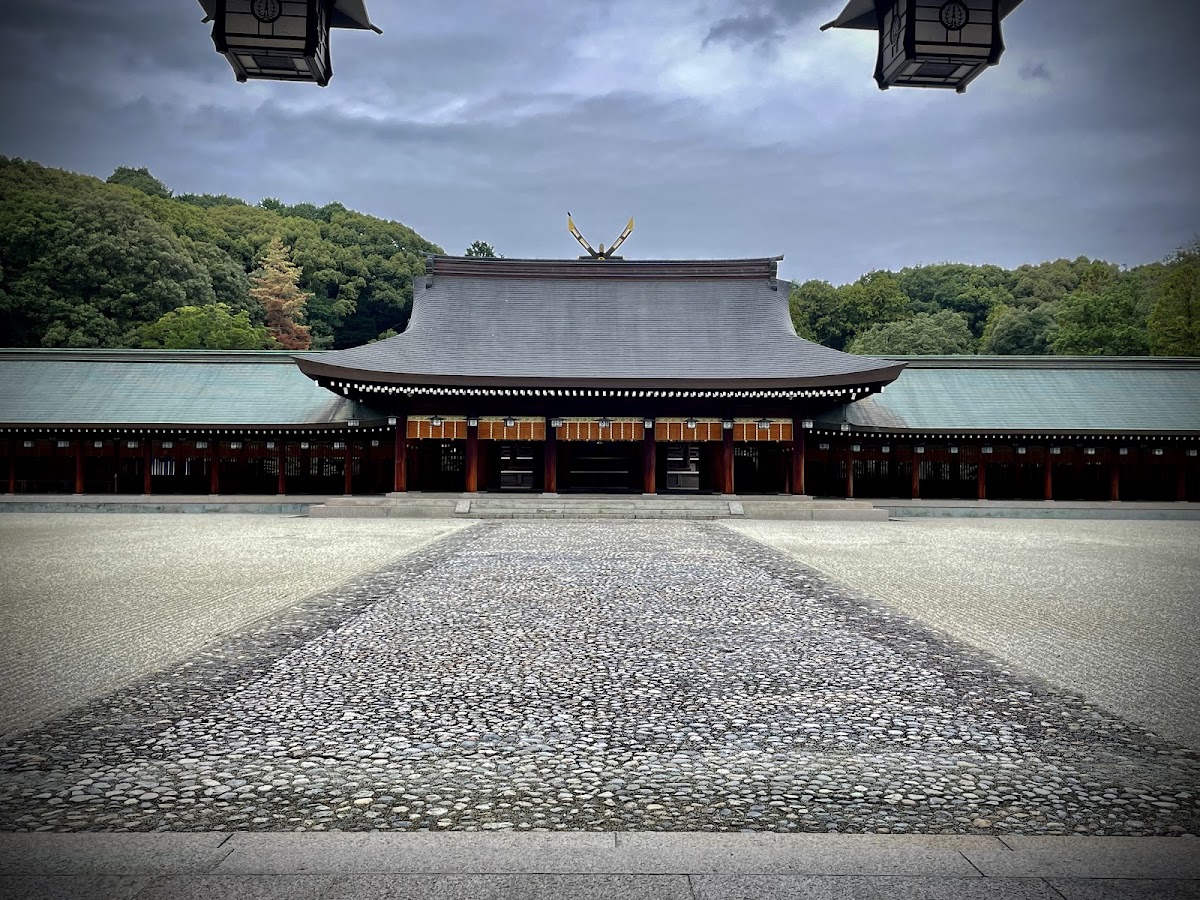
After passing through the first torii gate, a path lined with ancient trees hundreds of years old stretches out before you. Walking through the tranquil forest, you are enveloped in a sacred atmosphere. The path is covered with gravel, and with each step, you feel a sense of purification.
Water Basin
Further along the path is the water basin. Here, you purify your hands and mouth before praying. Pure water springs forth, allowing you to cleanse your mind and body before offering your prayers.
Shrine Gate
Beyond the water basin comes the magnificent shrine gate. Passing through this gate, you will see the main hall (haiden).
Main Hall and Honden (Inner Sanctuary)
The main hall was rebuilt in the Showa era and is a beautiful example of cypress wood construction. The inner sanctuary is located behind the main hall and is built in the Shinmei-zukuri style. While the inner sanctuary is not usually open to the public, its solemn atmosphere can be felt even from the main hall.
Sacred Trees
Within the shrine grounds are sacred trees over several hundred years old, making it a popular power spot. The giant camphor and cedar trees are like witnesses to a long history.
Sacred Garden
A sacred garden is located in a corner of the shrine grounds, where visitors can enjoy flowers of all seasons. Cherry blossoms in spring, fresh greenery in early summer, and autumn leaves are beautiful, delighting the eyes of worshippers.
Miyazaki Prefectural Museum
Adjacent to Miyazaki Shrine is the Miyazaki Prefectural Museum. It features exhibits on Miyazaki’s history, nature, and folklore, making it well worth visiting in conjunction with a shrine visit. Admission is free, and you can gain a deep understanding of Miyazaki’s culture.
Architectural Style of the Shrine
Characteristics of Shinmei-zukuri
The main hall of Miyazaki Shrine employs the Shinmei-zukuri style, the oldest shrine architectural style in Japan. Shinmei-zukuri is a style exemplified by Ise Grand Shrine and has the following characteristics:
- Gable roof
- Hirairi (flat entrance) structure
- Raised floor structure
- Chigi (ornamental roof finials) and Katsuogi (decorative roof beams) are placed on the roof
Showa Era Grand Construction
The current shrine building was grandly constructed during the Showa era and is a dignified building using cypress wood. The worship hall provides a spacious area for worshippers to offer their prayers.
Place of Worship Area
In front of the worship hall is a worship area where worshippers offer their prayers to the gods. A donation box is placed there, and a bell rope hangs down.
Introduction to Subsidiary Shrines
Several subsidiary shrines are located within the grounds of Miyazaki Shrine.
Gokoku Shrine
The Gokoku Shrine, dedicated to those who died in war from Miyazaki Prefecture, is located within the grounds. Many worshippers visit this place to express their gratitude and remembrance for the war dead.
Other Subsidiary Shrines
Within the shrine grounds, there are other small shrines and subsidiary shrines, each enshrining a different deity. It is believed that visiting these subsidiary shrines after the main worship will bring deeper blessings.
Relationship with Omi Shrine
In Hyuga City, Miyazaki Prefecture, there is Omi Shrine, also known as a shrine associated with Emperor Jimmu’s eastern expedition. There are several shrines related to Emperor Jimmu in the Hyuga region, and a “mythological pilgrimage” visiting these shrines is popular.
Annual Rituals and Festivals
Miyazaki Shrine holds various rituals throughout the year.
Main Annual Events
January 1st: Saitansai (New Year’s Day Festival)
The most important festival celebrating the New Year. It is bustling with many first-time worshippers.
February 11th: Kigensai (National Foundation Day Festival)
A festival held to coincide with National Foundation Day. It celebrates the enthronement of Emperor Jimmu.
April 3rd: Emperor Jimmu Festival (Distant Worship)
A festival held on the anniversary of Emperor Jimmu’s death.
October 26th & 27th: Annual Festival (Jimmu-sama)
The most important festival at Miyazaki Shrine. Various Shinto rituals are performed over two days.
November: Shichi-Go-San Prayer
Many families visit during the Shichi-Go-San festival, which celebrates the growth of children.
December 31st: Great Purification Ceremony & New Year’s Eve Festival
The Great Purification Ceremony is held to cleanse away the impurities of the past year.
Details of the Annual Festival
The October Annual Festival, affectionately known as “Jimmu-sama” by the local community, includes a portable shrine procession, offerings, and Kagura (sacred dance). Stalls line the shrine grounds, creating a festive atmosphere.
The Charm of Yabusame (Shinto Ritual Archery)
Among the rituals of Miyazaki Shrine, the most famous is Yabusame (Shinto ritual archery).
What is Yabusame?
Yabusame is a traditional Japanese martial art in which archers shoot arrows at targets from horseback while galloping. Performed as a Shinto ritual, Yabusame is a sacred ceremony praying for a bountiful harvest and peace throughout the land.
Yabusame at Miyazaki Shrine
Yabusame is performed at Miyazaki Shrine every April. Many spectators from within and outside the prefecture visit to witness this magnificent spectacle.
- Event Period: April (Specific dates vary each year)
- Location: Horse riding grounds within Miyazaki Shrine grounds
- Content: Archers in traditional attire ride horses and shoot arrows at three targets.
Highlights of Yabusame (Horseback Archery)
The thrill of the galloping horses, the archers’ skill, and the cheers at the moment of impact are just some of the many highlights. The traditional attire and horse tack are also beautiful, making this a valuable opportunity to experience traditional Japanese culture.
Cultural Properties and Treasures
Designated Cultural Properties
Miyazaki Shrine houses valuable cultural properties.
Shrine Buildings: The shrine buildings, constructed during the major reconstruction in the Showa era, embody the essence of traditional shrine architecture.
Ancient Documents: Ancient documents passed down within the shrine contain historically valuable records.
Treasure Hall
Miyazaki Shrine houses treasures that are occasionally displayed to the public on special occasions. These include ritual implements used in Shinto ceremonies and offerings.
Kōgūya Kofun (Imperial Palace Burial Mound)
Located behind the shrine grounds, the Kōgūya Kofun was once believed to be the tomb of Emperor Jimmu. While currently preserved as a Kofun period (ancient burial mound) site, it is an important historical site closely connected to the history of the shrine.
Access and Visiting Information
Access by Public Transportation
By JR Train
- Get off at Miyazaki Jingu Station on the JR Nippo Main Line, approximately 10 minutes on foot.
- Approximately 5 minutes by train from JR Miyazaki Station.
By Bus
- Get off at the Miyazaki Jingu bus stop on the Miyazaki Kotsu Bus, short walk away.
- Approximately 15-20 minutes from Miyazaki Station.
Access by Car
From Miyazaki City Center
- Approximately 15 minutes via National Route 10.
From Miyazaki Airport
- Approximately 30 minutes by car.
From Miyazaki Expressway
- Approximately 15 minutes from Miyazaki Interchange.
Parking Information
Miyazaki Jingu Shrine has a free parking lot.
- Parking Capacity: Approximately 300 cars
- Operating Hours: 24 hours a day
- Fee: Free
*During the first three days of the New Year and the annual festival, it can get crowded, so using public transportation is recommended.
Notes for Visitors
Dress Code: There are no specific dress code requirements, but as it is a sacred place, clean attire is preferred.
Photography: Photography is permitted within the shrine grounds, but may be prohibited inside the main hall or during religious ceremonies.
Pets: Please limit the number of pets brought to the shrine and always keep them on a leash.
Estimated Time Required: A leisurely visit takes approximately 30 minutes to 1 hour.
Nearby Tourist Attractions
Miyazaki Prefectural Museum
Located next to the shrine, you can learn about Miyazaki’s history, nature, and folklore. Admission is free.
Heiwadai Park
Approximately 15 minutes by car. A park with the Tower of Peace, offering panoramic views.
Aoshima/Aoshima Shrine
Approximately 30 minutes by car. A tourist destination overflowing with tropical charm.
Goshuin (Shrine Seals) and Amulets
Goshuin: Available at the shrine office (donation of 300 yen).
Amulets: Various amulets are available, including those for family safety, traffic safety, and success in exams.
Prayers: Various prayers are also available. Please inquire at the shrine office for details.
Frequently Asked Questions
Q1: How long does it take to visit Miyazaki Shrine?
A1: A normal visit takes about 30 minutes to an hour. If you want to stroll around the grounds or visit the adjacent Miyazaki Prefectural Museum, it’s best to allow about two hours.
Q2: Can I get a Goshuin?
A2: Yes, you can get a Goshuin at the shrine office. Reception hours are approximately 9:00 AM to 5:00 PM. The offering fee is typically 300 yen. You can bring your own goshuincho (stamp book) or purchase one on-site.
Q3: Is parking free?
A3: Yes, parking at Miyazaki Shrine is free. There are approximately 300 spaces. However, it gets crowded during the first three days of the New Year and during festivals, so we recommend using public transportation.
Q4: Can I have a wedding ceremony here?
A4: Yes, you can have a Shinto wedding ceremony at Miyazaki Shrine. Please inquire at the shrine office for details. You can have a traditional Shinto ceremony in a solemn atmosphere.
Q5: Can I bring my pet to the shrine?
A5: Pets are allowed, but you must keep them on a leash and be considerate of other visitors. Please refrain from bringing them too close to the main shrine.
Q6: When can I see the Yabusame (mounted archery)?
A6: The Shinto Yabusame is held every April. Specific dates vary from year to year, so we recommend checking the official Miyazaki Shrine website or calling them for confirmation.
Q7: What is the relationship between Miyazaki Shrine and Emperor Jimmu?
A7: Miyazaki Shrine enshrines Emperor Jimmu, the first emperor of Japan, as its main deity. Emperor Jimmu was born and raised in Hyuga (present-day Miyazaki), and it was from here that he departed on his eastern expedition. It is said that Miyazaki Shrine was founded by Takeiwatatsu-no-Mikoto, Emperor Jimmu’s grandson, to honor his grandfather’s virtues.
Q8: What are the blessings of Miyazaki Shrine?
A8: It is believed to offer blessings for family safety, marital harmony, safe childbirth and fertility, victory in competitions, success in examinations, and good fortune. Because Emperor Jimmu’s parents are also enshrined there, the blessing of family harmony is particularly well-known, as is the blessing of achieving goals due to his successful eastern expedition.
Summary
Miyazaki Shrine is a venerable shrine dedicated to Emperor Jimmu, the first emperor of Japan, and is a representative tourist spot and power spot in Miyazaki Prefecture. It boasts a long history from its founding to the present day, beautiful Shinto-style shrine buildings, grounds surrounded by abundant nature, and numerous rituals held throughout the year, offering plenty to see.
The Yabusame (mounted archery) ritual in April and the annual festival in October are particularly popular, attracting many worshippers and tourists. It offers various blessings, including family safety, victory in competitions, and safe childbirth, making it a shrine to visit at important life milestones or when making important wishes.
It’s easily accessible, located about a 10-minute walk from JR Miyazaki Jingu Station, and has free parking available. When visiting Miyazaki, be sure to visit Miyazaki Shrine and experience Japanese history and tradition firsthand.