Complete Guide to Okadera Temple | The Charm of Japan’s First Exorcism Temple and the Seventh Temple of the Saigoku Kannon Pilgrimage
Located on the mountainside of Oka in Asuka Village, Takaichi District, Nara Prefecture, Okadera Temple, officially known as “Tokozan Shinjuin Ryugaiji,” is an ancient temple of the Buzan branch of the Shingon sect with a history of over 1300 years. As Japan’s first exorcism temple and the seventh temple of the Saigoku Kannon Pilgrimage, it has attracted many worshippers since ancient times. This article will introduce the charm of this historic temple in its entirety, from its history and highlights to information for visitors.
History and Origin of Okadera Temple
Circumstances of its Founding
Okadera Temple is said to have been founded in 633 AD (the second year of Emperor Tenji’s reign) by the monk Gien Sojo at the request of Emperor Tenji. It was named “Okadera” because it was built on the site of Prince Kusakabe’s Oka Palace. It is believed that the temple complex was originally located in a different place than its current location, and was later moved to the middle of Okayama in Asuka.
Gien Sojo was a high-ranking priest of the Hossō sect and is known as a renowned monk who produced many eminent priests, including Ryōben Sojo, who founded Tōdai-ji Temple, and Gyōki Bodhisattva, the teacher of Jianzhen Wajō, who founded Tōshōdai-ji Temple. Okadera flourished as a center of Buddhist scholarship from the Nara period to the Heian period.
Origin of the Name Ryūgai-ji
An interesting legend surrounds the temple’s official name, “Ryūgai-ji.” It is said that a malevolent dragon once lived in this area, tormenting the villagers. According to legend, Gien Sojo sealed the dragon in a pond using his spiritual power and covered it with a large stone, hence the name “Ryūgai-ji” (Dragon-Spreading Temple). This legend of dragon sealing is the origin of the temple’s reputation as a sacred site for warding off evil.
A Faith That Transcends Time
Okadera Temple was designated as the seventh temple on the Saigoku Thirty-Three Kannon Pilgrimage during the Heian period and developed as a center of Kannon worship. During the Edo period, the current temple layout was established, and important cultural properties such as the Shoin (study hall) and Niomon (gate) were built. Having overcome the difficult period of anti-Buddhist movement after the Meiji Restoration, it continues to attract worshippers from all over Japan as Japan’s first temple for warding off evil, spanning the Showa, Heisei, and Reiwa eras.
Highlights of Okadera Temple
Principal Image: Nyoirin Kannon Bodhisattva
The greatest highlight of Okadera Temple is the seated statue of Nyoirin Kannon Bodhisattva, the principal image enshrined in the main hall. This statue boasts the largest size among clay statues in Japan, standing approximately 4.6 meters tall. It is believed to be a work from the Tenpyo period and is designated as an Important Cultural Property.
This Kannon statue, said to be the work of Kobo Daishi Kukai, is particularly revered as a Kannon that wards off evil for women, and its graceful form and compassionate expression captivate visitors. Nyoirin Kannon is depicted with six arms, each holding an object such as a wish-granting jewel or a Dharma wheel.
Niomon Gate
Climbing the stone steps leading up the mountainside of Okayama, visitors are greeted by the Niomon Gate, vividly painted in vermilion. This Niomon Gate is designated as an Important Cultural Property and is a valuable structure that preserves the architectural style of the Edo period. On either side are the Agyo and Ungyo Kongo Rikishi statues, guarding the temple.
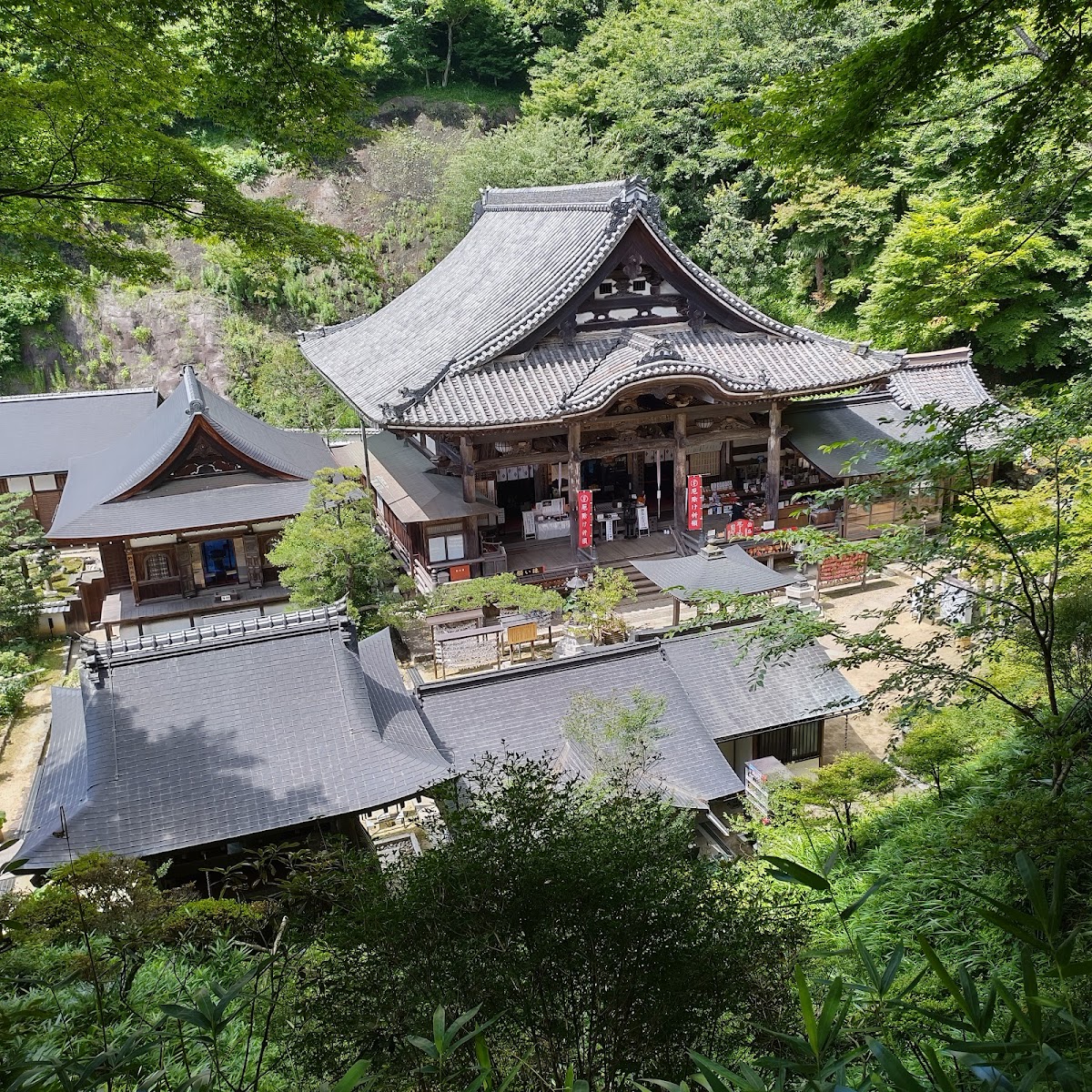
Passing through the Niomon Gate, a magnificent landscape unfolds, with the main hall and a three-story pagoda standing atop a stone wall. From the temple grounds, you can enjoy a panoramic view of Asuka village and appreciate the beautiful scenery of each season.
Shoin (Important Cultural Property)
The Shoin, built during the Edo period, is a particularly valuable building among Okadera Temple’s cultural assets. It boasts a typical Shoin-zukuri architectural style and is designated as an Important Cultural Property, representing the pinnacle of architectural technology at the time. Inside, fusuma paintings by Kano school artists remain, and viewing may be possible with prior reservation.
Three-Storied Pagoda
The three-storied pagoda, standing on a hill within the temple grounds, is a symbolic presence at Okadera Temple. Its beautiful form, harmonizing with the surrounding nature, is popular with many photography enthusiasts. Especially during the cherry blossom season in spring and the autumn foliage season, a spectacular view unfolds with the pagoda as a backdrop.
Okadera Temple, the Temple of Flowers
The Birthplace of Flower Water Basins
Okadera Temple is also known as the “Temple of Flowers,” and in particular, the “Flower Pond” and “Flower Water Basin,” started in the spring of 2015, spearheaded the flower water basin boom that is now spreading throughout Japan. The sight of colorful flowers floating in the water basin became a big topic of conversation on social media, attracting many visitors.
The dahlias (Tenjiku Botan) and seasonal flowers floating on the surface of the temple’s pond create a fantastical landscape resembling a flower garden on the water. This beautiful scene is called “Flower Pond” and has become a new attraction of Okadera Temple.
Seasonal Flowers
You can enjoy a variety of flowers throughout the year at Okadera Temple.
Spring (March-May)
- Cherry Blossoms: The cherry blossoms that adorn the temple grounds are a representative scene of spring in Asuka.
- Rhododendrons: Approximately 3,000 rhododendron bushes beautifully adorn the temple grounds.
- The “Rhododendron Festival” is held during the rhododendron season.
Summer (June-August)
- Hydrangeas: Hydrangeas bloom profusely throughout the temple grounds during the rainy season.
- Lotus: Lotus flowers adorn the summer flower pond.
Autumn (September-November)
- Dahlias: Approximately 2,000 dahlia bushes adorn the flower pond.
- Autumn Leaves: Beautiful autumn leaves can be seen in harmony with the nature of Okayama.
Winter (December-February)
- Winter Peonies: Winter flowers that bloom proudly in the cold.
Japan’s First Pilgrimage Site for Warding Off Evil Spirits
The Origin of the Exorcism Belief
The reason Okadera Temple is called “Japan’s first sacred site for exorcism” is based on the aforementioned legend of the dragon’s sealing. The tradition that Abbot Gien sealed away an evil dragon and removed the misfortunes of the villagers became the foundation of the temple’s belief in exorcism.
The principal image, Nyoirin Kannon, is particularly revered as a Kannon for exorcism for women, and many worshippers visit to pray for protection against misfortune during women’s unlucky years (19, 33, 37, etc.). Of course, it is also considered highly effective for men’s exorcism (25, 42, 61, etc.).
How to Pray for Exorcism
At Okadera Temple, exorcism prayers are available by prior reservation in the main hall, where you can receive an exorcism goma prayer. During the prayer, the monks chant mantras to purify and ward off misfortune from the worshippers. After the prayer, an amulet or talisman for exorcism is given.
Those who fall into their unlucky year according to the traditional Japanese age counting system typically receive prayers for protection against misfortune at the beginning of the year or around Setsubun (the day before the beginning of spring). Many also visit the temple to pray for protection from disaster and good fortune, even if they are not in their unlucky year.
Saigoku Thirty-Three Kannon Pilgrimage, Temple No. 7
History of the Saigoku Pilgrimage
The Saigoku Thirty-Three Kannon Pilgrimage is known as Japan’s oldest pilgrimage route, said to have been founded in 718 by Tokudo Shonin. Okadera Temple, as the seventh temple on this pilgrimage route, has welcomed pilgrims for over a thousand years.
Goshuin (Temple Seal) and Sutra Copying
Pilgrims on the Saigoku Pilgrimage can receive a Goshuin (temple seal) at the sutra copying office after praying at the main hall. Okadera Temple’s Goshuin features the calligraphy and red seal of “Nyoirin Kannon,” serving as proof of pilgrimage. It can be inscribed in a Goshuincho (stamp book), hanging scroll, or white robe.
Nara Yamato Four Temple Pilgrimage
Okadera Temple, along with Hase-dera Temple, Murō-ji Temple, and Abe Monju-in Temple, is one of the “Nara Yamato Four Temple Pilgrimage” temples. This pilgrimage is attracting attention as a new pilgrimage route visiting famous temples in the central and southern regions of Nara.
Basic Information
Location and Access
Address
806 Oka, Asuka-mura, Takaichi-gun, Nara Prefecture 634-0111
Phone Number
0744-54-2007
Access Method
*Train/Bus*
- From Kintetsu Kashiharajingu-mae Station East Exit, take the Nara Kotsu bus and get off at “Okadera-mae” bus stop, then walk for about 10 minutes.
- From Kintetsu Asuka Station, walk for about 30 minutes (approx. 2km).
*Car*
- From Nishimeihan Expressway “Koriyama IC” via National Route 24, about 40 minutes.
- From Minami-Hanna Expressway “Katsuragi IC”, about 30 minutes.
- Parking: Paid parking available in front of the gate (approx. 500 yen for a regular car).
Visiting Hours and Admission Fee
Visiting Hours
- March to November: 8:30 AM to 5:00 PM (Last entry at 4:30 PM)
- December to February: 8:30 AM to 4:30 PM (Last entry at 4:00 PM)
- Open year-round
Admission Fee
- General: 400 yen
- High school students: 300 yen
- Junior high school students: 200 yen
- Elementary school students and younger: Free
*Fees may change during special viewing periods (e.g., Rhododendron Festival).
Main Annual Events
- January 1st: Shusho-e (New Year’s Ceremony)
- February 3rd: Setsubun Exorcism Star Festival
- Mid-April to Early May: Rhododendron Festival
- August 17th: Segaki-e (February 5th Ceremony)
- 18th of every month: Kannon Festival
Nearby Tourist Spots
Asuka Village, where Okadera Temple is located, is a historical area with many historical sites from the Asuka period. Here are some nearby spots to visit along with your Okadera Temple visit.
Ishibutai Kofun
Located about a 15-minute walk from Okadera Temple, this is one of Japan’s largest burial mounds with a horizontal stone chamber. It is said to be the tomb of Soga no Umako, and the massive stone structure is truly impressive.
Asuka-dera Temple (Hokko-ji Temple)
Asuka-dera Temple, Japan’s oldest full-fledged temple, houses the Asuka Daibutsu, Japan’s oldest Buddhist statue. It’s about a 20-minute walk from Okadera Temple.
Takamatsuzuka Kofun and Kitora Kofun
A group of burial mounds known for their vividly colored murals. At the mural museum, you can see valuable reproductions of the murals.
Tachibana-dera Temple
A temple said to be the birthplace of Prince Shotoku. It features unique stone structures such as the Two-Faced Stone.
Manners and Points for Visiting the Temple
Etiquette for Visiting the Temple
- Niomon Gate: Bow before passing through the gate.
- Temizuya (Water Basin): Cleanse your left hand, right hand, and mouth in that order (the flower arrangements are for decoration only).
- Hondo (Main Hall): Offer your donation and bow with clasped hands.
- Nokyosho (Temple Nosho Office): Receive your temple stamp after visiting the temple.
Photography
Photography is generally permitted within the temple grounds, but photography is prohibited inside the main hall. The flower pond and flower arrangements are popular photo spots, but please be considerate of other visitors. Tripods may be prohibited, so please check beforehand.
Clothing and Items to Bring
Okadera Temple is located on the mountainside, and you will need to climb stone steps from the gate to the temple grounds. Comfortable shoes and clothing are recommended. In summer, the sun is strong, so it’s a good idea to bring a hat, parasol, and drinks. Don’t forget to take precautions against the cold during the winter months.
Cultural Properties of Okadera Temple
Okadera Temple houses numerous valuable cultural properties designated as Important Cultural Properties of Japan.
List of Important Cultural Properties
- Wooden Seated Statue of Nyoirin Kannon (Main Image): Clay sculpture, Tenpyo period
- Niomon Gate: Edo period architecture
- Shoin (Study Hall): Edo period Shoin-zukuri architecture
- Wooden Seated Statue of Priest Gien: Kamakura period portrait sculpture
These cultural properties occupy an important position in the history of Japanese Buddhist art and are highly valued by researchers and art lovers alike.
Amulets and Gifts of Okadera Temple
Amulets for Protection Against Evil
As Japan’s first sacred site for warding off evil, various amulets for protection against evil are available. Particularly popular are the “Evil-Repelling Amulet,” “Good Fortune Amulet,” and “Substitute Amulet.” They come in a variety of colors and designs, making them popular not only for personal use but also as gifts.
Dragon Orb
The “Dragon Orb,” inspired by the legend of Ryugai-ji Temple, is a prayer item on which you write your wish and float it on the Flower Pond. The colorful dragon orbs floating on the water further enhance the beauty of the Flower Pond.
Goshuincho (Stamp Book)
Oka-dera Temple’s original goshuincho features a beautiful design of the Flower Pond and the flowers within the temple grounds. We also carry goshuincho specifically for the Saigoku Thirty-Three Kannon Pilgrimage.
How to Spend Time in Asuka Village
We introduce a model course for a one-day tour of Asuka Village, centered around a visit to Oka-dera Temple.
Half-Day Course (Morning)
- 9:00 Arrive at Kintetsu Kashiharajingu-mae Station
- 9:30 Visit Oka-dera Temple (Hana-no-ike Pond, Main Hall visit, Goshuin stamp)
- 11:00 Visit Ishibutai Kofun (Stone Stage Tumulus)
- 12:00 Lunch at a cafe or restaurant in Asuka Village
Full-Day Course
- 9:00 Arrive at Kintetsu Asuka Station, rent a bicycle
- 9:30 Visit Asuka-dera Temple
- 10:30 Visit Oka-dera Temple
- 12:00 Lunch
- 13:30 Ishibutai Kofun (Stone Stage Tumulus)
- 14:30 Takamatsuzuka Kofun and Kitora Kofun (Takamatsuzuka Tumulus and Kitora Tumulus)
- 16:00 Tachibana-dera Temple
- 17:00 Return to Asuka Station
Sightseeing in Asuka Village is convenient by rental bicycle. Electric-assist bicycles are also available, making it easy to get around even on hills.
Seasonal Highlights
Spring at Okadera Temple (March-May)
Spring is the most vibrant season at Okadera Temple. During the “Rhododendron Festival” from mid-April to early May, approximately 3,000 rhododendron bushes fill the temple grounds. The contrast between the colorful rhododendrons (pink, white, purple, etc.) and the cherry blossoms and fresh greenery is beautiful, attracting many visitors.
Summer at Okadera Temple (June-August)
During the rainy season, hydrangeas are in full bloom, allowing visitors to enjoy the tranquil atmosphere of the temple grounds. Lotus flowers float on the flower pond, creating a refreshing landscape. Visiting early in the morning during the summer is recommended; the crisp morning air is especially wonderful.
Autumn at Okadera Temple (September-November)
In autumn, approximately 2,000 dahlias (Tenjiku Botan) adorn the Hana-no-ike Pond. The sight of the large dahlias floating on the water’s surface is breathtaking, making it a popular photo spot for social media. In November, the autumn leaves reach their peak, allowing visitors to enjoy the beautiful scenery where Okayama’s nature and the autumn foliage within the temple grounds harmonize.
Winter at Okadera Temple (December-February)
Winter is a quiet season for worship, with fewer visitors. Winter peonies bloom, and worshipping in the crisp air is a refreshing experience. During the New Year’s period, the temple becomes bustling with worshippers, many visiting to pray for protection from evil in the new year.
Frequently Asked Questions
Q: How long does it take to visit Okadera Temple?
A: A typical visit takes about 30 minutes to 1 hour. If you plan to leisurely admire the flowers in the flower pond and grounds, or enjoy taking photos, it’s a good idea to allow about 1.5 to 2 hours.
Q: Is it possible to visit in a wheelchair?
A: There are slopes and stone steps from the parking lot to the Niomon Gate, making it difficult to visit in a wheelchair. Even if you have an assistant, we recommend contacting the temple office in advance.
Q: Are pets allowed?
A: As a general rule, pets are not allowed on the temple grounds. Guide dogs and service dogs are exceptions.
Q: Until what time are Goshuin (temple stamps) accepted?
A: Goshuin are accepted during visiting hours. However, we stop accepting applications 30 minutes before closing time, so we recommend visiting with plenty of time to spare.
Q: Is a reservation required for the exorcism prayer?
A: For individuals, a reservation is not required; you can apply at the reception desk on the day of your visit. However, if you wish to request prayers for a group, please make a reservation by phone in advance.
Q: Can I see the Flower Pond even in rainy weather?
A: The Flower Pond is set up even in rainy weather, but in the event of strong winds or severe weather, the flowers may be temporarily removed to prevent damage.
Summary
Okadera Temple has a history of over 1300 years and is Japan’s first temple for warding off evil. It has attracted many worshippers as the seventh temple on the Saigoku Thirty-Three Kannon Pilgrimage. It is an ancient temple with a large Nyoirin Kannon statue, the largest clay statue in Japan, as its principal image, and possesses valuable cultural assets such as the Niomon Gate and Shoin (study hall), both designated as Important Cultural Properties.
The Flower Pond and flower-filled water basin, which began in 2015, spearheaded the nationwide flower-filled water basin boom, and the temple has become widely known as the “Temple of Flowers.” Seasonal flowers adorn the temple grounds, and it is especially bustling with visitors during the rhododendron season in spring and the dahlia season in autumn.
Located on the slopes of Mount Okayama in Asuka Village, Okadera Temple offers a captivating location, providing panoramic views of the Asuka region from its grounds. The surrounding area is dotted with historical sites from the Asuka period, such as the Ishibutai Kofun (stone burial mound) and Asuka-dera Temple, making it an ideal base for historical exploration.
Okadera Temple can be visited for a variety of purposes, including prayers for protection against misfortune, pilgrimages to the Saigoku Kannon Pilgrimage, flower viewing, and historical exploration. It is a renowned temple that you should definitely visit when you come to Nara Prefecture. Spending time quietly praying in this place of ancient faith will be a precious experience for us living in the modern age.