Complete Guide to Chogosonshi-ji Temple on Mount Shigi | History and Highlights of the Bishamonten Sacred Site Associated with Prince Shotoku
What is Chogosonshi-ji Temple?
Chogosonshi-ji Temple is the head temple of the Shigi-san Shingon sect, located on the slopes of Mount Shigi in Heguri-cho, Ikoma-gun, Nara Prefecture, at an altitude of 437m. Widely known as “Bishamon-san of Mount Shigi” or “the tiger temple,” it continues to attract fervent popular devotion as a sacred site for good fortune, prosperity, and business success.
Its mountain name is Mount Shigi, and its principal deity is Bishamonten. It is an ancient temple with a history of over 1400 years, said to have been founded by Prince Shotoku in the second year of Emperor Yomei’s reign (587 AD). Located on the border of Nara and Osaka prefectures, it is easily accessible from both prefectures, attracting many visitors throughout the year.
The Legend of Prince Shōtoku and Bishamonten
The Defeat of Mononobe no Moriya and Prayers for Victory
The founding of Chōgosonshi-ji Temple is connected to an important event in Japanese history. Approximately 1400 years ago, in the second year of Emperor Yōmei’s reign (587 AD), Prince Shōtoku visited this mountain to defeat Mononobe no Moriya. While praying for victory, it is said that Bishamonten appeared from the heavens on the year, day, and hour of the tiger, and bestowed upon the prince the secret method for certain victory.
Having received this mystical experience, the prince successfully defeated Mononobe no Moriya and achieved victory. As a token of gratitude, the prince himself carved an image of Bishamonten and built a temple on this site. He named it “Shigi-san,” meaning “a mountain to be believed in and revered,” which is the origin of the temple’s name.
Japan’s First Bishamonten Sacred Site
Due to this event, Mount Shigi is considered the first sacred site in Japan where Bishamonten appeared, and since then, it has developed as a center of Bishamonten worship. Bishamonten is another name for Tamonten, one of the Four Heavenly Kings, and was deeply revered by the samurai class as a god who bestows wealth and good fortune, as well as a god of military success.
Origin of the Name of Chogosonshi-ji Temple
Emperor Daigo and Myoren Shonin
The official name “Chogosonshi-ji Temple” originates from an imperial title bestowed by Emperor Daigo during the Heian period. In 902 AD, Myoren Shonin, who was training on Mount Shigi, prayed to Bishamonten for the recovery of Emperor Daigo, who was ill, and the emperor’s illness was immediately cured.
Deeply moved by this miraculous event, Emperor Daigo bestowed the imperial title of “Chogosonshi-ji Temple” upon the temple, designating it as a place of prayer for “peace and tranquility of the imperial court, protection of the land, and the longevity of descendants.” Thus, Shigisan-ji Temple officially became known as “Shigisan Chogosonshi-ji Temple.”
Main Highlights of the Temple Grounds
Main Hall (Bishamonten-no-Hall)
The main hall, the heart of Chogosonshi-ji Temple, is an important building enshrining Bishamonten-no-O as its principal deity. While the current main hall was rebuilt in modern times, it houses a hidden statue of Bishamonten-no-O, said to have been created by Prince Shotoku himself.
The stone steps leading up to the main hall are a popular pilgrimage route, attracting many worshippers. Goma (fire ritual) prayers are regularly performed inside the hall, where people can pray for business prosperity, family safety, and protection from evil.
Kaidan Meguri (Circumambulation of the Underground Platform)
Below the main hall lies a dark corridor called “Kaidan Meguri.” This is a spiritual experience where one navigates a pitch-black passage by touching the Buddha’s locks attached to the walls, purifying the mind and forging a connection with Buddha.
It is believed that navigating in darkness sharpens the five senses, allowing one to detach from everyday distractions and concentrate the mind. It’s a popular experience for many visitors, and those who successfully reach the exit often feel a sense of purification and clarity.
Kokuzo-do (Hall of the Akebono Bodhisattva)
Kokuzo-do is a hall dedicated to Kokuzo Bodhisattva, who bestows wisdom and memory. It is particularly popular with students and those preparing for exams. Known as a sacred site for praying for success in entrance exams, it boasts numerous votive tablets (ema) dedicated to those seeking success.
Kokuzo Bodhisattva is considered a Bodhisattva possessing infinite wisdom and compassion, and is revered not only by those seeking academic success but also by those praying for improvement in skills and memory.
Kengai Gohodo Hall
The Kengai Gohodo Hall is a hall dedicated to the guardian deities, attendants of Bishamonten. These guardian deities are believed to protect Buddhist teachings and practitioners, and are particularly revered for protection against disaster and evil.
Inside the hall, a statue of the guardian deity, clad in sword and armor, is enshrined, and its imposing appearance leaves a strong impression on visitors.
Kaizando Hall
The Kaizando Hall is a hall dedicated to Prince Shotoku, the founder of Chogosonshi-ji Temple. As an important place to commemorate the Prince’s achievements and to pass on his teachings, it attracts many visitors.
Inside the hall is a statue of Prince Shōtoku, an object of worship for those who admire the prince’s virtues.
Kūhatsu Gohōdō (Empty Bowl Guardian Hall)
The Kūhatsu Gohōdō is the setting for a legend related to Myōren Shōnin. The legend of the “Flying Bowl Ritual,” in which Myōren Shōnin carried rice in a bowl that flew through the air, is depicted in the national treasure “Shigisan Engi Emaki” (Illustrated Scroll of the Origins of Shigisan).
This hall is a place of deep faith, particularly among business people, where prayers for wealth and business prosperity are offered.
Goma-dō (Goma Fire Ritual Hall)
The Goma-dō is where the Goma prayer, an important ritual of esoteric Buddhism, is performed. Goma is a ceremony in which fire is lit to burn away worldly desires and fulfill wishes. Goma rituals are performed daily at Chōgosonshi-ji Temple.
Visitors can write their wishes on wooden prayer sticks and offer them, which are then burned in a hearth while monks chant sutras.
Yuzuden Hall
Yuzuden Hall is a hall that attracts worshippers seeking improved financial fortune and wealth. “Yuzu” means the flow of money, and many visitors come here to pray for business prosperity and increased wealth.
The Yuzu-son deity is enshrined inside the hall, and prayers are offered by people wishing for a life free from financial worries.
Highlights of the Sub-Temples
Chogosonshi-ji Temple has several sub-temples, each of which also functions as a lodging for pilgrims.
Jofukuin Temple
Jofukuin Temple is one of the sub-temples of Shigi-san and accepts visitors as a lodging for pilgrims. It offers vegetarian meals and sutra copying experiences, allowing visitors to deepen their experience of asceticism on Shigi-san.
Senjuin Temple
Senjuin Temple is also a sub-temple known as a lodging for pilgrims. With the Thousand-Armed Kannon as its principal deity, this temple attracts many worshippers seeking to learn about compassion. The view from the temple grounds is magnificent, offering a panoramic view of the Yamato Plain.
Gyokuzoin Temple
Gyokuzoin is a particularly famous temple lodging among the sub-temples of Chogosonshi-ji Temple. Known for its beautiful garden, it offers enjoyment of the scenery throughout the seasons. Its vegetarian cuisine is also highly regarded, making it popular with worshippers seeking a temple lodging experience.
Deep Connection with Tigers
Legend of the Year, Day, and Hour of the Tiger
Chogosonshi-ji Temple is known as the “Tiger Temple” because of a legend that Prince Shotoku perceived Bishamonten (Vaisravana) during the Year, Day, and Hour of the Tiger. From this “Three Tigers” legend, the tiger became the guardian deity and symbol of Chogosonshi-ji Temple.
The Giant Papier-Mâché Tiger “Fukutora”
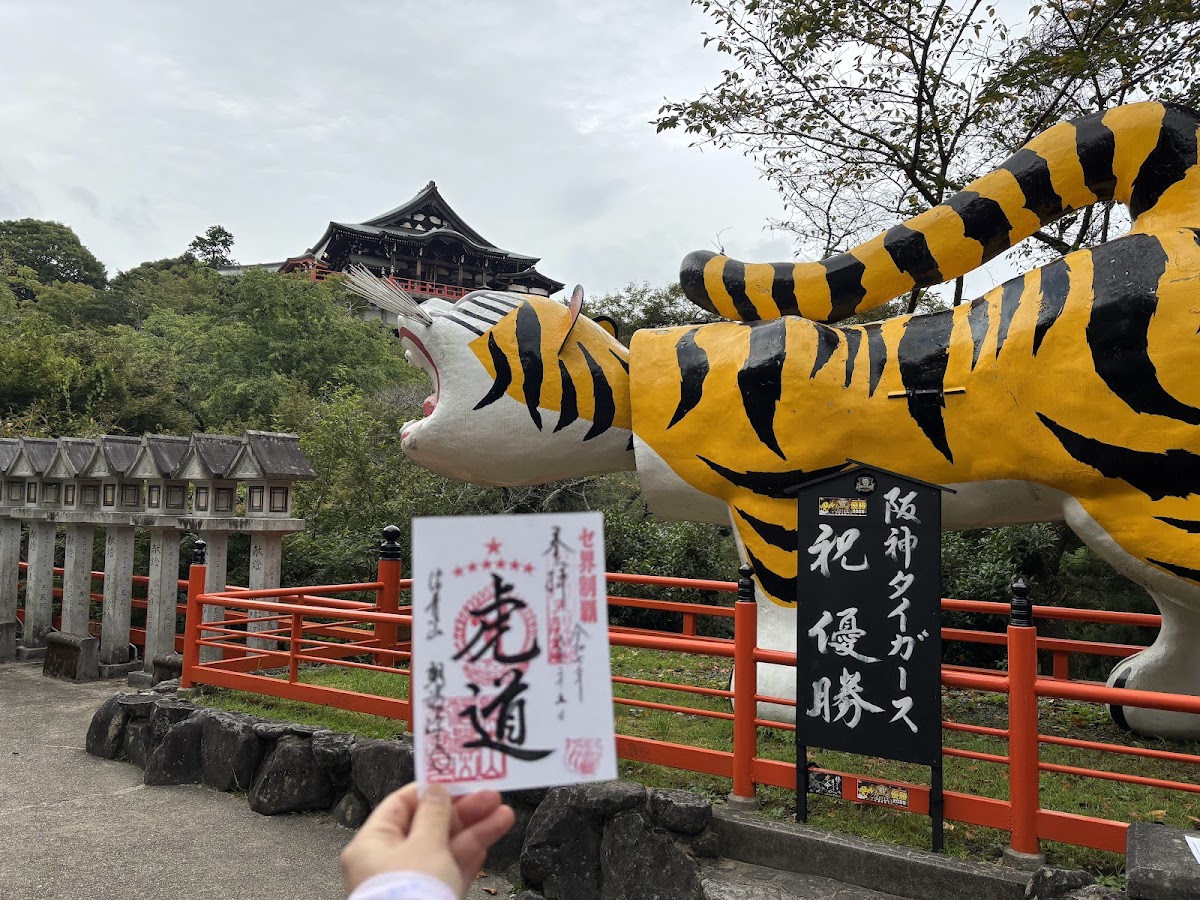
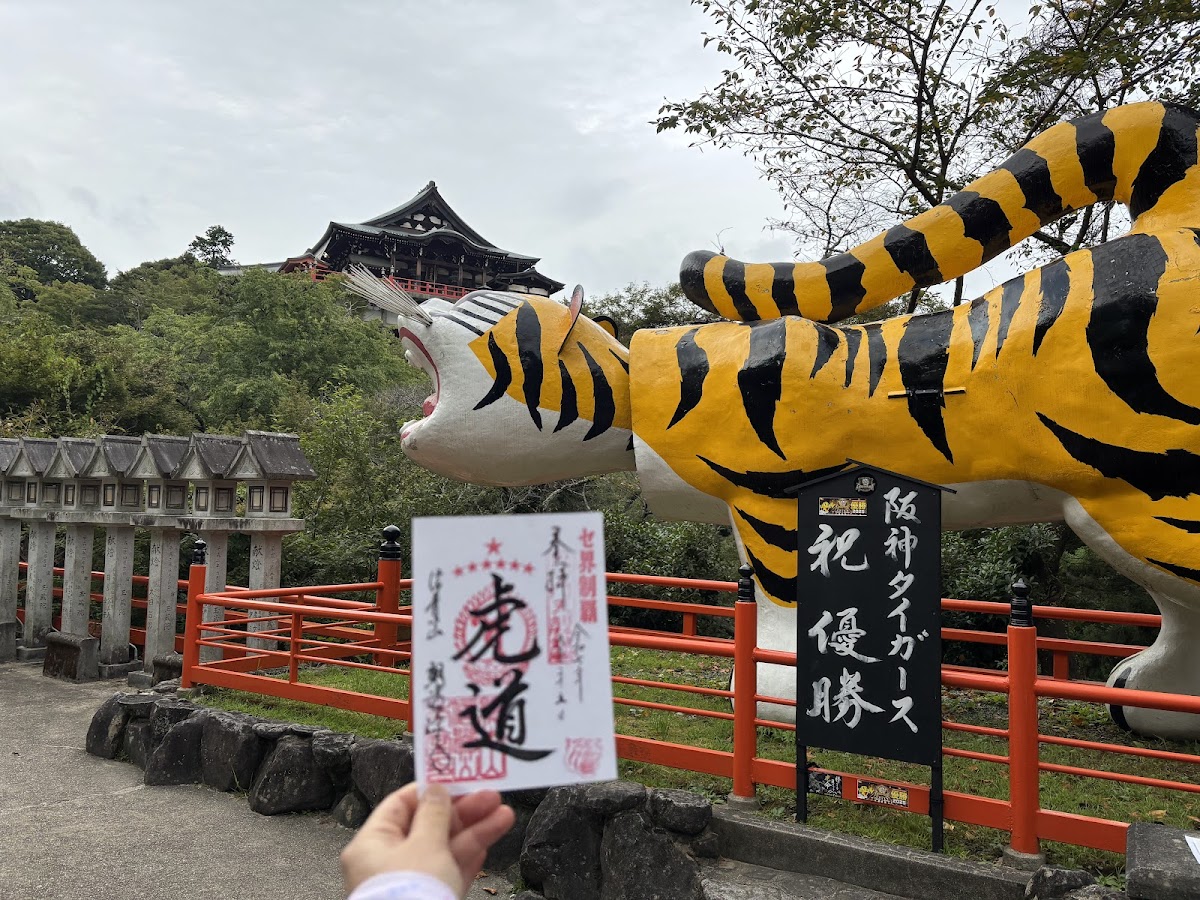
The most eye-catching feature on the temple grounds is the gigantic papier-mâché tiger “Fukutora,” measuring over 6 meters in length. This Fukutora, seated in front of the main hall, overwhelms visitors with its imposing presence and is a popular spot for commemorative photos.
Visitors can even enter Fukutora’s mouth, and it is believed that passing through its body will bestow good fortune. Furthermore, various tiger statues and paintings are placed throughout the temple grounds, creating a unique and charming tiger-filled atmosphere.
The Legend of the White Tiger
Chogosonshi-ji Temple also has a legend related to the White Tiger. It is said that when the monk Myoren was practicing asceticism, a White Tiger appeared and protected him, and the White Tiger is revered as a sacred animal of Mount Shigi.
The National Treasure “Shigisan Engi Emaki”
Indispensable to understanding the history of Chogosonshi-ji Temple is the “Shigisan Engi Emaki,” a national treasure. This picture scroll was created in the late Heian period (12th century) and consists of three volumes.
Contents of the Picture Scroll
- The Scroll of Yamazaki Chōja: The story of a wealthy man who gains fortune through the flying bowl ritual of Myōren Shōnin
- The Scroll of Engi Kaji: The miracle of Emperor Daigo’s recovery from illness
- The Scroll of the Nun: The story of Myōren Shōnin’s sister, the nun, visiting her brother
These picture scrolls are considered one of the greatest masterpieces of Japanese picture scrolls due to their outstanding artistic skill and narrative. Currently, the originals are housed in the Nara National Museum and other institutions, but copies can also be seen within the temple grounds.
Connections with Oda Nobunaga and Toyotomi Hideyoshi
Suffering in the Sengoku Period
The history of Chōgosonshi-ji Temple underwent a major turning point during the Sengoku period. In 1577, during Oda Nobunaga’s attack on Shigisan Castle, many of Chōgosonshi-ji Temple’s buildings were destroyed by fire. At that time, Matsunaga Hisahide, the lord of Shigisan Castle, rebelled against Nobunaga, and the temple was attacked by Nobunaga’s army. This war resulted in the tragic loss of many temple buildings and treasures that had existed since the temple’s founding.
Restoration by Toyotomi Hideyoshi
Later, during the era of Toyotomi Hideyoshi, under his patronage, Chogosonshi-ji Temple began its path to restoration. Hideyoshi had a deep faith in Bishamonten and dedicated himself to the reconstruction of Chogosonshi-ji Temple.
Throughout the Edo period, the temple complex was gradually developed, forming the foundation of the grounds we see today.
Faith and Benefits
Good Fortune, Prosperity, and Business Success
Bishamonten, the principal deity of Chogosonshi-ji Temple, is also known as one of the Seven Lucky Gods and is worshipped as a god who bestows wealth and good fortune. In particular, it is believed to bring benefits such as business prosperity, increased wealth, and success in ventures, and is constantly visited by business owners and merchants. ### Prayer for Victory and Success
Due to its history as a place where Prince Shotoku prayed for victory during his campaign against Mononobe no Moriya, it is known as a sacred site for prayers for victory and success. Many students, athletes, and businesspeople visit to pray for success.
Protection from Misfortune and Disaster
Because of the powerful protective energy of Bishamonten, it is also believed to offer protection from misfortune and disaster. Many worshippers visit at important turning points in their lives to receive prayers for protection against misfortune.
Prayer for Academic Success and Passing Exams
Due to the worship of Kokuzo Bodhisattva at the Kokuzo-do Hall, it is also famous for its blessings of academic success and passing entrance exams. During exam season, many students and their parents visit to pray for success.
Access Information
Access by Train
Using Kintetsu Lines
- Get off at Shigisanshita Station on the Kintetsu Ikoma Line, take the Nara Kotsu bus bound for Shigisanmon (approx. 15 minutes), get off at the last stop and walk for about 10 minutes.
- Take the Kintetsu Nishishigi Cable Car from Takayasu Station to Shigisan Station, then walk for about 10 minutes.
Using JR Lines
- Get off at Oji Station on the JR Yamatoji Line, take the Nara Kotsu bus bound for Shigisanmon (approx. 20 minutes), get off at the last stop and walk for about 10 minutes.
Access by Car
- Approximately 20 minutes from Kashiba IC or Kashiwara IC on the Nishimeihan Expressway.
- Parking: Paid parking is available around the temple grounds (early arrival is recommended due to congestion during peak seasons).
Access by Cable Car
The Nishishigi Cable Car is a sightseeing cable car connecting Takayasu Mountain to Shigisan Mountain, offering scenic views from the windows. The scenery is especially spectacular during the autumn foliage season.
Visiting Hours and Admission Fees
Visiting Hours
While the temple grounds are freely accessible, the viewing hours for each building are generally as follows:
- 9:00 AM to 4:30 PM (may vary depending on the season)
Admission Fees
- Temple Grounds Visit: Free
- Kaidan Meguri (Circumambulation of the Underground Enclosure): Fee applies (several hundred yen)
- Treasure Hall (during special openings): Additional fee
We recommend checking the official website or visiting the site for details.
Annual Events
Major Festivals
First Three Days of the New Year
The temple is extremely crowded with visitors for Hatsumode (first shrine visit of the year). Many people visit to pray for good fortune and prosperity in the new year.
Setsubun Festival
A Setsubun ceremony held around February 3rd. Bean-throwing and goma (fire ritual) prayers are performed.
Bishamonten Grand Festival
A grand festival held to coincide with the Bishamonten festival day. Special Buddhist services and Goma fire rituals are performed.
Autumn Grand Festival
A festival to give thanks for the autumn harvest and pray for a bountiful harvest. Various events are held on the temple grounds.
Nearby Tourist Attractions
Shigisan Nodoka Village
An agricultural park at the foot of Mt. Shigisan, where you can enjoy seasonal flowers, fruit picking, and barbecues. A popular spot for families.
Shigisan Castle Ruins
The site of Shigisan Castle, the residence of Matsunaga Hisahide. Remains such as stone walls still exist, attracting history buffs.
Tatsuta River
Known since ancient times as a famous spot for autumn foliage, the Tatsuta River is about a 15-minute drive from Chogosonshi Temple. Beautiful autumn leaves can be enjoyed there.
Temple Lodging Experience
At the sub-temples of Chogosonshi-ji Temple, you can experience temple lodging. By experiencing temple life, including vegetarian meals, morning prayers, sutra copying, and meditation, you can spend a tranquil time away from everyday life.
Temple lodging requires advance reservations, and early booking is especially necessary on weekends and during the autumn foliage season. It’s very popular with foreign tourists and offers a valuable opportunity to experience traditional Japanese temple culture.
Nature and Seasons of Shigi-san
Spring
Cherry blossoms bloom in profusion, dyeing the temple grounds in a soft pink. The fresh greenery is also beautiful, allowing you to enjoy a visit in the refreshing air.
Summer
Due to its high altitude, it’s cooler and more comfortable than urban areas. The temple grounds, enveloped in deep green, are also a popular summer retreat.
Autumn
The autumn foliage of Shigi-san is among the most beautiful in Nara Prefecture. Throughout the temple grounds, trees are adorned with vibrant red and yellow hues, attracting many tourists.
Winter
Shigisan Mountain, covered in snow, presents a fantastical beauty. With fewer crowds, a peaceful visit is possible. Visiting to see the first sunrise of the New Year is also popular.
Summary
Shigisan Chogosonshi-ji Temple is a venerable sacred site with a history spanning over 1400 years. As the first sacred site in Japan where Prince Shotoku perceived Bishamonten, it continues to attract the faith of many.
The giant papier-mâché tiger “Fukutora” and other tiger symbols, the diverse attractions such as the Kaidan Meguri (a pilgrimage route) and Kokuzo-do Hall, the miraculous tales depicted in the national treasure Engi Emaki (illustrated scroll), and the blessings of good fortune, prosperity, and business success—all of these make Chogosonshi-ji Temple a special place.
With its convenient location on the border of Nara and Osaka, the beauty of nature throughout the seasons, and the opportunity to experience ascetic training at the temple lodgings, Chogosonshi-ji Temple possesses a variety of charms. Please visit at least once and experience its sacred atmosphere. Bishamonten of Shigisan will surely bring you good fortune and blessings.