Complete Guide to Kinpusen-ji Temple: A Thorough Explanation of History, Highlights, Worship Methods, and Goshuin (Temple Seals)
What is Kinpusen-ji Temple?: The Head Temple of Shugendo
Kinpusen-ji Temple is the head temple of the Kinpusen Shugendo sect, located in Yoshino-cho, Yoshino-gun, Nara Prefecture. It is registered as part of the World Heritage Site “Sacred Sites and Pilgrimage Routes in the Kii Mountain Range” and is known as one of the most important sacred sites in Japanese Shugendo.
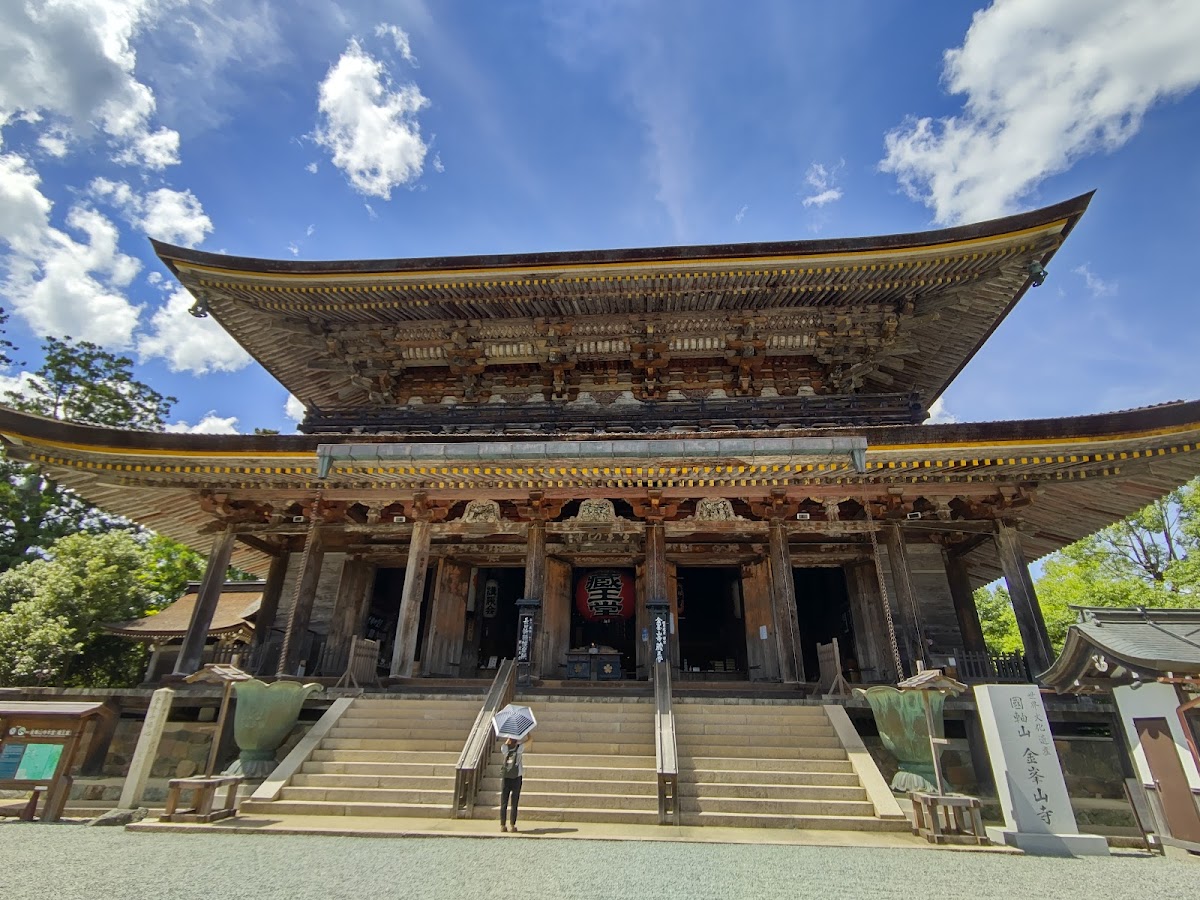
Located in the heart of Mount Yoshino, Kinpusen-ji Temple is said to have been founded in the late 7th century by En no Gyoja, considered the founder of Shugendo. The main hall, Zao-do, is a magnificent wooden ancient building, second only to the Great Buddha Hall of Todai-ji Temple, and overwhelms visitors with its grand scale.
Shugendo is a unique Japanese religion that fuses mountain worship and Buddhism, a practical faith that aims for enlightenment through rigorous mountain training. Kinpusen-ji Temple, as a central training ground, has nurtured many Shugendo practitioners for over 1300 years.
History of Kinpusen-ji Temple: From En no Gyoja to the Present
Founding and the Legend of En no Gyoja
Kinpusen-ji Temple is believed to have been founded around the end of the 7th century, during the late Asuka period. Its founder, En no Gyoja (En no Ozunu), is said to have trained on Mount Katsuragi in Yamato Province and received a vision of Zaō Gongen on Mount Kinpu in Yoshino.
En no Gyoja carved the image of Zaō Gongen into a mountain cherry tree and established Kinpusen-ji Temple with this as the principal image. This image of Zaō Gongen is still enshrined as a hidden Buddha in the main hall and is only unveiled during special periods.
Heian to Kamakura Periods: The Golden Age
During the Heian period, Kinpusen-ji Temple attracted the faith of the imperial family and nobility and flourished greatly. Many emperors, particularly Emperor Shirakawa, Emperor Toba, and Emperor Go-Shirakawa, visited Yoshino and paid homage at Kinpusen-ji Temple.
During the Kamakura period, there is a historical anecdote that Minamoto no Yoshitsune, pursued by his brother Yoritomo, took refuge at Kinpusen-ji Temple when he fled to Yoshino. During this period, Shugendo (mountain asceticism) became widely practiced among the samurai class.
Nanboku-cho Period: Emperor Go-Daigo and the Yoshino Court
One of the most important periods in Kinpusen-ji Temple’s history is the Nanboku-cho period (Northern and Southern Courts period). In 1336, when Emperor Go-Daigo was driven out of Kyoto and established the Southern Court in Yoshino, Kinpusen-ji Temple became the spiritual pillar of the Southern Court.
The Yoshino Court lasted for approximately 60 years, during which time Kinpusen-ji Temple functioned as a political and religious center. Many historical sites related to the Southern Court still remain on the temple grounds today.
From the Early Modern Period to the Present
During the Edo period, under the protection of the Tokugawa Shogunate, many temple buildings were rebuilt and maintained. Although it faced a period of hardship due to the Meiji-era separation of Shinto and Buddhism, the tradition of Shugendo (mountain asceticism) was passed down without interruption.
In 2004, it was registered as a World Heritage Site as part of the “Sacred Sites and Pilgrimage Routes in the Kii Mountain Range,” and its value has been recognized internationally. Even today, it remains a representative landmark of Mount Yoshino, attracting many worshippers and tourists throughout the year.
National Treasure – Zao-do Hall: A Breathtaking Wooden Architecture
Architectural Features
The Zao-do Hall, the main hall of Kinpusen-ji Temple, is one of Japan’s leading wooden buildings and is designated a National Treasure. The current building was rebuilt in 1592 (Tensho 20) through a donation from Toyotomi Hideyoshi, and has a history of over 400 years.
The Zaōdō Hall is an overwhelming structure, a massive wooden building measuring approximately 36 meters wide, 30 meters deep, and 34 meters high. It boasts the second largest size after the Great Buddha Hall of Tōdai-ji Temple, and its imposing and powerful presence overwhelms all who behold it.
The architectural style is an eclectic blend, primarily based on Japanese style but incorporating elements of Zen Buddhist architecture. In particular, the craftsmanship shines through in every detail, from the cypress bark roof and thick pillars to the intricately assembled joinery.
Interior Structure and Space
The interior of the Zaōdō Hall is vast, far larger than its exterior suggests. Three colossal statues of Zaō Gongen are enshrined in the center, their imposing presence leaving a powerful impression on visitors.
The inner sanctuary is adorned with magnificent decorations, and the ceiling is painted with vividly colored artwork. Standing inside the hall, one is enveloped in the scent of wood and a solemn atmosphere, feeling the spiritual energy of this sacred site of Shugendō (mountain asceticism).
The Hidden Principal Image: Zaō Gongen: The Blue, Wrathful Buddha
What is Zaō Gongen?
The principal image of Kinpusen-ji Temple is three standing statues of Zaō Gongen. Zaō Gongen is a unique Buddhist deity of Shugendō, a combination of Shakyamuni Buddha, Thousand-Armed Kannon, and Maitreya Bodhisattva.
Its appearance is extremely distinctive; its entire body is a dark blue color, and it assumes a dynamic pose with its right leg raised high, displaying an angry expression. This wrathful expression symbolizes the powerful force that crushes people’s worldly desires and guides them to enlightenment.
The central principal image is approximately 7.3 meters tall, and the two attendant figures on either side are also enormous, measuring 5.9 meters and 6.1 meters respectively. The sight of the three statues standing together is breathtaking. They are believed to have been created in the late Heian period to the early Kamakura period and are designated as Important Cultural Properties.
Special Public Viewing
The Zaō Gongen statue is normally kept in a shrine as a hidden Buddha image and is only unveiled during special periods. The main periods of unveiling are as follows:
- Spring Special Unveiling: Cherry blossom season (usually late March to early May)
- Autumn Special Unveiling: Autumn foliage season (usually late October to late November)
During the unveiling period, visitors can admire the awe-inspiring figure of Zaō Gongen up close, attracting many worshippers. Especially since it coincides with the cherry blossom and autumn foliage seasons, it can be enjoyed in conjunction with the natural beauty of Mount Yoshino.
Main Buildings and Highlights of Kinpusen-ji Temple
Niomon Gate (National Treasure)
The Niomon Gate, standing at the entrance to the path leading to the Zaōdō Hall, is a magnificent two-story gate approximately 20 meters high and designated a National Treasure. Built in the early Muromachi period (1456), it serves as the main gate of Kinpusen-ji Temple, welcoming visitors.
On either side of the gate are colossal Kongo Rikishi statues (Nio statues), each over 5 meters tall. Their imposing presence has led to their worship as guardian deities that ward off evil spirits.
In 2019, a major restoration, the first in approximately 120 years, was completed, restoring the gate’s vibrant vermilion color. As a symbol of Mount Yoshino, it’s a popular spot for many photography enthusiasts.
Bronze Torii Gate (Important Cultural Property)
Standing before the Nio Gate, along the path leading to Mount Yoshino, is a bronze torii gate built in 1348 by Shunjobo Chogen of Todai-ji Temple. It is designated as an Important Cultural Property. This bronze torii gate, approximately 7.5 meters tall, is also known as the “Hosshinmon” (Gate of Aspiration).
Passing through this torii gate is said to cross the boundary from the secular world to the sacred realm, symbolizing the beginning of Shugendo training.
Southern Court Myohoden
This facility preserves and exhibits historical sites from the time when Emperor Go-Daigo established the Southern Court in Yoshino during the Nanboku-cho period. It displays items related to the four emperors of the Southern Court and historical materials of the Yoshino court, making it a must-see spot for anyone interested in Japanese history.
Aizen-do
This hall enshrines Aizen Myoo, a deity worshipped for matchmaking and successful love. It is particularly popular with young women and those praying for success in love, and heart-shaped ema (votive tablets) are often offered.
Annual Events and Festivals
Kinpusen-ji Temple holds various events throughout the year based on the traditions of Shugendo.
Setsubun Festival and Oni-bi Festival (February 3rd)
Kinpusen-ji Temple’s Setsubun Festival is known as a rare event in Japan where demons are welcomed. While typical Setsubun festivals involve driving away demons with the chant “Demons out!”, Kinpusen-ji Temple chants “Good fortune in, demons in!” and welcomes reformed demons.
The “Oni-bi Festival” takes place in front of the Zao-do Hall, creating a fantastical scene as demons carrying torches parade through the temple grounds. This event embodies the Shugendo teaching of saving all beings.
Hanakure Senpo-e (April 10th-12th)
This is the most important Buddhist service held during the cherry blossom season in Yoshino Mountain. Based on the legend that En no Gyoja carved Zao Gongen into a cherry tree on Mount Kinpusen, cherry blossoms are offered to the main deity.
During this period, the “Yako Procession,” featuring mountain ascetics dressed as yamabushi (mountain priests), parades through Mount Yoshino, creating a magnificent historical spectacle. Coinciding with the peak cherry blossom season, it attracts many tourists.
Renge-e and Frog-Leaping Ceremony (July 7th)
This ceremony is based on the legend of En no Gyoja, who, while training on Mount Omine, longed for his mother and used his spiritual powers to summon her. However, because this violated the rule prohibiting women from entering the mountain, he transformed his mother into a frog and descended the mountain.
In front of the Zao-do Hall, men dressed as frogs perform the “Frog-Leaping” ceremony, a popular traditional event that is both humorous and deeply meaningful.
Autumn Grand Festival (October 20th)
One of Kinpusen-ji Temple’s most important annual events, it features a goma fire ritual and the Saito Daigoma-ku, performed by mountain ascetics. The sight of the flames rising high into the sky is breathtaking, and it’s an event where you can truly feel the power of Shugendo (Japanese mountain asceticism).
Visiting Information: Visiting Hours, Fees, and Estimated Time Required
Visiting Hours and Fees
Zao-do Hall Visit
- Visiting Hours: 8:30 AM – 4:30 PM (Last entry at 4:00 PM)
- Admission Fee: Adults 800 yen, Junior/Senior High School Students 600 yen, Elementary School Students 400 yen
- Separate fees apply during special opening periods
Nio-mon Gate
- Exterior can be viewed at any time (free)
- Special viewing of the interior is limited to specific periods
Nancho Myoho-den Hall
- Visiting Hours: Same as Zao-do Hall
- Admission Fee: Included in Zao-do Hall admission fee
Estimated Time Required for Visiting
If you are visiting Kinpusen-ji Temple grounds at a leisurely pace, the following is an estimate of the time required:
- Zao-do Hall Only: 30-45 minutes
- Including Major Halls: 1 hour – 1 hour 30 minutes
- Exploring the Entire Yoshino Mountains: 3 hours to half a day
During cherry blossom and autumn foliage seasons, it gets crowded, so we recommend visiting with plenty of time to spare.
Access Information: Train, Car, and Parking
Access by Train
Nearest Station: Kintetsu Yoshino Line “Yoshino Station”
- From Osaka
- Approximately 1 hour 15 minutes by Kintetsu Yoshino Line Limited Express from Kintetsu Abenobashi Station
- Approximately 1 hour 30 minutes to 1 hour 45 minutes by Express train
- From Kyoto
- Transfer at Kashiharajingu-mae Station via Kintetsu Kyoto Line and Kashihara Line from Kyoto Station
- Approximately 50 minutes on the Yoshino Line from Kashiharajingu-mae Station
- Total travel time: Approximately 2 hours to 2 hours 30 minutes
- From Nara
- Approximately 1 hour 30 minutes via Kashiharajingu-mae Station from Kintetsu Nara Station
From Yoshino Station to Kinpusen-ji Temple
- Ropeway (Yoshinoyama Ropeway): Approximately 3 minutes, 450 yen one way
- Walking: Approximately 30-40 minutes (uphill)
- Approximately 10 minutes on foot from the ropeway mountaintop station to Kinpusen-ji Zaodo Hall
Access by Car
Travel Time from Major Cities
- From Osaka City: Approximately 1 hour 30 minutes to 2 hours
- From Kyoto City: Approximately 2 hours to 2 hours 30 minutes
- From Nara City: Approximately 1 hour to 1 hour 30 minutes
Main Routes
- Via National Routes 24 and 169 from Koriyama IC on the Nishi-Meihan Expressway
- Via National Route 169 from Katsuragi IC on the Minami-Hanna Expressway
Parking Information
There are several parking lots at Yoshinoyama, but they become extremely crowded during cherry blossom and autumn foliage seasons.
Shimo-Senbon Parking Lot
- Capacity: Approximately 400 cars
- Fee: 1,500 yen for regular cars (2,000 yen during peak season)
- To Kinpusen-ji Temple: Approximately 20 minutes on foot or by bus
Yoshino-yama Tourist Parking Lot
- Capacity: Approximately 100 cars
- Fee: 1,500 yen for regular cars
- To Kinpusen-ji Temple: Approximately 15 minutes on foot
Important Notes for Peak Season
During the peak cherry blossom season (early to mid-April), the autumn foliage season (mid to late November), and on weekends and holidays, the parking lots are almost always full early in the morning. During this period, we recommend the following measures:
- We strongly recommend using public transportation.
- If traveling by car, aim to arrive early in the morning (before 8:00 AM).
- Consider using the park-and-ride parking lot at the foot of Mount Yoshino.
Goshuin Information: Types and Locations
Kinpusen-ji Temple offers several types of goshuin (temple stamps). For those collecting goshuin, the goshuin from the head temple of Shugendo (mountain asceticism) holds special value.
Main Types of Goshuin (Temple Seals)
- Zaōdō Hall Goshuin
- Calligraphy of “Zaō Gongen”
- A representative goshuin of Kinpusen-ji Temple
- Location: Nokyōsho (sutra hall) inside Zaōdō Hall
- Niomon Gate Goshuin
- Calligraphy of “Nio-son”
- A goshuin related to the National Treasure Niomon Gate
- Location: Nokyōsho (sutra hall) inside Zaōdō Hall
- Aizendō Hall Goshuin
- Calligraphy of “Aizen Myōō”
- Popular as a goshuin for matchmaking and successful love
- Location: Aizendō Hall
- Special Opening Period Limited Goshuin
- A special goshuin only available during the spring and autumn opening periods
- The design and calligraphy differ from the usual
Goshuin Issuance Hours and Fees
- Issuance Hours: 8:30~16:00 (according to temple visiting hours)
- Price: 300-500 yen each (varies depending on type)
- Time Required: Usually 5-10 minutes, but there may be a waiting time during peak seasons.
Goshuincho (Stamp Book)
Kinpusen-ji Temple also offers its own original goshuincho. Featuring beautiful designs of Zaō Gongen and the cherry blossoms of Yoshino Mountain, it’s a popular souvenir of your visit.
Nearby Attractions and Yoshino Mountain Sightseeing
After visiting Kinpusen-ji Temple, you can also enjoy sightseeing throughout Yoshino Mountain.
Cherry Blossoms of Yoshino Mountain
Yoshino Mountain is known as one of Japan’s leading cherry blossom viewing spots, with approximately 30,000 cherry trees covering the mountain. Because the blooming period differs depending on the altitude (Shimo-senbon, Naka-senbon, Kami-senbon, and Oku-senbon), you can enjoy the cherry blossoms for an extended period.
The area around Kinpusen-ji Temple’s Zaō-dō Hall is located in the Naka-senbon area, and during cherry blossom season, you can enjoy a spectacular view from the temple grounds.
Yoshimizu Shrine (World Heritage Site)
Located about a 5-minute walk from Kinpusen-ji Temple, this shrine is the site of Emperor Go-Daigo’s temporary palace. From the study hall, you can enjoy the breathtaking “Ichimoku Senbon” (One Glance, a Thousand Trees) view, one of the most spectacular sights in Yoshino Mountain, especially during cherry blossom season.
It is also known as the place where Minamoto no Yoshitsune and Shizuka Gozen hid, making it a popular spot for history buffs.
Chikurin-in Temple (World Heritage Site)
This temple is said to have been founded by Prince Shotoku, and its highlight is the beautiful “Gunhoen” garden. The pond garden, said to have been designed with the involvement of Sen no Rikyu, offers beautiful scenery throughout the seasons.
It also operates as a temple lodging, allowing you to stay overnight in Yoshino Mountain while enjoying vegetarian cuisine.
Nyoirin-ji Temple
This is an imperial temple of Emperor Go-Daigo, and also houses the emperor’s mausoleum. Many historical sites related to the Southern Court remain on the temple grounds, making it ideal for historical walks. It is also known as a famous spot for cherry blossoms and autumn leaves.
Yoshino Mizuwake Shrine (World Heritage Site)
Located in the Kamisenbon area, this ancient shrine is worshipped as a god of fertility. The shrine building, rebuilt by Toyotomi Hideyoshi in gratitude for being blessed with Hideyori, still preserves the magnificent architectural style of the Momoyama period.
Nearby Cuisine and Restaurants
Yoshino Mountain is dotted with restaurants where you can enjoy dishes and specialties made with local ingredients.
Yoshino’s Specialty Dishes
Kakinoha Sushi
A representative local dish of Yoshino and Nara, this is pressed sushi made with mackerel or salmon wrapped in persimmon leaves. The antibacterial properties of the persimmon leaves give it excellent preservation, and it has been enjoyed for centuries. There are several long-established kakinoha sushi restaurants around Kinpusen-ji Temple.
Kuzu Cuisine
Yoshino is famous as a production area for high-quality Yoshino kuzu (arrowroot starch). You can enjoy various kuzu dishes such as kuzukiri (arrowroot noodles), kuzumochi (arrowroot rice cakes), and kuzuudon (arrowroot udon noodles). Cold kudzu noodles are especially popular in the summer.
Kusamochi & Sakuramochi
Along the approach to Mount Yoshino, you’ll find tea houses selling kusamochi and sakuramochi made using traditional methods. It’s a great place to stop for a break during your pilgrimage.
Recommended Restaurants
Around Kinpusen-ji Temple, there are a variety of restaurants serving everything from vegetarian cuisine to local dishes. Many require reservations, so it’s recommended to check in advance.
Points to Note and Manners When Visiting
Clothing and Items to Bring
- Clothing: The temple grounds are large and have many stairs, so comfortable shoes and clothing that allows for easy movement are recommended.
- Seasonal Precautions: In summer, the sun is strong, so bring a hat or parasol; in winter, bring warm clothing.
- Items to Bring: Drinks, camera, Goshuincho (stamp book) (if desired)
Photography
- Photography is prohibited inside the Zao-do Hall.
- Photography is permitted on the exterior of the temple grounds and the Niomon Gate.
- Please be considerate of other visitors.
Manners for Visiting
- Bow before entering the Niomon Gate and Zao-do Hall.
- Be quiet inside the hall.
- Be considerate so as not to disturb the training of the Shugendo practitioners.
- Always take your trash with you.
Accommodation Information: Temple Lodgings and Ryokans in Yoshino Mountain
Yoshino Mountain has many traditional temple lodgings and ryokans, offering a special experience of spending a night in a sacred site of Shugendo.
Temple Lodging Experience
There are several temple lodgings (shukubo) around Kinpusen-ji Temple, where you can experience temple life in a unique way, such as vegetarian meals and morning prayers. Strolling through the quiet temple grounds in the early morning is also a privilege for overnight guests.
Ryokans and Hotels
Yoshino Mountain also has ryokans and hotels with beautiful views. Early reservations are especially necessary during cherry blossom and autumn foliage seasons. Some accommodations have hot springs, allowing you to relax and unwind after sightseeing.
Summary: The Charm of Visiting Kinpusen-ji Temple
Kinpusen-ji Temple, as the head temple of Shugendo (mountain asceticism) with a history of over 1300 years, holds an important position in Japanese religious culture. It is a special place where the national treasure Zao-do Hall, the gigantic Zao Gongen statue, its value as a World Heritage Site, and the rich nature and history of Yoshino Mountain are fused together, offering an experience unlike any other.
Each season has its own unique charm, from the cherry blossom and autumn foliage seasons to the fresh greenery of early summer and the tranquility of winter. A journey through Kinpusen-ji Temple, steeped in the solemn atmosphere of a sacred site of Shugendo (Japanese mountain asceticism), while immersing yourself in Japanese history and culture, will surely create unforgettable memories.
We highly recommend visiting Kinpusen-ji Temple at least once to experience its magnificent scale and profound spirituality.