About Kofuku-ji Temple
Kofuku-ji Temple is the head temple of the Hossō sect, located in Noborioji-cho, Nara City. Founded in 710 by Fujiwara no Fuhito at the time of the relocation of the capital to Heijō-kyō, it was the family temple of the Fujiwara clan. During the Nara period, it was counted as one of the four great temples, and during the Heian period, one of the seven great temples. In 1998, it was registered as a World Heritage Site as part of the “Historic Monuments of Ancient Nara.”
The temple grounds house numerous cultural assets, including two National Treasure buildings (the Five-Storied Pagoda and the East Golden Hall) and 18 National Treasure sculptures. The Ashura statue housed in the National Treasure Hall, in particular, attracts many visitors throughout the year.
History of Kofuku-ji Temple
The origins of Kofuku-ji Temple can be traced back to 669, when Yamashina-dera Temple was built in Yamashina (present-day Yamashina Ward, Kyoto Prefecture) to pray for the recovery of Fujiwara no Kamatari from illness. Afterwards, following its relocation to Umayasaka-dera Temple in Asuka, it moved to its current location in 710 with the transfer of the capital to Heijo-kyo and was named “Kofuku-ji Temple.”
With the rise of the Fujiwara clan, the temple expanded its influence, and at its peak, it became a large temple complex with 175 halls and pagodas. However, due to repeated fires, wars, and the anti-Buddhist movement in the early Meiji period, many buildings were lost. Currently, only the Central Golden Hall (rebuilt in 2018), the East Golden Hall, the Five-Storied Pagoda, the North Octagonal Hall, and the South Octagonal Hall remain.
Points to Note During Your Visit
Must-See National Treasure Architecture
Five-Storied Pagoda (National Treasure)
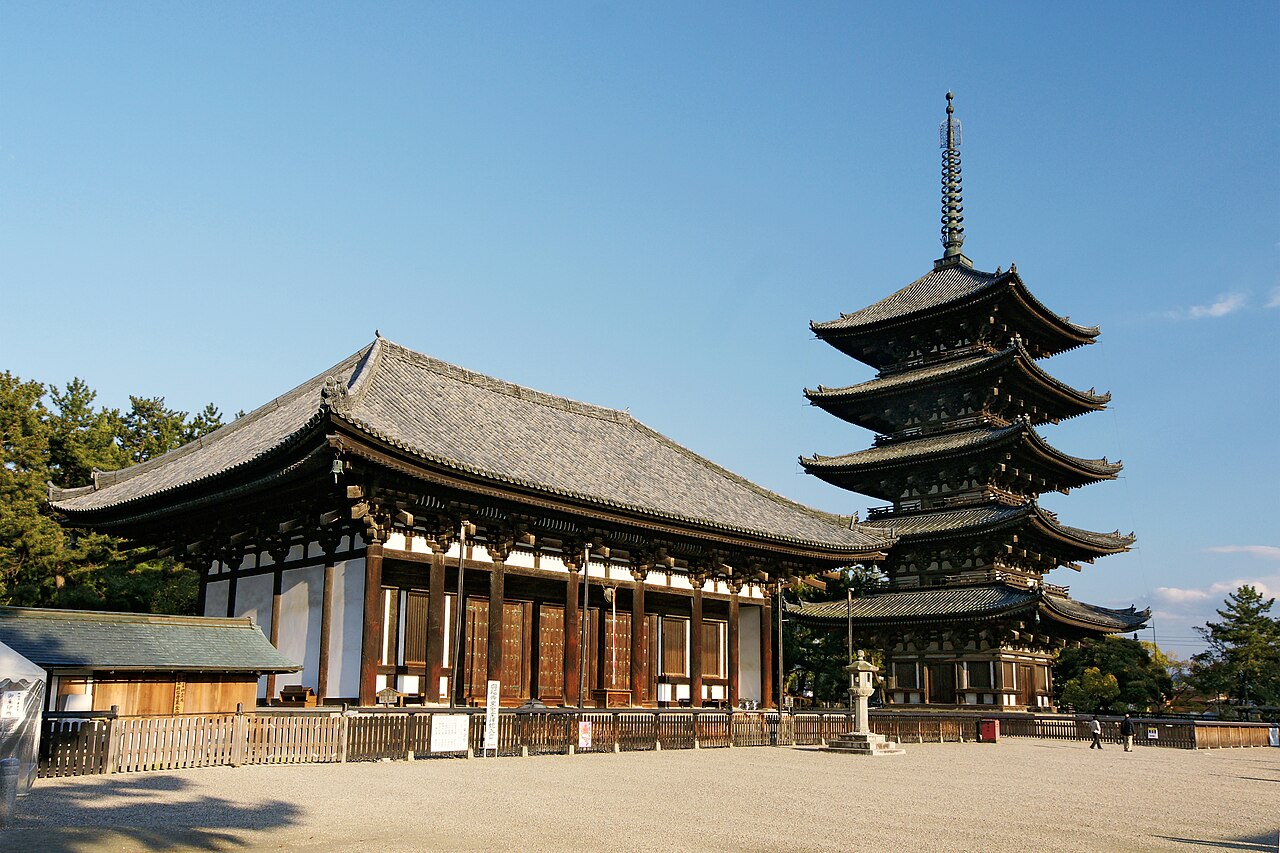
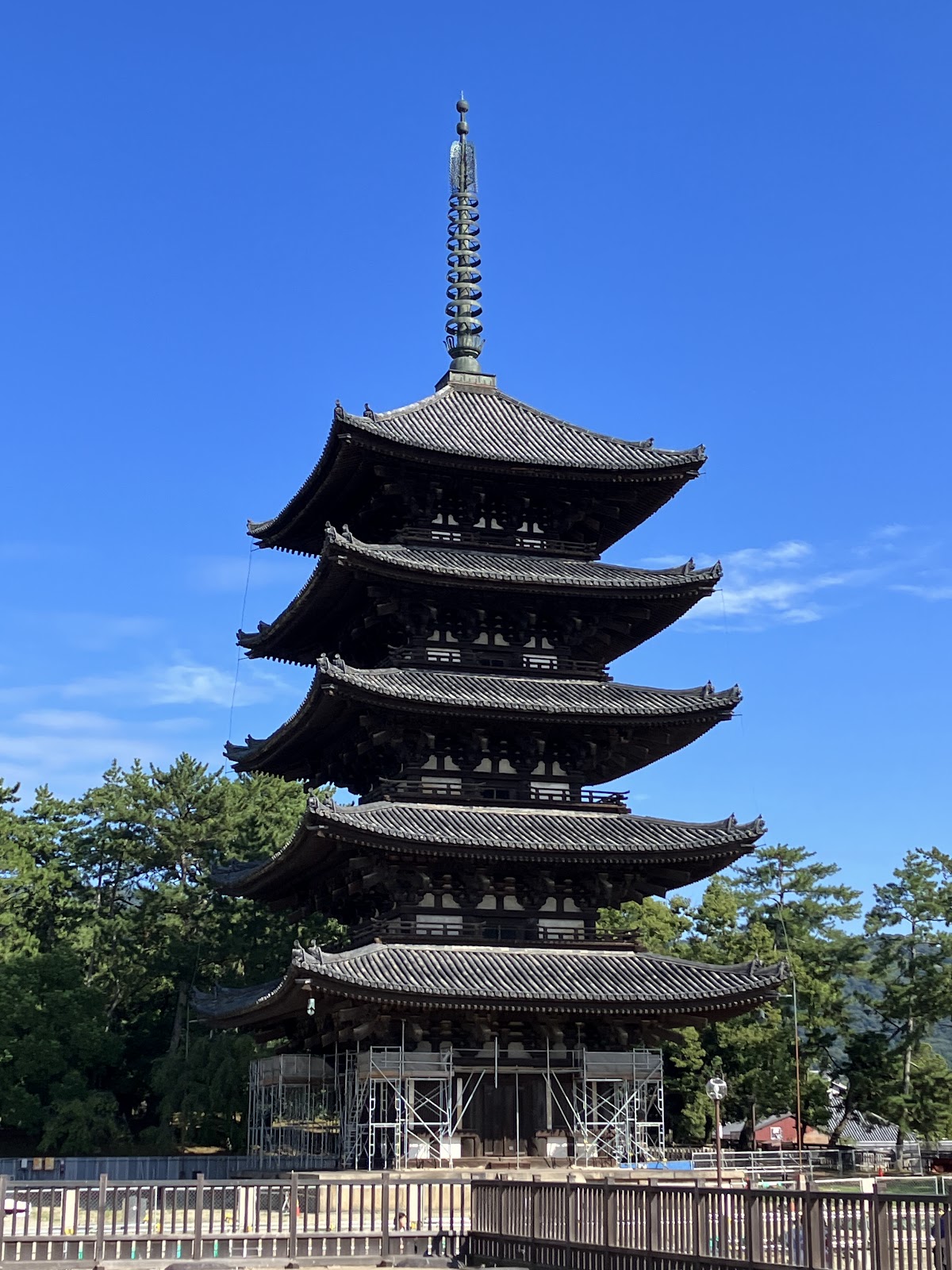
Boasting a height of 50.1 meters, it is the symbol of Kofuku-ji Temple and the second tallest wooden pagoda in Japan after the Five-Storied Pagoda of To-ji Temple. The current pagoda was rebuilt in 1426 (Oei 33) and is a beloved landmark of Nara. Inside the first floor, Buddhist statues such as the Yakushi Triad and the Shaka Triad are enshrined on all four sides. ### East Golden Hall (National Treasure)
Rebuilt in 1415 (Oei 22), this hall houses 15 national treasure sculptures, including the principal image, a seated statue of Yakushi Nyorai (National Treasure), as well as Nikko and Gekko Bodhisattvas, Monju Bodhisattva, Vimalakirti, the Four Heavenly Kings, and the Twelve Divine Generals. The Four Heavenly Kings, in particular, are masterpieces of Kamakura period sculpture, attributed to the school of Kokei, Unkei’s father.
North Octagonal Hall (National Treasure)
An elegant octagonal hall, rebuilt in 1210 (Jogen 4). It was built to commemorate the first anniversary of the death of Fujiwara no Fuhito. Inside, the principal image, a seated statue of Miroku Nyorai (National Treasure), and standing statues of Muchaku and Seshin Bodhisattvas (National Treasures), both created by Unkei, are enshrined, and are known as Unkei’s finest sculptures. Normally, it is only open to the public during special spring and autumn exhibitions.
Highlights of the National Treasure Museum
Ashura Statue (National Treasure)
This is a representative Buddhist statue of Kofuku-ji Temple, created during the Tenpyo period (around 734 AD). It is characterized by its three faces and six arms, and its melancholic, boyish expression. It was created using the dry lacquer technique. It was created as one of the Eight Legions statues and was originally housed in the West Golden Hall.
Other National Treasure Sculptures
- Standing Statue of the Thousand-Armed Kannon Bodhisattva: A representative dry lacquer sculpture from the Nara period
- Standing Statues of the Ten Great Disciples: Realistic group statues representing the disciples of Shakyamuni Buddha (6 existing statues)
- Standing Statues of Tenki and Ryuki: Dynamic demon statues created by Koben, the fourth son of Unkei
- Twelve Heavenly Generals Sculptures: Excellent examples of wood carving techniques from the Heian period
Central Golden Hall (Rebuilt in 2018)
This is the central hall of Kofuku-ji Temple, completed in 2018 as the seventh reconstruction since its founding. It houses the principal image, a seated statue of Shakyamuni Buddha, as well as Yakushi and Yakujo Bodhisattvas, and the Four Heavenly Kings. It attracts attention as a magnificent hall that revives the Tenpyo-style architecture in the modern era.
Benefits and Faith
Kofuku-ji Temple, as the fundamental training ground of the Hossō sect, transmits a profound Buddhist philosophy based on the Yogacara school of thought.
Main Benefits
- Healing from Illness: The Yakushi Nyorai in the East Golden Hall is revered as the Buddha of medicine.
- Protection from Misfortune and Good Fortune: The Fuku Kensaku Kannon in the South Octagonal Hall is visited by pilgrims as the ninth temple on the Saigoku Thirty-Three Kannon Pilgrimage.
- Academic Success: Many visitors pray for the improvement of their wisdom, as the temple enshrines Monju Bosatsu.
- Family Safety: As the family temple of the Fujiwara clan, it has a history of prayers for the prosperity of the family.
Annual Events
- Shunie: A Buddhist service held in March.
- Takigi Ono: A performance of ethereal Noh theater by the Konparu school in May.
- Special Opening of the South Octagonal Hall: During the Great Prajnaparamita Sutra recitation ceremony on October 17th.
Visiting Information
Visiting Hours and Fees
- National Treasure Museum: 9:00 AM – 5:00 PM (Last entry 4:45 PM), General admission 700 yen
- East Golden Hall: 9:00 AM – 5:00 PM (Last entry 4:45 PM), General admission 300 yen
- Central Golden Hall: 9:00 AM – 5:00 PM (Last entry 4:45 PM), General admission 500 yen
- Combined Ticket (National Treasure Museum + East Golden Hall + Central Golden Hall): General admission 1,000 yen (great value)
- Temple Grounds: Free to explore (free of charge)
*The North Octagonal Hall is only open to visitors during special spring and autumn viewing periods.
Access
By Train
- Approximately 5-minute walk from Kintetsu Nara Station (nearest station)
- Approximately 15-minute walk from JR Nara Station, or immediately after alighting at “Prefectural Office” bus stop on the city loop bus.
By Bus
- Get off at the “Prefectural Office” bus stop on the Nara Kotsu bus line and it’s right there.
- Accessible by both the outer and inner loops of the city’s circular bus line.
By Car
- No dedicated parking available.
- Use nearby paid parking lots (e.g., Noborioji Kanko Jidosha Parking).
- Public transportation is recommended as the area around Nara Park is crowded during peak tourist season.
Location
48 Noborioji-cho, Nara City, Nara Prefecture 630-8213
Phone: 0742-22-7755 (Main)
Nearby Attractions
Kofuku-ji Temple is located in a corner of Nara Park, and there are many tourist attractions within walking distance.
- Nara National Museum (5-minute walk): Exhibits masterpieces of Buddhist art
- Todai-ji Temple (15-minute walk): A World Heritage Site known for its Great Buddha Hall
- Kasuga Taisha Shrine (10-minute walk): An ancient shrine associated with the Fujiwara clan
- Sarusawa Pond (3-minute walk): A scenic spot reflecting the five-story pagoda
As a key point in a sightseeing route exploring the cultural treasures of the ancient capital of Nara while interacting with the deer of Nara Park, Kofuku-ji Temple is an indispensable part of Nara sightseeing.