Complete Guide to Okinawan Shrines: A Thorough Explanation of Okinawa’s Shrine Culture, from the Eight Ryukyu Shrines to Utaki
Okinawa’s shrine culture is unique, a fusion of mainland Shinto and the distinctive beliefs of the Ryukyu Kingdom era, unlike those of other prefectures. This article comprehensively explains Okinawa’s shrines, from their historical background and major shrines to methods of worship and their relationship to Utaki, a unique form of Okinawan belief.
Characteristics and History of Okinawa’s Shrine Culture
The Relationship Between the Ryukyu Kingdom and Shrines
Understanding the history of the Ryukyu Kingdom is essential to understanding Okinawa’s shrine culture. In the Ryukyu Kingdom, unique Ryukyuan beliefs and Buddhism were more central than Shinto. Many of the shrines currently found in Okinawa were established after the Meiji era, particularly after the establishment of Okinawa Prefecture (1879).
During the Ryukyu Kingdom era, sacred sites called “Utaki” were the center of worship. These represent a unique Ryukyuan form of belief distinct from shrines, and still remain in various parts of Okinawa today. The Meiji government’s decree separating Shinto and Buddhism and the introduction of the shrine system led to the fusion of traditional Ryukyuan beliefs and Shintoism, shaping the current shrine culture of Okinawa Prefecture.
Role and Organization of the Okinawa Prefectural Shrine Association
The Okinawa Prefectural Shrine Association was established on May 15, 1972 (Showa 47), the day of Okinawa’s return to Japan, as a local branch of the Association of Shinto Shrines, which oversees 80,000 shrines nationwide. Its office is located at 1-25-11 Wakasa, Naha City, within the grounds of Naminoue Shrine.
The Okinawa Prefectural Shrine Association oversees shrines under the jurisdiction of the Association of Shinto Shrines within the prefecture, and is responsible for training Shinto priests, supporting the maintenance and management of shrines, and providing guidance on rituals. Due to its establishment following Okinawa’s return to Japan, the Okinawa Prefectural Shrine Association is a relatively new organization nationwide and plays a crucial role in harmonizing traditional Ryukyuan beliefs and Shintoism.
The telephone number is 098-868-3697 and the fax number is 098-868-4219. We handle various inquiries regarding the shrine.
Ryukyu Eight Shrines: Eight representative shrines of Okinawa
The Ryukyu Eight Shrines refer to eight shrines and temples that received special treatment from the royal government during the Ryukyu Kingdom era. These played an important role as the center of faith in the Ryukyu Kingdom and continue to attract many worshippers as representative shrines of Okinawa Prefecture.
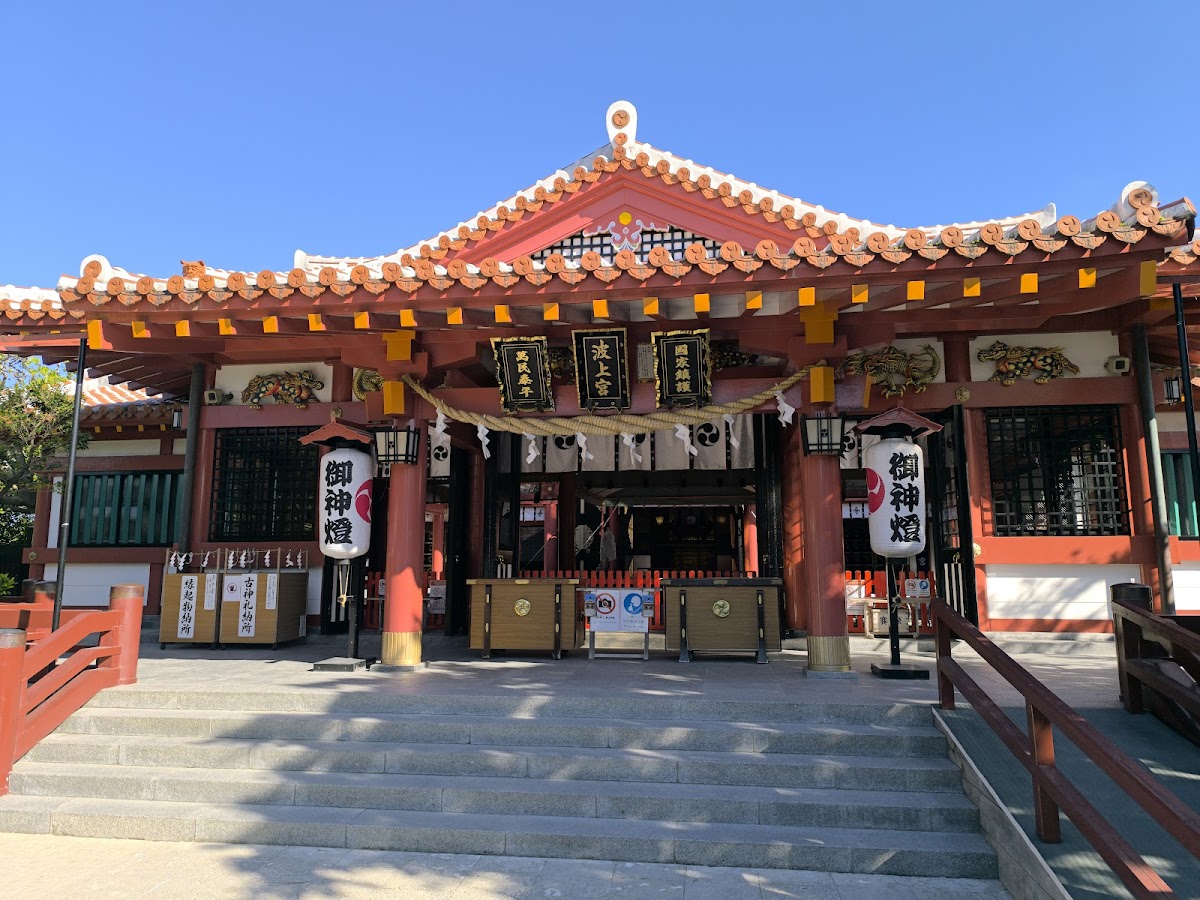
Naminoue Shrine
Naminoue Shrine is the most prestigious of the Ryukyu Eight Shrines and has been revered as the guardian shrine of the Ryukyu Kingdom. Located in Wakasa, Naha City, its distinctive feature is the shrine building built on a cliff. It was formerly known as “Nanmin” or “Nanmin Utaki” and was beloved by the people of Ryukyu.
The shrine grounds feature Shisa (lion-dog statues) instead of guardian lions, and palm trees line the grounds, creating a distinctly Okinawan, tropical atmosphere. Located adjacent to Naminoue Beach, this shrine is also known as a place to pray for the safety of maritime traffic. During the New Year’s pilgrimage, many worshippers from both within and outside Okinawa Prefecture visit, making it the most visited shrine in Okinawa Prefecture.
Goshuin (shrine stamps) are also available, making it a popular starting point for goshuin pilgrimages.
Okinogu Shrine
Okinogu Shrine is one of the eight Ryukyu shrines located in Ogiyama-cho, Naha City. Originally located near the Tenshikan (a facility for receiving envoys from China) near Naha Port, it was moved to its current location due to post-war urban redevelopment.
It is revered as a god of safe voyages and business prosperity, and is affectionately known as “Okinogu-san” by locals. Located within Ogiyama Park, it is easily accessible, and many people visit in conjunction with watching sports or strolling through the park.
Futenma-gu Shrine
Located in Ginowan City, Futenma-gu Shrine is one of the eight Ryukyu shrines and is characterized by its unique location, with the shrine building built on top of a cave. At the back of the grounds is the Futenma-gu Cave, which is attracting attention as a power spot.
Since the Ryukyu Kingdom era, it has been revered as a god of safe voyages and abundant harvests, and it continues to attract the faith of local residents today. The cave interior can be visited by prior reservation, allowing visitors to experience a mystical atmosphere.
Shikina-gu Shrine
Located in Shikina, Naha City, Shikina-gu Shrine is one of the eight Ryukyu shrines and was originally located near Shikina-en, a villa of the royal government. It was destroyed by fire during the war but was rebuilt afterward.
Sueyoshi-gu Shrine
Located in Sueyoshi-cho, Shuri, Naha City, Sueyoshi-gu Shrine is one of the oldest of the eight Ryukyu shrines, and is said to have been founded in 1451. Located on a hill within Sueyoshi Park, it boasts a scenic view overlooking the city of Shuri.
Asato Hachimangu Shrine
Asato Hachimangu Shrine, located in Asato, Naha City, is one of the eight Ryukyu shrines dedicated to Hachiman. It is a beloved local guardian shrine, bustling with worshippers during New Year’s and festivals.
Amekugu Shrine
Amekugu Shrine, located in Tomari, Naha City, is another of the eight Ryukyu shrines, dedicated to Kumano Gongen. Originally situated in a sacred area called Ameku no Mori, it has attracted worshippers since the Ryukyu Kingdom era.
Kingu Shrine
Kingu Shrine, located in Kin Town, is the northernmost of the eight Ryukyu shrines. It enshrines the three Kumano deities and plays an important role as a center of local faith.
Major Shrines in Okinawa Prefecture
Besides the eight Ryukyu shrines, there are many other distinctive shrines throughout Okinawa Prefecture.
Okinawa Shrine (Shuri Castle Site)
Okinawa Shrine is a Shinto shrine located in Shuri Toribori-cho, Naha City, Okinawa Prefecture, and is currently managed by Naminoue Shrine. Its construction was permitted in 1923 (Taisho 12) and completed in 1925 (Taisho 14).
Notably, its history includes the fact that the worship hall was constructed using the main hall of Shuri Castle. Built on the site of Shuri Castle, it was a unique existence where the history of the Ryukyu Kingdom and Shinto shrines merged. Although it was destroyed by fire during the war, its historical value is indispensable when discussing the shrine culture of Okinawa Prefecture.
Okinawa Prefecture Gokoku Shrine
Okinawa Prefecture Gokoku Shrine was founded in 1936 (Showa 11) as a Shokonsha (shrine for the war dead) and renamed Gokoku Shrine in 1939 (Showa 14). In July 1940 (Showa 15), it was designated a Gokoku Shrine by the Minister of Home Affairs and given a shrine rank equivalent to a prefectural shrine.
As a shrine dedicated to those who died in the Battle of Okinawa and other wars, it serves as a place of remembrance and prayer for peace. Located in Ogiyama-cho, Naha City, it holds memorial services and other events annually.
Miyako Shrine (Japan’s Southernmost Shrine under the Association of Shinto Shrines)
Miyako Shrine, located in Miyakojima City, is a historical shrine established in 1590. It is the southernmost shrine under the Association of Shinto Shrines in Japan. As the guardian shrine of Miyakojima, it attracts the faith of local residents.
The shrine grounds, with their tropical atmosphere, are visited by many tourists on Miyakojima, and Goshuin (shrine stamps) are available. It is an important spot where you can feel the history and culture of Miyakojima.
Senkaku Shrine
Senkaku Shrine, related to the Senkaku Islands, is also known as a shrine in Okinawa Prefecture. Due to its connection to territorial disputes, it is a historically and politically significant entity.
Difference Between Utaki and Shrines
Understanding the difference between Utaki and shrines is important for understanding Okinawan beliefs. ### What is an Utaki?
An Utaki is a unique form of worship in the Ryukyu Islands, referring to a sacred site where deities are enshrined. In most cases, there are no buildings; the object of worship is nature itself, such as forests, rocks, or springs. While it is equivalent to a Shinto shrine, it is based on traditional Ryukyuan beliefs that differ from Shinto.
Utaki are central to Okinawan faith, enshrining the gods of the land and nature. In particular, Harimizu Utaki on Miyako Island enshrines the gods of creation myths and is considered the starting point of the island.
Seifa Utaki
Seifa Utaki, a World Heritage Site, is considered the most sacred Utaki of the Ryukyu Kingdom. Located in Nanjo City, during the Ryukyu Kingdom era, it was a sacred place where only the king and the highest-ranking priestesses, such as the Kikoe-Ōgimi, were permitted to worship.
Currently open to the public, it is a representative power spot in Okinawa Prefecture, attracting many tourists from both Japan and abroad. It is a valuable place to experience the Ryukyu faith culture, distinct from that of Shinto shrines.
Coexistence of Utaki and Shinto Shrines
In modern Okinawa, Utaki (sacred groves) and Shinto shrines coexist. In some areas, Utaki are the center of worship, and some people even visit Utaki instead of Shinto shrines for their first shrine visit of the New Year. This unique form of worship makes Okinawa’s shrine culture special and different from that of other prefectures.
Shrine Visits and Goshuin Stamp Collecting in Okinawa Prefecture
Popular Goshuin Stamp Collecting Spots
In recent years, the boom in collecting Goshuin (shrine stamps) has led to an increase in tourists visiting shrines throughout Okinawa Prefecture. Particularly popular are Naminoue-gu, Okinomiya, and Futenma-gu, each offering distinctive Goshuin stamps.
The “Ryukyu Eight Shrines Pilgrimage,” visiting all eight Ryukyu shrines, is also a popular route. Visitors can experience Okinawa’s history and culture while receiving Goshuin stamps at each shrine.
Etiquette for Visiting Shrines in Okinawa
Basic etiquette for visiting shrines is the same as on the mainland, but there are also elements unique to Okinawa. For example, Shisa (lion-dog statues) may be placed in place of Komainu (guardian lion-dogs), and some shrine grounds may contain elements similar to Utaki (sacred groves). Therefore, it is important to understand the characteristics of each shrine before visiting.
During the New Year’s period, shrines become very crowded, so it is recommended to allow ample time for visits, especially to popular shrines like Naminoue Shrine.
List and Distribution of Shrines in Okinawa Prefecture
Distribution of Shrines by Region
There are dozens of shrines under the jurisdiction of the Association of Shinto Shrines in Okinawa Prefecture, concentrated in the southern part of the main island, centered around Naha City. On the outlying islands, there is Miyako Shrine on Miyako Island, and several shrines on Ishigaki Island, each serving as a center of faith in its respective region.
Major Shrines in Municipalities
Naha City: Many of the eight major Ryukyu shrines are concentrated here, including Naminoue Shrine, Okinomiya Shrine, Shikina Shrine, Sueyoshi Shrine, Asato Hachimangu Shrine, and Ameku Shrine.
Ginowan City: Futenma Shrine
Kin Town: Kin Shrine
Miyakojima City: Miyako Shrine
Other: Local tutelary shrines and small shrines are scattered throughout each municipality.
Okinawan Shrines and Annual Events
New Year’s Visit to Shrines
New Year’s visits to shrines are an important annual event in Okinawa Prefecture. Tens of thousands of worshippers from within and outside the prefecture visit Naminoue Shrine to pray for peace in the new year. However, as mentioned above, many people also visit sacred groves (Utaki), resulting in a different New Year’s visit culture compared to mainland Japan.
Festivals and Events
Various festivals are held at each shrine throughout the year. Some festivals carry on traditions from the Ryukyu Kingdom era, showcasing unique events that blend Shinto rituals with Ryukyuan traditions.
Okinawa’s Shrines and Power Spots
Spiritual Charm
Shrines and sacred sites (utaki) in Okinawa Prefecture are known as powerful spiritual spots. Numerous places exist that are filled with natural energy, such as Naminoue Shrine facing the sea, Futenma Shrine with its cave, and the World Heritage site Seifa Utaki.
Kudaka Island: Island of the Gods
Kudaka Island is revered as the “Island of the Gods” and is a sacred site appearing in the Ryukyu creation myth. The entire island is considered sacred, and while it differs from a shrine, it is an important place for understanding Okinawa’s faith culture.
The Modern Significance of Okinawa’s Shrine Culture
Balancing Tourism and Faith
Modern shrines in Okinawa Prefecture serve as places of worship for local residents while also functioning as tourist attractions. They act as a window to convey Okinawa’s unique faith culture to tourists visiting from all over Japan.
Challenges of Cultural Preservation
The unique culture of Okinawa, a fusion of traditional beliefs from the Ryukyu Kingdom era and Shintoism, faces a crucial challenge in how to pass it on to future generations. The Okinawa Prefectural Shrine Association and individual shrines are working to preserve this culture through maintaining rituals, training Shinto priests, and collaborating with local communities.
Prayers for Peace
In Okinawa Prefecture, a site of fierce fighting during the Battle of Okinawa, shrines also serve as places of prayer for peace. Many shrines, including the Okinawa Prefectural Gokoku Shrine, embody the commemoration of war dead and the wish for lasting peace.
Summary: The Diversity and Charm of Okinawan Shrines
Okinawa’s shrine culture, a fusion of traditional beliefs from the Ryukyu Kingdom era and Shintoism, possesses unique characteristics within Japan. It offers multifaceted charm, including historical shrines centered around the eight Ryukyu shrines, coexistence with sacred groves (Utaki), a tropical atmosphere with Shisa statues and palm trees, and prayers for peace.
Each shrine in Okinawa Prefecture, from Miyako Shrine (the southernmost shrine under the jurisdiction of the Association of Shinto Shrines), to Naminoue Shrine (the principal guardian shrine of the Ryukyu Kingdom), and Okinawa Shrine (which utilizes the main hall of Shuri Castle), possesses its own unique history and story.
When visiting Okinawa Prefecture, you can experience its spiritual culture more deeply by visiting shrines and sacred sites, in addition to its beautiful seas and distinctive culture. Why not experience Okinawa’s shrine culture in various ways, such as visiting the eight Ryukyu shrines, collecting Goshuin (shrine stamps), or touring power spots?
The shrines managed and supported by the Okinawa Prefectural Association of Shinto Shrines have played a vital role as the center of local faith and culture for over 50 years since Okinawa’s return to Japan. They will continue to explore new forms of faith in the modern era while maintaining harmony between Ryukyu traditions and Shinto.