Complete Guide to Shuzenji Temple (Shizuoka Prefecture): Exploring 1200 Years of History and the Stage of the Genji Clan Tragedy
Nestled quietly in the heart of the Shuzenji Onsen hot spring resort area in Izu City, Shizuoka Prefecture, Shuzenji Temple boasts a history of approximately 1200 years and is the oldest and most renowned temple on the Izu Peninsula. Founded by Kobo Daishi Kukai, this temple holds a place in history as the stage of the tragedy of the Genji clan during the Kamakura period, and continues to fascinate many worshippers and tourists today. This article will introduce the charm of this ancient temple in its entirety, from its history, cultural assets, highlights, and access methods.
Basic Information and Name of Shuzenji Temple
The official name of Shuzenji Temple is “Fukuchizan Shuzen Bannan Zenji,” and it is commonly referred to as “Fukuchizan Shuzenji.” The name of the religious corporation is simply “Shuzenji.”
Although currently known as a Zen temple belonging to the Soto school, it has an interesting history of changing sects, having previously belonged to the Shingon and Rinzai schools. This temple is a symbolic presence in the Shuzenji Onsen hot spring resort area and is an important cultural heritage site, as it is also the origin of the place name “Shuzenji.”
Location: 964 Shuzenji, Izu City, Shizuoka Prefecture 410-2416
Visiting Hours:
- Temple Grounds: 5:00 AM – 5:00 PM (Free entry)
- Temple Office/Treasure Hall: 8:30 AM – 4:30 PM (April – September), 8:30 AM – 4:00 PM (October – March)
Admission Fee:
- Temple Grounds: Free
- Treasure Hall: Adults 300 yen, Elementary and Junior High School Students 200 yen
History of Shuzenji Temple: From Founding to the Present
Early Heian Period: Founded by Kobo Daishi Kukai
The history of Shuzenji Temple dates back to 807 AD. It is said that Kobo Daishi Kukai, the founder of the Shingon sect, visited this area and founded the temple. Initially established as a Shingon sect temple, it developed into a center of Buddhist culture in Izu. There are various theories as to why Kukai built a temple in this area, but it is deeply connected to the legend of the discovery of Shuzenji Onsen. Legend says that Kukai saw a boy washing his sick father in the Katsura River, and when he struck a rock in the river with a Buddhist implement called a tokko, a hot spring gushed forth. This “Tokko no Yu” (Tokko Hot Spring) remains a beloved symbol of the Shuzenji Onsen area today.
Kamakura Period: The Stage of the Minamoto Clan’s Tragedy
Shuzenji Temple’s name is most prominently recorded in history during the Kamakura period. During this time, Shuzenji became the stage for the rise and fall of the Minamoto clan.
The Imprisonment and Final Moments of Minamoto no Noriyori
In 1193 (Kenkyu 4), Minamoto no Noriyori, the half-brother of Minamoto no Yoritomo, was imprisoned at Shuzenji Temple. Noriyori was a warrior who distinguished himself in the pursuit of the Taira clan, but he incurred Yoritomo’s suspicion and was exiled to Izu. The following year, he was forced to commit suicide there.
The Imprisonment and Assassination of Minamoto no Yoriie
Even more tragic is the end of Minamoto no Yoriie, Yoritomo’s eldest son. Yoriie became the second shogun of the Kamakura shogunate, but lost a political struggle with the Hojo clan and was imprisoned at Shuzenji Temple in 1204. It is said that on July 18th of the following year, he was assassinated by an assassin from the Hojo clan while bathing. He was only 23 years old.
This tragedy of Minamoto no Yoriie later became the subject of Okamoto Kido’s masterpiece play, “The Tale of Shuzenji Temple,” which made the name of Shuzenji Temple known throughout Japan.
Kenchō Era to Muromachi Period: Changes in Sect
During the Kenchō era (1249-1255), Shuzenji Temple changed its sect from Shingon Buddhism to Rinzai Buddhism. While the exact circumstances of this period are unclear, it is believed to have been influenced by the flourishing of Zen Buddhism during the Kamakura period.
However, in 1402 (Ōei 9), the temple suffered a major disaster during wartime, with a large portion of its buildings being destroyed by fire. This fire resulted in the loss of many of the original buildings and valuable cultural artifacts.
Sengoku Period: Reconstruction by Hōjō Sōun
Hōjō Sōun, a powerful daimyo of the Sengoku period, rebuilt the dilapidated Shuzenji Temple. Sōun, who ruled Izu Province, recognized the historical importance of Shuzenji Temple and dedicated himself to its reconstruction. During this reconstruction, Shuzenji Temple converted to the Sōtō Zen sect, which it remains to this day.
The reconstruction by Hojo Soun was more than just a restoration of the building; it marked a crucial turning point in positioning Shuzenji Temple as a central temple of the Soto Zen sect.
From the Edo Period to the Present: Along with the Development of the Shuzenji Hot Spring Resort
Throughout the Edo period, Shuzenji Temple prospered alongside the development of the Shuzenji Hot Spring Resort. As a hot spring resort attracting many visitors seeking therapeutic baths, Shuzenji Temple functioned as the spiritual center of the resort.
Even after the Meiji era, Shuzenji Temple was protected as an important cultural property of Izu, and underwent several restoration projects from the Showa to Heisei periods. In particular, in 2014, a large-scale restoration of the main gate, the first in approximately 150 years, was completed, and new Nio-do halls were constructed on either side.
Currently, Shuzenji Temple is a major tourist attraction in Izu City, Shizuoka Prefecture, welcoming many worshippers and tourists throughout the year.
Highlights and Cultural Properties of Shuzenji Temple
Main Gate (Izu City Designated Cultural Property)
The first thing that catches the eye upon visiting Shuzenji Temple is its majestic main gate. While this gate is of the four-legged gate style commonly seen in Shizuoka Prefecture, its rarity as a “purely Japanese-style four-legged gate” has been recognized, and in 2013, it was designated as a cultural property of Izu City.
During the restoration work in 2014, the first major restoration in approximately 150 years was carried out, and Nio-do halls were newly constructed on either side. The Nio statues welcome visitors, further enhancing the solemn atmosphere of the temple.
Main Hall
The current main hall was built between the late Edo period and the Meiji period, and is a simple yet dignified structure typical of a Soto Zen temple. The main hall houses the principal image, a statue of Dainichi Nyorai, providing a quiet space for prayer.
A beautiful garden lies in front of the main hall, where visitors can enjoy the scenery of each season. It is especially popular during the seasons of fresh greenery and autumn leaves, attracting many worshippers.
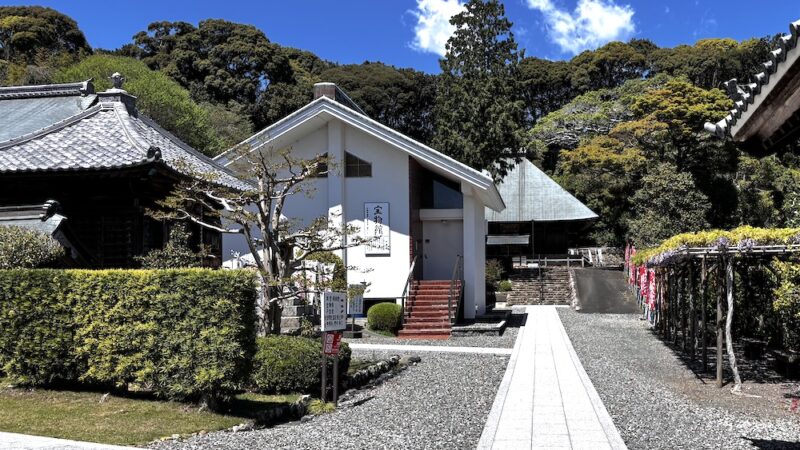
Treasure Hall
The Shuzenji Temple Treasure Hall houses valuable cultural artifacts that tell the story of the temple’s long history.
Main Collections:
- Items Associated with Minamoto no Yoriie: Historical materials related to Yoriie, the second shogun of the Kamakura shogunate and a figure who met a tragic end.
- Materials Related to Okamoto Kido’s “Shuzenji Monogatari”: Items deeply connected to the literary work, such as masks that appear in the play.
- Calligraphy and Paintings of Successive Chief Priests: Important materials showing the spiritual lineage of Shuzenji Temple.
- Buddhist Artwork: Buddhist statues, paintings, and implements that tell the history of faith since the temple’s founding.
Admission to the Treasure Hall is charged (300 yen for adults, 200 yen for elementary and junior high school students), but it is a must-see facility for a deep understanding of Shuzenji Temple’s history and culture.
Hot Spring Water Basin
One of Shuzenji Temple’s distinctive features is its hot spring water basin. Located in the heart of the Shuzenji hot spring town, this unique facility allows visitors to purify their hands with the hot spring water.
This water basin symbolizes the deep connection between Shuzenji Temple and Shuzenji Onsen (hot spring resort), and is a popular photo spot for many tourists.
Nature and Gardens of the Temple Grounds
Shuzenji Temple’s grounds are surrounded by abundant nature, allowing visitors to enjoy its beauty throughout the seasons.
Spring: Cherry blossoms adorn the grounds, and the fresh greenery is dazzling.
Summer: A tranquil space enveloped in deep green.
Autumn: The most beautiful season, when the autumn leaves paint the grounds in brilliant colors.
Winter: The dignified atmosphere of the snow-covered grounds.
Especially during the autumn foliage season, the entire Shuzenji Onsen area is known as a famous spot for autumn leaves, and Shuzenji Temple’s grounds are bustling with many tourists.
Annual Events and Festivals
Shuzenji Temple hosts various religious and cultural events throughout the year.
Main Annual Events
New Year’s Day – First Three Days: Hatsumode (First Shrine Visit of the Year)
Many worshippers visit the Shuzenji Onsen hot spring resort area to pray for the New Year.
Spring Equinox Service (March)
A memorial service for ancestors is held.
Flower Festival (Around April 8th)
A Buddhist event celebrating the birth of Buddha.
Autumn Equinox Service (September)
Similar to the spring service, a memorial service for ancestors is held.
Shuzenji Maple Festival (Mid-November to Early December)
One of the central venues for the autumn foliage event held throughout the Shuzenji Onsen hot spring resort area.
During these events, you can see Shuzenji Temple in a different light than usual.
The Charm of Shuzenji Temple and the Shuzenji Onsen Hot Spring Resort
When visiting Shuzenji Temple, a stroll through the surrounding Shuzenji Onsen hot spring resort area is a must.
Tokko-no-Yu Hot Spring
Tokko-no-Yu, a symbol of Shuzenji Onsen, is located along the Katsura River, a few minutes’ walk from Shuzenji Temple. Legend says that Kobo Daishi Kukai struck a rock with his vajra (tokko) to cause the spring to gush forth. It is also one of Japan’s 100 Famous Hot Springs. While bathing is not currently permitted, it attracts many tourists as the birthplace of Shuzenji Onsen.
Bamboo Grove Path
North of Shuzenji Temple lies a walking path called the “Bamboo Grove Path.” The bamboo grove, stretching for approximately 300 meters, evokes the beauty of Arashiyama in Kyoto and symbolizes the atmosphere of Shuzenji, often called “Little Kyoto of Izu.”
Shigetsuden Hall
Shigetsuden Hall, said to have been built by Hojo Masako to pray for the repose of Minamoto no Yoriie’s soul, is also within walking distance of Shuzenji Temple. Designated as a National Important Cultural Property and the oldest wooden building in Izu, it’s a must-visit spot along with Shuzenji Temple.
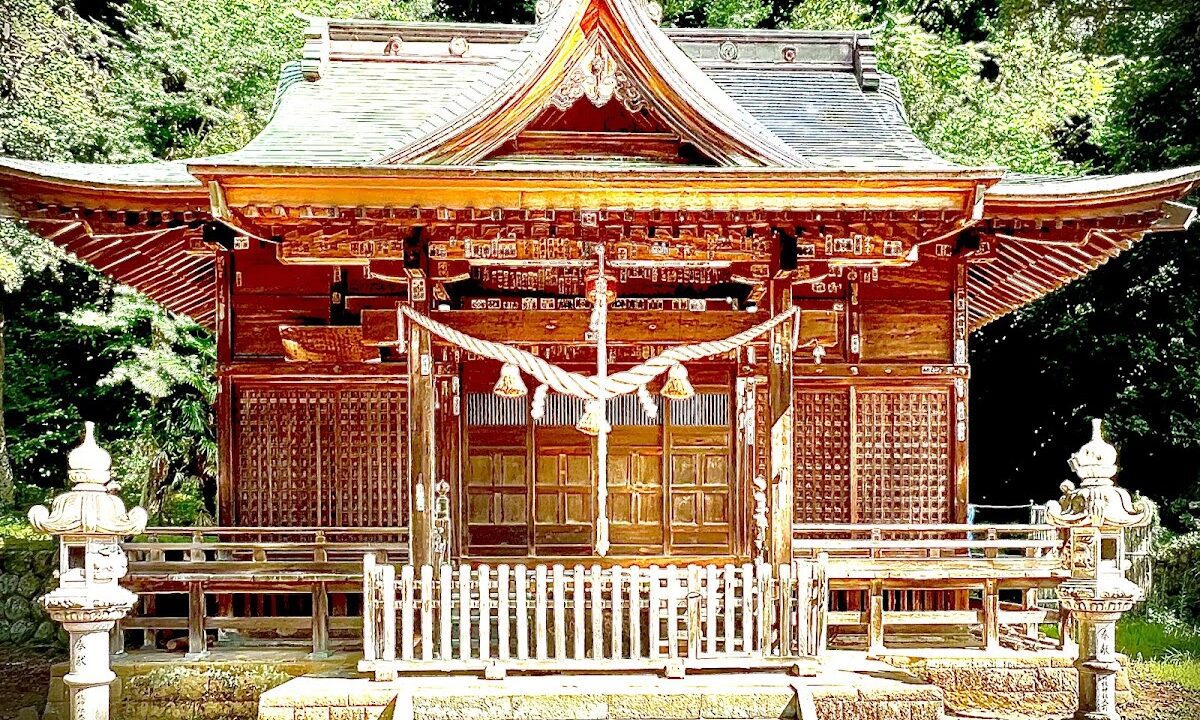
Hie Shrine
Hie Shrine, the guardian shrine of Shuzenji Temple, sits on a hill overlooking the Shuzenji hot spring resort town. It is said that Minamoto no Yoriie visited the shrine while in confinement, making it a shrine with deep historical ties.
How to Access Shuzenji Temple
Access by Train and Bus
From Tokyo:
- Take the JR Tokaido Shinkansen and get off at Mishima Station (approx. 45 minutes)
- Transfer to the Izuhakone Railway Sunzu Line and get off at Shuzenji Station (approx. 30 minutes)
- From Shuzenji Station, take the Tokai Bus or Izuhakone Bus bound for Shuzenji Onsen (approx. 8 minutes) and get off at the Shuzenji Onsen bus stop.
- Approximately 3 minutes on foot from the bus stop.
Alternatively:
- Take the JR Tokaido Main Line and get off at Atami Station
- Transfer to the Izuhakone Railway Sunzu Line and get off at Shuzenji Station
- The rest is the same as above.
Travel Time: Approximately 2 to 2.5 hours from Tokyo Station
Access by Car
From Tokyo:
- Approximately 30 minutes from Numazu IC on the Tomei Expressway via the Izu Jukan Expressway
- Approximately 30 minutes from the Shin-Tomei Expressway, Nagaizumi-Numazu IC, via the Izu Jukan Expressway.
From Nagoya:
- Approximately 30 minutes from the Tomei Expressway, Numazu IC, via the Izu Jukan Expressway.
Parking:
There is no dedicated parking lot for Shuzenji Temple, but there are several paid parking lots in the Shuzenji Onsen area.
- Shuzenji Onsen Parking (next to Shuzenji Kaikan): 500 yen/day for regular cars
- Other private parking lots are available in the surrounding area.
The hot spring area is relatively compact, so it is possible to access Shuzenji Temple on foot from the parking lot.
Notes and Manners for Visiting
Shuzenji Temple is a temple that still functions as a place of worship. Please note the following points when visiting.
Visiting Manners
- Dress Code: There are no particularly strict regulations, but please dress appropriately and respectfully for a temple.
- Photography: Photography is generally permitted within the temple grounds, but photography may be prohibited inside the main hall and treasure hall. Please be sure to check the following:
- Quietness: Please be quiet on the temple grounds and be considerate of other visitors.
- Smoking and Eating: Please refrain from smoking and eating on the temple grounds.
Checking Visiting Hours
The Treasure Hall has different closing times depending on the season (16:30 in summer, 16:00 in winter). We recommend visiting with plenty of time to spare.
Accommodation near Shuzenji Temple
The Shuzenji Onsen area has many hot spring inns and hotels. A one-night, two-day trip to enjoy the famous hot springs of Izu in conjunction with a visit to Shuzenji Temple is highly recommended.
Accommodation Tips
- Traditional Inns: Experience traditional hospitality at historic hot spring inns.
- Modern Hotels: Enjoy a comfortable stay with modern facilities and services.
- Day Trip Hot Springs: Many facilities offer day-trip bathing even if you are not staying overnight.
The Shuzenji Onsen hot springs are alkaline simple springs, gentle on the skin, and known as “beauty springs.”
Shuzenji Temple and Literature/Art
Okamoto Kidō’s “Shuzenji Monogatari”
The play that made Shuzenji Temple famous throughout Japan is “Shuzenji Monogatari” by playwright Okamoto Kidō. Published in 1911 (Meiji 44), this masterpiece weaves together the tragic story of Minamoto no Yoriie with the tale of the mask maker Yashaō and his daughter Katsura.
This play continues to be performed as a Kabuki play, etching the name of Shuzenji Temple into the world of literature and theater. The treasure hall displays masks related to “Shuzenji Monogatari,” among other items.
Other Literary Works
Shuzenji Onsen is also a place beloved by many literary giants. Many writers, including Natsume Sōseki, Akutagawa Ryūnosuke, and Ozaki Kōyō, visited this area and used it as the setting for their works. Shuzenji Temple and its surroundings are important locations in the history of modern Japanese literature.
Shuzenji Temple: Seasons and Best Time to Visit
Shuzenji Temple has different charms throughout the seasons, but here are some of the best times to visit.
Spring (March-May)
During cherry blossom season, the temple grounds are dyed in a soft pink hue. The fresh greenery is also beautiful, and you can enjoy a comfortable visit in the mild climate. It may be crowded during Golden Week.
Summer (June-August)
The temple grounds, enveloped in deep green, are cool and refreshing, allowing you to experience Shuzenji’s charm as a summer resort. However, the number of tourists increases during the summer holidays.
Autumn (September-November)
This is the most recommended season. The autumn foliage season from mid-November to early December is when Shuzenji Temple shines most beautifully. The autumn leaves within the temple grounds are magnificent, as are the leaves along the bamboo grove path and the Katsura River. However, this is the most crowded time.
Winter (December-February)
This is a hidden gem of a season, offering quiet and peaceful visits with fewer tourists. While snowfall is rare, the temple grounds can be enjoyed even on colder days when they are covered in snow. The combination of a visit and a visit to the hot springs is particularly appealing.
Summary: Experience the Charms of Shuzenji Temple
Shuzenji Temple in Izu City, Shizuoka Prefecture, is the oldest and most renowned temple in Izu, boasting a history of over 1200 years. It has played a significant role in important moments in Japanese history, from its founding by Kobo Daishi Kukai, to the tragedy of the Minamoto clan, the changes in religious sects, and its reconstruction by Hojo Soun.
Even today, it continues to welcome many worshippers and tourists as the spiritual center of the Shuzenji Onsen hot spring resort area. From the hot spring water gushing from the purification fountain, to the treasure hall that tells stories of history, the beautiful natural surroundings, and the atmosphere of the surrounding hot spring town, Shuzenji Temple encapsulates all the charms of Izu tourism: history, culture, nature, and hot springs.
Its easy accessibility, approximately two hours from Tokyo, is also a major draw. While a day trip is certainly enjoyable, we also recommend staying overnight in Shuzenji Onsen to fully appreciate its history and the hot springs.
Immerse yourself in the tranquil grounds, reflecting on the tragedy of the Minamoto clan during the Kamakura period, and experience the charm of Shuzenji Temple, steeped in 1200 years of history, with your own eyes. We await you in the heart of Shuzenji Onsen, the “Little Kyoto of Izu.”