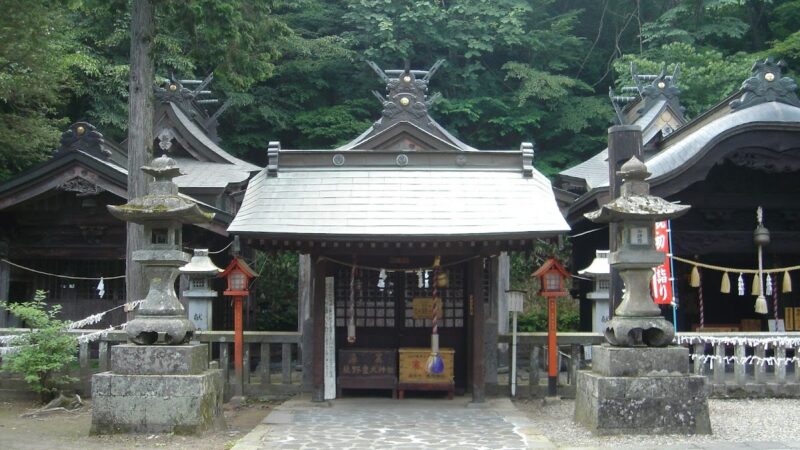
Akagi Shrine (Akagiyama, Fujimi-cho, Maebashi City, Gunma Prefecture) Complete Guide
Akagi Shrine, located on Akagiyama in Fujimi-cho, Maebashi City, Gunma Prefecture, is a beautiful vermilion-painted shrine situated on the summit of the sacred Mount Akagi, on the shores of Lake Onuma. As the center of Akagiyama worship, revered since ancient times as a “mountain where gods reside,” it is counted among the candidates for a Shikinaisha (a major shrine listed in the Engishiki) and the second-ranked shrine of Kōzuke Province, and is now one of Gunma Prefecture’s leading power spots, attracting many visitors.
This article comprehensively introduces information you should know before visiting Akagi Shrine, including its history, enshrined deities, highlights of the grounds, annual festivals, and access methods.
Overview and Basic Information of Akagi Shrine
Akagi Shrine is located at 4-2 Akagiyama, Fujimi-cho, Maebashi City, Gunma Prefecture, and is situated on the shores of Lake Onuma at an altitude of approximately 1,340 meters. Although its former rank was Village Shrine, due to its historical importance, it is considered a candidate for a Shikinaisha (a shrine listed in the Engishiki, an ancient Japanese legal text) and is also known as a candidate for the second-ranked shrine of Kōzuke Province.
Basic Data
- Location: 4-2 Akagiyama, Fujimi-cho, Maebashi City, Gunma Prefecture 371-0101
- Phone: 027-287-8202
- FAX: 027-287-8177
- Former Shrine Rank: Village Shrine
- Shrine Type: Candidate for Shikinaisha (Myojin Taisha), Candidate for the second-ranked shrine of Kōzuke Province
- Sacred Object: Mount Akagi, Ōnuma (Ōno), Konuma (Kono)
The most distinctive feature of Akagi Shrine is that it considers the mountain itself and the lakes as sacred objects. It preserves a form of nature worship that enshrines Mount Kurohime, the main peak of Mount Akagi, as well as Ōnuma and Konuma at the summit, as sacred.
Deities and Divine Virtues
Main Deity
The main deity of Akagi Shrine is Akagi Daimyojin. Akagi Daimyojin has been worshipped since ancient times as the god of Mount Akagi and Lake Akagi, and as a guardian deity of the people. Several other deities, including Toyokiirihiko-no-Mikoto, are also enshrined.
Toyokiirihiko-no-Mikoto was a prince of Emperor Sujin (the 10th emperor) and is believed to have been tasked with pacifying the eastern provinces. He is revered as the pioneering deity of Kōzuke Province (present-day Gunma Prefecture).
Deities Enshrined Together
The current Akagi Shrine enshrines deities from various shrines that were previously located on different peaks of Mount Akagi:
- Toyouke Shrine (Onuma-bata)
- Itsukushima Shrine (Kotorigashima)
- Takao-no-kami Shrine (Kurohimeyama Summit)
- Other shrines on different peaks of Mount Akagi
These shrines were enshrined together at the current location in 1970 (Showa 45) when the shrine building was relocated.
The Legend of Akagi-hime and Women’s Wishes
Akagi Shrine is associated with the legend of Akagi-hime, recorded in the “Shinto-shu” (Collection of Shinto). According to this legend, a goddess named Akagi-hime, who was summoned to Akagi Daimyojin, is enshrined here, and it is said that women’s wishes will surely be granted when they pray to this goddess.
For this reason, Akagi Shrine is known as a particularly popular power spot for women, attracting many female worshippers with wishes for matchmaking, successful relationships, fertility, and safe childbirth.
The Blessing of Water and Abundant Harvests
The water flowing from the summit of Mount Akagi has given life to living things, nourished fields, and produced abundant food. For this reason, Akagi Shrine is also worshipped as a deity of abundant harvests, business prosperity, and good fortune.
History of Akagi Shrine
Founding and Ancient Records
The founding date of Akagi Shrine is unknown, but it is a shrine with a very long history. Documentary records indicate that sacred treasures were dedicated in Daido 1 (806), indicating that it existed as an important shrine at least in the early Heian period.
The Engishiki Jinmyocho (compiled in 927) lists it as “Akagi Shrine, Seta District, Kōzuke Province, Myōjin Taisha,” indicating that it was recognized by the imperial court as a shrine of the highest rank, Myōjin Taisha.
Development of Akagi Mountain Faith
Akagi Mountain has been revered since ancient times as a “mountain where gods reside” and has been an object of mountain worship. Numerous branch shrines of Akagi Shrine were established, mainly in the Kanto region, and Akagi faith spread widely. Especially during the Edo period, Akagi religious associations were organized throughout the Kanto region, and many believers made pilgrimages to Akagi Mountain.
Changes in the Modern Era
With the Meiji-era separation of Shinto and Buddhism, the religious facilities on Akagi Mountain, which had previously been a syncretic blend of Shinto and Buddhism, were reorganized. Under the modern shrine ranking system, it was classified as a village shrine, but its historical importance remained unchanged, and it continued to exist as a center of regional faith.
The Great Relocation in the Showa Era
In 1970 (Showa 45), due to the dilapidation of the shrine buildings, Akagi Shrine, which had previously been located in Daido, was relocated to its current location. At this time, as mentioned above, the various peak shrines within Akagi Mountain were also merged, resulting in the current form.
The site of the original shrine in Odō still remains today, making it an important historical site that allows us to reflect on the history of Akagi Shrine.
Highlights of the Shrine Grounds
Vermilion-Painted Shrine
The most distinctive feature of Akagi Shrine is its beautiful vermilion-painted shrine built on the shore of Lake Ōnuma. The vibrant vermilion, contrasting beautifully with the deep green surroundings of the lake, captivates visitors. Especially during the seasons of fresh greenery and autumn leaves, the vermilion of the shrine harmonizes with the natural colors, creating a breathtaking spectacle.
The shrine faces Lake Ōnuma, and its reflection on the lake’s surface is also beautiful, making it a popular photo spot for many photography enthusiasts.
Ōnuma (Lake Ōnuma)
Lake Ōnuma, one of the sacred objects of worship at Akagi Shrine, is a crater lake of Mount Akagi, with a circumference of approximately 4.2 kilometers and a maximum depth of approximately 20 meters. Located at an altitude of 1,340 meters, it is also known for completely freezing over in winter.
A walking path is maintained along the lakeshore, allowing visitors to enjoy a stroll. You can also enjoy leisure activities such as boating and smelt fishing, appreciating the natural beauty of the area throughout the seasons.
Konuma Lake and Kotorigashima Island
Konuma, located a short distance from Onuma Lake, is also considered a sacred site. Konuma Lake has a small island called Kotorigashima Island, where Itsukushima Shrine was once enshrined (now merged with Akagi Shrine). Konuma Lake has a quieter, more mystical atmosphere than Onuma Lake and is popular as a power spot.
Kurohisan Mountain
The summit of Kurohisan (1,828 meters above sea level), the highest peak of Mount Akagi, once housed Takao-no-kami Shrine. Although now merged with Akagi Shrine, climbing Kurohisan is often done in conjunction with a visit to Akagi Shrine, and the view from the summit is known as a spectacular panorama of the Kanto Plain.
The trailheads are concentrated around Lake Onuma, and you can enjoy hiking starting from Akagi Shrine. ## Annual Festivals and Events
Akagi Shrine holds various festivals and events throughout the year.
Summer Festival (First Saturday of August)
The most important festival at Akagi Shrine is the Summer Festival. Held annually on the first Saturday of August, the following events take place:
- Dedication of Ogasawara-ryu Archery and Horsemanship: The head of the Ogasawara-ryu school of archery and horsemanship, along with his disciples, dedicates a demonstration of archery. This is a rare opportunity to witness traditional archery techniques up close.
- Lantern Floating Ceremony: At night, lanterns are floated on Lake Onuma, creating a magical scene with countless lanterns floating on the lake’s surface.
- Fireworks Display: As the climax of the festival, fireworks are launched, their reflections on the lake’s surface and the sounds echoing through the surrounding mountains creating unforgettable memories.
The Summer Festival attracts many tourists every year and has become a summer tradition of Mount Akagi.
Autumn Festival
In autumn, the Autumn Festival is held to give thanks for the harvest. It is a traditional festival to express gratitude for a bountiful harvest and pray for a good harvest in the following year.
Other Annual Events
- New Year’s Day Festival (January 1st)
- Setsubun Festival (around February 3rd)
- Annual Grand Festival (the most important festival of the year)
- Monthly Festival (regular monthly festivals)
Through these festivals, Akagi Shrine also plays a central role in the local community.
Akagi Shrine as a Power Spot
Akagi Shrine is known as one of Gunma Prefecture’s leading power spots. Here are some of the reasons why.
Natural Energy
Located at an altitude of 1,340 meters, Akagi Shrine is surrounded by pure air and abundant nature. The worship style, which considers the mountains and lakes themselves as deities, creates an environment where one can directly feel the energy of nature.
A Goddess Who Grants Women’s Wishes
Due to the aforementioned legend of Princess Akagi, this shrine is particularly popular among women as a goddess who grants women’s wishes. Many visitors come with wishes specific to women, such as success in love, matchmaking, fertility, and safe childbirth.
Good Fortune and Business Prosperity
The blessings of water flowing from Mount Akagi are considered a symbol of vitality and prosperity. Therefore, many visitors come to pray for good fortune, business prosperity, and success in their ventures.
Purification of Mind and Body
The tranquil environment on the shores of Lake Onuma is ideal for purifying mind and body away from the hustle and bustle of everyday life. Visiting the shrine while gazing at the lake surface provides an opportunity to calm the mind and gain new vitality.
Access and Local Information
Access by Car
The most convenient way to access Akagi Shrine is by car.
From the Kan-Etsu Expressway:
- Approximately 60 minutes from Maebashi IC
- Approximately 60 minutes from Akagi IC
From Major Cities:
- Approximately 50 minutes from Maebashi city center
- Approximately 70 minutes from Takasaki city
- Approximately 2 hours 30 minutes from central Tokyo
To reach the summit of Mt. Akagi, use the “Akagi Mountain Parkway.” While the road is well-maintained, it is a mountain road with many curves, and caution is needed regarding ice and snow in winter.
Parking
There are several free parking lots around Lake Onuma. It gets crowded on weekends during summer and the autumn foliage season, so early arrival is recommended.
Access by Public Transportation
From JR Maebashi Station:
- Take the Kanetsu Kotsu bus bound for “Akagiyama Visitor Center” (approximately 90 minutes).
- *Operation is seasonal (mainly late April to early November).
- *Due to limited service, it is necessary to check the timetable in advance.
Public transportation access is limited, so visiting by car is recommended.
Opening Hours and Visiting Hours
While the grounds of Akagi Shrine are generally open for free visits, the shrine office hours are as follows:
- Opening Hours: 9:00 AM to approximately 4:00 PM (may vary seasonally)
- Goshuin (Shrine Stamp) Reception: During opening hours
- Visiting the Shrine: 24 hours (however, please note that there is no lighting at night).
Winter Precautions
Akagiyama’s summit experiences snow and ice during the winter months (late November to early April).
- Road Conditions: Due to icy roads in winter, snow tires or chains are essential.
- Temperature: Temperatures can drop below -10 degrees Celsius in mid-winter.
- Cold Weather Protection: Sufficient warm clothing is necessary.
- Smelt Fishing: Smelt fishing season runs from mid-January to early March when Lake Onuma freezes over.
Akagi Shrine is beautiful in winter, but please take all necessary safety precautions before visiting.
Nearby Facilities
Akagi Mountain Visitor Center:
- A facility where you can learn about the nature and history of Akagi Mountain.
- Approximately 5 minutes’ walk from Akagi Shrine.
Akagi Mountain General Tourist Information Center:
- Provides tourist information and sells souvenirs.
- Also has a restaurant.
Accommodation:
- Akagi Mountain Hot Spring Village is located on the shores of Lake Onuma, offering day trips for bathing and overnight stays.
- Numerous hotels and inns are located in Maebashi city.
Best Season for Visiting Akagi Shrine
Season of Fresh Greenery (May-June)
The fresh greenery after the snowmelt is beautiful, and you can visit the shrine in refreshing air. You can also enjoy flowers such as azaleas and rhododendrons.
Summer (July-August)
It’s an ideal summer resort, with temperatures more than 10 degrees Celsius lower than the lowlands, making it very comfortable. The summer festival on the first Saturday of August is a must-see.
Autumn Foliage Season (Early October to Early November)
The autumn foliage of Mt. Akagi is one of Gunma Prefecture’s most representative autumn foliage spots. The contrast between the vermilion shrine buildings and the autumn leaves is breathtaking. However, it gets extremely crowded during this time.
Winter (December to March)
Akagi Shrine amidst a snowy landscape is also mystical. During the smelt fishing season (mid-January to early March), you can enjoy combining ice fishing for smelt with a visit to the shrine.
Manners and Etiquette for Visiting a Shrine
Basic Worship Etiquette
- Bow before passing through the torii gate.
- Purify your body and mind at the water basin.
- Hold the ladle in your right hand and purify your left hand.
- Switch the ladle to your left hand and purify your right hand.
- Hold the ladle in your right hand again, receive water in your left hand, and rinse your mouth.
- Finally, hold the ladle upright and purify the handle.
- Worship in front of the main hall.
- Place your offering.
- Bow twice, clap twice, and bow once.
- Bow again at the torii gate when leaving.
Regarding Photography
Photography is generally permitted on the shrine grounds, but please note the following:
- Do not disturb other worshippers.
- Do not take photos in areas where photography is prohibited, such as inside the main hall.
- Refrain from taking photos during festivals or obtain permission.
Cultural Properties and Treasures of Akagi Shrine
Akagi Shrine possesses a variety of cultural properties and treasures that have been donated throughout its long history. ### Sacred Treasures
The shrine houses sacred treasures, including one recorded as having been dedicated in 806 AD, as well as items donated by successive generations of worshippers.
Ancient Documents
Ancient documents detailing the history of Akagi Shrine and materials related to the Akagi Mountain faith are preserved here, serving as important resources for local history research.
Shrines and Related Shrines
Akagi Shrine oversees several surrounding shrines. Many of the shrines formerly located throughout Akagi Mountain have been merged into the current Akagi Shrine, but their history and traditions are carefully preserved.
Main Related Shrines
- Miyazawa Akagi Shrine (Miyazawa-cho, Maebashi City): The lower shrine of Akagi Shrine
- Ninomiya Akagi Shrine (Ninomiya-cho, Maebashi City): A strong candidate for the second-ranked shrine of Kōzuke Province
These shrines are also important centers of Akagi faith, and many people visit them together.
Checklist for Items to Bring When Visiting Akagi Shrine
For a comfortable visit, we recommend preparing the following:
Essential Items
- Goshuincho (stamp book) (if you wish to receive a stamp)
- Small change (for offerings)
- Jacket (due to the high altitude, something to wear even in summer)
- Comfortable walking shoes
Useful Items
- Camera (many scenic spots)
- Binoculars (for bird watching and enjoying the scenery)
- Drinks (especially in summer)
- Sunscreen (high altitude and strong UV rays)
- Rain gear (mountain weather is unpredictable)
Additional Items for Winter
- Warm clothing (down jacket, etc.)
- Gloves, hat, scarf
- Hand warmers
- Shoes with non-slip soles
Summary: The Charm of Akagi Shrine
Located on Mount Akagi in Fujimi-cho, Maebashi City, Gunma Prefecture, Akagi Shrine is not merely a tourist destination, but a sacred site of mountain worship that has continued since ancient times. The vermilion-lacquered shrine buildings, built on the shores of Lake Onuma at an altitude of 1,340 meters, the sacred Mount Akagi, Lake Onuma and Lake Konuma, and the deep faith in Akagi Daimyojin offer visitors a special experience.
With its historical importance as a candidate for a Shikinaisha (a shrine listed in the Engishiki, an ancient Japanese legal code) and a candidate for the second-ranked shrine of Kōzuke Province, its modern appeal as a power spot for women’s wishes, and the harmony of nature’s beauty throughout the seasons, Akagi Shrine, as a representative shrine of Gunma Prefecture, will undoubtedly continue to be loved by many people.
When visiting Maebashi or Takasaki, or when you want to enjoy the nature of Gunma Prefecture, or when you are seeking peace of mind, please plan a visit to Akagi Shrine. The sacred space embraced in the bosom of the sacred Mount Akagi will surely bring you something special.