
Complete Guide to Mishima Taisha Shrine | A Thorough Explanation of the History, Deities, Festivals, and Highlights of the Shrine Grounds, the Ichinomiya of Izu Province
What is Mishima Taisha Shrine?
Mishima Taisha Shrine is an ancient shrine located in Omiya-cho, Mishima City, Shizuoka Prefecture, revered as the Ichinomiya (first-ranked shrine) of Izu Province. As a Shikinaisha (a shrine listed in the Engishiki, an ancient Japanese legal text) and the Soja (chief shrine) of Izu Province, it has been worshipped as the foremost deity in the Tokai region since ancient times. Its former rank was Kanpei Taisha (a high-ranking government-supported shrine), and it is currently designated as a Beppyo Jinja (a special shrine) by the Association of Shinto Shrines.
The shrine grounds, facing the old Tokaido road, are known as the place where Minamoto no Yoritomo prayed for the restoration of the Minamoto clan, making it a historical sacred site with deep ties to the samurai government. Despite its convenient location, approximately a 10-minute walk from JR Mishima Station, the grounds are enveloped in a tranquil atmosphere, providing visitors with a refreshing feeling.
Deities Enshrined at Mishima Taisha Shrine
Two deities are enshrined at Mishima Taisha Shrine.
Ōyamatsumi-no-Mikoto
Ōyamatsumi-no-Mikoto is a deity known as the god of mountains and the sea. He is revered as the god of national development, industrial growth, business prosperity, and protection of agriculture. His head shrine is the Ōyamatsumi Shrine in Iyo Province (present-day Ehime Prefecture), and he is widely worshipped as the principal deity of Yamatsumi Shrines throughout Japan.
Tsumihayaekotoshironushi-no-Kami
Tsumihayaekotoshironushi-no-Kami is a child deity of Ōkuninushi-no-Mikoto and is worshipped as the god of business prosperity, maritime safety, and abundant catches. He is also affectionately known as “Ebisu-sama” and is believed to bring good fortune, happiness, and family safety.
These two deities are collectively called “Mishima Daimyōjin” and have long been revered as gods of development in the Izu Islands and national management.
Tsumihayaekotoshironushi-no-Kami is a child deity of Ōkuninushi-no-Mikoto and is worshipped as the god of business prosperity, maritime safety, and abundant catches. ## History of Mishima Taisha Shrine
Founding and Ancient Beliefs
The exact founding date of Mishima Taisha Shrine is unclear, but it is listed in the Engishiki Jinmyocho (927 AD) as “Mishima Shrine, Kamo District, Izu Province, Myojin Taisha,” indicating that it was already revered by the imperial court as a Myojin Taisha shrine during the Heian period.
There are several theories regarding the origin of the shrine’s name. One theory suggests it derives from “Mishima” (御島) in the Izu Islands, while another suggests it is based on the ancient geographical understanding that the Izu Peninsula consists of “three islands.”
Status as the Ichinomiya of Izu Province
During the Ritsuryo period, the provincial capital of Izu Province was located in Mishima City, and Mishima Taisha Shrine became the center of regional faith as the Ichinomiya of Izu Province. An Ichinomiya refers to the most prestigious shrine in a province, and it was a shrine that the provincial governor always visited upon taking up post.
Minamoto no Yoritomo and Mishima Taisha Shrine
An essential aspect of the history of Mishima Taisha Shrine is its deep connection with Minamoto no Yoritomo. In 1180, during the Jisho era, Minamoto no Yoritomo, who was exiled to Hirugakojima in Izu Province (present-day Izunokuni City), prayed at Mishima Taisha Shrine for the restoration of the Minamoto clan before raising an army to overthrow the Taira clan.
The Azuma Kagami records that Yoritomo prayed at Mishima Taisha Shrine for 100 days, received a divine oracle, and decided to raise an army. Although he was defeated at the Battle of Ishibashiyama, he achieved victory at the subsequent Battle of Fujikawa, beginning the path to establishing the Kamakura Shogunate.
Even after the restoration of the Minamoto clan, Yoritomo continued to revere Mishima Taisha Shrine, constructing shrine buildings and donating land to the shrine. Because of this history, Mishima Taisha Shrine attracted the faith of the samurai class and continued to strengthen its ties with the samurai government from the Kamakura period onward.
From the Medieval to the Early Modern Period
From the Kamakura period onward, Mishima Taisha Shrine flourished as the guardian deity of samurai families and received protection from successive samurai governments, including the Hojo, Ashikaga, and Tokugawa clans. Tokugawa Ieyasu, in particular, positioned Mishima Taisha Shrine as an important base along the Tokaido road as part of its development, and undertook repairs to the shrine buildings and guaranteed its land holdings.
During the Edo period, Mishima prospered as a post town on the Tokaido road, and Mishima Taisha Shrine attracted worshippers seeking safe journeys.
From the Modern Period Onward
In 1871 (Meiji 4), under the modern shrine ranking system, Mishima Taisha Shrine was designated a Kanpei Taisha (Grand Imperial Shrine), positioning it as an important national shrine. After World War II, it became a Beppyo Jinja (Special Shrine) of the Association of Shinto Shrines, and continues to welcome many worshippers as a representative shrine of the Izu region.
Guide to Mishima Taisha Shrine Grounds
The grounds of Mishima Taisha Shrine contain many points of interest, including nationally important cultural properties and natural monuments.
Main Gate
Facing the old Tokaido Road, the main gate is the entrance to Mishima Taisha Shrine, welcoming visitors. This beautiful vermilion-painted gate has served as a landmark for travelers along the Tokaido.
Shrine Gate
After passing through the main gate, the shrine gate comes into view. The shrine gate is an important structure serving as the entrance to the shrine grounds, and its dignified appearance is impressive.
Dance Hall
Upon entering the shrine gate, the dance hall is to the left. Kagura (sacred dance and music) are performed here during festivals. Its open design allows visitors to observe the rituals up close.
Main Hall, Offering Hall, and Worship Hall
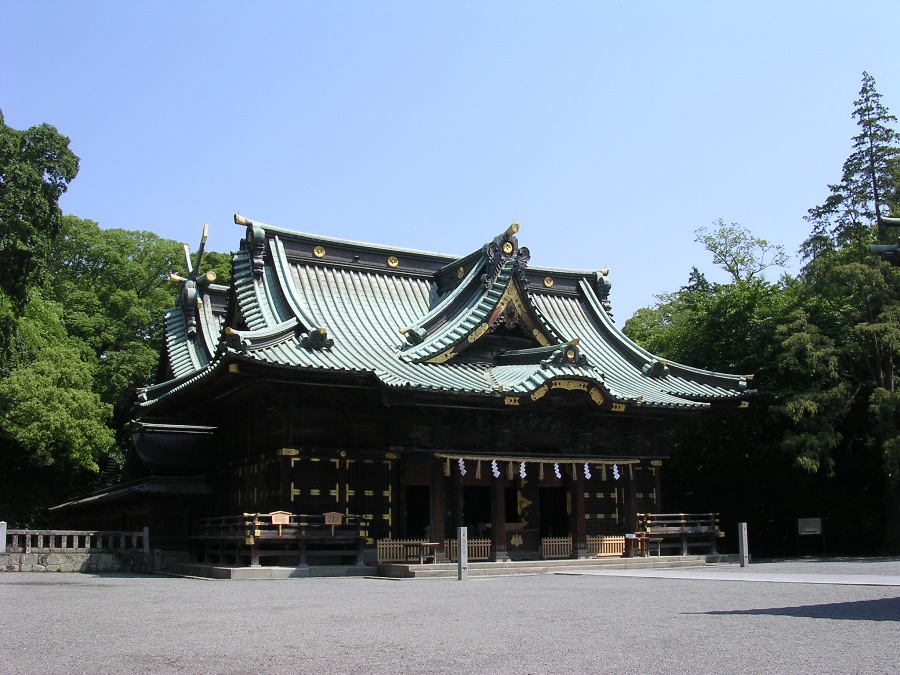
The main hall, offering hall, and worship hall, which form the heart of Mishima Taisha Shrine, are designated as important national cultural properties. The current shrine buildings were rebuilt in 1866 (Keio 2) and retain many characteristics of late Edo period shrine architecture.
The main shrine is built in the Nagare-zukuri style, characterized by its elegantly curved roof. The offering hall and worship hall are integrated into a single structure, with worshippers offering their prayers in the worship hall.
The carvings on the shrine are exquisitely detailed, with the dragon carvings on the front of the porch being particularly magnificent. As a building showcasing the pinnacle of Edo-period craftsmanship, it holds high architectural historical value.
Osmanthus (Kinmokusei)
Near the main shrine stands an ancient osmanthus tree designated as a national natural monument. Said to be approximately 1200 years old, it is known as one of the largest osmanthus trees in Japan.
This giant tree, approximately 15 meters tall and with a trunk circumference of about 3.6 meters, fills the shrine grounds with its fragrant aroma from late September to early October each year. During the blooming season, many worshippers visit to enjoy its scent.
Itsukushima Shrine
Within the shrine grounds is Itsukushima Shrine, dedicated to Ichikishima-hime no Mikoto. It is worshipped as the god of artistic improvement, beauty, and matchmaking.
Wakamiya Shrine
Wakamiya Shrine, dedicated to the child deity of the main deity, is revered as the god of fertility, safe childbirth, and child-rearing.
Mimeme Shrine
One of the shrines within the grounds, it is believed to offer blessings for healing eye diseases.
Sacred Horse Stable
White horses are kept in the sacred horse stable, and visitors can feed them carrots. Sacred horses are considered the mounts of the gods and have been cherished at the shrine since ancient times.
Mishima Taisha Treasure Museum
The Mishima Taisha Treasure Museum, located within the shrine grounds, displays valuable collections, including national treasures and important cultural properties.
National Treasure “Plum Blossom Makie Handbox”
A masterpiece of makie (lacquerware with lacquer) from the Kamakura period, designated as a national treasure. This beautiful handbox, said to have been donated by Hojo Masako, is adorned with an intricate plum blossom motif. As a pinnacle of Japanese lacquerware, it is an extremely important work in the history of crafts.
Important Cultural Property
The Treasure Hall houses numerous important cultural properties, including ancient documents, swords, and armor. Documents related to Minamoto no Yoritomo and the Hojo clan, in particular, are invaluable historical materials for understanding the history of the Kamakura period.
Sword “Tachi, inscribed Kunimune”
This famous sword, designated as an important cultural property, is a work by the Kamakura period swordsmith Kunimune. It is a collection unique to Mishima Taisha Shrine, which was revered by the samurai class.
While there is an admission fee to the Treasure Hall, it is a facility well worth visiting to gain a deeper understanding of the history and culture of Mishima Taisha Shrine.
Main Festivals of Mishima Taisha Shrine
Mishima Taisha Shrine holds various festivals throughout the year.
Tamatsuri (Rice Field Festival)
Held on January 7th, the Tamatsuri is a Shinto ritual praying for a bountiful harvest. “Ta-asobi” (rice field play), a simulated performance of agricultural work such as plowing, sowing, planting, and harvesting, is offered as a tribute, predicting the year’s harvest.
Reisai (Mishima Grand Festival)
Held from August 15th to 17th, the Reisai is the most important festival at Mishima Taisha Shrine. On the 16th, the main festival day, a portable shrine procession takes place, parading through Mishima city. Numerous stalls line the streets, making it the largest and most lively festival in Mishima city.
Yabusame (Mountain Archery)
Performed in conjunction with the Reisai, Yabusame is a magnificent Shinto ritual in which archers shoot at targets from horseback while galloping. As a martial art associated with Minamoto no Yoritomo, the tradition continues to this day.
Rice Plowing Ritual
This is the central ritual of the Rice Field Festival on January 7th, where Shinto priests perform the ritual of plowing rice fields. Traditionally, the outcome of this ritual is used to predict the year’s harvest.
Monthly Festival
The monthly festival is held on the 1st and 15th of each month, where prayers are offered for national peace and the well-being of parishioners and worshippers.
Benefits of Mishima Taisha Shrine
Mishima Taisha Shrine is believed to offer various benefits.
Business Prosperity and Success
The enshrined deity, Kotoshironushi-no-kami, is known as the god of business, attracting many worshippers praying for business prosperity and success.
Good Fortune and Protection from Evil
Due to the legend of Minamoto no Yoritomo’s restoration of the Minamoto clan, the shrine is believed to offer benefits of good fortune, prosperity, and protection from evil. Many people visit this shrine during life-changing moments or when embarking on new challenges.
Traffic Safety and Travel Safety
Located at a key point on the Tokaido road, Mishima Taisha Shrine has long been revered as a deity protecting travelers’ safety. Even today, many visitors come to pray for traffic safety.
Family Safety and Matchmaking
The Itsukushima Shrine and Wakamiya Shrine within the grounds are believed to offer blessings for matchmaking, family safety, fertility, and safe childbirth.
Amulets and Gifts
Mishima Taisha Shrine offers a variety of amulets and gifts.
Amulets
A variety of amulets are available, including those for business prosperity, good fortune, traffic safety, and academic success. The victory amulet, associated with Minamoto no Yoritomo, is also popular.
Goshuin (Shrine Seals)
Mishima Taisha Shrine’s goshuin are characterized by their powerful calligraphy and red seal. In addition to the regular goshuin, seasonal limited-edition goshuin are sometimes available.
Lucky Rice Cake “Fukutaro”
Fukutaro, a lucky rice cake known as a specialty of Mishima Taisha Shrine, can be purchased at the “Taisha no Yoridokoro” (shrine’s sanctuary) on the shrine grounds. Its simple flavor, with mugwort rice cake filled with sweet bean paste, makes it a popular souvenir for visitors. The affordable price of 200 yen per piece is also a major draw.
About Prayers
Mishima Taisha Shrine offers various prayers.
Reception Hours
Prayers are accepted from 8:30 AM to 4:00 PM (reception closes at 3:30 PM). Reservations are not required; you can apply at the reception on the day of your visit.
Main Prayers
- First Shrine Visit for a Newborn
- Shichi-Go-San Ceremony
- Protection from Evil
- Family Safety
- Business Prosperity
- Traffic Safety
- Prayer for Success in Exams
- Recovery from Illness
- Prayer for Safe Childbirth
Special Prayers
Prayers for companies and organizations, ground-breaking ceremonies, and roof-raising ceremonies are also performed. Prior consultation is recommended.
Weddings at Mishima Taisha Shrine
Traditional Shinto wedding ceremonies can be held at Mishima Taisha Shrine.
The Charm of Shinto Weddings
A ceremony held in the dignified main hall is a solemn and memorable event. The procession in a white kimono or colorful kimono is a moment to feel the beauty of Japanese tradition.
Ceremony Flow
The ceremony follows traditional Shinto rituals, including the procession, purification ceremony, recitation of prayers, the three-cup ceremony, recitation of vows, and offering of sacred branches.
Wedding Reception Venue
The temple grounds also include a wedding reception venue, allowing you to hold your wedding ceremony and reception in one place. For details, please contact Mishima Taisha Shrine directly.
Access Information
Access by Train
From JR Tokaido Shinkansen/Tokaido Main Line “Mishima Station”
- Approximately 15 minutes on foot
- Proceed straight from the South Exit, via the old Tokaido Road.
From Izuhakone Railway “Mishima Tamachi Station”
- Approximately 7 minutes on foot
- Conveniently located near the station.
Access by Bus
Get off at “Mishima Taisha-mae” bus stop (Tokai Bus) from the South Exit of Mishima Station.
Access by Car
Tomei Expressway
- Approximately 20 minutes from Numazu IC
- Approximately 30 minutes from Susono IC
Shin-Tomei Expressway
- Approximately 15 minutes from Nagaizumi-Numazu IC
Parking
There is a parking lot for visitors on the temple grounds (fee applies). During the New Year and festival periods, congestion is expected, so the use of public transportation is recommended.
Nearby Tourist Attractions
Mishima Calendar Maker’s Residence
One of Mishima City’s proud cultural heritage sites, this is the residence of a calendar maker who created the Mishima calendar during the Edo period. Approximately a 5-minute walk from Mishima Taisha Shrine.
Rakujuen Garden
A nationally designated natural monument and scenic spot, approximately a 3-minute walk from the south exit of Mishima Station. Enjoy the beautiful pond fed by spring water from Mt. Fuji and the changing seasons.
Genbei River
A clear stream fed by spring water from Mt. Fuji, with a well-maintained riverside promenade. A spot where you can feel the charm of Mishima as a city of water.
Kakitagawa Park
Located in Shimizu Town, next to Mishima City, this park boasts the largest volume of spring water in East Asia. The highly transparent spring water is a must-see.
Manners and Etiquette for Visiting a Shrine
Proper Way to Visit a Shrine
- When passing through the torii gate: Bow before entering the shrine grounds.
- Purification at the water basin: Purify your left hand, then your right hand, then your mouth.
- Worship at the main hall: The basic procedure is two bows, two claps, and one bow.
Regarding Attire
There are no specific dress code requirements, but it is desirable to wear clothing that reflects the sacred nature of the place. If you are receiving a prayer, please dress appropriately and not too casually.
Regarding Photography
Photography is generally permitted within the shrine grounds, but photography inside the main hall or during ceremonies may be restricted. Please be considerate of other visitors.
About the Mishima Taisha Supporters’ Association
The Mishima Taisha Supporters’ Association is an organization that reveres Mishima Taisha Shrine and supports its maintenance and development. Membership offers various benefits, including newsletters, invitations to special prayers, and priority participation in ceremonies. Even those living far away can join and maintain their connection with Mishima Taisha Shrine.
The Four Seasons of Mishima Taisha Shrine
Spring (March-May)
The cherry blossoms in the shrine grounds are in full bloom, signaling the arrival of spring. The Spring Grand Festival is held in April.
Summer (June-August)
The August festival is the biggest event at Mishima Taisha Shrine. It’s full of highlights, including horseback archery and a portable shrine procession.
Autumn (September-November)
From late September to early October, the fragrant osmanthus trees, a national natural monument, bloom, filling the shrine grounds with a sweet scent. Many worshippers visit during this time.
Winter (December-February)
The Rice Field Festival on January 7th is an important Shinto ritual praying for a bountiful harvest in the new year. The first three days of the New Year are extremely crowded with visitors. ## Frequently Asked Questions
Q: What are the visiting hours for Mishima Taisha Shrine?
A: While you are generally free to visit the shrine grounds, the shrine office is open from 8:30 AM to 5:00 PM. Prayers and blessings are accepted until 3:30 PM.
Q: Where can I get a Goshuin (shrine stamp)?
A: Goshuin can be obtained at the shrine office on the grounds. Reception hours are from 8:30 AM to 5:00 PM. The offering fee is usually 300 yen.
Q: Is there parking? How much does it cost?
A: There is a parking lot for visitors (paid). The fee is hourly; please check the details on-site. It gets crowded during New Year’s and festival periods, so we recommend using public transportation.
Q: Is it possible to visit with a pet?
A: Small dogs may be allowed on the grounds if they are in a carrier bag, but they are not allowed inside the shrine buildings. Please contact the shrine office for details.
Q: Where can I buy Fukutaro?
A: You can purchase it at the “Taisha no Yoridokoro” building on the shrine grounds. It costs 200 yen per piece, and its simple flavor of freshly made mugwort mochi filled with sweet bean paste is very popular.
Q: I would like to have a wedding ceremony here. Where should I inquire?
A: For inquiries regarding Shinto wedding ceremonies, please contact the Mishima Taisha Shrine office directly. The phone number is 055-975-0172.
Summary
Mishima Taisha Shrine, with its history spanning over a thousand years, is the Ichinomiya (first-ranked shrine) of Izu Province and continues to attract the faith of many people. It is a historically significant shrine where Minamoto no Yoritomo prayed for the restoration of the Minamoto clan. It boasts numerous attractions, including shrine buildings designated as important national cultural properties, fragrant osmanthus trees designated as natural monuments, and valuable treasures including national treasures.
Mishima Taisha Shrine is believed to offer various blessings, including business prosperity, good fortune, and traffic safety, attracting a constant stream of worshippers at life’s milestones and during new challenges. Various festivals are held throughout the year, with the August festival being the largest and most lively in Mishima City.
Conveniently located within walking distance of JR Mishima Station, the shrine is surrounded by numerous tourist attractions such as Rakujuen Garden and Genbei River. When visiting Izu, be sure to stop by Mishima Taisha Shrine and experience its history, tradition, and sacred atmosphere.
Walking through the grounds, you’ll feel a sense of peace and tranquility, connecting you with the ancient spiritual culture of Japan. Mishima Taisha Shrine, a place connecting the past and present, is sure to continue to be cherished by many.
