Complete Guide to Iwakiyama Shrine (Aomori Prefecture) | 1200 Years of History and the Splendid Shrine Buildings of Oku-Nikko
Iwakiyama Shrine, located at the foot of the sacred Mt. Iwaki in Hirosaki City, Aomori Prefecture, is an ancient shrine affectionately known as “O-Iwa-sama” or “O-yama” by the people of Tsugaru. With a long and distinguished history spanning over 1200 years since its founding, it has been revered as the Ichinomiya (first-ranked shrine) of Tsugaru Province. This article comprehensively introduces information you should know before visiting Iwakiyama Shrine, including its history, highlights, blessings, and access methods.
History and Origins of Iwakiyama Shrine
An Ancient Shrine with Over 1200 Years of History
The origins of Iwakiyama Shrine date back approximately 1200 years. It is believed to have begun in 780 AD (Hoki 11), when a shrine building was constructed on the summit of Mt. Iwaki. Mount Iwaki, an isolated peak, stands at 1625 meters, making it the highest peak in Aomori Prefecture. Its beautiful conical shape has earned it the nickname “Tsugaru Fuji.”
Long ago, it was revered as an object of mountain worship, with Mount Iwaki itself being worshipped as a sacred object. Visible from all over Tsugaru, Mount Iwaki has been intimately intertwined with the lives of the people of Tsugaru, providing water to irrigate fields, protecting apples from the wind like a screen, and assisting fishermen as a lighthouse.
Construction and Protection by Successive Lords
Despite experiencing several fires, Iwakiyama Shrine was carefully protected by successive lords of the Hirosaki domain. Many of the existing structures date from the early to mid-Edo period.
- Kanei 5 (1628): The main gate was constructed.
- Kanei 17 (1640): The worship hall was constructed.
- Genroku 7 (1694): The main shrine, inner gate, and sacred fence were constructed.
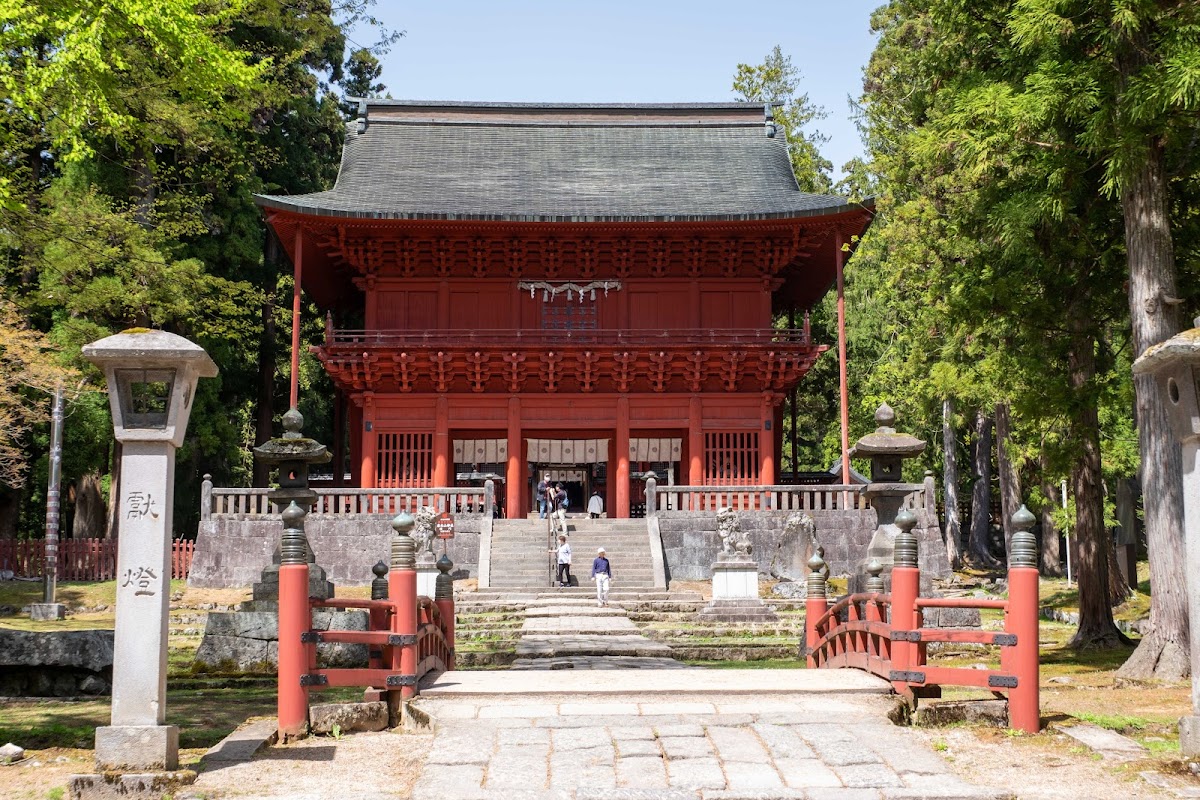
These structures are valuable as examples of shrine architecture at the northernmost tip of Honshu. They utilize cypress wood from Aomori Prefecture, and some have withstood the elements for 390 years. Currently, the main gate, worship hall, main shrine, inner gate, and sacred fence are all designated as important national cultural properties.
Status as the Ichinomiya (First Shrine) of Tsugaru Province
Iwaki-yama Shrine has long been revered as the Ichinomiya (first shrine) of Tsugaru Province. It is a central place of worship, serving as the guardian deity of agriculture and fishing, the god of Tsugaru’s development, and the dwelling place of the ancestral spirits of the local people. Its former shrine rank was Kokuhei Shosha (National Shrine of the Lower Rank), and it has maintained its religious and cultural importance in the Tsugaru region since the Meiji era.
Highlights and Buildings within the Shrine Grounds
The Magnificent Shrine Buildings Known as “Oku-Nikko”
The greatest highlight of Iwaki-yama Shrine is its magnificent group of shrine buildings, so beautiful that it has earned the nickname “Oku-Nikko” (the inner Nikko). Boasting a splendor comparable to Nikko Toshogu Shrine, the buildings, adorned with colorful carvings, are breathtakingly beautiful.
The shrine buildings are solidly constructed, and the intricate carvings throughout showcase the excellent techniques of the Edo period. The harmonious beauty of the vermilion paint, gold leaf, and vibrant decorations continues to captivate visitors.
The Gate Tower and Approach
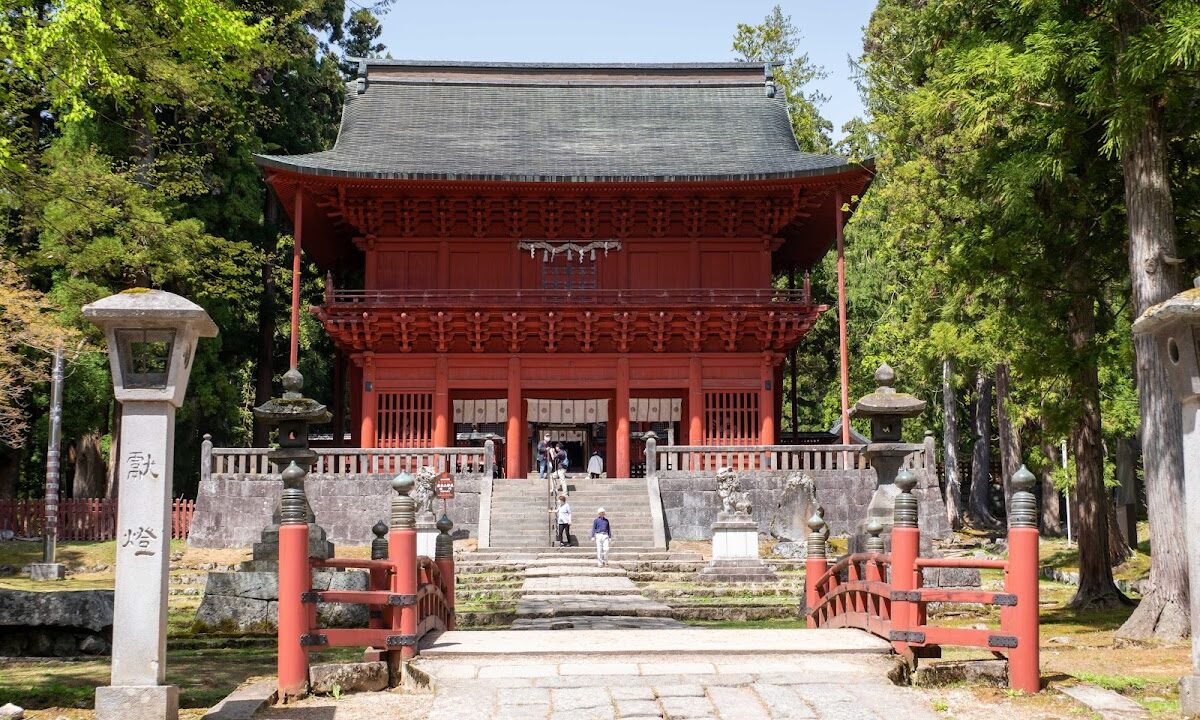
The approach to Iwaki-yama Shrine is enveloped in a solemn atmosphere surrounded by giant cedar trees. As you proceed along the approach, the first thing you see is the gate tower, built in 1628. Its imposing two-story structure possesses a dignity befitting an entrance to a sacred area. Passing through the main gate, you’ll find another gate, followed by the worship hall and the main sanctuary. This arrangement, while adhering to traditional shrine architecture, exudes a unique solemnity characteristic of Iwaki-san Shrine.
Distinctive Upward-Facing Komainu (Guardian Lion-Dogs)
Within the shrine grounds are the rare “upward-facing komainu,” a rarity nationwide. While typical komainu face forward, those at Iwaki-san Shrine are characterized by their upward gaze, as if looking up to the heavens. It’s said that they are either gazing up at the inner shrine at the summit of Mount Iwaki, or gazing up to the gods of heaven.
These unique komainu are a popular photo spot, with many visitors taking commemorative photos.
Three-Headed Dragon Water Basin
Particularly striking within the shrine grounds is the water basin shaped like a three-headed dragon. The clear water gushing from the mouths of the three dragon deities is spring water from Mount Iwaki, and can be used not only for purifying hands but also for drinking.
This sacred water is believed to bring blessings for fertility, and many worshippers drink it to absorb its power into their bodies. The cold, pure water allows one to feel the sacred energy of Mount Iwaki.
Main Shrine, Inner Gate, and Sacred Fence
Behind the worship hall is the main shrine, built in 1694 (Genroku 7). The main shrine is a building adorned with intricate carvings and decorations, and is designated as an Important Cultural Property. The inner gate and sacred fence surrounding the main shrine were also constructed around the same time, and together they create a solemn atmosphere for the sacred area.
These structures were built by combining the wealth and technical expertise of the Hirosaki Domain, and can be considered the pinnacle of shrine architecture in the Tsugaru region.
Treasures such as Hanging Lanterns and Japanese Swords
Numerous treasures, such as hanging lanterns and Japanese swords, donated by successive feudal lords and devotees, are preserved within the shrine grounds and buildings. These are valuable cultural assets that tell the story of Iwakiyama Shrine’s long history and the deep faith of its people.
Benefits and the Charm of a Power Spot
Guardian Deity of Agriculture and Fisheries
Iwakiyama Shrine has long been worshipped as the guardian deity of agriculture and fisheries. The abundant water flowing from Mount Iwaki nourishes the Tsugaru Plain, bringing bountiful harvests. Furthermore, Mount Iwaki, visible from the sea, served as a landmark for fishermen, ensuring safe voyages.
It is believed to grant blessings for abundant harvests and bountiful catches, and many people involved in agriculture and fisheries still visit the shrine today.
Benefits for Fertility and Safe Childbirth
The sacred water gushing from the three-headed dragon water basin is particularly believed to grant blessings for fertility. Couples and women from all over Japan visit to drink this sacred water and pray for conception and safe childbirth.
Power Spot for Good Fortune and Protection from Evil
Iwakiyama Shrine is also known as a powerful power spot. As a place where the energy of the sacred Mount Iwaki gathers, it is believed to grant blessings for good fortune, protection from evil, and purification.
The entire shrine grounds are filled with a sacred atmosphere, and many visitors testify that simply visiting cleanses the mind and body and revitalizes them. It is a sacred place worth visiting for those seeking spiritual power.
Oyama Sankei (Mountain Pilgrimage)
A Traditional Tsugaru Event
The most important event at Iwaki-yama Shrine is the “Oyama Sankei,” held primarily on the first day of the eighth month of the lunar calendar. This is a group pilgrimage to Mount Iwaki, a unique Tsugaru religious event praying for a bountiful harvest and family safety.
Participants, clad in white robes, ascend Mount Iwaki chanting “Saigi Saigi, Dokkoisa.” This chant means “Saigi” (lucky tree), signifying the climb in search of a tree that brings happiness.
A Form of Faith Continuing in Modern Times
Oyama Sankei remains a grand event attracting many participants even today. This year, the festival is scheduled to be held on September 9th (Mukoyama), 10th (Yoiyama), and 11th (Tsuitachiyama), demonstrating the deep faith of the people of Tsugaru.
The sight of people climbing the mountain at night, carrying torches, is fantastical and a beloved autumn tradition in Tsugaru.
Inner Shrine at the Summit of Mt. Iwaki
The inner shrine of Iwakiyama Shrine is located near the summit of Mt. Iwaki. Climbing to the 1625-meter-high summit is not easy, but many people aim for the inner shrine during pilgrimages to the mountain and during the climbing season.
The view from the summit is spectacular, offering panoramic views of the Tsugaru Plain, the Sea of Japan, and on clear days, even Hokkaido. It is believed that visiting the inner shrine brings even greater blessings.
Basic Information and Access
Location and Contact Information
- Address: 27 Terasawa, Hyakusawa, Hirosaki City, Aomori Prefecture
- Phone Number: Please contact the Iwakiyama Shrine office
- Official Website: Please check the latest information on the Iwakiyama Shrine official website
Access Methods
Access by Car
- Approximately 40 minutes from the Tohoku Expressway “Owani Hirosaki IC”
- Approximately 30 minutes from Hirosaki city center via the Prefectural Road Iwakiyama Line
- Parking: Free parking available (for visitors)
Access by Public Transportation
- Take the Konan Bus “bound for Karekidaira” from JR Hirosaki Station and get off at “Iwakiyama Shrine Mae” (approximately 40 minutes)
- Since the number of buses is limited, it is recommended to check the timetable in advance.
Visiting Hours and Admission Fee
- Visiting Hours: The shrine grounds are generally open for free worship (the shrine office is open during the daytime)
- Admission Fee: Free (for visiting the shrine grounds)
- Goshuin (Shrine Seal): Available at the shrine office (during reception hours)
Best Season to Visit
Iwakiyama Shrine displays different beauty in each of the four seasons.
- Spring (April-May): The refreshing air of melting snow and the beautiful new greenery
- Summer (June-August): The lush green grounds and cool spring water are very pleasant
- Autumn (September-November): The autumn leaves are beautiful, and the shrine is especially crowded during the mountain pilgrimage season
- Winter (December-March): The shrine buildings amidst the snowscape are fantastic, but be careful of heavy snowfall
We especially recommend visiting in autumn when the leaves are beautiful, and in September when the mountain pilgrimage takes place.
Nearby Tourist Attractions
Iwakiyama Skyline
Located about 20 minutes by car from Iwakiyama Shrine, the Iwakiyama Skyline is a toll road that allows you to drive up to the 8th station. From the 8th station, you can take a lift to the 9th station, and from there it takes about 40 minutes to reach the summit. Even those who are not confident in their physical fitness can reach near the summit relatively easily.
Hyakusawa Onsenkyo (Hyakusawa Hot Spring Village)
Near Iwakiyama Shrine is Hyakusawa Onsenkyo. The hot springs, using the groundwater of Mt. Iwaki, are perfect for relaxing after visiting the shrine. There are also day-trip bathing facilities, making it easy to enjoy the hot springs.
Hirosaki City Center
Located about 30 minutes by car from Iwakiyama Shrine, Hirosaki city center offers plenty of attractions, including Hirosaki Castle, Fujita Memorial Garden, and a cluster of Western-style buildings. Combining your visit to Iwakiyama Shrine with sightseeing in Hirosaki is highly recommended.
Manners and Precautions for Visiting a Shrine
Basic Manners for Visiting a Shrine
- Bow before passing through the torii gate: This is a sign of respect before entering the sacred area.
- Walk along the edge of the path: The center is considered the path of the gods.
- Purify yourself at the water basin: Purify your left hand, then your right hand, then your mouth.
- Two bows, two claps, one bow: Follow the general etiquette of a Shinto shrine.
Precautions when drinking the sacred water from the three-headed dragon
The sacred water is drinkable, but for hygiene reasons, please drink it by cupping your hands rather than drinking directly from it. Also, please refrain from filling up large quantities in plastic bottles and take them home, and be considerate of other visitors.
Regarding Photography
Photography is generally permitted within the shrine grounds, but there are areas where photography is prohibited, such as inside the main hall. Please follow the signs and be considerate of other visitors.
Visiting the Shrine in Winter
During winter, heavy snowfall makes the approach to the shrine slippery. When visiting in winter, it is important to wear warm clothing and non-slip shoes. Also, depending on snowfall, roads may be closed, so please check road conditions in advance.
Cultural Value of Iwaki-yama Shrine
The buildings of Iwaki-yama Shrine possess high cultural value as excellent examples of shrine architecture from the early to mid-Edo period.
Important Cultural Property Designated Buildings
- Romon Gate (Built in 1628)
- Haiden Hall (Built in 1640)
- Honden Main Hall (Built in 1694)
- Okumon Gate (Built in 1694)
- Mizugaki Fence (Built in 1694)
These are designated as Important Cultural Properties of Japan and are extremely valuable as a group of Edo-period shrine buildings located at the northernmost tip of Honshu.
Architectural Style Characteristics
The buildings of Iwaki-yama Shrine are characterized by their magnificent decorations influenced by Nikko Toshogu Shrine. The pictorial carvings utilize a variety of motifs, from flowers, birds, and mythical creatures, and are adorned in vibrant colors.
The buildings, constructed using cypress wood from Aomori Prefecture, are highly durable and have maintained their robustness even after 390 years. The unique fragrance and antibacterial properties of cypress wood have contributed to the preservation of the building.
Summary: The Charm of Iwaki-yama Shrine
Iwaki-yama Shrine, with its history of over 1200 years, is the Ichinomiya (first-ranked shrine) of Tsugaru Province and a representative shrine of Aomori Prefecture. It boasts numerous attractions, including its magnificent shrine buildings, often called “Nikko of the Inner Province,” a water basin with three-headed dragons, and unique upward-facing guardian lion-dogs.
It offers diverse blessings, including protection for agriculture and fishing, fertility and safe childbirth, good fortune, and protection from evil, making it a highly popular power spot. The unique religious practice of “Oyama-sankei” (mountain pilgrimage) conveys the deep faith of the people of Tsugaru.
Combined with its location at the foot of the sacred Mount Iwaki, the shrine grounds are filled with a sacred atmosphere, offering visitors deep inspiration and healing. It is relatively easy to access from Hirosaki city center, making it a must-visit spot when visiting Aomori Prefecture.
Iwaki-san Shrine, where history, architecture, faith, and nature harmonize, is truly the spiritual home of Tsugaru and a sacred place that embodies the essence of Japanese shrine culture.