
Kannon-in Kaga-dera Temple (Ishikawa Prefecture) Complete Guide: The History of the 73-meter-tall Golden Kannon and the Abandoned Theme Park
A gigantic golden statue of Kannon suddenly appears in the hilly area of Kaga City, Ishikawa Prefecture. Kannon-in Kaga-dera Temple, which houses this overwhelmingly impressive Kaga Daikannon, was once the core facility of a large-scale theme park called “Utopia Kaga no Sato.” This article provides a thorough explanation of the history, current state, highlights, and future prospects of this unique religious site.
What is Kannon-in Kaga-dera Temple?: Basic Information and Overview
Kannon-in Kaga-dera Temple is a Shingon Buddhist temple located at 1-1 Kannon-yama, Sakumi-cho, Kaga City, Ishikawa Prefecture. Its most distinctive feature is the Kaga Daikannon, boasting an overwhelming scale of 73 meters in height. This golden Kannon statue is visible from afar even while driving along National Route 8, making it a striking landmark in the Kaga Onsenkyo area.
Basic Facility Data
- Official Name: Shingon Sect Kannon-in Kaga-dera Temple
- Location: 1-1 Kannon-yama, Sakumi-cho, Kaga City, Ishikawa Prefecture
- Kannon Statue Height: 73 meters (including pedestal)
- Admission Fee: 500 yen for adults (as of 2024)
- Parking: Free parking available
- Nearest Station: Approximately 10 minutes by car from JR Kaga Onsen Station
The baby held in the arms of the Kannon statue is said to be comparable in size to the Great Buddha of Nara, and its scale is something that can only be truly appreciated by visiting in person. On cloudy days, the golden Kannon statue exudes a unique atmosphere, offering a different kind of grandeur than on sunny days.
Utopia Kaga no Sato: A Grand Dream of the Bubble Era
The Birth and Heyday of a Theme Park
The history of “Utopia Kaga no Sato” is indispensable when discussing Kannon Kaga-dera Temple. Built in 1987 (Showa 62), during the height of the bubble economy, Utopia Kaga no Sato was constructed by businessman Toshio Shimanaka at a massive cost of 28 billion yen.
Utopia Kaga no Sato was a unique multi-themed amusement park in Japan, themed around Buddhism. The facility offered a variety of attractions, including:
- Kaga Daikannon: The central symbol of the facility
- Buddhist Diorama: An exhibit expressing the Buddhist worldview
- Amusement Park Facilities: Attractions and entertainment facilities
- Hot Spring Facilities: Bathing facilities utilizing the blessings of the Kaga Onsenkyo hot spring area
- Hotel: Accommodation facilities
- Restaurant: Dining facilities
- Pool: Leisure pool
Upon opening, its innovative concept of fusing the seemingly complex theme of Buddhism with entertainment attracted much attention, making it a popular tourist destination, especially from the Kansai region. Its excellent location within the Kaga Onsenkyo area further contributed to its potential as a new tourist spot in Ishikawa Prefecture.
The Collapse of the Bubble Economy and the Decline of the Facility
However, with the collapse of the bubble economy in the 1990s, the situation changed dramatically. Maintaining enough visitors to recoup the massive 28 billion yen investment became difficult, and the business gradually deteriorated. In 1999 (Heisei 11), Utopia Kaga no Sato was forced to close, just 12 years after its opening.
Even after the theme park portion closed, the facility attempted to survive in a modified form. For a time, it was renamed “Esoteric Buddhist Zen Head Temple Toyosei-ji,” and in the 2010s, Oda Mudo served as the head priest. However, the amusement park, hotel, and hot spring facilities gradually became ruins.
Current Status of Kannon Kaga-ji Temple: Coexistence of Ruins and Faith
Facility Status as of 2024
As of 2024, only the Kaga Daikannon and the surrounding main hall area remain operating as Kannon-in Kaga-ji Temple. Most of the former theme park facilities are now ruins, creating a unique atmosphere.
Upon entering the grounds, the sight of the 73-meter-tall Kannon statue looming before you from the main entrance is breathtaking. The golden statue, gleaming with brilliance, is also equipped with aircraft obstruction lights, and at night, the flashing red lights create an eerie presence.
Areas Open to Visit
Currently, the following areas are mainly open to visitors:
- Kaga Daikannon: Visitors can enter the interior and view the inside of the Kannon statue.
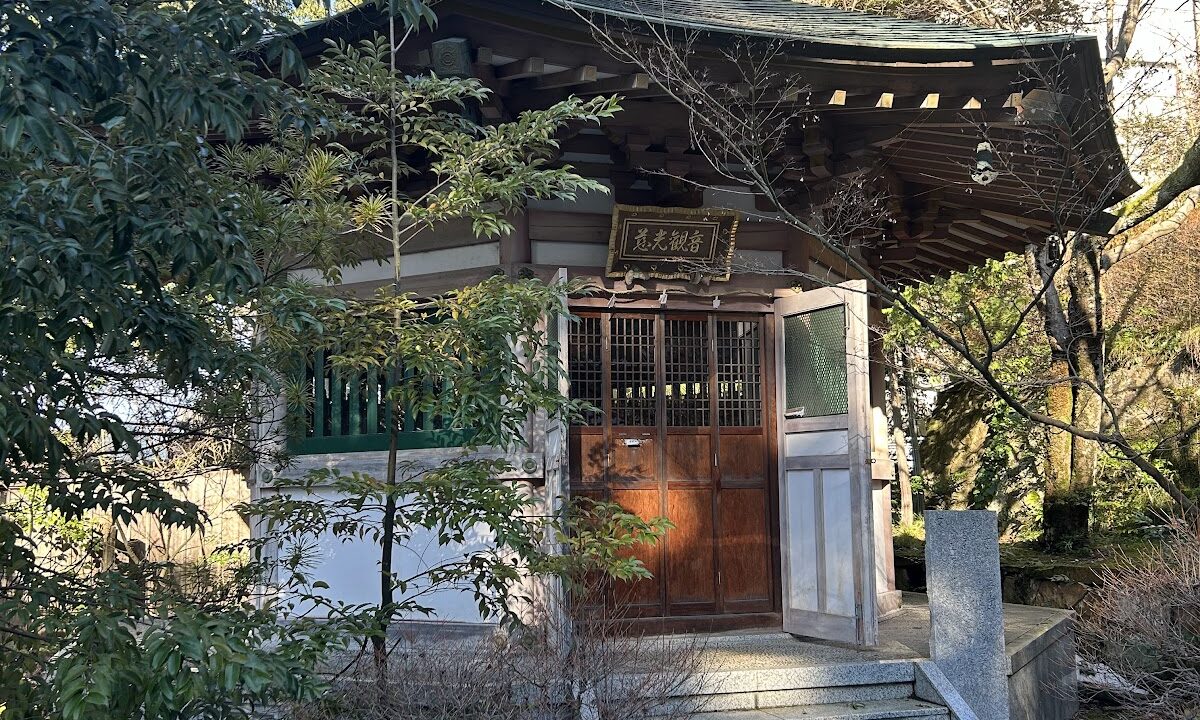
- Main Hall: Open as a worship space.
- Temple Grounds: A plaza where one can gaze upon the Kannon statue.
On the other hand, the former amusement park area, hotel building, and hot spring facilities are off-limits, and can only be viewed from a distance. These ruins have attracted attention among “ruin enthusiasts,” and their unique atmosphere often evokes feelings of “fear” and “creepiness.”
The Charm and Highlights of the Kaga Daikannon
Overwhelming Scale
The greatest charm of the Kaga Daikannon is undoubtedly its overwhelming scale. At 73 meters tall, it boasts one of the largest statues in Japan. The fact that the baby held by the Kannon statue alone is comparable in size to the Great Buddha of Nara speaks volumes about its immense scale.
Because it is built on a small hill, there are no tall buildings nearby, allowing its presence to be seen from afar. The golden giant statue, suddenly appearing in view while driving along National Route 8, leaves a powerful impression on first-time visitors.
The Origin of the Place Name Kannon-yama
One reason the Kaga Daikannon was built in this location is that the area has long been called “Kannon-yama” (Kannon Mountain). The concept of building a gigantic Kannon statue in modern times, utilizing the connection between the place name and Kannon worship, can be seen as a fusion of regional history and modern technology.
The Meaning of the Golden Kannon Statue
In Buddhism, gold symbolizes a pure heart free from worldly desires, and represents the compassion and wisdom of Buddha. The golden color of the Kaga Daikannon statue is not merely visually striking, but also carries Buddhist significance. The golden Kannon statue displays different expressions depending on the weather; on cloudy days, it exudes a solemn atmosphere, while on sunny days, it radiates a brilliant presence.
Access and Parking Information
Access by Car
The most convenient way to access Kannon Kaga-ji Temple is by car:
- Hokuriku Expressway: Approximately 15 minutes from Kaga IC
- National Route 8: Accessible from both Kanazawa and Fukui directions
- JR Kaga Onsen Station: Approximately 10 minutes by car
Free parking is available on the premises, and regular cars can park without any problems. However, only a portion of the vast parking lot from the former theme park era is in use, and some areas are dilapidated.
Access by Public Transportation
Access by public transportation is somewhat inconvenient:
- Nearest Station: JR Hokuriku Main Line, Kaga Onsen Station
- Travel from Station: Approximately 10 minutes by taxi; walking is difficult.
Since bus services from Kaga Onsen Station are limited, using a rental car or taxi is the most practical option. If you plan to combine your visit with other tourist spots in the Kaga Onsen area, renting a car is recommended.
Combining with Nearby Tourist Attractions
Kannon Kaga-dera Temple is located in the Kaga Onsenkyo area, so there are many tourist attractions nearby:
Kaga Onsenkyo
- Yamashiro Onsen: A historic hot spring town with attractions such as Koso-yu and Yakuoin Onsen-ji Temple
- Yamanaka Onsen: Enjoy the beauty of the Kakusenkei Gorge and hot springs
- Katayamazu Onsen: A hot spring resort spread along the shores of Shibayama Lagoon
Other Tourist Attractions
- Natadera Temple: A representative ancient temple of Ishikawa Prefecture
- Kaga Traditional Craft Village Yunokuni no Mori: A facility for experiencing traditional crafts
- Kitamaebune no Sato Museum: Learn about the history of maritime transport in Kaga City
The contrast between the unique atmosphere of Kaga Daikannon and the traditional hot spring towns and temples and shrines is also a charm of this region.
Redevelopment Plan and Future Prospects
Acquisition of the Area by a Real Estate Company
In the 2020s, it was reported that the area including Kannon Kaga-dera Temple was acquired by a Kyoto-based real estate company. This company is reportedly working to attract developers with the aim of redeveloping the vast site.
Possibilities for Redevelopment
How to utilize the facilities built at a total cost of 28 billion yen, and the 73-meter-tall Kannon statue, is a major challenge for the future. Possible options include:
- Regeneration as a Religious Facility: Strengthening the original temple functions
- Redevelopment as a Tourist Facility: Transformation into a ruins tourism facility or historical museum
- Conversion to a Multi-Purpose Facility: Revival of hot spring and hotel functions
- Preservation as a Cultural Property: Value as a legacy of the bubble economy era
For Kaga City and Ishikawa Prefecture, how to utilize this enormous heritage is a crucial issue from the perspective of regional development.
Points to Note and Manners When Visiting
Safety Precautions
When visiting Kannon Kagaji Temple, please note the following:
- No Entry to Ruined Areas: Do not enter restricted areas as they are dangerous.
- Check Your Footing: Some areas of the pavement are deteriorated.
- Consider the Weather: Some areas may be slippery in rainy weather.
Visiting Manners
As the temple is still operating as a religious facility, please observe the following manners:
- Be Quiet: Refrain from loud conversations.
- Photography: Check for areas where photography is prohibited, such as inside the main hall.
- Take Your Trash With You: Keep the grounds clean.
- Payment of Admission Fee: Pay the designated fee.
Regarding the “Scary” Reputation
Kannon Kagaji Temple has a reputation for being “scary” and “eerie.” This is due to the ruined facilities and the overwhelming presence of the giant Kannon statue. While some people visit as a haunted spot, please remember that it is an active religious facility and visit with respect.
Cultural and Historical Value of Kannon Kaga-ji Temple
A Legacy Conveying Memories of the Bubble Economy
Kannon Kaga-ji Temple is a valuable legacy that tells the story of the grand dreams and collapse of Japan’s bubble economy. The massive investment of 28 billion yen, the original concept themed on Buddhism, and the short 12-year operating period—all of these symbolize a certain era in Japan.
An Experiment in the Fusion of Religion and Entertainment
Utopia Kaga no Sato was an ambitious attempt to fuse religion and entertainment. While this experiment was a business failure, it is recorded as an interesting case in the history of Japan’s tourism industry and religious culture.
Significance in the Region
For Kaga City, the Kaga Daikannon is a complex entity. On the one hand, it is seen as a negative legacy with a huge ruin, but on the other hand, it is a unique landmark and part of the region’s identity. For drivers traveling along National Route 8, the golden Kannon statue is a powerful landmark that makes them truly feel they’ve arrived in Kaga.
Attractiveness as a Photo Spot
Photogenic Points
Kannon Kaga Temple is an attractive subject for photography enthusiasts:
- Front View: An angle looking up at the 73-meter-tall Kannon statue
- Distant View: The Kannon statue standing on a small hill and the surrounding landscape
- Sunset: The moment the golden Kannon statue is illuminated by the setting sun
- Contrast with Ruins: The contrast between the operating temple and the dilapidated facilities
Unique Atmosphere Perfect for Social Media
In recent years, photos of Kannon Kaga Temple have been attracting attention on social media platforms such as Instagram and Twitter. The extraordinary sight of the gigantic golden Kannon statue has a unique atmosphere that is perfect for social media. However, consideration should be given to avoiding disturbing other visitors when taking photos.
Summary: The Value of Visiting Kannon-in Kaga-dera Temple
Kannon-in Kaga-dera Temple is more than just a tourist attraction. The overwhelming presence of the 73-meter-tall golden Kannon statue, the remnants of the grand dream of Utopia Kaga no Sato, and its continued function as a religious facility—all these elements are intricately intertwined, creating a unique space unlike any other.
Memories of the bubble economy era, traces of a massive 28 billion yen investment, and a place of faith that continues to this day—Kannon-in Kaga-dera Temple is a valuable witness to modern Japanese history and a distinctive landmark in Kaga City, Ishikawa Prefecture.
When visiting the Kaga Onsenkyo area, be sure to visit this colossal golden Kannon. Its overwhelming scale and the space imbued with its complex history will surely be an unforgettable experience. If you’re intrigued by the golden Kannon statue visible from National Route 8, it’s well worth a detour to actually go and see it up close.
While the future of the redevelopment remains uncertain, the Kaga Daikannon itself will continue to stand in the land of Kaga, leaving a powerful impression on visitors. As a hidden gem of Ishikawa Prefecture, or as a legacy of the bubble economy era, Kannon Kaga-dera Temple is a facility with multifaceted value.

