
Kashima Shrine (Omitama City, Ibaraki Prefecture) Complete Guide | Thorough Explanation of Deities, Access, and History
Omitama City, Ibaraki Prefecture, is home to several Kashima Shrines, each deeply intertwined with the local history. This article comprehensively explains the main Kashima Shrines in Omitama City, providing useful information for visitors, including their enshrined deities, festivals, access methods, and historical background.
About Kashima Shrines in Omitama City
Omitama City is located in the central part of Ibaraki Prefecture, a region stretching northwest of Lake Kasumigaura. Several Kashima Shrines exist in this area, each long revered as the guardian shrine of the region.
Major Kashima Shrines include the Kashima Shrine in Shimobaba, the Miyawaki Kashima Shrine in Shimoyoshikage, and the Kashima Shrine in Hatori, all of which are important shrines demonstrating the spread of Kashima faith.
Kashima Faith and Omitama City
Kashima faith is a faith centered around Kashima Shrine in Kashima City, Ibaraki Prefecture, and enshrines the warrior god Takemikazuchi-no-Mikoto. It is said that Kashima Shrine in Omitama City was also founded by inviting a divided spirit of this Kashima deity.
According to tradition, the Kashima deity entered Lake Kasumigaura from the East Sea, traveled up the Sonobe River, and arrived in various places, illustrating the deep-rooted Kashima faith in this region.
Deities Enshrined
The main deities enshrined at Kashima Shrine in Omitama City are as follows:
Main Deity: Takemikazuchi-no-Mikoto
Takemikazuchi-no-Mikoto is known as the strongest warrior god in Japanese mythology and is recorded in the Kojiki and Nihon Shoki as the god who negotiated with Okuninushi-no-Mikoto during the transfer of the land. He also possesses characteristics as a god of swords and thunder, and is widely worshipped as a god of martial arts and a god of good fortune in competitions.
Divine Virtues
- Prayer for Long-Lasting Military Fortune and Guaranteed Victory: Due to his characteristics as a god of war, prayers are offered for success in competitions and sports.
- Protection from Evil and Disaster: His powerful divine power purifies and dispels evil spirits.
- Safety of Family and Protection of the Community: As the guardian deity of the entire community, he protects the entire area.
- Traffic Safety: He is also worshipped as a god who protects travelers safely.
List of Festivals and Events (2026)
Kashima Shrine in Omitama City holds various festivals and events throughout the year. The following is a general schedule of annual festivals.
Main Annual Festivals
January
- New Year’s Day Festival (January 1st): Celebrating the New Year and praying for peace throughout the year
- New Year’s Day Festival: Praying for national peace and the prosperity of the parishioners at the beginning of the year
February
- National Foundation Day Festival (February 11th): A festival coinciding with National Foundation Day
- Harvest Festival: A grand spring festival praying for a bountiful harvest
April
- Spring Festival: Celebrating the arrival of spring and praying for the development of the region
July
- Summer Purification Ceremony: A Shinto ritual to cleanse away the sins and impurities accumulated over the past six months
September-October
- Autumn Festival: The most important festival, giving thanks for the harvest and praying for the prosperity of the region
- Divine Procession Festival: Sometimes a portable shrine procession takes place
November
- Harvest Festival (November 23rd): Offering new grain to the gods and giving thanks for the harvest
- Shichi-Go-San Pilgrimage: A period of worship to celebrate the growth of children.
December
- Great Purification Ceremony (December 31st): Purification of sins and impurities accumulated throughout the year.
- New Year’s Eve Festival: A Shinto ritual to mark the end of the year.
*Please note that the dates of festivals may change depending on the year. Please check the latest information before visiting. For actual dates and times, please contact the relevant facility or the Ibaraki Prefectural Shrine Association.
Location
The main locations of Kashima Shrines in Omitama City are as follows:
Kashima Shrine (Shimobaba)
Address: 530 Shimobaba, Omitama City, Ibaraki Prefecture
The Kashima Shrine in Shimobaba was formerly known as “Baba no Miya” and was revered as the guardian shrine of the entire area. It is said to have been founded in 807 AD, and the current shrine building was rebuilt in 1883.
In 1457 (Chōroku 1), Lord Sonobe Kanefusa, the lord of Ogawa Castle, donated rice fields to the shrine, and successive lords of the castle followed suit, continuing to show reverence. In 1873 (Meiji 5), it was designated a local shrine.
The shrine grounds feature unusual ceramic guardian lion-dogs that welcome visitors.
Kashima Shrine (Shimoyoshikage/Miyawaki)
Address: 899 Shimoyoshikage, Omitama City, Ibaraki Prefecture (Miyawaki)
Commonly known as “Miyawaki Kashima Shrine,” it is distinguished from other shrines with the same name. It can be accessed from National Route 50 (Melon Road). From near the “Kaiya Community Center” or the “Omitama City Fire Department 11th Division,” take the road west and proceed north to reach the shrine.
It is considered a historical shrine, listed in the Engishiki Jinmyōchō (a list of shrines compiled in the Heian period), and has long been a center of worship in this region.
Kashima Shrine (Hatori)
Address: 916 Hatori, Omitama City, Ibaraki Prefecture
Kashima Shrine is located in the Hatori area and is within walking distance of Hatori Station. It is a beloved local shrine for the residents of the Hatori area.
Nearest Station/Line
To access Kashima Shrine in Omitama City by train, the following station is the nearest:
JR Joban Line
Hatori Station
- To Kashima Shrine (Hatori): Approximately 16 minutes on foot (approx. 1.3 km)
- To Kashima Shrine (Shimobaba): Approximately 30 minutes on foot, or taxi recommended
- To Kashima Shrine (Shimoyoshikage): Taxi recommended
Hatori Station is a major station in Omitama City, and local trains on the Joban Line stop there. It can be accessed from Ueno via Toride Station.
Ishioka Station
- To each Kashima Shrine: Take a taxi or bus.
From Ishioka Station, there are bus routes to Omitama City.
Access by Car
Joban Expressway
- Approximately 10-15 minutes from Ishioka-Omitama Smart Interchange
- Approximately 15-20 minutes from Chiyoda-Ishioka Interchange
National Route 50
- Located along Melon Road, easily accessible from Mito and Tsuchiura.
Many shrines have parking lots for visitors, but they may be crowded during festival periods.
Nearest Bus Stops and Routes
The following bus routes are available as public transportation within Omitama City.
Ibaraki Kotsu Bus
Ishioka Station to Ogawa Area
- Bus stop near Shimobaba
- Convenient access to Kashima Shrine (Shimobaba)
Omitama City Community Bus “Minore”
Omitama City operates the “Minore” community bus, connecting various parts of the city.
Routes
- Hatori Route
- Tamasato Route
- Ogawa Route
Routes and timetables can be checked on the official Omitama City website. It is recommended to check the route in advance.
*Since the number of buses is limited, it is recommended to check the timetable in advance and plan accordingly.
History and Origins
History of Founding
Many Kashima Shrines in Omitama City are said to have been founded during the Daido era (806-810) in the early Heian period. In particular, the Kashima Shrine in Shimobaba is said to have been founded in 807 AD, giving it a history of over 1200 years.
According to tradition, the great deity of Kashima entered Lake Kasumigaura from the East Sea, traveled up the Sonobe River, and arrived in Kanawada, Baba Village. This tradition is interesting as it demonstrates the transmission of faith through water transport in ancient times.
Medieval Reverence
Since Lord Sonobe Kanefusa, lord of Ogawa Castle, donated rice fields to the shrine in 1457 AD during the Muromachi period, successive castle lords continued to revere it. Even during the Sengoku period, the Kashima Shrine, which enshrines a god of war, attracted the faith of samurai families and functioned as a spiritual pillar of the region.
Modern Era
In 1873 (Meiji 5), the Kashima Shrine in Shimobaba was designated a local shrine, officially recognizing its importance. In 1883 (Meiji 16), the shrine building was renovated, resulting in its current form.
Through the Showa and Heisei eras, and into the Reiwa era, it continues to attract the faith of parishioners and visitors as the guardian shrine of the region.
Highlights of the Shrine Grounds
Ceramic Komainu (Shimobaba)
Kashima Shrine in Shimobaba houses rare ceramic komainu (guardian lion-dogs). They have a different charm from the typical stone komainu, delighting visitors.
Shrine Architecture
The shrine building, renovated during the Meiji period, is a valuable structure that preserves the architectural style of that time. Its simple yet dignified appearance evokes a long history.
Nature on the Shrine Grounds
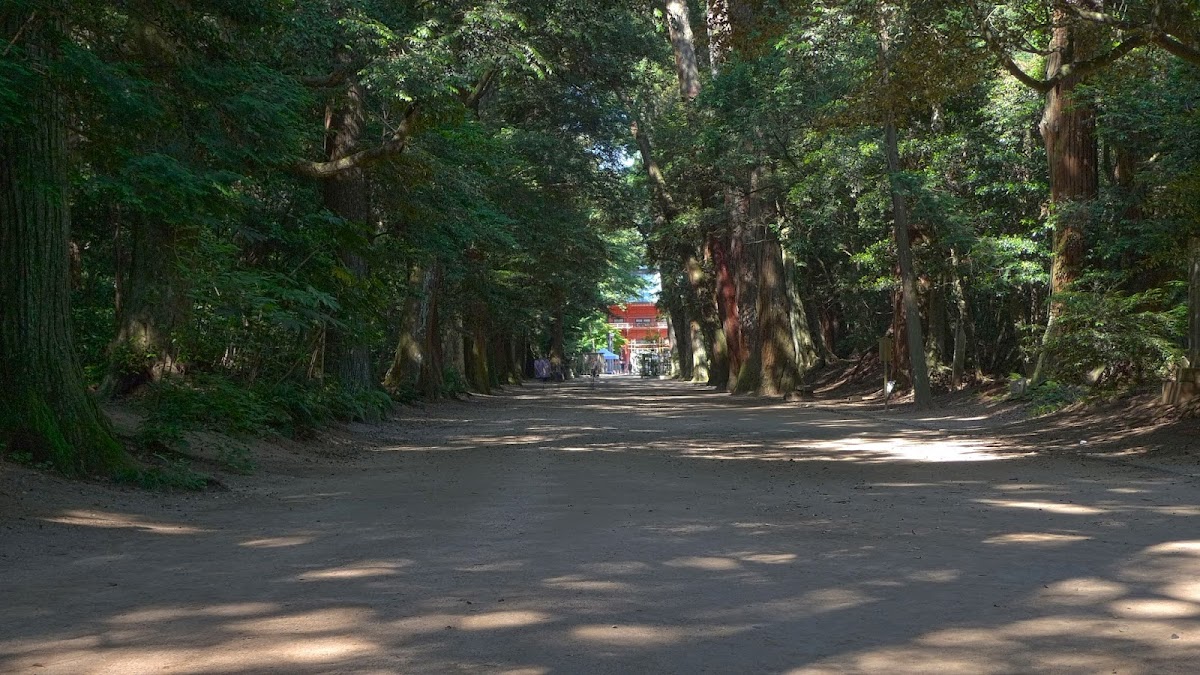
Each shrine grounds feature ancient trees and seasonal flowers, allowing visitors to enjoy the beauty of each season. The scenery is particularly beautiful during the autumn foliage and spring greenery seasons.
Manners and Etiquette for Visiting a Shrine
Here are the basic manners for visiting Kashima Shrine.
Visiting Etiquette
- Bow before passing through the torii gate: As a sign of respect before entering the sacred area.
- Purify yourself at the water basin: Purify your left hand, right hand, and mouth in that order, and finally purify the handle of the ladle.
- Walk along the edge of the path: The center is considered the path of the gods.
- Manners in front of the main hall: The basic procedure is two bows, two claps, and one bow.
- Bow upon leaving: After leaving the torii gate, turn around and bow.
Attire for Visiting a Shrine
There are no specific regulations, but it is desirable to wear clothing that reflects the sacred nature of the place. If attending a festival or ceremony, more formal attire is appropriate.
About Goshuin (Shrine Seals)
The issuance of Goshuin varies depending on the shrine. Since there may not always be a resident Shinto priest, it is recommended that those wishing to receive a Goshuin (temple/shrine stamp) check in advance.
While the number of shrines offering electronic Goshuin has increased in recent years, please inquire with the Kashima Shrine in Omitama City or the Ibaraki Prefectural Association of Shinto Shrines regarding their availability.
Nearby Tourist Attractions
Highlights of Omitama City
Ibaraki Airport
- Located in Omitama City, it is the gateway to the skies of Ibaraki Prefecture.
- Popular for its views from the observation deck.
Sora no Eki Sora-ra
- A tourist facility adjacent to Ibaraki Airport.
- Enjoy local specialties and gourmet food.
Lake Kasumigaura
- The second largest lake in Japan by surface area.
- Enjoy cycling and strolling along the waterfront.
Nearby Shrines and Temples
Hitachi no Kuni Soja-gu (Ishioka City)
- A prestigious shrine as the main shrine of Hitachi Province.
- Approximately 20 minutes by car from Omitama City.
Kashima Jingu (Kashima City)
- The head shrine of the Kashima faith.
- Approximately 40 minutes by car from Omitama City.
About Omitama City
Omitama City was formed in 2006 through the merger of Ogawa Town, Minori Town, and Tamasato Village. Located almost in the center of Ibaraki Prefecture, it is known as a region with a thriving agricultural industry.
In particular, it boasts the highest egg production in Japan and is promoting itself as the “Egg Town.” Furthermore, due to the location of Ibaraki Airport, it is also attracting attention as a base for tourism.
Access Map and Route Confirmation
To access each Kashima Shrine, search for “Kashima Shrine, Omitama City” in your smartphone’s map app and select your desired shrine to check the route from your current location.
If using a car navigation system, please search by address or phone number (some shrines may not be registered).
Precautions When Visiting
- Visiting Hours: Visiting during the daytime is generally recommended. Please refrain from visiting at night.
- Parking: Parking spaces may be limited. Special attention during festival periods
- Photography: Photography is permitted on the shrine grounds, but please be considerate of other worshippers.
- Bringing pets: It is generally considered good manners to refrain from bringing pets.
- Garbage: Please take all your trash with you.
Summary
Kashima Shrine in Omitama City, Ibaraki Prefecture, is a historical shrine that demonstrates the spread of the Kashima faith, which has continued since ancient times. It enshrines Takemikazuchi-no-Mikoto as its main deity, and offers divine blessings for military success, protection from evil, and family safety.
Several Kashima Shrines are scattered throughout the city, each cherished as the guardian shrine of its region. The nearest station is Hatori Station on the JR Joban Line, and it is also easily accessible by car.
Various festivals are held throughout the year, and the Autumn Festival, in particular, is an important event for the community. When visiting, observing basic etiquette and praying quietly and sincerely will allow you to forge a good connection with the deity.
When you visit Omitama City, be sure to pay your respects at Kashima Shrine and experience its long history and the faith of the local people.


