Kasuga Shrine (Ootakiyama, Bizan-cho, Tokushima City, Tokushima Prefecture) Complete Guide
Kasuga Shrine, located on Ootakiyama in Bizan-cho, Tokushima City, Tokushima Prefecture, is a historic shrine that enshrines the same four deities as Kasuga Taisha in Nara Prefecture. Situated in the scenic location of Ootakiyama at the eastern foot of Mount Bizan, it has been deeply revered by successive lords of the Hachisuka clan as the guardian shrine of Tokushima Castle town. This article provides detailed information you should know before visiting, including the history of Kasuga Shrine, its enshrined deities, highlights of the grounds, information on goshuin (shrine stamps), and access methods.
Basic Information about Kasuga Shrine
Official Name: Kasuga Shrine
Location: 1 Otakiyama, Bizan-cho, Tokushima City, Tokushima Prefecture 770-0908
Phone Number: 088-622-5733
Shrine Rank: Former Prefectural Shrine
Main Deities: Takemikazuchi-no-Mikoto, Iwainushi-no-Mikoto, Amenokoyane-no-Mikoto, Himegami
Kasuga Shrine is characterized by its easy access from the city center, being approximately 11 minutes (about 900m) on foot from Tokushima Station. It is a valuable “shrine that can be visited on foot” in Tokushima Prefecture, where transportation infrastructure is limited.
History of Kasuga Shrine
Origins and the Tomita-sho Era
The origins of Kasuga Shrine can be traced back to Tomita-sho, a territory of the Kasuga Shrine in Yamato Province (present-day Nara Prefecture). Tomita-sho refers to the area around Irida Village, Myoto District, Awa Province (present-day Irida-cho, Tokushima City), and was a prosperous area as a manor of the Fujiwara clan. The establishment of a Kasuga shrine in this area, where a divided spirit was invited from Kasuga Taisha in Nara, is considered the beginning of the shrine.
The Fujiwara clan revered Kasuga Taisha as their tutelary deity, and it was a natural progression to enshrine a divided spirit of Kasuga Taisha in their manor, Tomita-sho. It is believed that the Kasuga shrine during this period attracted the faith of the local people as the guardian deity of the manor.
Relocation in 1586
The most important turning point in the history of Kasuga Shrine was the relocation in 1586 (Tensho 14). In this year, Hachisuka Iemasa, who became the lord of Awa Province by order of Toyotomi Hideyoshi, entered Tokushima and began construction of Tokushima Castle.
When constructing Tokushima Castle, Hachisuka Iemasa relocated Kasuga Shrine to its current location on Otakiyama, at the eastern foot of Mount Bizan, as the guardian shrine of the castle town. This was not merely a relocation of the shrine; it is believed that Iemasa had a clear intention to position Kasuga Shrine as the spiritual pillar of the new castle town.
One theory suggests that the shrine was originally located in Tamiya Village, Myōtō District, and the existence of multiple traditions indicates that Kasuga worship was rooted in several regions within Awa Province.
Reverence during the Hachisuka Domain
After the relocation, Kasuga Shrine received deep reverence from successive generations of the Hachisuka family, the lords of the Tokushima Domain. It was counted as one of the “Five Shrines of Tokushima City,” and the lords themselves would visit the shrine during official domain festivals, establishing its position as the domain’s guardian deity.
Throughout the Edo period, Kasuga Shrine functioned as an important religious institution in the castle town of Tokushima, attracting widespread devotion not only from samurai but also from townspeople. Shōfuku-ji Temple served as its affiliated temple, and it operated as a syncretic Shinto-Buddhist shrine.
Changes After the Meiji Era
With the Meiji-era separation of Shinto and Buddhism, the relationship with Shōfuku-ji Temple, its former affiliated temple, was severed. In 1871 (Meiji 4), it was ranked as a local shrine, and later elevated to a prefectural shrine.
In the Showa era, Kunitamahiko Shrine, which had been located within Tokushima Castle, was relocated to the grounds of Kasuga Shrine and enshrined as a subsidiary shrine. Kunitamahiko Shrine enshrines the ancestors of the Hachisuka family, and this relocation further strengthened the historical connection between Kasuga Shrine and the Hachisuka family.
Today, Kasuga Shrine continues to welcome many worshippers as the local tutelary shrine and an important cultural asset that conveys the history of Tokushima City.
About the Deities Enshrined
Kasuga Shrine enshrines the same four deities as Kasuga Taisha Shrine in Nara. These deities are collectively known as “Kasuga-shin” and each possesses different divine virtues.
Takemikazuchi-no-Mikoto
A god of war based at Kashima Shrine in Hitachi Province (present-day Ibaraki Prefecture). He appears in the Kojiki and Nihon Shoki as the main character in the myth of the transfer of the land, where he pacified Ashihara-no-Nakatsukuni (Japan) at the command of Amaterasu-Omikami. He is worshipped as the god of martial arts and victory, and also possesses characteristics of a thunder god.
Iwai-nushi-no-Mikoto (Futsunushi-no-Mikoto)
A god based at Katori Shrine in Shimosa Province (present-day Chiba Prefecture), he is a god of war who, together with Takemikazuchi-no-Mikoto, accomplished the transfer of the land. He is revered as the god of swords and martial arts. Saishu-no-Mikoto is also known as Futsunushi-no-Mikoto.
Amenokoyane-no-Mikoto
This deity is considered the ancestral god of the Fujiwara clan and is known for the myth of reciting prayers when Amaterasu-Omikami hid in the Heavenly Rock Cave. He is worshipped as the god of Kotodama (the power of words), the god of learning, and the god of wisdom. The Fujiwara clan considered Kasuga Taisha Shrine their tutelary shrine because they worshipped Amenokoyane-no-Mikoto as their ancestral god.
Himegami
This deity is believed to refer to Amenomitsutamateruhime-no-Mikoto, the consort of Amenokoyane-no-Mikoto. She is worshipped as the guardian deity of women and the god of matchmaking.
These four deities possess a wide range of divine virtues, including military fortune, national peace and security, academic success, and family safety, and have been revered as comprehensive guardian deities.
Highlights of the Shrine Grounds
Shrine Architecture
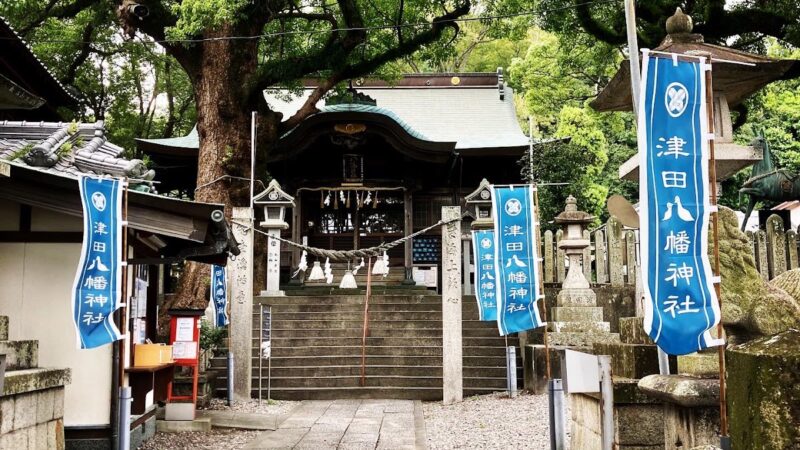
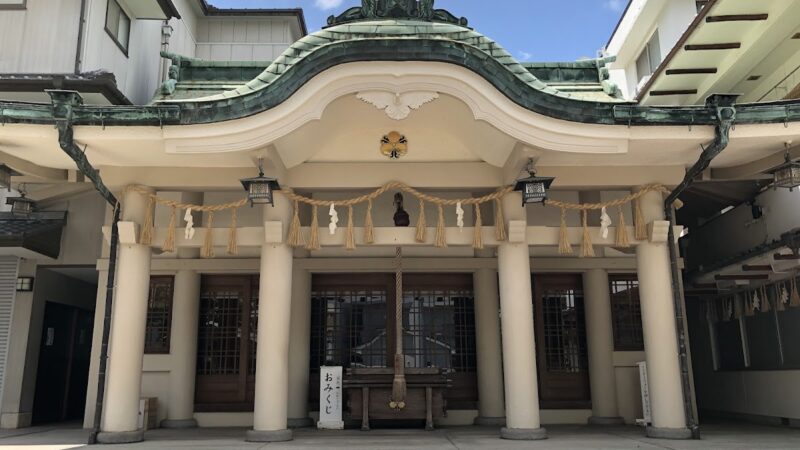
The shrine buildings of Kasuga Shrine are arranged to take advantage of the topography at the foot of Mount Bizan. The main hall is based on the Kasuga-zukuri style, demonstrating its architectural connection to Kasuga Taisha Shrine in Nara. From the worship hall, you can overlook the city of Tokushima and imagine the landscape of the former castle town.
Subsidiary Shrine: Kunizuhiko Shrine
Kunizuhiko Shrine, relocated from Tokushima Castle during the Showa era, is an important subsidiary shrine of Kasuga Shrine. It enshrines the ancestral deity of the Hachisuka family and is a valuable presence that conveys the history of the Tokushima domain. The existence of Kunizuhiko Shrine strengthens Kasuga Shrine’s character not merely as a branch shrine of Kasuga Taisha, but as a shrine that embodies the local history of Tokushima.
Kasuga Water (Mount Bizan Spring Group)
Within the grounds of Kasuga Shrine, “Kasuga Water,” one of the Mount Bizan springs, gushes forth. Mount Bizan has long been known for its abundant spring water, playing a vital role as a water source for Tokushima Castle town. Kasuga-mizu (Kasuga Spring Water) continues to produce crystal-clear water, further enhancing the sacred atmosphere of the shrine.
The spring water from Mount Bizan is of excellent quality and was once widely used as a source of water for daily life in the castle town. Even today, it remains a beloved spot for local residents, and a must-visit when visiting Kasuga Shrine.
Relationship with Mount Bizan
Ootaki-yama, where Kasuga Shrine is located, is situated at the eastern foot of Mount Bizan. Mount Bizan is a 290-meter-high mountain and is a beloved symbol of Tokushima City. The name “Bizan” (meaning “eyebrow mountain”) is said to originate from its resemblance to an eyebrow when viewed from any direction.
A hiking trail from Kasuga Shrine to Mount Bizan is also maintained, allowing for a combination of worship and nature walk. From the summit of Mount Bizan, a spectacular view unfolds, encompassing Tokushima city, the Yoshino River, and the Kii Channel, making it well worth visiting in conjunction with a visit to Kasuga Shrine. ## Information on Goshuin (Shrine Seals) and Goshuincho (Shrine Seal Books)
Kasuga Shrine offers Goshuin. Goshuin are popular among many visitors as proof of worship and as a way to forge a connection with the shrine.
Features of the Goshuin
The Kasuga Shrine Goshuin features the calligraphy of “Kasuga Shrine” and the shrine’s seal. Its design reflects its connection to Kasuga Taisha in Nara, making it a must-have for anyone visiting shrines in Tokushima City.
If you wish to receive a Goshuin, please inquire at the shrine office after your visit. Even if you do not have a Goshuincho, you may be able to receive a pre-written Goshuin. However, it is recommended to call ahead to confirm availability, as it may not be possible during the shrine office’s opening hours or when the chief priest is absent.
Etiquette for Visiting Shrines
Goshuin are not merely commemorative stamps, but proof of worship. Always complete your prayers before receiving a Goshuin. Furthermore, it is considered desirable to use separate goshuincho (stamp books) for shrines and temples.
Access and Transportation Information
Access by Public Transportation
Walking from JR Tokushima Station
It is approximately 900 meters from Tokushima Station, about an 11-minute walk. Exit the station and head southeast towards Mount Bizan. The route is relatively easy to access as it follows flat roads in the center of Tokushima City.
Directions from Tokushima Station:
- Exit JR Tokushima Station and head east.
- Follow the signs towards Mount Bizan.
- Enter Bizan-cho and head towards the sign for Mount Otaki.
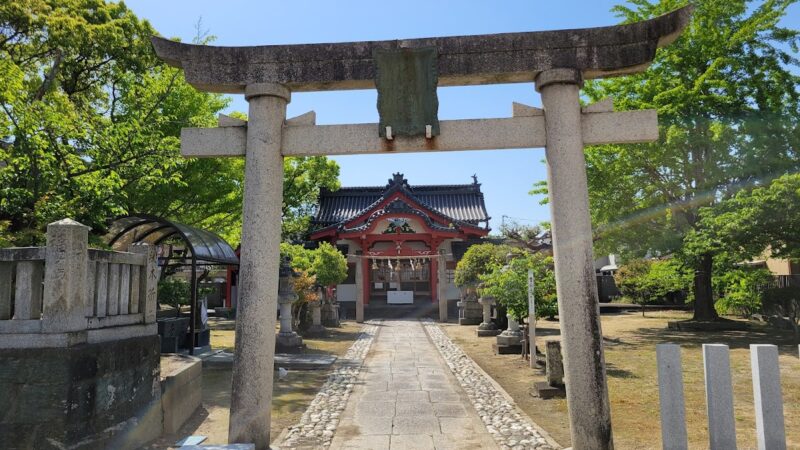
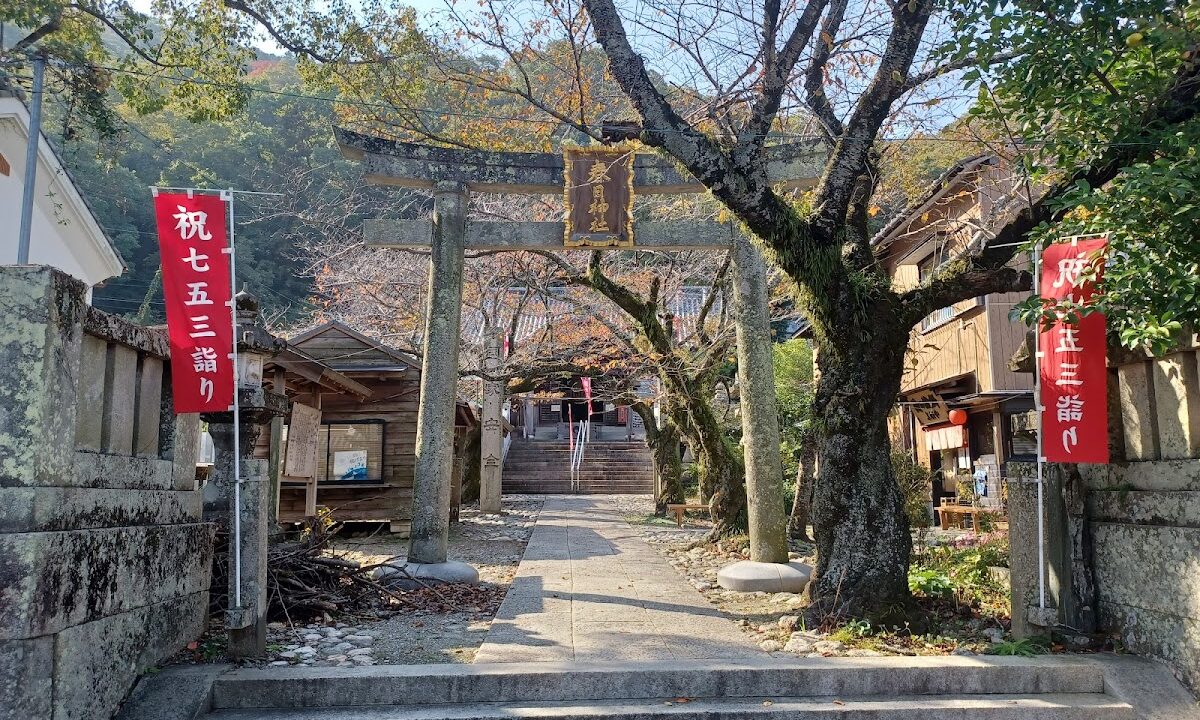
- After passing through the residential area, you will see the torii gate of Kasuga Shrine.
By Bus
If using Tokushima City buses, it is a few minutes’ walk from the nearest bus stop. However, since it is a short distance from Tokushima Station, walking is recommended.
Access by Car
From the Tokushima Expressway
It’s about 15 minutes from the Tokushima Interchange. Head towards Tokushima city center and aim for Bizan-cho.
Parking
The shrine has parking spaces for visitors, but the number of spaces is limited. During busy periods such as New Year’s, we recommend using public transportation. There are also coin-operated parking lots nearby, so please consider using those as well.
Nearby Tourist Attractions
When visiting Kasuga Shrine, we recommend also visiting nearby tourist attractions.
Tokushima Castle Ruins
Located north of Tokushima Station, the Tokushima Castle Ruins are the remains of a castle built by Hachisuka Iemasa. Currently, it is maintained as a park, with stone walls, moats, and gardens remaining. It was the residence of Hachisuka Iemasa, who relocated Kasuga Shrine, and you can feel the historical connection.
Bizan Ropeway
You can access the summit of Mount Bizan by ropeway. From the mountaintop observation deck, you can enjoy a spectacular view of Tokushima city, and on a clear day, you can even see Awaji Island and the Kii Peninsula.
Awa Odori Hall
This facility allows you to enjoy Awa Odori, Tokushima’s representative traditional performing art, all year round. It’s within walking distance of Kasuga Shrine, allowing you to experience Tokushima’s culture.
Annual Events and Festivals
Kasuga Shrine holds various festivals and events throughout the year.
Grand Festival
The Grand Festival, the most important festival of Kasuga Shrine, has been cherished by the local people for centuries. Traditional Shinto rituals, such as the portable shrine procession and Kagura (sacred dance) performances, are held.
New Year’s Visit
Many worshippers visit the shrine for their first shrine visit of the new year. Its location in the heart of Tokushima city makes it a familiar New Year’s visit spot for residents. It gets especially crowded from New Year’s Day to the third day, so it’s recommended to visit with plenty of time to spare.
Other Events
Various Shinto rituals are held throughout the year, including the Setsubun Festival, the Summer Purification Ceremony, and the Autumn Festival. Please contact the shrine directly for detailed dates.
Cultural Significance of Kasuga Shrine
Status as one of the Five Central Shrines of Tokushima City
Kasuga Shrine is counted as one of the “Five Central Shrines of Tokushima City.” The Five Central Shrines refer to five shrines that were particularly important within the Tokushima castle town, including Kasuga Shrine, Kotoshironushi Shrine, and Hachiman Shrine. These shrines received the reverence of the feudal lords and functioned as spiritual pillars of the castle town.
Relationship with Kasuga Taisha Shrine
Kasuga Taisha Shrine in Nara is known as the tutelary shrine of the Fujiwara clan and as the head shrine of all Kasuga Shrines nationwide. Kasuga Shrine (Tokushima), as a branch shrine, has a deep relationship with Kasuga Taisha Shrine and, by enshrining the same four deities, is part of a network of faith connecting Nara and Tokushima.
The shrine’s origins in Tomita-sho, a manor belonging to the Fujiwara clan, make it a valuable example illustrating the relationship between the manorial system and Shinto worship from ancient to medieval times.
Center of the Local Community
Even today, Kasuga Shrine remains the tutelary shrine of the region, attracting the faith of surrounding residents. During festivals, local residents cooperate to support the religious ceremonies, forming a community centered around the shrine. Even in today’s increasingly urbanized world, the preservation of these traditional community ties is a significant cultural value of Kasuga Shrine.
Points to Note When Visiting a Shrine
Etiquette for Visiting a Shrine
The basic etiquette for visiting a shrine is as follows:
- Bow before passing through the torii gate: This is a courtesy before entering the sacred area.
- Purify yourself at the water basin: Purify your left hand, right hand, and mouth in that order.
- Walk along the edge of the path: The center is considered the path of the gods.
- Etiquette at the main hall: The basic procedure is two bows, two claps, and one bow.
Recommended Time to Visit
Because Kasuga Shrine is located at the foot of Mount Bizan, visiting in the refreshing morning air is especially recommended. There are fewer visitors in the early morning, allowing for quiet prayer. Also, the sunset over Mount Bizan at dusk is beautiful, creating a magical atmosphere.
Regarding Attire
No special attire is required, but please dress appropriately for a sacred place. It is best to avoid overly revealing or flashy clothing.
Summary of the Charms of Kasuga Shrine
Kasuga Shrine (Ootakiyama, Bizan-cho, Tokushima City) is a historic shrine that received a divided spirit from Kasuga Taisha in Nara. Since its relocation by Hachisuka Iemasa, it has played an important role as the guardian shrine of Tokushima Castle town.
The four enshrined deities possess a wide range of divine virtues, including military fortune, academic success, and matchmaking, attracting the faith of many people. Within the shrine grounds, Kasuga-mizu, one of the Bizan spring waters, flows, and the subsidiary shrine, Kunizuhiko Shrine, preserves the history of the Tokushima domain.
Despite its convenient location within walking distance of Tokushima Station, the tranquil environment embraced by the nature of Bizan offers an ideal place to escape the hustle and bustle of the city and find peace of mind. It is a shrine worth visiting for various purposes, whether you are a worshipper seeking a Goshuin (shrine stamp), interested in history, or simply want to enjoy nature.
When you visit Tokushima, be sure to visit Kasuga Shrine and experience the unique atmosphere woven from its long history, abundant nature, and the faith of the local people. In Awa, far from Nara, the gods of Kasuga continue to watch over the people as they always have.