
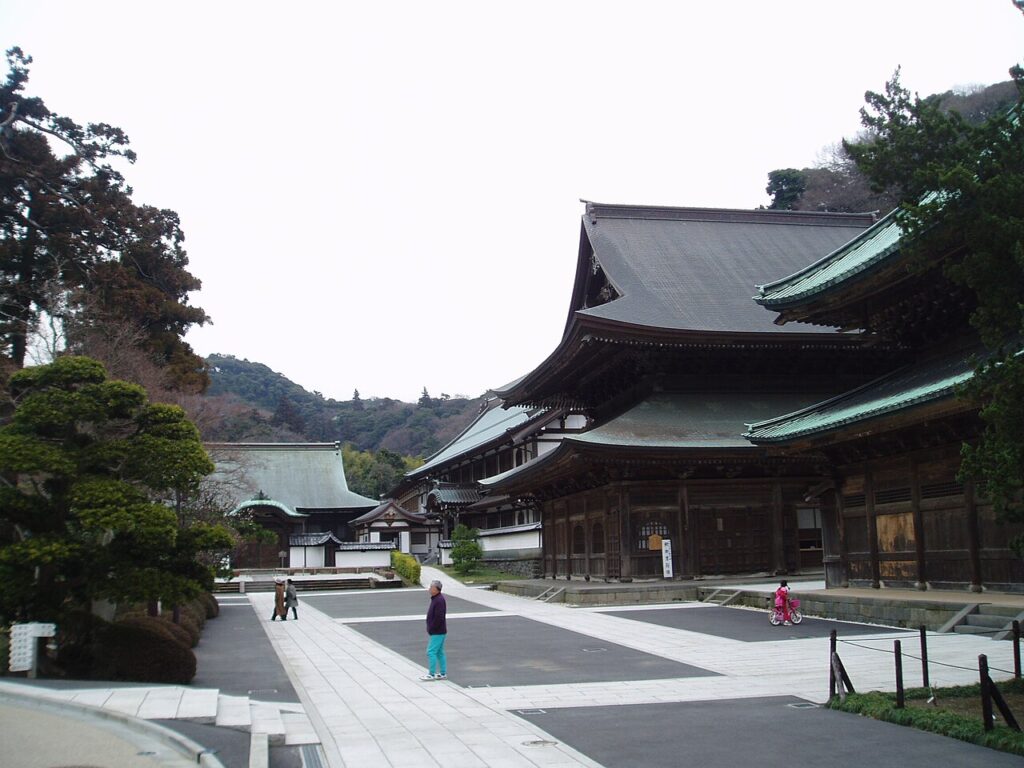
Complete Guide to Kencho-ji Temple: History, Highlights, and Visiting Information for the First-Ranked Zen Temple of Kamakura
Kencho-ji Temple is the head temple of the Kencho-ji branch of the Rinzai school of Zen Buddhism, located in Yamanouchi, Kamakura City, Kanagawa Prefecture. Its official name is “Kofukusan Kencho Kokoku Zenji,” and as the first-ranked of the Five Great Zen Temples of Kamakura, it has played a central role in Japanese Zen Buddhist culture. This article comprehensively introduces information you should know before visiting Kencho-ji Temple, including its history, temple buildings, cultural properties, and visiting information.
History of Kencho-ji Temple
Founding Circumstances and Hojo Tokiyori
Kencho-ji Temple was founded in 1253 (Kencho 5) by Hojo Tokiyori, the 5th regent of the Kamakura Shogunate. This was a groundbreaking event as it was the first full-fledged Zen Buddhist training center in Japan. Tokiyori assumed the position of regent at a young age and promoted political reforms, while also being deeply devoted to Zen Buddhism.
The site of the temple’s founding was formerly the site of an execution ground known as “Jigoku-dani” (Hell Valley). Tokiyori purified this land and transformed it into a Buddhist training ground, praying for the peace of the deceased and for the security of the shogunate and the peace of the nation. The temple’s name, “Kencho,” comes from the year of its founding, and the mountain’s name, “Kobukuzan,” derives from the place name “Kobukurozaka.”
Founder Rankei Doryu and the Introduction of Zen Buddhism
The founder (first head priest) of Kencho-ji Temple was Rankei Doryu, a Zen monk who came to Japan from the Southern Song Dynasty. Rankei Dōryū arrived in Japan in 1246 and initially stayed at Kennin-ji and Sennyū-ji temples in Kyoto. However, at the invitation of Hōjō Tokiyori, he moved to Kamakura and became the founding abbot of Kenchō-ji temple.
Rankei Dōryū played an extremely important role in the history of Zen Buddhism, as he brought pure Rinzai Zen from the Song Dynasty of China to Japan. He established a rigorous training system and trained many monks. Later, he was posthumously given the title of “Daigaku Zenji,” becoming the first person in Japan to be granted the title of Zen Master.
The second abbot was Gotan Funei, who also came to Japan from the Southern Song Dynasty, thus continuing the orthodox lineage of Chinese Zen at Kenchō-ji.
The Kamakura Five Mountains System and the Position of Kenchō-ji
The Kamakura Five Mountains was a ranking system of Rinzai Zen temples established by the Kamakura Shogunate, and Kenchō-ji was ranked first. The Gozan system was modeled after the Chinese system, with Kencho-ji, Engaku-ji, Jufuku-ji, Jochi-ji, and Jomyo-ji forming the Kamakura Gozan (Five Mountains).
During the Muromachi period, a system was established that integrated the Kyoto Gozan and Kamakura Gozan, with Kyoto’s Nanzen-ji as the “superior of the Five Mountains,” and the Kyoto Gozan and Kamakura Gozan positioned below it. Even so, Kencho-ji continued to play a crucial political and cultural role as the central Zen Buddhist temple in Kamakura.
History of Fires and Reconstruction
Kencho-ji has suffered numerous fires since its founding. It was struck by fire as early as 1255 (Kencho 7), and subsequently in 1301 (Shoan 3), 1313 (Showa 2), and 1414 (Oei 21), with much of the temple complex destroyed by repeated fires.
The fire in 1414 (Oei 21) was particularly devastating, resulting in the loss of major buildings such as the Buddha Hall and the Dharma Hall. Afterwards, reconstruction gradually progressed during the Edo period, and most of the temple buildings seen today date from the mid-Edo period onwards.
During the anti-Buddhist movement of the Meiji era, it survived without significant damage and continues to this day as the head temple of the Kenchoji branch of the Rinzai school, with approximately 100 branch temples throughout Japan.
Temple Layout and Architecture
The layout of Kenchoji Temple faithfully reproduces the style of Chinese Zen temples, maintaining a typical form of “Zen-style (Tang style).” The main buildings, lined up in a straight line from north to south, embody the dignity and spirituality of a Zen temple.
Main Gate
The main gate, standing at the entrance of Kenchoji Temple, is the first gate to enter the temple grounds. Its simple yet dignified structure welcomes visitors. Passing through the main gate, a straight path leads to the main gate, creating a solemn atmosphere characteristic of Zen temples.
Sanmon (Main Gate)
After passing through the main gate, the massive Sanmon (main gate), a symbol of Kencho-ji Temple, appears. The current Sanmon was rebuilt in 1775 and is a magnificent two-story gatehouse with a hipped roof. Standing approximately 30 meters tall, it is one of the largest temple buildings still standing in Kamakura.
The upper levels of the Sanmon house statues of the Five Hundred Arhats and the Eleven-Headed Kannon. While normally closed to the public, it is possible to ascend to the upper levels during special viewings. From the top of the gate, one can enjoy a spectacular panoramic view of the entire Kencho-ji Temple grounds and the Kamakura mountains.
The plaque above the Sanmon bears the characters “Kyofukuzan,” which are said to be in the handwriting of Emperor Gofukakusa.
Buddha Hall
After passing through the Sanmon, you will find the Buddha Hall, where the main image of Buddha is enshrined. The current Buddha Hall was relocated in 1647 (Shoho 4) during the Edo period from the mausoleum of Sugen-in (wife of Tokugawa Hidetada) at Zojo-ji Temple in Shiba, Edo. It is a single-story building with a hipped roof, and inside is enshrined the principal image, a seated statue of Jizo Bodhisattva.
The fact that Kencho-ji Temple’s principal image is Jizo Bodhisattva is unusual for a Zen Buddhist temple. It is believed that this is because the temple’s founding site was a former execution ground, and therefore Jizo Bodhisattva, who saves sentient beings from the suffering of hell, was chosen as the principal image. The principal image, a seated statue of Jizo Bodhisattva, is a magnificent seated statue approximately 2.4 meters tall and is estimated to be a work from the Kamakura period.
The ceiling of the Buddha Hall is adorned with a painting of a “Cloud Dragon” by artist Junji Koizumi, which has an overwhelming presence that overwhelms visitors.
Dharma Hall (Hatto)
Located behind the Buddha Hall, the Dharma Hall is where the head priest preaches Buddhist teachings. The current main hall (Hatto) was rebuilt in 1814 and boasts one of the largest scales among Zen Buddhist temples in the Kanto region.
The ceiling of the main hall displays the “Cloud Dragon” painting, created by artist Junjiro Koizumi to commemorate the 750th anniversary of Kencho-ji Temple’s founding. The dragon, depicted within a massive circle approximately 12 meters in diameter, is painted in such a way that its eyes seem to meet yours no matter where you view it from, earning it the nickname “the dragon that stares in all directions.”
The main hall still regularly hosts Zen meditation sessions and Dharma talks, allowing the public to experience Zen practice.
Karamon Gate and Abbot’s Quarters
Behind the main hall is the Karamon Gate, beyond which lies the Abbot’s Quarters (the abbot’s residence). The Karamon Gate is a valuable architectural structure that preserves the Momoyama period style, said to have been relocated from the Kyoto Imperial Palace in 1647. It is a four-legged gate adorned with intricate carvings.
The Hojo (abbot’s quarters) in a Zen Buddhist temple served as both the abbot’s residence and reception area. The current building was rebuilt during the Meiji era. The front garden of the Hojo is known as the “Hojo Garden,” a pond garden said to have been created by Muso Soseki.
The garden is a strolling garden centered around a heart-shaped pond, displaying different appearances with each season. It is particularly beautiful during the fresh green season and the autumn foliage season, attracting many visitors. Behind the Hojo is a tea room called “Tokugetsuro,” a space where Zen and tea cultures are fused.
Bell Tower and Bell
Within the temple grounds is a bell designated as a National Treasure. This bell was cast in 1255 (Kencho 7), dating back to the founding of Kencho-ji Temple. A large bell, approximately 2.1 meters high and 1.4 meters in diameter, it is considered one of the finest masterpieces of Kamakura period bells.
The bell bears an inscription related to the founding of Kencho-ji Temple, making it a valuable historical document that conveys the history of that time. It is still used today to tell the time, and its sound is cherished as part of the “soundscape of Kamakura.”
Hansobo and Ten’en Hiking Course
At the innermost part of Kencho-ji Temple’s grounds, halfway up the mountain, lies Hansobo. Hansobo is a guardian shrine that was invited from Okuyama Hokoji Temple in Shizuoka Prefecture during the Meiji era, and is worshipped as a god of fire prevention.
To reach Hansobo, you climb the stone steps that begin beside the Hojo (abbot’s quarters). Numerous Tengu statues line the path, creating a unique atmosphere. The steps number approximately 250 and are somewhat steep, but the view from Hansobo is magnificent, offering a panoramic view from Kamakura city to Sagami Bay.
Continuing along the mountain path from Hansobo connects to the “Ten’en Hiking Course,” which follows the ridge of Kamakura. This course is a popular hiking route that runs from Kencho-ji Temple towards Zuisen-ji Temple, allowing you to enjoy the nature of Kamakura while strolling.
Sub-temples
Kencho-ji Temple currently has the following sub-temples (tatchu). A tatchu is a small temple located within the grounds of a larger temple, and was formerly a residence for high-ranking monks or a training ground for their disciples.
Ryuho-in
This is a particularly prestigious temple among Kencho-ji’s sub-temples. It is known for housing the tomb of Hojo Tokiyori and was built to commemorate him. While usually closed to the public, it may be possible to view the interior during special viewing periods.
Shoto-in
Located west of Kencho-ji Temple, this sub-temple was once a place where many monks studied. It still maintains a tranquil atmosphere today.
Tengen-in
This temple has a long history as a sub-temple of Kencho-ji. Its grounds feature a beautiful garden, embodying the spirit of Zen.
Myokoin Temple
Located north of Kenchoji Temple, this sub-temple once functioned as a place of learning. While not currently open to the public, it is one of the important temples that supported the history of Kenchoji Temple.
These sub-temples played a crucial role in supporting the religious and cultural functions of Kenchoji Temple as a whole. At its peak, there were said to be 49 sub-temples, but only a few remain today.
Cultural Properties
Kenchoji Temple houses numerous valuable cultural properties, including National Treasures and Important Cultural Properties.
National Treasures
Bell: As mentioned above, the bell, cast in Kencho 7 (1255), is designated a National Treasure. It is a masterpiece showcasing the pinnacle of Kamakura period casting technology, excelling in both shape and sound.
Important Cultural Properties
Buddha Hall: Designated an Important Cultural Property as an early Edo period building. Its unique history of being relocated from Zojoji Temple also holds significant importance in architectural history.
Karamon Gate: Designated as an Important Cultural Property, this gate is a valuable example of Momoyama period architecture.
Daigaku Zenji’s Calligraphy: The calligraphy of the temple’s founder, Rankei Dōryū (Daigaku Zenji), is considered among the finest examples of Zen calligraphy, and several of his works are designated as Important Cultural Properties.
Silk Painting of Daigaku Zenji: A portrait of Rankei Dōryū, a representative work of Kamakura period portraits of Zen monks.
Other Cultural Properties
Kenchōji Temple also houses numerous other Buddhist statues, paintings, calligraphic works, and crafts. These cultural properties can be viewed during special exhibitions such as treasure airings.
Of particular note are the ancient documents known as the “Kenchōji Documents,” which are preserved at Kenchōji Temple. These documents are extremely important historical sources for understanding the temple’s management, its relationship with the shogunate, and the history of Zen Buddhism from the Kamakura period to the Edo period.
The Zen Study Center and Zen Training
Kencho-ji Temple has a monastic training hall called the “Zen Study Center,” where many monks still engage in rigorous training. The daily routine at the Zen Study Center focuses on seated meditation, chanting, and manual labor, providing a foundation for becoming a Zen monk.
Zen Meditation Sessions for the Public
Kencho-ji Temple regularly holds Zen meditation sessions open to the public. Beginner-friendly sessions are held every Friday and Saturday evening, offering careful instruction on basic Zen etiquette.
No reservations are required; anyone can participate. After the meditation, there is a tea ceremony, allowing participants to experience Zen teachings through dialogue with the abbot.
The Origin of Kencho-ji Temple’s Kenchin-jiru
Kencho-ji Temple is also known as the birthplace of “Kenchin-jiru” (a type of vegetable soup). It is said to have originated from vegetarian dishes prepared by the monks of Kencho-ji Temple, characterized by a cooking method where vegetables are stir-fried before being simmered. According to legend, one day a修行僧 (shugyōsō – ascetic monk) accidentally dropped tofu on the floor. To avoid wasting the crumbled tofu, he boiled it with vegetables, and that’s how it all began. The most likely theory is that “Kenchōji” (建長寺) was corrupted into “Kenchin.”
Even today, Kenchōji Temple sometimes serves Kenchin-jiru (a type of soup) during special events.
Annual Events
Kenchōji Temple holds various religious events throughout the year.
Main Annual Events
First Three Days of the New Year: Special New Year’s worship services are held, attracting many visitors.
Setsubun Festival (February 3rd): A bean-throwing ceremony is held, a popular event believed to bring good fortune.
Founder’s Memorial Service (July 24th): A memorial service held on the anniversary of the death of the temple’s founder, Rankei Dōryū.
Treasure Airing (November): The temple’s cultural artifacts are aired out and made available to the public. This is a rare opportunity to appreciate these valuable cultural items.
New Year’s Eve Bell Ringing (December 31st): This event allows visitors to ring the national treasure bell, attracting many worshippers every year.
Visiting Information
Visiting Hours and Fees
Visiting Hours: 8:30 AM – 4:30 PM (Open year-round)
Admission Fees:
- Adults (High school students and older): 500 yen
- Elementary and junior high school students: 200 yen
*Admission fees may change during special viewings or events.
Access
Access by Train:
- Approximately 15 minutes on foot from Kita-Kamakura Station on the JR Yokosuka Line
- Approximately 10 minutes by bus from Kamakura Station on the JR Yokosuka Line, get off at the Kenchoji bus stop.
Access by Car:
- Approximately 20 minutes from the Asahina Interchange on the Yokohama-Yokosuka Expressway
Parking:
- Approximately 20 passenger cars (paid parking)
- There is a parking lot for visitors, but it can be full during peak times. We recommend using public transportation.
Location
8 Yamanouchi, Kamakura City, Kanagawa Prefecture 247-8525
TEL: 0467-22-0981
Nearby Attractions
Numerous temples and shrines representing Kamakura are located around Kenchoji Temple.
Engakuji Temple: 1 minute on foot from Kita-Kamakura Station. This is a renowned temple, the second-ranked of the Five Great Zen Temples of Kamakura, and houses a national treasure, the Shariden (reliquary hall).
Meigetsu-in Temple: Famous as the “Hydrangea Temple.” Approximately 2,500 hydrangea bushes bloom in June.
Tokei-ji Temple: Formerly known as a temple for ending relationships, it is also popular as a temple of beautiful flowers.
Jochi-ji Temple: The fourth-ranked of the Five Great Zen Temples of Kamakura. Enjoy the tranquil atmosphere and the charm of Kamakura.
These temples are within walking distance of each other, making it easy to enjoy a temple and shrine tour of Kita-Kamakura.
The Charm and Points of Visit to Kencho-ji Temple
The greatest charm of Kencho-ji Temple lies in its status as Japan’s first full-fledged Zen Buddhist temple, preserving the pure spirit and culture of Zen to this day. The temple buildings, arranged within its vast grounds, faithfully reproduce the style of Zen Buddhist temples from the Song Dynasty in China, becoming a model for Japanese Zen architecture.
When visiting, we recommend starting from the main gate and touring the temple grounds in order, finally climbing up to Hansobo. A typical visit takes about an hour, but if you want to explore thoroughly, allow about two hours.
Especially during the quiet early morning hours, it’s ideal to experience the serene atmosphere of a Zen temple. Also, during the autumn foliage season (late November to early December), the temple grounds are beautifully colored, attracting many photography enthusiasts.
Participating in a Zen meditation session offers a profound experience that cannot be obtained through simple sightseeing. Even beginners receive careful instruction, so please give it a try.
Summary
Kenchoji Temple, founded by Hojo Tokiyori during the Kamakura period, is Japan’s first full-fledged Zen Buddhist temple and continues to play an important role as the head temple of the Kenchoji branch of the Rinzai school. The pure tradition of Chinese Zen, transmitted by its founder Rankei Doryu, has been passed down for over 750 years to the present day.
With its national treasure bell and other precious cultural assets, magnificent temple layout, and beautiful gardens, Kencho-ji Temple offers endless sights to see. As the first-ranked temple of the Five Great Zen Temples of Kamakura, you can feel the weight of history and tradition while experiencing the spirit of Zen. It’s a must-see temple when visiting Kamakura.
Beyond general worship, Kencho-ji Temple offers a variety of ways to enjoy your visit, including participating in Zen meditation sessions, viewing cultural assets during special viewings, and nature walks on the Ten’en hiking trail. It’s a profound temple where you’ll discover something new with every visit.
