
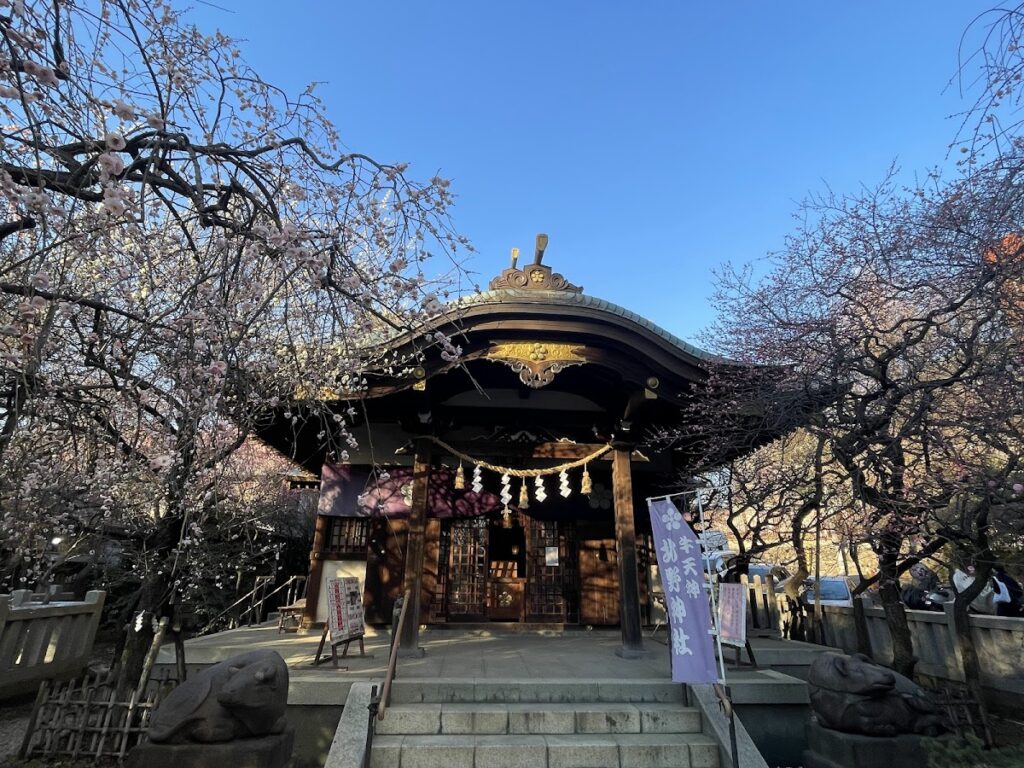
Kitano Shrine (Bunkyo Ward, Tokyo) Complete Guide | History, Benefits, and Access Information for Ushitenjin
Located in Kasuga, Bunkyo Ward, Tokyo, Kitano Shrine is a historic shrine affectionately known as “Ushitenjin” (Cow Tenjin). Known for its founding legend attributed to Minamoto no Yoritomo and its “Wishing Cow” said to grant wishes, it attracts many worshippers as a shrine dedicated to Sugawara no Michizane, the god of learning.
Basic Information on Kitano Shrine (Ushi Tenjin)
Location: 1-5-2 Kasuga, Bunkyo-ku, Tokyo 112-0003
Phone Number: 03-3812-1862
FAX: 03-3868-0477
Reception Hours: 9:00 AM – 5:00 PM
Former Shrine Rank: Village Shrine
Alternative Names: Ushi Tenjin, Kanasugi Tenjin
Kitano Shrine has served as the guardian shrine of Kasuga and Korakuen in Bunkyo-ku for over 800 years, since the Kamakura period. Despite being located in the heart of Tokyo, close to Tokyo Dome and Korakuen, it is known as a hidden power spot that maintains a tranquil atmosphere.
Deities and Benefits
Main Deity
The main deity enshrined at Kitano Shrine is Sugawara no Michizane. This shrine enshrines Sugawara no Michizane, who is revered nationwide as the god of learning, and is particularly known for its blessings related to academic success and passing exams.
Blessings
- Academic Success and Passing Exams: Due to the divine virtues of Sugawara no Michizane, the shrine is constantly visited by students and those preparing for exams.
- Protection from Misfortune and Good Fortune: Blessings for good fortune based on a divine oracle from Minamoto no Yoritomo.
- Fulfillment of Wishes: It is believed that various wishes will be granted by stroking the wishing cow statue.
- Career Advancement: Blessings from the Shusse Inari Shrine within the grounds.
Founding and History of Kitano Shrine
Founding Legend by Minamoto no Yoritomo
The founding of Kitano Shrine dates back to 1184 (Genryaku 1). Its history began in the Kamakura period with a mysterious experience of Minamoto no Yoritomo.
In 1182 (Juei 1), while Minamoto no Yoritomo was inspecting the Kanto region for the administration of eastern Japan, he rested on a hill where the present-day Kitano Shrine stands. It is said that as Yoritomo sat on a large rock in the area, Sugawara no Michizane appeared to him in a dream, riding an ox, and gave him a divine oracle that “two joys await.”
The following year, Yoritomo experienced two joys as predicted by the oracle. One was receiving an imperial decree to pursue and defeat the Taira clan, and the other was his wife, Hojo Masako, giving birth to a son (later Minamoto no Yoriie). Grateful for this divine intervention, in 1184 (Genryaku 1), Yoritomo enshrined the rock from his dream as a sacred object and invited Sugawara no Michizane to become the deity, thus establishing Kitano Shrine.
Origin of Ushitenjin
Kitano Shrine came to be called “Ushitenjin” (Ox Tenjin) because Michizane, who appeared to Yoritomo in a dream, was riding an ox. Since then, the ox has been revered as a guardian deity, protecting this land for over 832 years.
In ancient times, it was also known as “Kanasugi Tenjin” and was revered as the local Tenjin deity. During the Edo period, it was already widely known by the nickname “Ushi Tenjin” (Ox Tenjin) and flourished as a shrine that attracted the faith of ordinary people.
What is the Wishing Ox (Negai-ushi)?
The Origin of the Wishing Ox
Within the grounds of Kitano Shrine, there is a rock shaped like an ox on which Minamoto no Yoritomo is said to have sat. This is the sacred stone known as the “Wishing Ox” or “Negai-ushi.”
Although this rock is a natural stone, it appears as if an ox is lying down depending on the viewing angle, and has been revered as a sacred stone since ancient times. It became associated with the divine oracle Yoritomo saw in a dream of “Michizane riding an ox,” and came to be worshipped as a stone with miraculous powers that grant wishes.
How to Worship the Wishing Cow
When worshipping the Wishing Cow, please follow these steps:
- First, pay your respects to Sugawara no Michizane at the main shrine.
- Approach the Wishing Cow and silently recite your wish.
- Gently stroke the Wishing Cow.
- Bow with gratitude.
Many worshippers believe that stroking this rock will grant them blessings for academic success, passing exams, and the fulfillment of all other wishes. Numerous reports of wishes being granted have been received, and the shrine is particularly popular with students and their parents during exam season.
Highlights of the Shrine Grounds
Main Shrine and Worship Hall
The main shrine of Kitano Shrine is built on a small hill in the heart of the city. The shrine is located at the top of a stone staircase from Kasuga Street, surrounded by trees, creating a tranquil space.
The main hall accepts prayers for academic success and passing exams year-round, from 9:00 AM to 5:00 PM.
Shrines within the Precincts
Kitano Shrine has several smaller shrines within its grounds.
Ota Shrine: Dedicated to Ame-no-Uzume-no-Mikoto, known as the god of artistic and performing arts improvement. Many people involved in the performing arts visit this shrine.
Shusse Inari Shrine: An Inari shrine known for its blessings of career advancement and business prosperity. As its name suggests, it attracts visitors seeking improved career prospects.
Suwa Shrine: Dedicated to Take-Minakata-no-Kami, worshipped as the god of victory and long-lasting military fortune.
Visiting these smaller shrines can bring various blessings.
Relationship with Katsushika Hokusai’s “Thirty-Six Views of Mount Fuji: Snowy Morning at Koishikawa”
Kitano Shrine is known as the location depicted in “Snowy Morning at Koishikawa,” one of Katsushika Hokusai’s representative works, “Thirty-Six Views of Mount Fuji.”
This ukiyo-e print depicts people walking up a slope near Kitano Shrine with Mount Fuji in the background amid a snowy landscape. During the Edo period, this area was known for its magnificent views of Mount Fuji, and Hokusai captured this scenery in his works.
Currently, an original goshuincho (stamp book) featuring “Snowy Morning at Koishikawa” is available and is gaining popularity as a memento of visits. Furthermore, this work has also been featured on postage stamps, leading to a renewed recognition of Kitano Shrine’s cultural value.
Goshuin Information
Regular Goshuin
Kitano Shrine offers goshuin (stamps) that are available year-round. This is a simple yet powerful goshuin (temple/shrine stamp) featuring the calligraphy and red seal of “Ushitenjin Kitano Shrine.”
Hours of Availability: 9:00 AM – 5:00 PM
Donation Fee: Usually around 300-500 yen (may vary depending on the season)
Limited-Time Commemorative Goshuin
Kitano Shrine sometimes offers limited-time commemorative goshuin in accordance with the seasons and events. During special periods such as New Year’s, Setsubun (bean-throwing festival), and the annual festival, goshuin with different designs than usual may be available.
Please check the official website or notices on the shrine grounds for the latest goshuin information.
Original Goshuin Notebook
An original goshuin notebook featuring a design of Katsushika Hokusai’s “Thirty-Six Views of Mount Fuji: Snow-Covered River in the Morning” is available. It is popular as a highly artistic goshuin notebook that fuses Hokusai’s ukiyo-e print with the history of Kitano Shrine.
Request Regarding Goshuin (Shrine Seals)
Kitano Shrine requests that you refrain from reselling Goshuincho (stamp books). Goshuin and Goshuincho are proof of your visit and important symbols of your connection to the shrine. Please refrain from purchasing multiple items for resale purposes and receive them with a sincere heart of faith.
Annual Events
Main Festivals
New Year’s Day Festival (January 1st): A festival celebrating the New Year. It is bustling with many first-time visitors.
Setsubun Festival (Around February 3rd): Bean-throwing ceremonies are held, and prayers are offered for protection against evil and good fortune.
Grand Festival (September 25th): Kitano Shrine’s most important festival. It commemorates the virtues of Sugawara no Michizane.
Shichi-Go-San Pilgrimage (November): Prayers for Shichi-Go-San, celebrating the growth of children, are accepted.
Tenjin-sama’s Festival Day
The 25th of every month is considered Tenjin-sama’s festival day, and is especially a good day to visit. This is because it is the birthday (June 25th) and death anniversary (February 25th) of Sugawara no Michizane.
Access and Transportation Information
Access by Train
Tokyo Metro Marunouchi Line/Namboku Line “Korakuen” Station
- Approximately 10 minutes on foot from Exit 1
- Access from the nearest station is the most convenient.
Toei Subway Mita Line/Oedo Line “Kasuga” Station
- Approximately 10 minutes on foot from Exit A1
- Directly connected to Korakuen Station, and similarly accessible.
JR Chuo/Sobu Line “Suidobashi” Station
- Approximately 15 minutes on foot from the East Exit
- This is the walking route from the direction of Tokyo Dome.
Detailed Walking Access
After exiting Korakuen Station Exit 1, proceed west (towards Iidabashi) along Kasuga Street. After passing the intersection at Kasuga 1-chome and walking up the slope a short distance, you will see the entrance to Kitano Shrine on your left.
The shrine grounds are located on a small hill, so you will need to climb stone steps. Those with mobility issues are advised to take their time and rest while visiting.
Access by Car
Approximately 5 minutes from the Iidabashi exit of the Metropolitan Expressway Route 5 Ikebukuro Line
Parking: There is parking space for visitors on the shrine grounds, but the number of spaces is limited. There are also coin-operated parking lots nearby, so please consider using those as well.
As it is located in the city center, we recommend using public transportation whenever possible.
Nearby Tourist Attractions
Tokyo Dome City
Tokyo Dome City, located about a 10-minute walk away, offers baseball games, concerts, amusement parks, and more. It’s a perfect place to visit in conjunction with a visit to Kitano Shrine.
Koishikawa Korakuen Garden
A Japanese garden designated as a National Special Historic Site and Special Place of Scenic Beauty, located about a 5-minute walk away. This is one of Tokyo’s most renowned gardens, offering beautiful scenery throughout the seasons, and many visitors come here in conjunction with Kitano Shrine.
Other Shrines in Bunkyo Ward
Bunkyo Ward is home to many historical shrines, including Sakuragi Shrine, Kohinata Shrine, and Hakusan Shrine. Shrine hopping is also highly recommended.
Manners and Requests for Visiting the Shrine
Basic Worship Etiquette
- Bow before passing through the torii gate: This is a courtesy before entering the sacred area.
- Purify yourself at the water basin: Purify your left hand, right hand, and mouth in that order.
- Worship at the main shrine: Two bows, two claps, and one bow is the basic procedure.
- Worship the wishing cow: After worshipping at the main shrine, stroke the wishing cow.
Regarding Disruptive Behavior
Kitano Shrine requests that you refrain from the following disruptive behaviors:
- Loud conversations and noise: Please cooperate in maintaining a quiet worship environment.
- Eating and drinking on the shrine grounds: Please refrain from eating and drinking outside of designated areas.
- Consideration when taking photographs: Please be careful not to disturb other worshippers.
- Bringing pets: As a general rule, pets are not allowed on the shrine grounds.
Shrines are sacred places. Please be considerate of other worshippers and approach your visit with a solemn spirit.
Cultural Value of Kitano Shrine
History of Bunkyo Ward and Kitano Shrine
Bunkyo Ward has flourished as a center of learning and culture since the Edo period. Many samurai residences and temples and shrines lined the streets, and it was a region where writers and artists gathered. Kitano Shrine is a valuable cultural asset that conveys the history of Bunkyo Ward to the present day.
Connection to Katsushika Hokusai
As mentioned above, the fact that Katsushika Hokusai depicted the area around Kitano Shrine as one of his “Thirty-Six Views of Mount Fuji” enhances the cultural value of this shrine. It is also proof that the landscape loved by people in the Edo period has been passed down to the present day.
Significance of the Minamoto no Yoritomo Legend
The legend of its founding by Minamoto no Yoritomo is deeply intertwined with the history of the Kamakura Shogunate’s establishment. The legend that Yoritomo visited this area during his administration of eastern Japan and received a divine oracle is noteworthy as a valuable historical document that sheds light on the political and religious situation of the time.
Media Coverage Information
Kitano Shrine is frequently featured in television programs and magazines due to its historical value and the miraculous power of its wishing ox. It is often featured in power spot specials, shrine pilgrimage programs, and as a place to pray for success during exam season, and its media exposure has increased its national recognition.
For the latest media information, please check the official website, which is updated regularly.
Frequently Asked Questions
Q1: What are the reception hours for Goshuin (shrine stamps)?
A1: Goshuin are available from 9:00 AM to 5:00 PM. However, times may change due to festivals and events, so we recommend checking in advance.
Q2: Is there parking available?
A2: There is parking space for visitors on the shrine grounds, but the number of spaces is limited. If the parking lot is full, please use the nearby coin-operated parking lots. We recommend using public transportation.
Q3: Where is the Wishing Cow located?
A3: The Wishing Cow is enshrined near the main hall on the temple grounds. You can check its location at the shrine office or on the information board when you visit.
Q4: Is a reservation required for prayers?
A4: Regular prayers are accepted without a reservation, but for group prayers or if you wish to request a special date and time, please contact us in advance by phone (03-3812-1862).
Q5: Can I purchase amulets and votive tablets?
A5: Yes, various amulets, votive tablets, and talismans are available at the shrine office. Amulets for academic success and passing exams are particularly popular.
Q6: How crowded is it during the New Year’s visit?
A6: The shrine is crowded with many visitors from New Year’s Day to the third day of the year. It gets particularly crowded from morning until early afternoon, so if you want to visit at a leisurely pace, early morning or evening is recommended.
Q7: Do you accept Shichi-Go-San prayers?
A7: Yes, we accept Shichi-Go-San prayers, mainly in November. We recommend making a reservation in advance, so please contact the shrine office.
Summary
Kitano Shrine (Ushi Tenjin), located in Kasuga, Bunkyo-ku, Tokyo, is a historical shrine known for its founding legend by Minamoto no Yoritomo and the miraculous power of the wishing ox. It enshrines Sugawara no Michizane, the god of learning, and attracts many visitors seeking blessings for academic success and passing exams.
Kitano Shrine has many attractions, including its cultural value as depicted in Katsushika Hokusai’s “Thirty-Six Views of Mount Fuji: Snowy Morning at Rekisen,” its history of over 832 years, and its tranquil grounds despite being in the heart of the city.
Its convenient access, approximately a 10-minute walk from Korakuen Station, is also a major draw. Visiting Kitano Shrine (Ushi Tenjin) along with Tokyo Dome and Koishikawa Korakuen Garden will make for a fulfilling day.
Whether you’re praying for success in exams, making your first shrine visit of the year, or simply seeking daily peace of mind, please do visit Kitano Shrine (Ushi Tenjin). Stroke the wishing cow and pray that your wishes come true.
