Complete Guide to Kuhonji Temple (Kamakura City, Kanagawa Prefecture) | History, Highlights, and Access Information
Kuhonji Temple, located in Zaimokuza, Kamakura City, Kanagawa Prefecture, is an ancient Jodo sect temple that commemorates a turning point in history: the fall of the Kamakura Shogunate. Established by Nitta Yoshisada to pray for the souls of those who died in battle, regardless of whether they were friend or foe, this temple, despite being located in the eastern part of Kamakura, captivates visitors with its quiet and peaceful atmosphere. This article comprehensively introduces everything you need to know before visiting Kuhonji Temple, from its historical background and highlights to information on temple stamps and access methods.
Basic Information about Kuhonji Temple
Kuhonji Temple is a Jodo sect temple located at 5-13-14 Zaimokuza, Kamakura City, Kanagawa Prefecture. Its official name is “Dairiyama Reigakuin Kuhonji,” with the mountain name Dairiyama and the temple name Reigakuin.
Basic Temple Data
- Address: 5-13-14 Zaimokuza, Kamakura City, Kanagawa Prefecture 248-0013
- Phone Number: 0467-22-3404
- Sect: Jodo-shu (Pure Land Buddhism)
- Principal Image: Amida Buddha
- Mountain Name: Dairizan
- Temple Name: Reigakuin
- Year of Founding: Kenmu 3 (1336)
- Founder: Fuko Junsai
- Founder of Temple: Nitta Yoshisada
- Visiting Hours: 9:00 AM – 4:00 PM
- Admission Fee: Donation (Free)
- Closed Days: None (Open all year round)
- Corporate Number: 4021005001861
Among the temples in the Kanto/Kanagawa area, it is known as a valuable temple that strongly preserves the history of the late Kamakura period.
History and Origin of Kyuhonji Temple
The Fall of the Kamakura Shogunate and Nitta Yoshisada
The history of Kyuhonji Temple dates back to the fall of the Kamakura Shogunate in 1333 (Genko 3). Nitta Yoshisada, acting on the orders of Emperor Go-Daigo, attacked Kamakura from Kozuke Province (present-day Gunma Prefecture) and destroyed the Kamakura Shogunate, which was ruled by the Hojo clan. It is believed that Yoshisada established his headquarters at the current location of Kyuhonji Temple.
Yoshisada, who set up camp on a hill in Zaimokuza, could overlook the entirety of Kamakura from there. After fierce fighting, the shogunate fell, but many samurai lost their lives.
A Heart of Compassion Transcending Enemy and Ally
Three years after the battle, in 1336 (Kenmu 3), Nitta Yoshisada decided to build a temple on the site of his main camp to mourn the souls of those who perished in the siege of Kamakura. What is particularly noteworthy is that Yoshisada sought to commemorate all victims without discrimination, including those who died on the opposing Hojo side.
This compassionate spirit is still recounted today as a testament to Yoshisada’s character, a samurai with a deep faith in Buddhism. Yoshisada invited the eminent monk Fuko Junsei from Kyoto to be the founding abbot, establishing Kuhonji Temple as a Jodo sect temple.
The Meaning of the Temple Name “Kuhon”
“Kuhon” originates from “Kuhon Ojo,” the nine ranks of rebirth in Pure Land Buddhism. This represents the teaching that all people, from those of the highest rank to those of the lowest rank, can attain rebirth in the Pure Land through the compassion of Amida Buddha. The temple’s philosophy of offering prayers for all, regardless of friend or foe, is deeply intertwined with this temple name.
Highlights of Kyuhonji Temple
The Temple Gate and the “Dairi-yama” Plaque
The first thing you notice upon visiting Kyuhonji Temple is its dignified temple gate. This gate bears a plaque inscribed with “Dairi-yama.” It is said that the calligraphy is a copy of that of Nitta Yoshisada, suggesting a deep connection between Yoshisada and the temple.
Passing through the gate, you enter a tranquil temple grounds, feeling as if you have stepped into a different world, far removed from the hustle and bustle of Kamakura. Located east of Kamakura Station, the Zaimokuza area is relatively less crowded with tourists, making it an attractive place for a peaceful visit.
The Main Hall and Nitta Yoshisada’s Handwritten Calligraphy
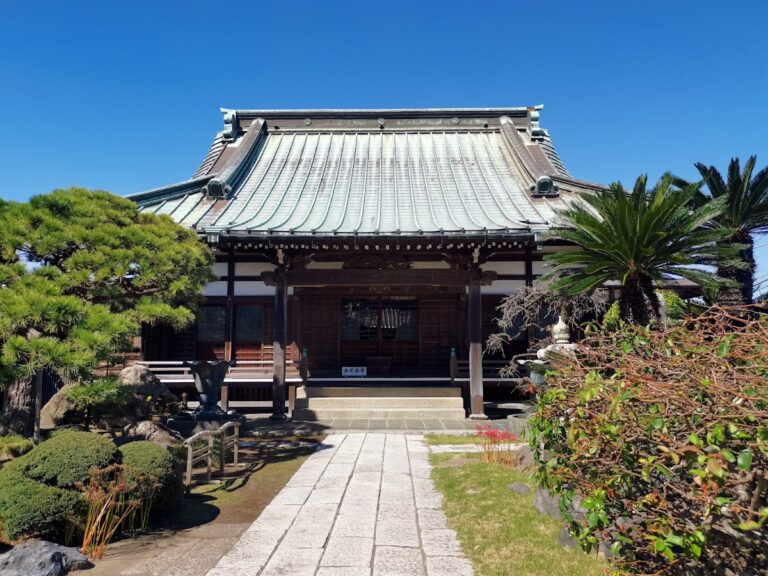
The main hall houses the principal image, Amida Buddha, and offers a tranquil atmosphere for worship. The main hall also displays a plaque bearing the name “Kuhonji,” which is believed to be a copy of Yoshisada’s handwriting.
Particularly valuable is the plaque, believed to be Nitta Yoshisada’s handwriting, preserved inside the main hall. While usually viewed from the outside, this handwritten calligraphy is of extremely high historical value and is one of the important highlights of a visit to Kuhonji Temple.
Views of Kamakura from the Temple Grounds
Within the grounds of Kuhonji Temple lies a small hill from which you can overlook the city of Kamakura. This hilltop is said to be where Nitta Yoshisada once established his headquarters, surveying the entire city of Kamakura.
While the landscape has changed due to the increase in buildings today, it remains a valuable spot to reflect on the history of approximately 700 years ago while gazing at the Zaimokuza coastline and the city of Kamakura. Especially on sunny days, this view leaves a deep impression on visitors.
Quiet Atmosphere of the Temple Grounds
One of the greatest charms of Kyuhonji Temple is its tranquility. Compared to famous Kamakura temples such as Tsurugaoka Hachimangu Shrine and Hase-dera Temple, the number of visitors is small, allowing for a peaceful and serene atmosphere for worship.
Different flowers bloom in the temple grounds depending on the season, and visitors can enjoy the beauty of nature throughout the year, especially the cherry blossoms in spring, the hydrangeas in early summer, and the autumn leaves. It is an ideal temple for those who want to escape the hustle and bustle of tourists and quietly experience the teachings of Buddhism.
Goshuin (Temple Seal) Information
You can receive a goshuin at Kyuhonji Temple. The goshuin features the temple name “Kyuhonji” and the name of the principal deity, “Amida Nyorai,” written in ink, and stamped with the temple seal.
You can request a goshuin at the main hall during visiting hours (9:00 AM to 4:00 PM). You can bring your own goshuincho (stamp book) or receive a pre-printed goshuin (temple stamp). The goshuin fee is generally around 300 yen, but it’s best to offer a donation based on your feelings.
Kamakura has many temples, and many visitors enjoy collecting goshuin, but the goshuin of Kuhonji Temple is particularly popular due to its historical significance as a Jodo sect temple and its connection to Nitta Yoshisada.
About the Perpetual Memorial Grave “Kuhonbyo”
Kuhonji Temple has a perpetual memorial grave called “Kuhonbyo.” This is a memorial facility for those who have no successors to their graves or who do not want to burden their descendants.
Kuhonbyo was established to carry on the temple’s spirit of Nitta Yoshisada, who offered memorial services regardless of whether they were friend or foe. It can be used regardless of religious affiliation, and the temple will continue to provide perpetual memorial services.
Located in the historic city of Kamakura, this temple offers respectful memorial services based on the teachings of the Jodo sect, attracting attention from those considering perpetual memorial services in the Kanto/Kanagawa area. For detailed information on fees and systems, please contact the temple directly.
Access Information
Access by Train and Bus
The nearest station to Kyuhonji Temple is Kamakura Station on the JR Yokosuka Line and Enoshima Electric Railway.
By Bus
- Take the Keikyu Bus “Kamakura 40 (Kyuhonji Loop)” or “Kamakura 41 (Tachiarai)” from the east exit of Kamakura Station.
- Get off at the “Kyuhonji” bus stop and it’s a short walk.
- Travel time: Approximately 5-7 minutes
- Bus fare: Approximately 180 yen
By Foot
- Approximately 25-30 minutes on foot from the east exit of Kamakura Station.
- Head south along Wakamiya-oji Street towards Zaimokuza.
- Distance: Approximately 2km
Located east of Kamakura Station in the Zaimokuza area, it’s a bit of a walk, but it’s recommended to enjoy a stroll while taking in the Kamakura streetscape. Walking is a good option for those confident in their physical fitness or who want to slowly savor the atmosphere of Kamakura.
Access by Car and Parking
Access by Car
- Approximately 15 minutes from the Asahina Interchange on the Yokohama-Yokosuka Expressway
- Accessible via National Route 134 from the Zushi area
Parking
Kyuhonji Temple does not have its own parking lot. If you are visiting by car, we recommend using a nearby coin-operated parking lot or parking near Kamakura Station and traveling by bus or on foot.
Kamakura’s roads are narrow and traffic congestion is common during peak tourist seasons, so using public transportation is recommended. Especially on weekends and holidays, and during the hydrangea and autumn foliage seasons, congestion is expected.
Nearby Tourist Spots
When visiting Kyuhonji Temple, we recommend also visiting the Zaimokuza area and other tourist spots in eastern Kamakura.
Zaimokuza Beach
Zaimokuza Beach, located about a 10-minute walk from Kyuhonji Temple, is a spot where you can enjoy Kamakura’s beautiful coastline. It is less crowded than Yuigahama Beach, allowing you to relax and enjoy the ocean view. Summer is perfect for swimming, and other seasons are ideal for strolling.
Komyoji Temple
Komyoji Temple, the largest temple in the Zaimokuza area, is located about a 15-minute walk from Kyuhonji Temple. As a head temple of the Jodo sect, it enjoys high status, and its magnificent main gate and main hall are highlights. It attracts many visitors, especially during the autumn foliage season.
Jissoji Temple and Gosho Shrine
There are many other historical temples and shrines scattered around Kyuhonji Temple. A popular route is the “Zaimokuza Temple and Shrine Tour,” which involves visiting several temples while strolling through the Zaimokuza area.
Points to Note and Manners When Visiting
Please note the following points when visiting Kyuhonji Temple.
Manners During Visits
- Visiting hours are 9:00 AM to 4:00 PM. Please refrain from visiting outside of opening hours.
- Please be quiet on the temple grounds and be considerate of other visitors.
- Photography is permitted, but please refrain from taking pictures in areas where photography is prohibited, such as inside the main hall.
- When entering a hall, please remove your hat and pray with respect.
Clothing and Belongings
- There is no specific dress code, but please dress appropriately and respectfully for a temple.
- There are stairs and slopes on the temple grounds, so comfortable shoes are recommended.
- The sun is strong in the summer, so please bring a hat, parasol, and water.
- If you wish to receive a Goshuin (temple stamp), please bring your Goshuincho (stamp book).
About Admission Fees
Admission to Kyuhonji Temple is generally free (donations are welcome). However, for the maintenance of the temple, it is recommended to place a donation in the offering box as a token of your appreciation. A separate fee is required for receiving a Goshuin.
Kyuhonji Temple in the Four Seasons
Spring (March-May)
In spring, cherry blossoms and camellias adorn the grounds of Kyuhonji Temple. Especially during cherry blossom season, you can enjoy flower viewing in the quiet temple grounds. It’s less crowded than the famous cherry blossom spots in Kamakura, allowing you to slowly appreciate the arrival of spring.
Summer (June-August)
In early summer, hydrangeas bloom, adding color to the temple grounds during the rainy season. While Kamakura is famous for its hydrangeas, Kyuhonji Temple is a hidden gem where you can quietly admire them. Visiting in conjunction with Zaimokuza Beach in the summer is also recommended.
Autumn (September-November)
In autumn, the trees on the temple grounds change color, offering a picturesque landscape. The best time to see the autumn foliage is from mid- to late November. The view of the main hall through the autumn leaves is perfect for photography.
Winter (December to February)
Winter at Kujoji Temple is the least crowded, enveloped in silence. Visiting the temple in the crisp air is a truly refreshing experience. While there are some visitors for Hatsumode (first shrine visit of the year) on New Year’s Day, it’s not as crowded as more famous temples.
Cultural Assets and Historical Value of Kujoji Temple
Kujoji Temple houses several valuable cultural assets, including a framed calligraphy piece attributed to Nitta Yoshisada. These are important historical documents that convey the history from the late Kamakura period to the Nanboku-cho period.
The temple itself is also valuable as a historical heritage site, recording a crucial turning point in Japanese history: the fall of the Kamakura Shogunate. The legend that Nitta Yoshisada established his headquarters here speaks to the historical significance of this location.
As a Jodo sect temple, it continues its religious activities centered on Amida Buddhism, balancing its historical value with its role as a place of worship in the modern era.
The Position of Kyuhonji Temple in Kamakura
While Kamakura boasts numerous temples, Kyuhonji Temple is one of the representative temples in the Zaimokuza area. Although smaller in scale compared to famous temples like Tsurugaoka Hachimangu Shrine, Kenchoji Temple, and Engakuji Temple, it is valued for its connection to the historically important figure Nitta Yoshisada and its compassionate spirit of offering prayers for all who died in battle, regardless of whether they were friend or foe.
The eastern area of Kamakura, compared to the western and northern regions, has fewer tourists and offers a tranquil atmosphere. Kyuhonji Temple is a valuable spot to experience this “quiet Kamakura,” and is popular among repeat visitors and Kamakura connoisseurs.
Summary
Kyuhonji Temple, located in Zaimokuza, Kamakura City, Kanagawa Prefecture, is a historic Jodo sect temple established by Nitta Yoshisada after the fall of the Kamakura Shogunate. Founded with a compassionate spirit of offering prayers for all who died in battle, regardless of whether they were friend or foe, it has a history of approximately 700 years.
Located in the Zaimokuza area, a short distance from Kamakura Station, Kuhonji Temple enjoys a quiet and peaceful environment, making it a great place for worship. It boasts numerous attractions, including calligraphy believed to be in the hand of Nitta Yoshisada, views from the site of the former main camp, and the beauty of nature throughout the seasons.
The temple also caters to modern needs, offering services such as the ability to receive a Goshuin (temple stamp) and the provision of perpetual memorial graves. When visiting Kamakura, why not consider visiting temples like Kuhonji, where you can experience history and tranquility, in addition to the famous temples?
For those in the Kanto/Kanagawa area who want to explore historical temples and find peace in a quiet environment, Kuhonji Temple is an ideal choice.