Complete Guide to Nezu Shrine | A Thorough Explanation of History, Azalea Festival, Goshuin (Shrine Seals), and Access Information
Nezu Shrine, located in Nezu, Bunkyo-ku, Tokyo, is a venerable shrine boasting a history of approximately 1900 years. With its Edo-period shrine architecture designated as a National Important Cultural Property, approximately 3000 azalea bushes that bloom in spring, and its status as one of Tokyo’s Ten Shrines, Nezu Shrine possesses a variety of attractions. This guide provides a detailed explanation of everything from its history to how to worship, its highlights, and access information.
History and Origins of Nezu Shrine
From Founding to Relocation to its Current Location
The founding of Nezu Shrine dates back approximately 1900 years. It is said to have been established by Yamato Takeru no Mikoto in the Sendagi area, and is known as one of Tokyo’s oldest shrines.
Initially located in Sendagi, northwest of its current location, it underwent a major turning point in 1706 (Hoei 3). This site, once the residence of Kofu Chunagon Tsunashige, the elder brother of the 5th Shogun Tokugawa Tsunayoshi, was also the birthplace of Tokugawa Ienobu (Tsunatoyo), who would later become the 6th Shogun. When Tsunayoshi adopted Tsunatoyo, he donated this residence to Nezu Shrine, built a magnificent shrine, and relocated the deity there.
Deep Connections with the Tokugawa Shogunate
Nezu Shrine has extremely deep ties to the Tokugawa Shogunate. The current location is designated as the tutelary shrine of the 6th Shogun Ienobu, and it developed under the patronage of the Shogunate.
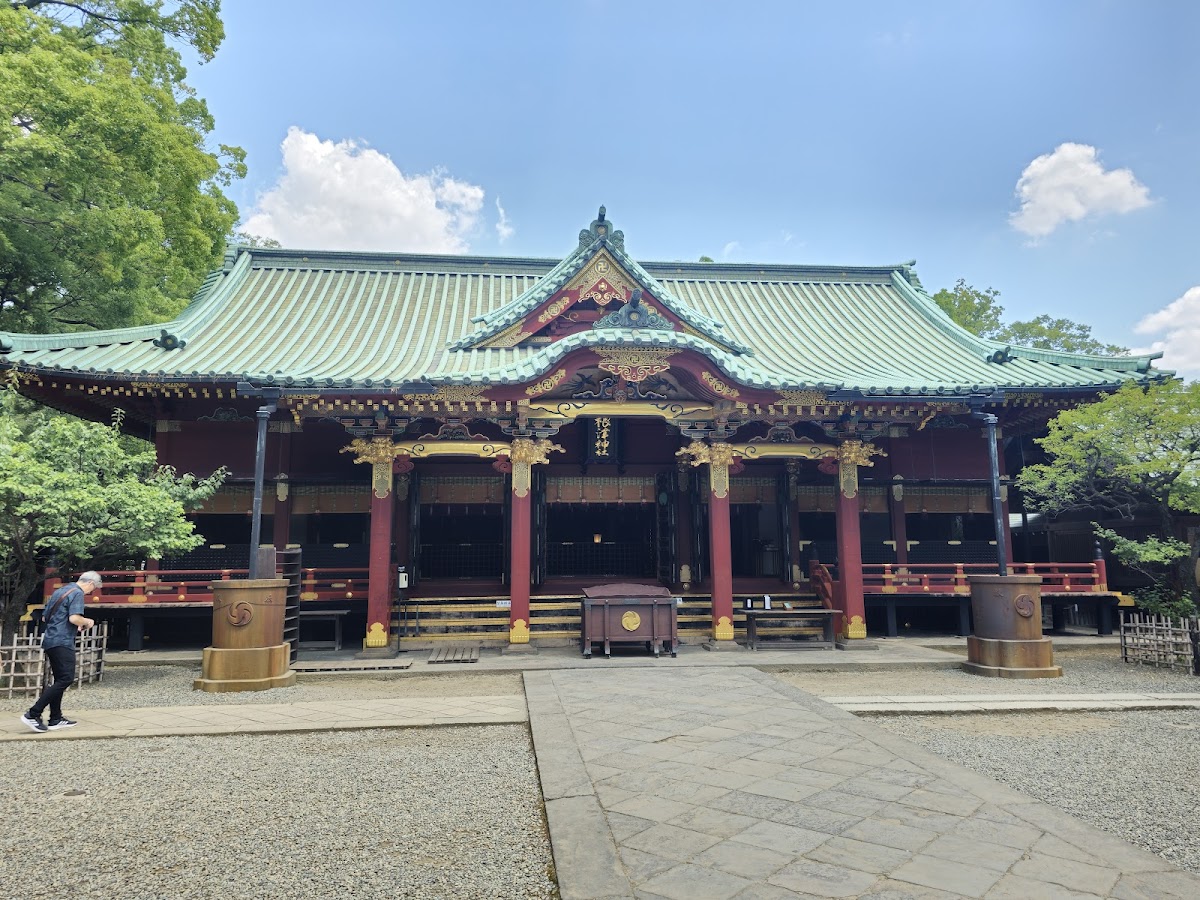
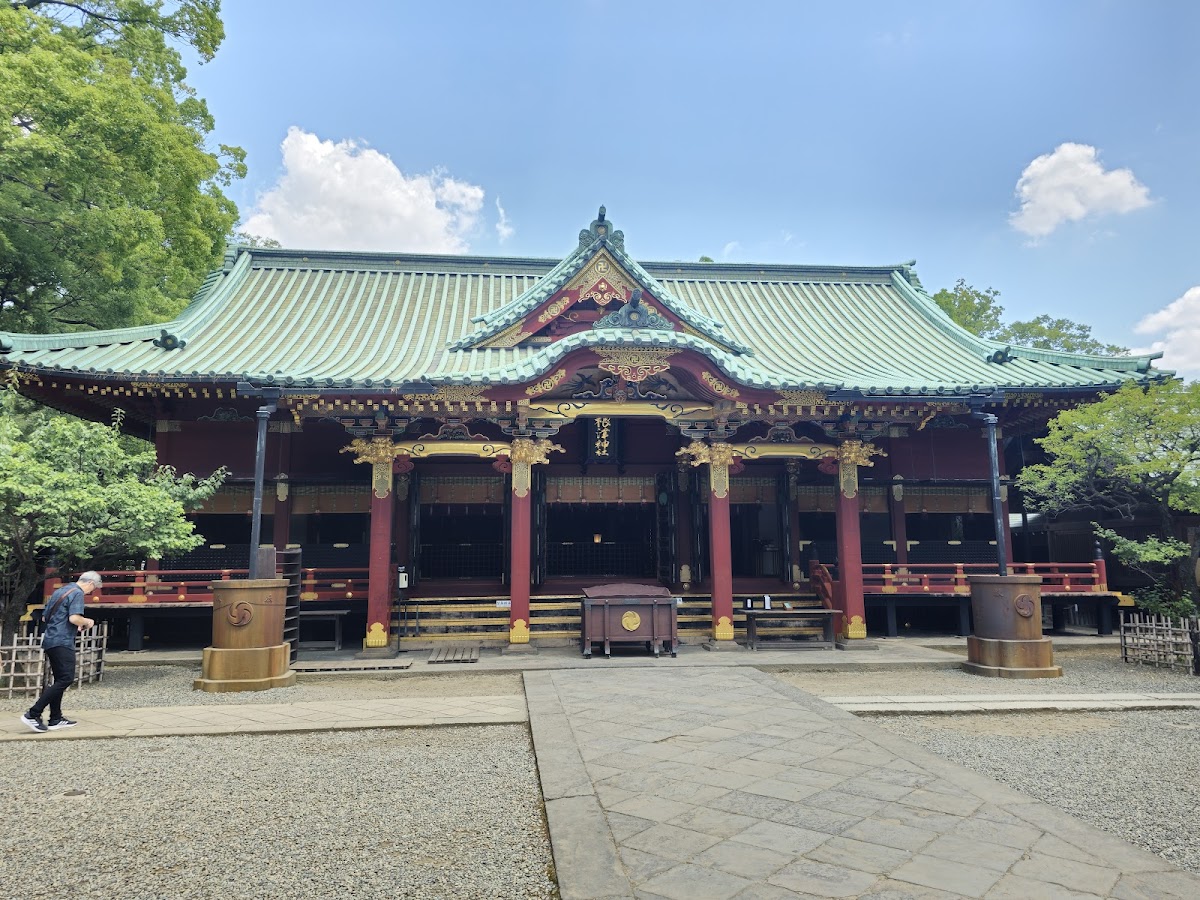
Tsunayoshi’s construction of the shrine buildings is highly regarded in architectural history as the perfected form of the Gongen-zukuri style. Seven buildings remain: the main hall, offering hall, worship hall, Karamon gate, tower gate, lattice fence, and west gate, all designated as important national cultural properties. These are valuable cultural heritage sites that convey the essence of Edo period shrine architecture.
Status as one of the Ten Shrines of Tokyo
During the Meiji era, the “Ten Shrines of Tokyo” were designated as quasi-imperial shrines to pray for the protection of Tokyo and the peace of all its people. Nezu Shrine is one of these shrines and is revered as a highly prestigious shrine. It is also a popular pilgrimage site for those visiting the Ten Shrines of Tokyo, attracting many worshippers.
Deities and Benefits
About the Deities
Nezu Shrine enshrines three deities:
- Susanoo-no-Mikoto: God of protection against misfortune and disaster
- Oyamakui-no-Mikoto: God of mountains and the landlord
- Honda-wake-no-Mikoto: Emperor Ojin, god of military fortune and victory
These three deities are collectively known as “Nezu Gongen” and have been revered since the Edo period.
Expected Benefits
Nezu Shrine is believed to offer the following benefits:
- Protection from Evil and Disaster: Due to the divine virtue of Susanoo-no-Mikoto
- Matchmaking: Long regarded as a place of great efficacy for praying for good relationships
- Business Prosperity: Attracted the faith of Edo merchants
- Academic Success and Passing Exams: Due to its proximity to the University of Tokyo, many students visit the shrine for exams
- Family Safety: Due to its history as the tutelary deity of the Shogunate
Highlights of the Shrine Grounds
Shrine Buildings Designated as National Important Cultural Properties
The greatest highlight of Nezu Shrine is the shrine buildings constructed in 1706 (Hoei 3). As a typical example of the Gongen-zukuri style, they hold significant historical value, and the following seven buildings are designated as National Important Cultural Properties.
Main Hall, Offering Hall, and Worship Hall
This structure, characteristic of the Gongen-zukuri style, connects the main hall and worship hall with the offering hall, inheriting the style of Nikko Toshogu Shrine. The black lacquer finish and gold leaf decorations allow visitors to appreciate the magnificent architectural beauty of the Edo period.
Karamon Gate
This four-legged gate stands in front of the main hall and is characterized by its intricate carvings. The elegant curves of the karahafu (curved gable) and the delicate decorations are magnificent and catch the eye of visitors.
Romon Gate
This two-story vermilion gate stands at the entrance to the shrine grounds and is a symbolic presence of Nezu Shrine. Its imposing appearance conveys the grandeur of Edo period shrine architecture.
Sukibei (Openwork Wall)
This wall surrounding the main hall is characterized by its lattice-like openwork. It encircles the shrine grounds for approximately 200 meters, creating a solemn atmosphere befitting a sacred area.
Azalea Garden – A Famous Spot with Approximately 3,000 Blooming Azaleas
Nezu Shrine is known as one of Tokyo’s premier azalea viewing spots. The “Azalea Garden,” located on the north side of the shrine grounds and spanning approximately 2,000 tsubo (about 6,600 square meters), boasts 3,000 azalea bushes of about 100 varieties, offering a magnificent floral spectacle from mid-April to early May.
The origin of azaleas is said to date back to when Tsunashige, the father of the 6th Shogun Ienobu, planted them in the garden of his residence. The garden, utilizing the slope, features pathways and torii gates, allowing visitors to stroll through a tunnel of azaleas.
The “Bunkyo Azalea Festival” is held annually (typically from early April to early May), attracting many flower viewers. The sight of the azaleas in various colors—white, pink, red, purple, and more—is truly breathtaking.
Senbon Torii – The Path to Otome Inari Shrine
On the west side of the shrine grounds is Otome Inari Shrine, and a thousand vermilion torii gates line the path leading to it. This fantastical scenery, reminiscent of Fushimi Inari Taisha in Kyoto, has recently become a popular spot for social media photos.
Otome Inari Shrine, located beyond the torii gates, is believed to bring blessings of business prosperity and family safety, attracting many worshippers.
Komagome Inari Shrine
On the south side of the shrine grounds is Komagome Inari Shrine. This is also a shrine with a long history, worshipped as a god of abundant harvests and business prosperity.
A Place Associated with Literary Figures
The area around Nezu Shrine is home to many literary figures, including Mori Ogai and Natsume Soseki. The Sendasanbo residence, where Mori Ogai first lived after moving to Bunkyo Ward, is near Nezu Shrine, and Natsume Soseki later lived in the same house. Kanchoro, where Ogai spent the latter half of his life, is also within walking distance.
Nezu Shrine, also known as “Nezu Gongen,” appears in Ogai’s novels and rakugo (traditional Japanese comic storytelling), and is known as a shrine beloved by cultural figures. A stroll through the shrine grounds will allow you to relive the scenery seen by these literary giants.
Goshuin (Shrine Seals) and Amulets
About Goshuin
At Nezu Shrine, in addition to the regular goshuin, a special goshuin for the Tokyo Ten Shrines pilgrimage is also available. Goshuin are given out at the shrine office, and the offering fee is usually 500 yen.
During the Azalea Festival, limited edition goshuin are sometimes given out, making it a must-see for collectors. Pre-printed goshuin are also available, allowing for smoother acquisition even during busy times.
Popular Amulets
Nezu Shrine offers a variety of amulets.
- Exorcism Amulet: An amulet for warding off evil spirits through the divine power of Susanoo-no-Mikoto.
- Matchmaking Amulet: Popular with those wishing for a good relationship.
- Academic Success Amulet: Popular with students and those taking exams.
- Azalea Amulet: An amulet featuring the azalea, unique to Nezu Shrine.
In addition, various amulets are available for different purposes, such as traffic safety and health prayers.
Annual Events and Festivals
Bunkyo Azalea Festival (Early April – Early May)
This is Nezu Shrine’s largest event, attracting approximately 100,000 visitors annually. The azalea garden is open to the public (admission fee 300 yen), and during the festival, a plant market and stalls are set up, creating a lively atmosphere.
Annual Grand Festival (Mid-September)
This is the most important festival of Nezu Shrine. The main festival, held once every three years, features a portable shrine procession. A traditional event dating back to the Edo period, it’s a grand celebration involving the entire community.
Other Annual Events
- New Year’s Visit (January 1st-3rd): A bustling festival with many worshippers.
- Setsubun Festival (February 3rd): A bean-throwing ritual takes place.
- Shichi-Go-San Festival (November): A popular event for families.
- Great Purification Ceremony (June 30th, December 31st): A ceremony to purify oneself of sins and impurities accumulated over the past six months.
Access Information
Access by Train
Nezu Shrine is within walking distance of several train stations, making it very convenient to access.
- Tokyo Metro Chiyoda Line “Nezu Station”: 5-minute walk (nearest station)
- Tokyo Metro Chiyoda Line “Sendagi Station”: 5-minute walk
- Tokyo Metro Namboku Line “Todaimae Station”: 5-minute walk
- Toei Mita Line “Hakusan Station”: 10-minute walk
Access from Nezu Station or Sendagi Station is the most convenient. Walking along Shinobazu Street will lead you to your destination without getting lost.
Access by Car and Parking
Nezu Shrine has a parking lot for visitors, but the number of spaces is limited (approximately 20). It gets especially crowded during the Azalea Festival, so using public transportation is recommended.
There are several coin-operated parking lots in the surrounding area, but they are often full on holidays, so try to arrive early.
Address: 1-28-9 Nezu, Bunkyo-ku, Tokyo
Visiting Information
Visiting Hours
Nezu Shrine grounds are open during the following hours:
- November-January: 6:00 AM – 5:00 PM
- February: 6:00 AM – 5:30 PM
- March: 6:00 AM – 6:00 PM
- April, May, September: 5:30 AM – 6:00 PM
- June-August: 5:30 AM – 6:30 PM
- October: 6:00 AM – 6:00 PM
The shrine office is open from 9:00 AM to 5:00 PM. Please visit during these hours if you wish to receive a Goshuin (shrine stamp) or amulet.
Admission Fee
Entry to the shrine grounds is free. However, during the Azalea Festival, there is a 300 yen entrance fee to the Azalea Garden. ### Etiquette for Visiting a Shrine
Please observe basic shrine etiquette.
- Bow when passing through the torii gate.
- Walk along the sides of the path, as the center is the path for the gods.
- Cleanse your hands and mouth at the water basin.
- At the main hall, perform the “two bows, two claps, one bow” ritual.
- Be quiet within the shrine grounds, and take care not to disturb other visitors when taking photographs.
Nearby Tourist Attractions
Yanaka Ginza Shopping Street
Located about a 10-minute walk from Nezu Shrine, this shopping street retains a retro Showa-era atmosphere. Approximately 70 shops line the street, offering opportunities for street food and souvenir shopping. The view from “Yuyake Dandan” (Sunset Steps) at dusk is particularly spectacular.
University of Tokyo Hongo Campus
Located about a 5-minute walk from Nezu Shrine, this is the campus of one of Japan’s leading universities, where you can visit historical buildings such as the Akamon (Red Gate) and Yasuda Auditorium. Sanshiro Pond within the grounds is a popular urban oasis.
Shinobazu Pond/Ueno Park
Approximately a 15-minute walk from Nezu Shrine. This vast park is home to cultural facilities such as a zoo, museums, and art galleries. Shinobazu Pond, with its beautiful cherry blossoms in spring and lotus flowers in summer, is a must-see.
Former Iwasaki Residence Garden
Approximately a 10-minute walk from Nezu Shrine. The Western-style mansion and garden, formerly the main residence of the Iwasaki family, the founders of the Mitsubishi zaibatsu, are open to the public. You can catch a glimpse of the lifestyle of the upper class during the Meiji era.
Points to Note When Visiting Nezu Shrine
Recommended Time to Visit
Azalea Season (Mid-April to Early May)
The azaleas, the greatest attraction of Nezu Shrine, are in full bloom. However, it will inevitably be crowded, so weekday mornings are recommended.
Fresh Green Season (Late May to June)
The grounds are relatively less crowded after the azalea festival, and it’s a beautiful time to visit with the fresh greenery. You can visit the shrine at a leisurely pace.
Autumn Foliage Season (Late November to Early December)
The trees on the shrine grounds change color, creating a peaceful atmosphere for worship.
Estimated Time Required
A regular visit to the shrine takes approximately 30 minutes to 1 hour. If you plan to leisurely explore the azalea garden during the azalea festival, allow 1 hour 30 minutes to 2 hours. If you plan to explore the surrounding Yanaka area as well, we recommend allocating about half a day.
Photo Spots
- Romon Gate: The symbol of Nezu Shrine; a classic photo spot is from the front.
- Senbon Torii Gates: A fantastical tunnel of vermilion gates.
- Tsutsuji-en Garden (during the Azalea Festival): A beautiful collaboration of colorful azaleas and the shrine buildings.
- Karamon Gate: Exquisite carvings.
Summary
Nezu Shrine boasts a history of approximately 1900 years, Edo-period shrine buildings designated as important national cultural properties, a spring azalea festival, and its status as one of Tokyo’s ten major shrines. Despite being in the heart of the city, it maintains a tranquil atmosphere, offering a precious space to enjoy the beauty of nature throughout the seasons.
With excellent access and many attractions nearby, such as Yanaka Ginza and the University of Tokyo, it’s ideal for a visit as part of Tokyo sightseeing. Why not spend some time reflecting on history while being soothed by the beautiful shrine buildings dating back to the Edo period and the surrounding nature?
Nezu Shrine is a shrine with diverse attractions. Whether you’re visiting for the first time or have been here many times, Nezu Shrine is a fascinating place where you’ll discover something new every time you visit. Be sure to go and experience its majestic atmosphere and the weight of its history for yourself.