Complete Guide to Koshikake Inari Shrine | A Hidden Gem in Mejirodai, Bunkyo Ward, Associated with Tokugawa Iemitsu
Koshikake Inari Shrine, quietly nestled in Mejirodai, Bunkyo Ward, Tokyo, is a historic Inari shrine with deep ties to the Tokugawa shogunate. Despite its convenient location within walking distance of Gokoku-ji Station, it maintains a tranquil atmosphere, far removed from the hustle and bustle of the city. This article comprehensively introduces all the information you need to know before visiting, from the shrine’s history and highlights to information on its goshuin (shrine stamp) and access methods.
Basic Information and Overview of Koshikake Inari Shrine
Koshikake Inari Shrine is an Inari shrine located at 3-26-1 Mejirodai, Bunkyo Ward, Tokyo. Its official name is “Inari Shrine,” but it is affectionately known as “Koshikake Inari” due to its unique origin.
Location and Basic Data
- Location: 3-26-1 Mejirodai, Bunkyo-ku, Tokyo
- Deity Enshrined: Toyouke-hime no Mikoto
- Former Name: Toyouke-no-Okami
- Annual Festival Day: First Horse Day of February
- Shrine Rank: Former Village Shrine
- Management: Affiliated with the Bunkyo Ward Branch of the Tokyo Association of Shinto Shrines
The shrine is located at the left corner of the main gate of the University of Tsukuba’s School for the Visually Impaired (formerly the University of Tsukuba’s School for the Blind), in a quiet residential area of Mejirodai. The grounds are not particularly large, but a carefully maintained and clean space welcomes visitors.
History and Origins of Koshikake Inari Shrine
Background of Founding and Connection to Tokugawa Iemitsu
The exact founding date of Koshikake Inari Shrine is not clearly known, but it is believed that a small shrine already existed in the early Edo period. At that time, this area was still a wide-open field with a good view, before Gokoku-ji Temple had even been built.
The origin of the shrine’s name comes from an anecdote related to Tokugawa Iemitsu, the third shogun. When Iemitsu visited this area during a falconry trip, he found a suitable tree stump and sat down to rest. It is said that while resting, Iemitsu bowed to a small shrine nearby before departing.
To pass on this event to future generations, the villagers of the surrounding area later worked together to build a shrine and a torii gate. Because it was the place where the shogun sat, it came to be called “Koshikake Inari” (Rest Inari), and since then, it has been deeply revered by the local people.
Original Name: “Toyouke-no-Okami”
Initially, this shrine was called “Toyouke-no-Okami.” Toyouke-no-Okami is the principal deity of the Outer Shrine of Ise Grand Shrine and is known as the god who presides over food and grains. It is believed that the shrine came to enshrine Toyouke-hime no Mikoto as its principal deity through syncretism with Inari worship.
From the Edo Period to the Present
Throughout the Edo period, Koshikake Inari Shrine was deeply rooted in the community as the guardian shrine of Zoshigaya-cho (present-day Mejirodai area, Bunkyo Ward). Even after the Meiji-era separation of Shinto and Buddhism, it continued to attract the faith of local residents and has been carefully preserved to this day.
Having escaped wartime destruction, old stone structures remain on the shrine grounds, allowing one to feel the weight of history that has continued since the Edo period.
About the Principal Deity: Toyouke-hime no Mikoto
The principal deity of Koshikake Inari Shrine is Toyouke-hime no Mikoto. She is also known as Toyouke-bime no Kami or Toyouke-no-Okami.
The Divine Nature of Toyouke-hime no Mikoto
Toyouke-hime no Mikoto is the goddess who presides over food and grains in Japanese mythology. In the Kojiki and Nihon Shoki, she appears as the god who presides over the meals of Amaterasu Omikami. She is enshrined as the principal deity of the Outer Shrine of Ise Grand Shrine and is worshipped as the guardian deity of all aspects of “clothing, food, and shelter,” especially food and industry.
Relationship with Inari Worship
While the principal deity of Inari shrines is originally Ukanomitama-no-kami, Toyouke-hime-no-Mikoto is often identified with her as a grain goddess, and thus syncretized with Inari worship. Koshikake Inari Shrine is believed to bestow blessings such as abundant harvests, business prosperity, and family safety.
Highlights of the Shrine Grounds
Shrine Building and Torii Gate
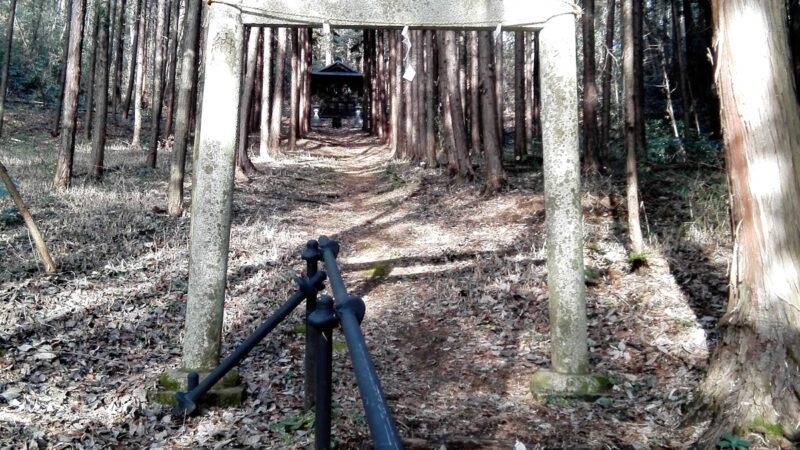
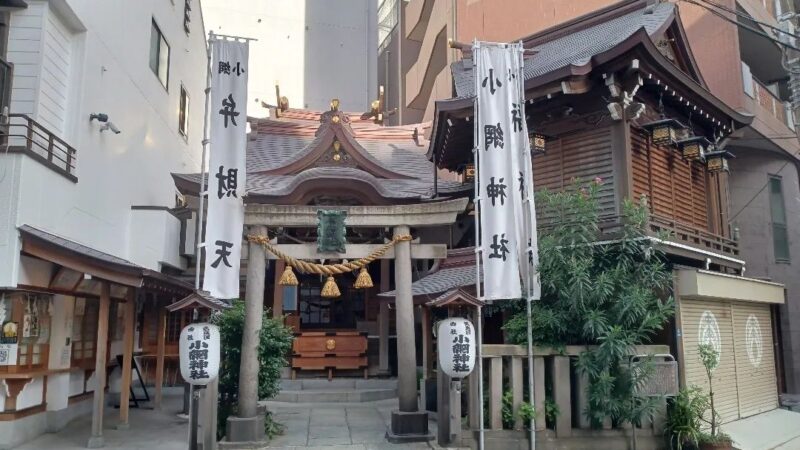
The current shrine building, though compact, is meticulously maintained. Passing through the vermilion torii gate, the worship hall is positioned directly ahead, maintaining the typical style of an Inari shrine. The shrine building is located to the left of the entrance, allowing worshippers to quietly offer their prayers.
Special Natural Monument “Chrysanthemum Stone”
Within the grounds of Koshikake Inari Shrine, a precious stone called Chrysanthemum Stone is displayed. The Chrysanthemum Stone is a fossil with a chrysanthemum flower-like pattern on its cross-section, making it extremely rare.
This Chrysanthemum Stone is designated as a Special Natural Monument and is one of the shrine’s important treasures. When visiting, please be sure to admire this precious natural beauty.
Koshin Tower and Stone Sculptures
To the right of the entrance to the shrine grounds stands a somewhat old-fashioned Koshin Tower. Koshin Towers are stone monuments built during the Edo period based on Koshin belief, and are valuable cultural assets that convey the history of the region. This Koshin Tower also suggests that this area has a long history dating back to the Edo period.
In addition, several other stone sculptures are placed within the shrine grounds, offering interesting elements for history enthusiasts.
Monument to the Hirata Ranch Site
In the back right of the shrine grounds stands a monument marking the site of the Hirata Ranch. This area was once the location of a ranch, and it is a historical site that tells the story of the region’s transformation from the Meiji to Taisho periods.
Goshuin (Shrine Seal) Information
About the Issuance of Goshuin
Goshuin are available at Koshikake Inari Shrine. However, since there is no resident priest, the issuance dates and times may be limited.
Generally, goshuin are often issued on Sundays and festival days. If you want to be sure to receive a goshuin, it is recommended to inquire in advance with the Tokyo Metropolitan Shrine Association or related shrines.
Goshuin Design
The goshuin of Koshikake Inari Shrine consists of simple yet carefully written ink calligraphy and a red seal. The name of the shrine, “Koshikake Inari Shrine,” and the date of visit are written, and the shrine’s seal is stamped. Bringing your goshuincho (stamp book) will make it a precious memento of your trip.
Transportation Access and Directions
Access by Train
Using public transportation is the most convenient way to reach Koshikake Inari Shrine.
Nearest Station: Tokyo Metro Yurakucho Line “Gokokuji Station”
- Approximately 4-5 minute walk from Exit 4 of Gokokuji Station
- After exiting, head north along Otowa Street towards Mejirodai.
- The landmark is the left corner of the main gate of the Tsukuba University School for the Visually Impaired.
Other Access Methods:
- Approximately 10 minute walk from Tokyo Metro Fukutoshin Line “Zoshigaya Station”
- Approximately 2 minute walk from the Toei Bus “Mejirodai 3-chome” bus stop
Access by Car
There is no dedicated parking lot for the shrine, so if you are visiting by car, you will need to use a nearby coin-operated parking lot. However, since the area around Mejirodai is a residential area with narrow roads, we recommend using public transportation.
Landmarks in the vicinity
- Main gate of Tsukuba University Affiliated School for the Visually Impaired
- Gokoku-ji Temple (approx. 7 minutes on foot)
- Bunkyo City Mejirodai Sports Park
Manners and Etiquette for Worship
Basic Worship Etiquette
Worship at an Inari shrine follows the same etiquette as at any other shrine.
- Bow before passing through the torii gate
- Purify your hands and mouth at the water basin (This step can be omitted if there is no water basin)
- In front of the main hall:
- Quietly place your offering
- Ring the bell if there is one
- Two bows, two claps, one bow (two bows, two claps, one bow)
- Bow again when leaving the torii gate
Mindset when Worshiping
Koshikake Inari Shrine is a small shrine located in a residential area. Please observe the following points when visiting the shrine:
- Do not speak loudly
- Worship quietly so as not to disturb nearby residents
- Take your trash with you
- When taking photographs, avoid the interior of the shrine and keep it within reasonable limits.
Nearby Attractions and Tourist Spots
Gokoku-ji Temple
Located approximately a 7-minute walk from Koshikake Inari Shrine, Gokoku-ji Temple is a renowned temple known as the head temple of the Buzan branch of the Shingon sect. It was built at the behest of Keishoin, the mother of Tokugawa Tsunayoshi, the fifth shogun. The vast grounds contain many cultural assets, including the main hall, a nationally designated important cultural property.
Chinzanso Hotel
Located on a hill in Mejirodai, Chinzanso Hotel is known for its beautiful Japanese garden. The garden, where you can enjoy nature in all four seasons, is open to the public (though overnight stays and dining are preferred), making it ideal for a stroll.
Bunkyo City Mejirodai Sports Park
This sports park serves as a place of relaxation for local residents and includes facilities such as tennis courts and a baseball field. ### Zoshigaya Cemetery
This historic metropolitan cemetery is the resting place of many famous people, including Natsume Soseki, Lafcadio Hearn (Koizumi Yakumo), and Takehisa Yumeji. It’s also a popular spot for quiet walks.
Other Inari Shrines in Bunkyo Ward
In addition to Koshikake Inari Shrine, several other Inari shrines are located within Bunkyo Ward.
Mikawa Inari Shrine
Located in Hongo, Bunkyo Ward, Mikawa Inari Shrine is a historically significant shrine said to have been established by Tokugawa Ieyasu when he entered Edo Castle, having been invited from Mikawa Province. Visiting it along with Koshikake Inari Shrine is recommended.
Other Inari Shrines
- Tsumakoi Inari Shrine (Yushima)
- Yanagimori Inari Shrine (Kanda)
- Karasumori Inari Shrine (Hongo)
Many other historic Inari shrines are scattered throughout Bunkyo Ward, making it possible to enjoy an Inari shrine pilgrimage.
Annual Events and Festivals
Hatsuumasai (February)
The most important festival at Inari shrines is the Hatsuumasai (First Horse Day Festival). Held on the first Horse Day of February, it is a time to pray for a bountiful harvest and business prosperity. At Koshikake Inari Shrine, a festival is also held on the first Horse Day, attracting local worshippers.
Other Annual Events
- New Year’s Day Festival (January 1st)
- Setsubun Festival (around February 3rd)
- Summer Purification Ceremony (June 30th)
- Year-End Purification Ceremony (December 31st)
However, due to the small size of the shrine, not all events are held on a large scale.
Benefits of Koshikake Inari Shrine
Main Divine Virtues
Koshikake Inari Shrine, dedicated to Toyouke-hime no Mikoto, is believed to offer the following benefits:
- Abundant Harvest: Blessings related to agriculture and food
- Business Prosperity: Development and prosperity of businesses
- Family Safety: Health and peace for the family
- Good Fortune and Prosperity: Increased luck and the arrival of happiness
- Protection from Misfortune: Protection from disaster
Protection of Tokugawa Iemitsu
Furthermore, as a shrine associated with the Tokugawa shogunate, it is also believed to offer benefits such as career advancement and good fortune and luck in competitions. Due to its history as a place where Iemitsu rested, it is also associated with “taking a breather” and “gaining rest,” and is a popular place to visit for healing physical and mental fatigue.
Visitor Feedback and Reviews
Visitors who have actually visited Koshikake Inari Shrine have shared the following comments:
- “It’s a quiet space that doesn’t feel like it’s in the middle of the city, and it calmed my mind.”
- “Although small, it’s meticulously maintained, and you can feel the love of the local people.”
- “The chrysanthemum stone is truly beautiful, and I felt the mystery of nature.”
- “I stopped by on my way to visit Gokoku-ji Temple, and it was good to learn about the history of Tokugawa Iemitsu.”
- “It’s quietly located in a residential area, and it was a little difficult to find, but that also added to its charm.”
Historical Background of Bunkyo Ward and the Shrine
Mejirodai in the Edo Period
During the Edo period, the area around Mejirodai was dotted with samurai residences and temples and shrines. Before Gokoku-ji Temple was built, it was a hill with a good view, and it is thought that this was one of the reasons why Iemitsu visited this place, as it was a suitable place for falconry.
Changes Since the Meiji Era
Since the Meiji era, this area has developed into an educational district with many educational institutions. The University of Tsukuba’s Special Needs School for the Visually Impaired (formerly Tokyo School for the Blind) is one such example; shrines have been preserved as spiritual anchors for the community even amidst this modernization.
Koshikake Inari Shrine as a Photo Spot
Recommended Photo Spots
- Vermilion Torii Gate: The entrance torii gate, with its beautiful vermilion color typical of Inari shrines, is very photogenic.
- Chrysanthemum Stone: This precious stone, a special natural monument, is a must-see.
- Panoramic View of the Shrine and Grounds: The grounds, though small, have a well-maintained atmosphere.
- Stone Structures such as Koshin Towers: Old stone monuments that evoke a sense of history.
Precautions When Taking Photos
- Refrain from taking photos inside the shrine.
- Be considerate of other visitors.
- Be mindful of the privacy of nearby residents.
- Avoid using flash photography.
Reasons to Visit Koshikake Inari Shrine
For History Enthusiasts
This shrine, with its direct connection to Tokugawa Iemitsu, the third shogun and a historically important figure, is invaluable. It holds historical value as a place where one can glimpse the Edo period’s falconry culture and the daily life of the shogun.
For Goshuin (Shrine Stamp) Collectors
As part of a tour of shrines in Bunkyo Ward, and as a shrine associated with the Tokugawa family, this is a shrine you’ll want to add to your goshuin book.
For Those Seeking Quiet Worship
Without the crowds of popular tourist spots, the environment allows for a peaceful and calm worship experience, a precious sanctuary for modern people.
For Those Interested in Local History
Koshikake Inari Shrine is an important landmark for understanding the history of the Mejirodai and Zoshigaya area. It is a valuable historical site that tells the story of the area’s transformation.
Contact Information
For detailed information about Koshikake Inari Shrine, including goshuin issuance dates, please contact the following:
- Tokyo Metropolitan Shrine Association, Bunkyo Ward Branch
- Bunkyo Ward Office, Academy Promotion Division
- Address: 1-16-21 Kasuga, Bunkyo-ku, Tokyo 112-8555
- Phone: 03-5803-1120 (Main)
Summary
Koshikake Inari Shrine is a historic Inari shrine in Mejirodai, Bunkyo Ward, with a history dating back to when Tokugawa Iemitsu, the third shogun, rested there during a falconry expedition. Despite its small grounds, it boasts many points of interest, including the specially designated natural monument, the Chrysanthemum Stone, and an old Koshin Tower, and its tranquil environment is a major draw.
Its convenient location, just a 5-minute walk from Gokoku-ji Station, makes it an ideal shrine to visit in conjunction with sightseeing at Gokoku-ji Temple or Chinzanso Garden. It is believed to offer blessings for abundant harvests, business prosperity, and family safety through the divine virtues of Toyouke-hime no Mikoto, and is still deeply revered by the local community.
Escape the hustle and bustle of the city and visit Koshikake Inari Shrine, where you can feel the weight of history that has continued since the Edo period and offer a peaceful prayer. When you visit Bunkyo Ward, why not stop by? It is a precious place where you can reflect on the tree stump where the shogun once sat and experience a form of faith that continues to this day.