Ofuna Kannon-ji Temple Complete Guide: History, Benefits, and Visiting Information for the Giant Kannon Statue
Anyone visiting the area around Ofuna Station in Kamakura City, Kanagawa Prefecture, will see the giant white Kannon statue. Ofuna Kannon-ji Temple, with its graceful form watching over many people, is a local symbol and a popular power spot for matchmaking and safe childbirth prayers. This article provides detailed information about Ofuna Kannon-ji Temple, including its history, benefits, visiting information, and access methods—everything you need to know before visiting.
About Ofuna Kannon-ji Temple
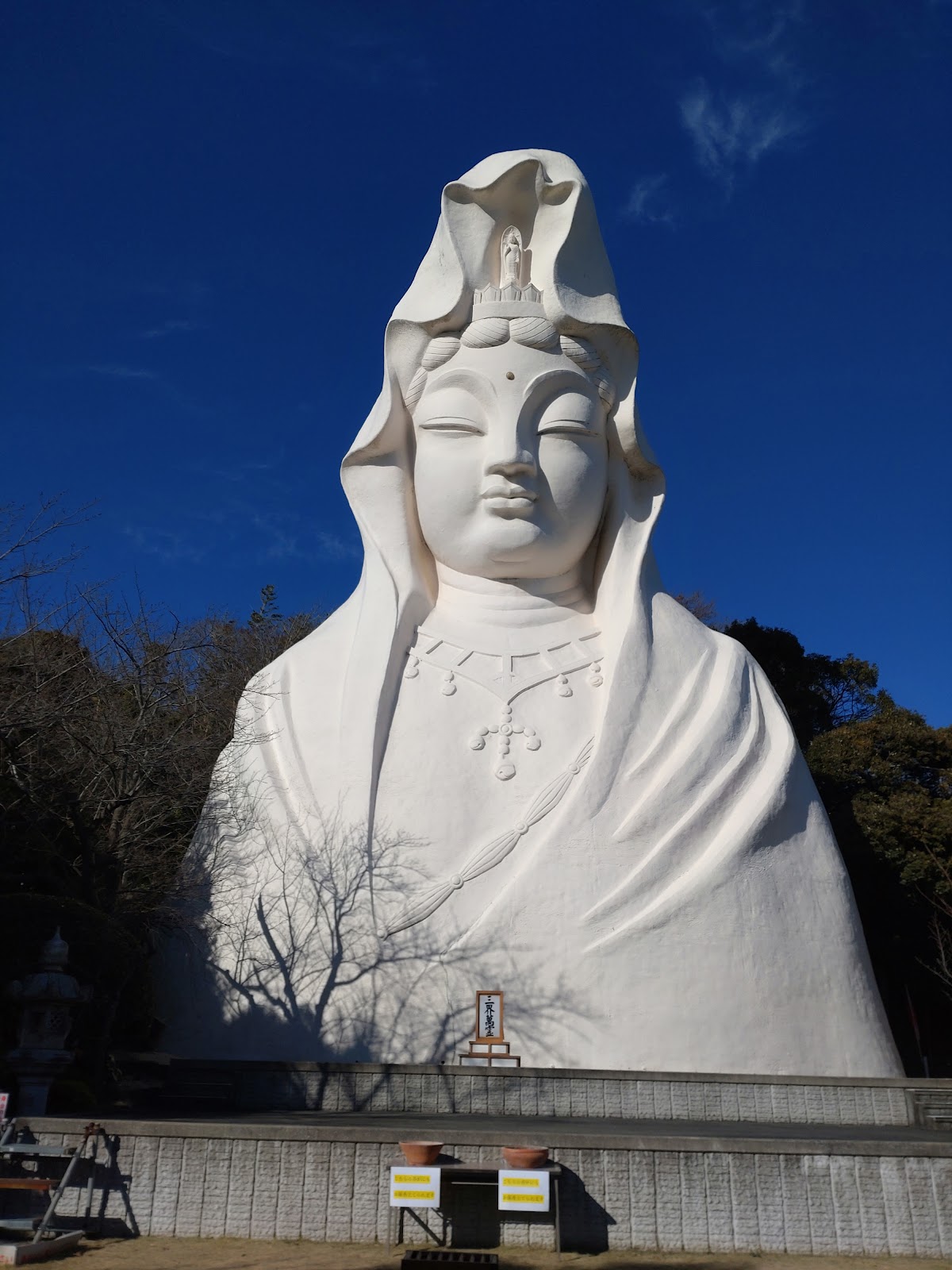
Ofuna Kannon-ji Temple is a Soto Zen Buddhist temple located in Okamoto 1-chome, Kamakura City, Kanagawa Prefecture. Its official name is “Butsukaizan Ofuna Kannon-ji,” and it is known as a prestigious temple as a direct branch temple of the head temple, Soji-ji. The principal image is the Holy Kannon Bodhisattva, and its most distinctive feature is the approximately 25-meter-tall white-robed Kannon statue.
Located in a prime location, approximately a 10-minute walk from Ofuna Station, where JR East’s Tokaido Line, Yokosuka Line, and Negishi Line intersect with the Shonan Monorail, its majestic form can be admired even from the train windows. For the residents of Kanagawa Prefecture, it is a familiar part of everyday scenery and has become deeply rooted in the community as “Ofuna’s Kannon.”
The Overwhelming Scale of the Ofuna Kannon Statue
The white-robed Kannon statue at Ofuna Kannon-ji Temple boasts an overwhelming presence due to its sheer size. This colossal bust-style Kannon, standing approximately 25.39 meters tall, 19 meters wide, and weighing approximately 1915 tons, sits atop a hill, seemingly watching over the town of Ofuna.
The Kannon statue is a bust-style sculpture, with its hands clasped together in prayer in front of its chest. Its graceful features and serene expression evoke a sense of peace and compassion in those who behold it. The white concrete statue stands out against the blue sky on sunny days and exudes a mystical atmosphere on cloudy days.
History and Background of Ofuna Kannon-ji Temple
The history of Ofuna Kannon-ji Temple began with a wish for peace in the early Showa period. Its construction and completion required many years, including interruptions due to war.
Beginning of Construction (Early Showa Period)
In 1929 (Showa 4), a plan to construct the Ofuna Kannon statue was initiated by local volunteers who wished for eternal peace. At that time, Japan was on the rise of militarism, and the construction of the Kannon statue, imbued with prayers for peace, reflected the strong wishes of the local people.
Construction progressed smoothly, and the outline of the Kannon statue was completed in 1934 (Showa 9). However, Japan then entered an era of war, and construction was forced to be interrupted. The unfinished Kannon statue continued to watch over Ofuna even during the war.
Post-War Reconstruction and Completion
After the end of World War II and the return of peace, momentum for the completion of the Kannon statue rose again. After the war, Zen Master Takashina Rōsen, the head of the Sōtō Zen sect, and others took the lead in establishing the Ōfuna Kannon Association, a foundation, and began full-scale activities toward the completion of the Kannon statue.
With the cooperation and donations of many people, construction resumed, and in 1960 (Showa 35), the Kannon statue in its current form was finally completed. After a full 31 years from the start of construction, the Kannon statue, imbued with a wish for peace, was finally completed.
Development as Ōfuna Kannon-ji Temple
In 1981 (Showa 56), Ōfuna Kannon officially became a temple, “Ōfuna Kannon-ji Temple,” and the development of the temple grounds progressed. As a Sōtō Zen temple, it began to function as a place for transmitting the teachings of Zen, and continues to do so to this day.
It is said that Shakyamuni Buddha, the founder of Zen Buddhism, attained enlightenment while meditating under a Bodhi tree, and his Zen teachings were passed down through 28 generations to Bodhidharma. Ofuna Kannon-ji Temple, as a temple that carries on this tradition, serves as a spiritual center.
Benefits and Power Spot of Ofuna Kannon-ji Temple
Ofuna Kannon-ji Temple is a power spot with various benefits, attracting many worshippers. It is particularly revered as a Kannon (Goddess of Mercy) that grants women’s wishes.
Matchmaking and Fulfillment of Good Relationships
The White-Robed Kannon is known for its benefits in matchmaking and fulfilling romantic relationships, attracting many worshippers seeking good fortune in love. Within the temple grounds is a special tree called the “Tree of Matchmaking,” and it is believed that praying here brings even stronger benefits.
Besides fulfilling good relationships, it also offers benefits for marital harmony, so many couples and married couples visit the temple. The sight of couples gazing up at the compassionate expression of Kannon and praying for their happiness is a common scene at Ofuna Kannon-ji Temple. ### Prayer for Safe Childbirth and Child-Rearing
Kannon (Goddess of Mercy) has been worshipped since ancient times as a protector of children, and Ofuna Kannon-ji Temple is known for its blessings for safe childbirth and child-rearing. Within the temple grounds is a Jizo statue for child-rearing and protection against misfortune, attracting parents who pray for their children’s healthy growth.
Various types of amulets are available, including those for safe childbirth and fertility, making them popular with pregnant women and those raising children. Kannon’s warm gaze is trusted as a gentle watchful presence for mothers and children.
Protection from Misfortune and Good Fortune
The Jizo statue for child-rearing and protection against misfortune is also known for its blessings of protection against misfortune. Those in their unlucky years at life’s turning points, or those seeking protection from disaster, visit the temple. It is believed that Kannon’s great compassion protects against various calamities.
Other Benefits
At Ofuna Kannon-ji Temple, in addition to the above, various wishes are granted, including recovery from illness, business prosperity, and family safety. Kannon’s name comes from the meaning of “seeing the voices of all sentient beings,” and she is a being who listens to the wishes of all people.
Guide to Ofuna Kannon-ji Temple Grounds
Besides the Kannon statue, there are many other sights to see within the grounds of Ofuna Kannon-ji Temple. When visiting, please take your time to explore the entire grounds.
White-Robed Kannon Statue
The central feature of the temple grounds is, of course, the White-Robed Kannon statue. The sight of Kannon viewed from below is breathtaking, and its graceful expression and serene atmosphere evoke a sense of spiritual cleansing.
Inside the Kannon statue, a 1/20 scale replica of the original is enshrined. There are times when it is possible to view the inside of the statue, offering a rare experience of looking out from within the Kannon statue.
Main Hall
The main hall enshrines the principal image, the Holy Kannon Bodhisattva. In the quiet hall, you can join your hands in prayer, calm your mind, and offer your prayers. As befits a Zen Buddhist temple, it exudes a simple yet dignified atmosphere.
Matchmaking Tree
The matchmaking tree on the temple grounds is a popular spot for visitors praying for good fortune in love. It is said that making a wish in front of this tree will bring you a wonderful relationship.
Child-Rearing and厄除け (Exorcism) Jizo
This Jizo statue is dedicated to the healthy growth of children and protection from evil. The small Jizo statue welcomes visitors with a gentle expression. Those raising children or those in their unlucky year should definitely offer their prayers here.
Observation Spot
Because the temple grounds are located on a hill, it is also a popular observation spot offering panoramic views of the town of Ofuna. On a clear day, you can see far into the distance and enjoy the townscape watched over by Kannon.
Visiting Information, Admission Fees, and Opening Hours
This section summarizes essential information you should know when visiting Ofuna Kannon-ji Temple.
Admission Fees
- Adults (High School Students and above): 300 yen
- Children (Elementary and Junior High School Students): 100 yen
- Infants: Free
Admission fees are used for maintaining the temple grounds and preserving the Kannon statue. It’s a reasonable price for a fulfilling visit.
Visiting Hours
Visiting hours may vary depending on the season, but generally they are from 9:00 AM to around 4:30 PM. When planning your visit, we recommend checking the official website for the latest information.
Location
Address: 1-5-3 Okamoto, Kamakura City, Kanagawa Prefecture
Inquiries
For details regarding visits and annual event schedules, please contact Ofuna Kannon-ji Temple via their official website or by phone.
Transportation Information and Access
Public transportation is the most convenient way to access Ofuna Kannon-ji Temple.
Access by Train
Walking from JR Ofuna Station
- Approximately 10 minutes on foot from the West Exit (Kannon Exit) of Ofuna Station on the JR Tokaido Line, Yokosuka Line, and Negishi Line.
- You will see the Kannon statue upon exiting the station; simply walk in that direction and you won’t get lost.
Access by Shonan Monorail
- Approximately 10 minutes on foot from Ofuna Station on the Shonan Monorail.
Walking Route
Exit the West Exit of Ofuna Station and head in the direction where you can see the Kannon statue. Walk up the slope through the residential area, and you will arrive at the entrance to Ofuna Kannon-ji Temple. There are signs along the way, so even first-time visitors can easily find their way.
Access by Car
If visiting by car, the nearest interchanges are Hino IC or Asahina IC on the Yokohama-Yokosuka Expressway. However, parking space is limited, so we recommend using public transportation whenever possible.
Parking
There is a parking lot for visitors on the temple grounds, but the number of spaces is limited. Especially on weekends and during events, congestion is expected, so please allow ample time for your visit or consider using public transportation.
Annual Events at Ofuna Kannon-ji Temple
Ofuna Kannon-ji Temple holds various Buddhist events throughout the year. Here are some of the main events:
New Year’s Day Visit
The first visit of the new year is bustling with many worshippers. People gather before Kannon to pray for happiness and peace in the new year.
Setsubun Festival
The Setsubun Festival is held in February, where people pray for protection from evil and good fortune. Events such as bean-throwing may also be held.
Flower Festival (Buddha’s Birthday)
The Flower Festival (Buddha’s Birthday) is held on April 8th, the birthday of Buddha. A statue of the infant Buddha is placed in a flower-decorated shrine, and sweet tea is poured over it to celebrate.
Obon Memorial Service
During Obon in August, memorial services for ancestors are held. Many parishioners and believers visit to pay their respects.
Autumn Grand Festival
A grand festival is held in autumn, offering gratitude to Kannon and prayers for peace.
Other Events
Monthly Zen meditation sessions and sutra copying sessions are also held, allowing visitors to experience the teachings of Zen. Detailed schedules can be found on the official website and on the temple’s bulletin board.
Tourist Attractions Around Ofuna Kannon-ji Temple
When visiting Ofuna Kannon-ji Temple, why not also explore the surrounding tourist attractions?
Kamakura City Center
Kamakura Station is approximately 10 minutes by train from Ofuna Station. Many of Kamakura’s representative tourist attractions, such as Tsurugaoka Hachimangu Shrine, the Kamakura Daibutsu (Kōtoku-in Temple), and Hase-dera Temple, are located here.
Kita-Kamakura Area
Near Kita-Kamakura Station, just one stop from Ofuna Station, are numerous famous Zen temples such as Engaku-ji, Kencho-ji, and Meigetsu-in. Enjoy a peaceful temple tour.
Ofuna Flower Center
This botanical garden, within walking distance of Ofuna Station, allows you to enjoy seasonal flowers. A visit after visiting Kannon-ji Temple is highly recommended.
Points and Manners for Visiting Ofuna Kannon-ji Temple
Manners for Visiting
Ofuna Kannon-ji Temple is a religious facility, so please observe the following manners when visiting:
- Be quiet within the temple grounds and be considerate of other visitors.
- Remove your hat in front of the main hall and the Kannon statue.
- Photography is permitted, but be considerate of other visitors.
- Take your trash with you.
Recommended Time to Visit
Early morning hours are relatively uncrowded, allowing for a peaceful visit. Also, the Kannon statue is beautifully illuminated by the setting sun in the evening, making it a great spot for photography.
Attire
There are no specific dress code requirements, but please dress appropriately for visiting a temple. Since you will be walking uphill, comfortable shoes are recommended.
Estimated Time Required
If you plan to leisurely explore the temple grounds, allow 30 minutes to an hour. Please include time for photography and enjoying the views.
Amulets and Souvenirs
Ofuna Kannon-ji Temple offers a variety of amulets and souvenirs.
Amulets for Finding Love
These amulets are popular with those wishing for a good match or success in love. Many feature cute designs with pink and red as the main colors.
Amulets for Safe Childbirth and Child-Rearing
These amulets are for praying for safe childbirth and the healthy growth of children. They make a wonderful gift for expectant mothers or those raising children.
Amulet for Protection Against Misfortune
This amulet is for those in their unlucky year or those wishing for protection from misfortune. Wearing it will bring the protection of Kannon (Goddess of Mercy).
Goshuin (Temple Seal)
Goshuin are available at Ofuna Kannon-ji Temple. Many people receive them as a memento of their visit or as part of their goshuincho (stamp book) collection.
Capturing the Charm of Ofuna Kannon-ji Temple in Photographs
Ofuna Kannon-ji Temple is also a popular photo spot.
Best Shot Points
- Front View of Kannon: The view of Kannon from the top of the stairs leading from the entrance is the most impressive.
- Side View: Photographing Kannon from the side highlights its graceful lines.
- Distant View from Ofuna Station: Kannon as seen from the station platform is also impressive.
- View from the Temple Grounds: The collaboration of the Ofuna townscape and Kannon as seen from the hilltop is stunning.
Photography Tips
The white Kannon looks especially beautiful against a clear blue sky on a sunny day. Cloudy days also allow for photos with a mystical atmosphere. The surrounding trees change color with the seasons, allowing you to enjoy the ever-changing scenery.
Ofuna Kannon-ji Temple: Present and Future
Ofuna Kannon-ji Temple continues to be cherished by many people today as a symbol of the region and a spiritual haven. The Kannon statue, which began as a prayer for peace, continues to watch over the town and people of Ofuna, more than 60 years after its completion.
In recent years, it has gained attention from younger generations through social media and has become popular as a power spot and a photogenic location. The official Instagram account (@oofuna_kannonji_official) posts daily updates on the Kannon statue and the changing seasons of the temple grounds, and is beloved by many followers.
While preserving tradition, Ofuna Kannonji Temple, as a temple open to the modern age, will continue to provide peace and hope to many people.
Summary
Ofuna Kannonji Temple is a Soto Zen temple located in Kamakura City, Kanagawa Prefecture, and is a local symbol known for its white-robed Kannon statue, which stands over 25 meters tall. Construction began in 1929, and after interruptions due to war, the statue was completed in 1960. It conveys a wish for peace and a spirit of compassion to this day.
This temple is a popular power spot, attracting many visitors with its various blessings, including matchmaking, safe childbirth, child-rearing, and protection from evil. Its convenient location, just a 10-minute walk from Ofuna Station, makes it a beloved destination for a wide range of people, both as part of a Kamakura sightseeing trip and as a regular place of worship.
The entrance fee is reasonable at 300 yen for adults and 100 yen for children, and visitors can enjoy panoramic views of Ofuna town from the temple grounds. Why not spend a peaceful and tranquil time in the quiet grounds, surrounded by the ever-changing beauty of the Kannon statue throughout the seasons?
When you visit Ofuna, be sure to stop by Ofuna Kannon-ji Temple and experience the graceful figure and compassionate gaze of the Kannon statue. It will surely be a memorable experience.