Complete Guide to Mokusenji Temple | History, Access, and Highlights of the Soto Zen Temple in Kamakura’s Ofuna
Mokusenji Temple, located in Okamoto, Kamakura City, Kanagawa Prefecture, is a Soto Zen temple founded during the Meiji era. Soto Zen temples are relatively few in Kamakura, and among them, Mokusenji Temple is known as a special place with deep historical ties to the Ofuna Kannon. This article comprehensively explains everything you need to know before visiting Mokusenji Temple, from its history and highlights to access information and cemetery details.
What is Mokusenji Temple?
Mokusenji Temple is a Soto Zen temple located at 1-4-1 Okamoto, Kamakura City, Kanagawa Prefecture. Its mountain name is “Ofuna-san,” and despite its convenient location about a 3-minute walk from the west exit of Ofuna Station, it is characterized by a long stone staircase leading to the main hall built on a hillside.
While the Kamakura area has many Rinzai and Jodo sect temples, Soto sect temples are limited in number, making Mokusenji Temple one of the precious few. Furthermore, the historical fact that Mokusenji Temple managed the Ofuna Kannon statue until Ofuna Kannon-ji Temple became an independent religious corporation also speaks to the temple’s importance.
History of Mokusenji Temple
Founding History
Mokusenji Temple was founded in 1909 (Meiji 42). A man named Hamachi Hachiro (or Hamachi Hachiro) founded the temple with the aim of spreading the Diamond Sutra, which he deeply believed in.
The founding abbot was Zen Master Heki Mokusen, who was the head priest of Eihei-ji Temple, the head temple of the Soto sect. Zen Master Heki Mokusen was a highly respected monk in the Soto sect at the time, and his fame and authority greatly influenced the founding of Mokusenji Temple. The temple’s name, “Mokusen,” originates from the name of its founder, Zen Master Heki Mokusen.
Relocation from Yushōji Temple
Mokusenji Temple has an interesting history. In fact, it was founded by relocating an existing temple called “Yūshōji” in Shizuoka Prefecture to this location in Kamakura and changing its name to “Mokusenji.” This relocation and name change marked the beginning of a new history.
The Meiji era was a time when the effects of the anti-Buddhist movement still lingered, but the faith and financial resources of Hamachi Hachirō, combined with the religious authority of Zen Master Heki Mokusen, made the founding of this new temple possible.
Relationship with Ōfuna Kannon
An essential aspect of Mokusenji Temple’s history is its deep connection with the neighboring Ōfuna Kannon. While the construction of Ōfuna Kannon began in 1929 (Showa 4), Mokusenji Temple was founded in 1910 (Meiji 43), meaning Mokusenji Temple existed on this mountain approximately 20 years earlier. The construction and completion of the Ofuna Kannon statue were largely due to the central role played by Zen Master Takashina Rōsen, the second head priest of Mokusenji Temple and later the head of Eiheiji Temple. Thanks to Zen Master Takashina’s efforts, the Ofuna Kannon was completed in 1960 after many years of construction.
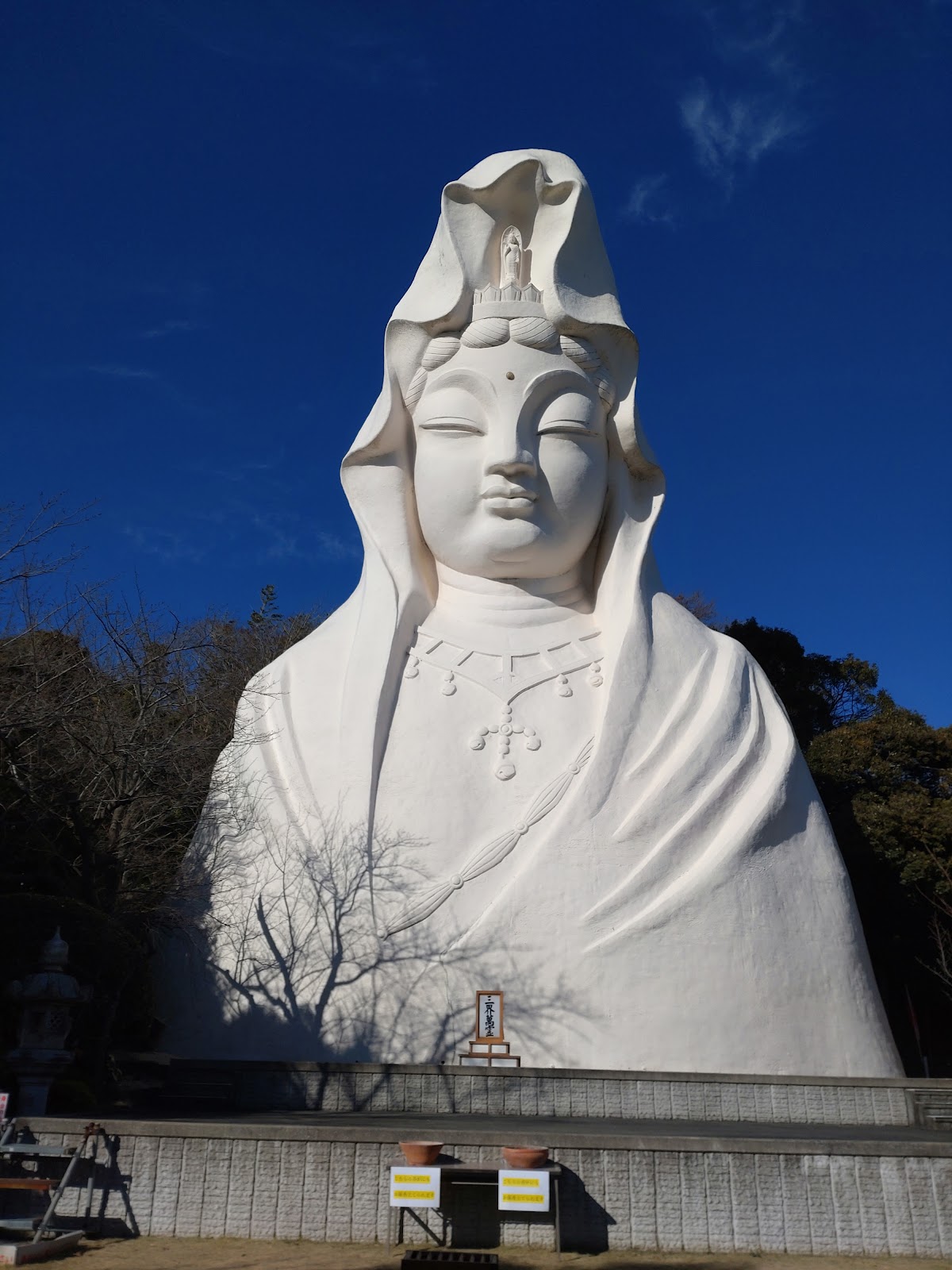
Even more importantly, Mokusenji Temple was responsible for the management of the Ofuna Kannon until Ofuna Kannon-ji Temple was registered as an independent religious corporation. This management responsibility demonstrates the important religious role Mokusenji Temple played in the region. Even today, the Ofuna Kannon is located immediately east of Mokusenji Temple, and the two maintain a close geographical and historical relationship.
Mokusenji Temple Grounds and Highlights
Stone Steps of the Approach
The first thing visitors to Mokusenji Temple encounter is the long, uphill staircase leading from the entrance to the main hall. These stone steps are built along the mountainside, and since the main hall is located at the top of the mountain, you will need to climb quite a number of steps.
Visitor reviews often mention that “the time it takes to reach the top varies greatly from person to person” and “you have to climb a lot of stairs.” Those who are not confident in their physical strength or the elderly are advised to climb slowly, taking breaks as needed. However, the process of climbing these steps itself can be seen as part of a spiritual practice, a way to compose oneself and prepare for worship.
Stone Buddhas and Jizo Statues
Along the stone steps, you will find stone Buddhas and Jizo statues with expressive faces. Visitors have commented that “the expressions on the Jizo statues along the way are very impressive,” and these stone Buddhas soothe the hearts of those climbing the path.
Each of these stone Buddhas has a different expression, and they quietly watch over and encourage worshippers, creating a unique atmosphere within the grounds of Mokusenji Temple.
Main Hall
Located at the top of a long flight of stone steps, the main hall is the central structure of Mokusenji Temple. From the hall, situated on a mountaintop, one can enjoy panoramic views of the surrounding landscape and worship in a tranquil atmosphere.
As befits a Soto Zen temple, the main hall exhibits the characteristics of Zen architecture, displaying a simple yet majestic presence. Worshipping in the main hall allows one to escape the hustle and bustle of daily life and find peace of mind.
Cemetery
Mokusenji Temple has an attached temple cemetery, characterized by its terraced structure. Utilizing the mountain slope, the cemetery enjoys good ventilation and ample sunlight, ensuring a pleasant environment.
While it may be possible to use the cemetery regardless of sect, as it is a Soto Zen temple cemetery, it is recommended to inquire directly with the temple for details. The cemetery offers excellent views and a quiet, peaceful environment.
How to Access Mokusenji Temple
Basic Information
- Location: 1-4-1 Okamoto, Kamakura City, Kanagawa Prefecture
- Sect: Soto Zen
- Mountain Name: Ofunayama
- Founder: Zen Master Mokusen Hioki
- Founder: Hachiro Hamachi
- Established: Meiji 42 (1909)
Access by Train
Access to Mokusenji Temple is very convenient. The nearest station is Ofuna Station on the JR Tokaido Line, Yokosuka Line, Shonan Shinjuku Line, and Shonan Monorail, and it’s only about a 3-minute walk from the station.
Route from Ofuna Station West Exit:
- Exit Ofuna Station West Exit (Kasama Exit)
- Proceed straight northwest from the station
- You will arrive at the entrance to the approach to Mokusenji Temple in approximately 232 meters (about 3 minutes on foot).
Ofuna Station is a major station served by multiple lines, making it easily accessible from both Yokohama and Tokyo.
Access by Car
If visiting by private car, the nearest interchanges are the Hino Interchange or Asahina Interchange on the Yokohama-Yokosuka Expressway. However, the area around the temple is residential, and parking spaces may be limited, so it is recommended to check with the temple in advance.
Parking may be available at Ofuna Kannon, but it is limited to use for worship purposes, so please use it respectfully.
Nearby Tourist Attractions
When visiting Mokusenji Temple, you can also visit the following nearby spots:
- Ofuna Kannon: A Kannon statue approximately 25 meters tall, located east of Mokusenji Temple.
- Jorakuji Temple: An ancient Rinzai Zen temple founded by Hojo Yasutoki, the third regent of the Kamakura Shogunate.
- Ofuna Flower Center: A botanical garden where you can enjoy flowers of all seasons.
- Tamanawa Castle Ruins: The ruins of a castle from the Sengoku period, perfect for a historical stroll.
Points to Note When Visiting Mokusenji Temple
Clothing and Preparations for Visiting
When visiting Mokusenji Temple, we recommend the following preparations, considering that you will be climbing a long flight of stone steps:
- Comfortable Shoes: Sneakers or athletic shoes that are non-slip and easy to walk in.
- Comfortable Clothing: Clothing that allows for easy movement, suitable for climbing stairs.
- Hydration: Bring drinks for hydration, especially in summer.
- Rest: Climb at your own pace, taking breaks along the way.
Etiquette for Visiting the Temple
As a Soto Zen temple, please observe the following basic etiquette for visiting:
- Bow at the Temple Gate: Bow at the entrance to the temple grounds before entering.
- Quiet: Be quiet within the temple grounds and be considerate of other visitors.
- Worship at the Main Hall: Join your hands in prayer and pray with sincerity.
- Photography: Take photographs discreetly inside the main hall or in the cemetery, or obtain permission beforehand.
- Offering: When visiting, consider making a donation of your choice.
About Goshuin (Temple Seals)
Goshuin are available at Mokusenji Temple. If you wish to receive a Goshuin, bring your Goshuincho (stamp book) and speak to the temple office after praying at the main hall. However, they may be absent, so if you want to be sure to receive a Goshuin, it is recommended to call ahead to confirm.
A Goshuin (temple stamp) is not merely a commemorative stamp, but a precious item bestowed by the temple as proof of worship. Please receive it with respect.
Mokusenji Temple and the Soto Zen School
What is the Soto Zen School?
The Soto Zen School is a branch of Japanese Zen Buddhism, founded by Zen Master Dogen. It is known for its teachings emphasizing “Shikantaza,” that is, simply sitting in meditation.
The two main temples of the Soto Zen School are Eiheiji Temple in Fukui Prefecture and Sojiji Temple in Yokohama City. The fact that Zen Master Mokusenji Heki, the founder of Mokusenji Temple, was the head priest of Eiheiji Temple demonstrates the high status of this temple.
Soto Zen Temples in Kamakura
Kamakura has many Rinzai Zen temples, represented by the Five Great Zen Temples of Kamakura, while Soto Zen temples are relatively few. This is due to the historical background of the widespread acceptance of Rinzai Zen among the samurai class during the Kamakura period.
Therefore, Mokusenji Temple, founded during the Meiji era, has played a unique role as a valuable base for the Soto Zen sect in Kamakura. As a temple that transmits the teachings of Zen to the present day, it continues to maintain ties with the local community.
Annual Events at Mokusenji Temple
As a Soto Zen temple, Mokusenji Temple holds various memorial services and events throughout the year. Major events include:
- Shushōe: New Year’s memorial service
- Spring and Autumn Equinoxes: Memorial services for ancestors
- Urabon-e: Obon memorial service
- Kaisan-ki: Memorial service for the temple’s founder, Zen Master Mokusen Hioki
For specific dates and whether general participation is permitted, please contact the temple directly.
Cemetery and Perpetual Memorial Services at Mokusenji Temple
Features of the Cemetery
Mokusenji Temple’s cemetery is characterized by its terraced construction utilizing the slope of the mountain. This structure offers the following advantages:
- Excellent Ventilation: Located on a hillside, it enjoys excellent ventilation.
- Sunlight: Many plots face south, providing ample sunlight.
- View: Offers a good view from its elevated location and a quiet environment.
- Access: Conveniently located within walking distance of Ofuna Station.
Regarding Cemetery Use
Mokusenji Temple’s cemetery is a Soto Zen Buddhist temple cemetery, but you should confirm the specific sect or denomination with the temple. For detailed information regarding plot availability, usage fees, and management fees, please contact the temple directly or an affiliated stonemason.
Several stonemasons have a track record of constructing graves at Mokusenji Temple, and you can receive comprehensive support from gravestone construction to memorial services.
Perpetual Memorial Services
In modern times, more and more people are seeking perpetual memorial services for those without successors or those who do not want to burden their descendants. Mokusenji Temple may also be able to provide consultations regarding perpetual memorial services; please contact the temple directly for details.
Visitor Feedback on Mokusenji Temple
Visitors to Mokusenji Temple have shared the following impressions:
- “The stone steps are certainly long, but I was encouraged by the Jizo statues along the way and managed to climb them.”
- “Despite being so close to Ofuna Station, the temple grounds were quiet and peaceful.”
- “Visiting it together with Ofuna Kannon Temple allows for a deeper understanding of its history.”
- “I was also allowed to tour the cemetery, and the environment was excellent and well-maintained.”
These comments demonstrate that Mokusenji Temple offers visitors a quiet tranquility and a sense of historical weight.
Historical Walks Around Mokusenji Temple
The Ofuna-Okamoto area, where Mokusenji Temple is located, is in the northern part of Kamakura City and has a quiet atmosphere different from the center of Kamakura. This area has the following historical points of interest:
Tamanawa Castle Ruins
Within walking distance of Mokusenji Temple are the ruins of Tamanawa Castle from the Sengoku period. Built by Hojo Ujitoki, son of Hojo Soun, it functioned as an important branch castle of the Later Hojo clan. Currently, some remains of the site are still standing, making it ideal for historical walks.
Ryūhōji Temple
Founded as the family temple of the lord of Tamanawa Castle, Ryūhōji Temple, like Mokusenji Temple, is an important temple in the Ōfuna area. While it belongs to the Jōdo sect rather than the Sōtō sect, it is an essential spot for understanding the history of Tamanawa Castle.
Jōrakuji Temple
This ancient temple of the Kenchōji branch of the Rinzai sect was founded by Hōjō Yasutoki, the third regent of the Kamakura Shogunate. It also houses Hōjō Yasutoki’s tomb. A must-see temple for anyone interested in the history of the Kamakura period.
Points to Note When Visiting Mokusenji Temple
Visiting Hours
Mokusenji Temple is generally open for daytime visits, but it is recommended to check the specific visiting hours in advance. Avoid visiting early in the morning or after sunset, and visit during reasonable hours.
Weather Considerations
Due to the many stone steps, it can become slippery in rainy weather. Particular caution is needed when visiting on rainy days. Also, the summer sun is strong, and you will sweat when climbing the stone steps, so please prepare a hat, parasol, and water.
Respect for Privacy
As this temple has an attached cemetery, please be considerate of the privacy of those visiting to pay their respects. Avoid speaking loudly or unnecessarily wandering around the cemetery.
Summary
Mokusenji Temple is a Soto Zen temple founded in 1909 by Hamachi Hachiro and opened by Zen Master Heki Mokusen. It was established by relocating and renaming Yushōji Temple in Shizuoka Prefecture, and is one of the precious Soto Zen temples in Kamakura with deep historical ties to the Ofuna Kannon.
Despite its convenient access, being only about a 3-minute walk from Ofuna Station, the tranquil main hall awaits at the top of a long flight of stone steps, offering a peaceful escape from the hustle and bustle of the city. The stone Buddhas and Jizo statues along the way warmly watch over visitors, and the process of climbing the path itself becomes a spiritual practice for calming the mind.
The history of managing the Ofuna Kannon statue, its connection to a high-ranking priest who served as the head priest of Eihei-ji Temple, and its enduring ties with the local community—all of these factors make Mokusen-ji Temple more than just an ordinary temple; it is an indispensable part of Kamakura’s modern history.
When visiting Kamakura, why not visit not only the famous Kamakura Five Mountains, but also temples like this one, founded during the Meiji period, and experience Kamakura’s multifaceted history? Mokusen-ji Temple will surely offer you new discoveries and a peaceful tranquility.