Complete Guide to Komyoji Temple (Kamakura City, Kanagawa Prefecture) | History, Highlights, and Access Information for the Head Temple of the Jodo Sect
Located in Zaimokuza, Kamakura City, Komyoji Temple is a historic temple boasting the highest prestige in the Kanto region as the head temple of the Jodo sect. Despite its location just a few minutes’ walk from Zaimokuza Beach, the temple grounds are enveloped in tranquility and offer numerous attractions, including the nationally designated Important Cultural Property (the main hall), a magnificent temple gate, beautiful gardens, and a scenic spot with breathtaking views of Mount Fuji.
This article comprehensively introduces everything you need to know before visiting Komyoji Temple, from its history and architectural charm to seasonal scenery, visiting information, and access methods.
About Komyoji Temple | The Status and History of a Jodo Sect Head Temple
Formal Name and Temple Rank of Tenshozan Rengein Komyoji
Komyoji Temple’s formal name is “Tenshozan Rengein Komyoji,” and it is a temple with the highest temple rank as a head temple of the Jodo sect. While the Jodo sect has seven head temples, Komyoji is the only one in the Kanto region. Its principal image is Amida Buddha, and as an important center of the Jodo sect, inheriting the teachings of Honen Shonin, it has attracted many followers to this day.
Its status as a head temple is reflected in the scale of its grounds and the grandeur of its architecture, and it is counted among the “Four Great Temples of Kamakura,” representing Kamakura.
History of its Founding | Zen’a Ryochu Shonin and Hojo Tsunetoki
The history of Komyoji Temple dates back to the mid-Kamakura period. In 1240 (Ninji 1), the fourth regent, Hojo Tsunetoki, established Renge-ji Temple in Sasuke-ga-tani, Kamakura, with Nenna Ryōchū Shōnin, the third patriarch of the Jōdo sect, as its founding priest.
Later, in 1243 (Kangen 1), the temple was moved to its current location in Zaimokuza and renamed Kōmyō-ji Temple. This relocation is thought to have been intended to secure a larger site and develop a temple complex befitting a center of the Jōdo sect.
Nenna Ryōchū Shōnin was a grand-disciple of Hōnen Shōnin and a highly respected priest who established the teachings of the Jōdo sect. Under the patronage of the Kamakura shogunate, he dedicated himself to spreading the Jōdo sect in the Kanto region and developed Kōmyō-ji Temple into a central temple of the Kanto Jōdo sect.
A Dharma Lineage Continuing from the Kamakura Period to the Present
Since its founding, Komyoji Temple received generous protection from the Kamakura Shogunate, and many temple buildings were constructed. It continued to function as a center of the Jodo sect in the Kanto region from the Muromachi period onward, and during the Edo period, it also received patronage from the Tokugawa family.
The current main hall was rebuilt in 1698 (Genroku 11), and survived the Great Kanto Earthquake and the ravages of World War II, preserving its original appearance to this day. From the Heisei to the Reiwa era, preservation activities for valuable cultural assets, such as the restoration of the temple gate, have continued, and efforts to pass on this historic temple complex to future generations are ongoing.
Komyoji Temple’s Architecture and Cultural Assets | A Thorough Explanation of Highlights
The Main Hall (Main Building), a Nationally Designated Important Cultural Property
The main hall of Komyoji Temple is the largest existing wooden ancient building in Kamakura. Rebuilt in 1698 (Genroku 11), its imposing appearance, with its hipped roof and copper-plated roofing (originally tiled), is truly breathtaking.
Inside the hall, the principal image, a statue of Amida Buddha, is enshrined, surrounded by various Buddhist statues, including one of Honen Shonin. The architectural style of the main hall is an eclectic blend of Zen and Japanese styles, retaining many characteristics of early Edo period temple architecture.
Visitors can view the inner sanctuary from the outer sanctuary, allowing them to quietly offer their prayers in a solemn atmosphere. The main hall is designated as a National Important Cultural Property, highly valued for both its architectural significance and religious significance.
Kamakura’s Largest Temple Gate | A Breathtaking Two-Story Gate Architecture
The two-story temple gate that appears beyond the main gate is a symbolic structure of Komyoji Temple. This gatehouse, approximately 20 meters tall, is the largest temple gatehouse still standing in Kamakura.
Rebuilt in 1847 (Koka 4), this gatehouse features a hip-and-gable roof, and the upper level houses statues of the Sixteen Arhats and the Shakyamuni Triad. While the second floor of the gatehouse is usually closed to the public, during special viewing periods, visitors can ascend to the upper level, offering breathtaking panoramic views of Zaimokuza Beach, Sagami Bay, and, on clear days, even Mount Fuji.
Visiting the gatehouse requires reservations, so advance inquiries are necessary. The view from the upper level has been selected as one of “Kanagawa’s 50 Scenic Spots” and is a popular highlight of Kamakura sightseeing.
Kishu Garden (Komyo-ji Temple Garden) | Expressing the World of Pure Land
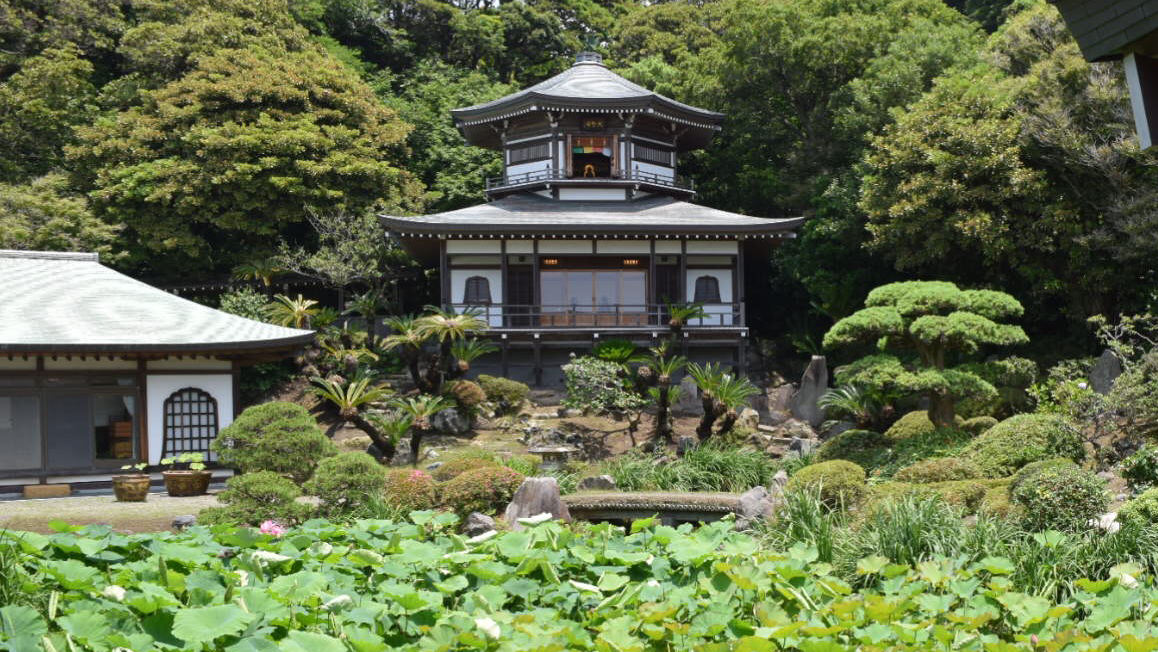
Within the grounds of Komyo-ji Temple lies a beautiful garden that expresses the worldview of Pure Land Buddhism. This garden, also known as the “Kishu Garden,” stretches out behind the main hall.
At the heart of the garden lies a large lotus pond, where in summer, lotus flowers, symbolizing the Pure Land, bloom profusely. Every July, the “Lotus Viewing Festival” is held, attracting many visitors from early morning who admire the pure lotus blossoms and contemplate the Pure Land.
Within the garden is a building called “Daiseikaku,” built to commemorate the 800th anniversary of the death of Honen Shonin. Its distinctive octagonal second floor is adorned with a phoenix on the roof. This is a rare and valuable structure, being the only temple in Kamakura with a phoenix on its roof.
Other Highlights | Founder’s Hall and the Stone Garden of the Three Buddhas and Five Patriarchs
There are many other points of interest within the temple grounds. The Founder’s Hall enshrines a statue of Zen’a Ryochu Shonin, allowing visitors to reflect on the history of Komyoji Temple.
Furthermore, the Three Buddhas and Five Patriarchs Stone Garden is a dry landscape garden featuring stone representations of the Amida Triad and the Five Patriarchs of the Jodo sect, creating a unique space that blends Zen-like tranquility with the worldview of Pure Land Buddhism.
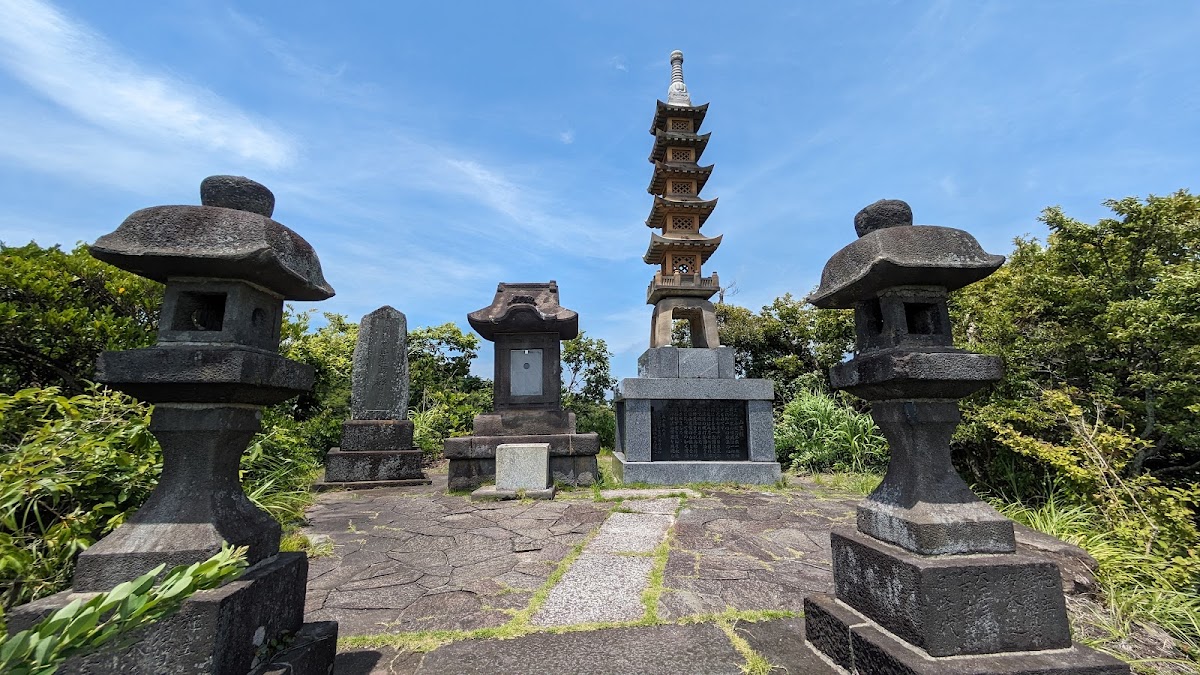
As you stroll through the temple grounds, you’ll find numerous historical stone monuments and memorial towers, allowing you to feel the history of faith that has continued since the Kamakura period.
Komyoji Temple in Every Season | Seasonal Ways to Enjoy
Spring Cherry Blossoms | A Famous Cherry Blossom Spot in Zaimokuza
Komyoji Temple is known as one of Kamakura’s most famous cherry blossom viewing spots. Many cherry trees are planted on the temple grounds, and from late March to early April, the area around the main gate and the approach to the temple are dyed in a delicate pink.
The row of cherry trees along the approach from the main gate to the temple gate is particularly magnificent, and the contrast between the white walls against the blue sky and the cherry blossoms makes for a beautiful photo spot. Enjoying the cherry blossoms while feeling the refreshing sea breeze is a unique charm of Komyoji Temple.
Summer Lotuses | Lotus Viewing Festival and the World of Paradise
A summer tradition at Komyoji Temple is the lotus flowers blooming in the lotus pond of the Kishu Garden. From mid-July to early August, thousands of lotus plants bloom one after another, enveloping the temple grounds in a beauty reminiscent of paradise.
Every July, the “Lotus Viewing Festival” is held, and the temple grounds are opened from early morning. Since lotus flowers are most beautiful in the early morning, many visitors arrive at dawn, enjoying a luxurious time admiring the lotus flowers in tranquility.
During the Lotus Viewing Festival, there are also Dharma talks and tea ceremonies related to lotus flowers, allowing visitors to enjoy the atmosphere of Japanese summer while learning about the teachings of the Jodo sect.
Autumn Foliage and Winter Serenity
In autumn, the trees on the temple grounds change color, with the maple and ginkgo trees around the main hall displaying particularly beautiful autumn foliage. Compared to the bustling tourist center of Kamakura, Komyoji Temple is a relatively tranquil hidden gem where you can enjoy the autumn leaves.
Winter at Komyoji Temple is the quietest time of year. With fewer visitors, you can pray in peace amidst the crisp, serene air. On clear winter days, the view of Mount Fuji from the upper level of the temple gate is particularly beautiful, allowing you to enjoy the magnificent scenery of Sagami Bay and Mount Fuji in the clear air.
Komyoji Temple Visiting Information | Visiting Hours, Fees, and Notes
Visiting Hours and Fees
Entry to the grounds of Komyoji Temple is generally free. Visiting hours vary by season, as follows:
- April 1st to October 14th: 6:00 AM to 5:00 PM
- October 15th to March 31st: 7:00 AM to 4:00 PM
Viewing the upper level of the temple gate is a special viewing and requires a reservation. For information on fees and reservation methods, it is recommended to contact Komyoji Temple directly.
Annual Events and Festivals
Komyoji Temple holds various Buddhist services and events throughout the year.
- First three days of the New Year: Many worshippers visit for the first shrine visit of the year.
- Spring Equinox Service (March): A memorial service for the spring equinox.
- Flower Festival (April 8th): A memorial service celebrating the birth of Buddha.
- Lotus Viewing Festival (July): A gathering to admire lotus flowers.
- Segaki Ceremony (August): A memorial service for ancestors.
- Autumn Equinox Service (September): A memorial service for the autumn equinox.
- New Year’s Eve Bell Ringing (December 31st): Open to the public.
The dates of these events may vary from year to year, so it is recommended to check the official website or call in advance.
Manners and Precautions When Visiting
Komyoji Temple is still a temple that functions as a place of worship. Please pay attention to the following points when visiting.
- Please behave quietly on the temple grounds and refrain from loud conversations.
- Photography inside buildings may require permission.
- Please be careful not to damage the gardens or buildings.
- Please take all your trash with you.
- Please dress modestly and avoid revealing clothing.
Especially during memorial services and events, general visitors may be restricted.
Access to Komyoji Temple | Transportation and Surrounding Information
Access by Train and Bus
Access from JR Kamakura Station
- Walking: Approximately 25 minutes (approximately 2 km)
- Bus: From bus stop #7 at the Kamakura Station East Exit bus terminal, take the Keikyu Bus bound for “Zushi Station via Kotsubo” or “Komyoji Temple,” and get off at the “Komyoji” bus stop (approximately 10 minutes).
Notes on using Keikyu Buses
Since buses are limited to about 2-3 per hour, it is recommended to check the timetable in advance. It’s a good idea to check the return bus schedule as well.
Access by Car and Parking
Access by Car
- Approximately 20 minutes from the Asahina IC on the Yokohama-Yokosuka Expressway
- Approximately 15 minutes from the Zushi IC on the Zushi-Hayama Shindo Road
Parking Information
Komyoji Temple has a free parking lot for visitors (approximately 30 spaces). However, it can get crowded during cherry blossom season, events such as lotus viewing festivals, weekends, and holidays. If the parking lot is full, you will need to use a paid parking lot around Zaimokuza Beach.
Nearby Tourist Attractions
There are many tourist attractions near Komyoji Temple that you might want to visit.
Zaimokuza Beach (5-minute walk)
A beautiful beach just a few minutes’ walk from Komyoji Temple. It’s bustling with people swimming in the summer, and enjoying walks and surfing in other seasons.
Gosho Shrine (10-minute walk)
A shrine that has long been revered as the guardian shrine of Zaimokuza.
Jissoji Temple (15-minute walk)
A Nichiren Buddhist temple, offering beautiful views of Zaimokuza Beach from its grounds.
Central Kamakura (20-30 minute walk)
Within walking distance of major Kamakura tourist spots such as Tsurugaoka Hachimangu Shrine and Komachi Street.
Goshuin (temple stamp) and Amulets at Komyoji Temple
Types of Goshuin and Reception Hours
At Komyoji Temple, you can receive several types of goshuin. The basic goshuin is of the principal image, Amida Buddha, but limited edition goshuin are sometimes given out according to the season and events.
Goshuin are accepted at the temple office near the main hall during visiting hours. You can bring your own goshuin book, or you can receive a pre-printed goshuin. The offering fee is usually around 300 yen.
Amulets and Gifts
At Komyoji Temple, various amulets are offered, including those for “rebirth in paradise” and “family safety,” typical of the Jodo sect, as well as amulets for traffic safety, academic success, and good health.
Also popular are prayer beads related to Honen Shonin and gifts featuring lotus flowers. During the lotus viewing season, special gifts related to lotus flowers are sometimes available.
The Charm of Komyoji Temple | Why You Should Visit
A Tranquil Space Away from the Hustle and Bustle of Kamakura
While Kamakura’s main tourist areas are always bustling with tourists, Komyoji Temple, located in Zaimokuza, maintains a relatively calm atmosphere. The opportunity to stroll leisurely through the vast grounds and pray in peace is one of Komyoji Temple’s greatest charms.
The temple grounds, where a refreshing breeze blows in from the sea, offer a healing space that allows you to forget the hustle and bustle of the city.
Architectural Beauty and the Weight of History
The buildings of Komyoji Temple, including the main hall (a nationally designated important cultural property) and the largest temple gate in Kamakura, possess an overwhelming presence. These structures are not merely tourist attractions, but valuable cultural assets that convey the history of faith that has continued since the Kamakura period.
From the architectural style to the smallest details of the decorations, you can feel the pinnacle of Edo period craftsmanship, making it a must-see spot for anyone interested in traditional Japanese architecture.
The Beauty of Nature in Every Season
From the cherry blossoms of spring, the lotus flowers of summer, the autumn leaves, to the tranquility of winter, Komyoji Temple displays a different face in each of the four seasons. The summer lotus viewing event, in particular, is loved by many as a precious opportunity to experience the world of paradise.
Visiting in each season will allow you to discover new charms of Komyoji Temple.
A Spectacular View of Mount Fuji
The view of Mount Fuji and Sagami Bay from the upper levels of the temple gate is a spectacular sight, selected as one of “Kanagawa’s 50 Scenic Spots.” On a clear day, you can enjoy a panoramic view of the blue sea and the majestic Mount Fuji, a sight that leaves a lasting impression on visitors.
If you have the opportunity for a special viewing, we highly recommend experiencing this breathtaking view.
Summary | Experiencing Kamakura’s History and Culture at Komyoji Temple
Komyoji Temple is a temple with diverse attractions, including its status as the head temple of the Jodo sect, its nationally designated important cultural property architecture, its beautiful gardens, and its spectacular view of Mount Fuji. With a history spanning nearly 800 years since the Kamakura period, it continues to attract the faith of many and serves as a spiritual haven.
When sightseeing in Kamakura, we highly recommend extending your trip to Zaimokuza and finding peace in the tranquil atmosphere of Komyoji Temple, while experiencing Japanese history and culture. A stroll through the temple grounds while feeling the sea breeze will surely become an unforgettable memory.
Basic Information
- Official Name: Tenshozan Rengein Komyoji Temple
- Address: 6-17-19 Zaimokuza, Kamakura City, Kanagawa Prefecture
- Phone: 0467-22-0603
- Visiting Hours: April to mid-October 6:00-17:00, mid-October to March 7:00-16:00
- Admission Fee: Free (Gate viewing requires reservation and is subject to a fee)
- Access: 25-minute walk or 10-minute bus ride from JR Kamakura Station
- Parking: Available (Free, approximately 30 spaces)
- Official Website: https://komyoji-kamakura.or.jp/
Before visiting, it is recommended to check the latest visiting information and event schedule on the official website or by phone.