Complete Guide to Shokokuji Temple (Zama City, Kanagawa Prefecture) | History and Seven Mysteries of the Eighth Temple of the Bando Thirty-Three Kannon Pilgrimage
Located in Zama City, Kanagawa Prefecture, Shokokuji Temple (also known as Hoshiya-dera) is an ancient temple of the Shingon sect, Daikakuji branch, affectionately known as “Hoshi no Tani Kannon” (Star Valley Kannon). As the eighth temple of the Bando Thirty-Three Kannon Pilgrimage, it has long welcomed many worshippers. This article will introduce the charm of this historic temple in its entirety, from its history and numerous legends known as the Seven Mysteries, to access information and its aspect as a temple cemetery.
Basic Information on Shokokuji Temple
Shokokuji Temple is located in Iriya-nishi 3-chome, Zama City, Kanagawa Prefecture, and is conveniently located about a 7-minute walk from Zama Station on the Odakyu Odawara Line.
- Official Name: Myōhōzan Jihōin Hoshitani-ji Temple
- Mountain Name: Myōhōzan
- Temple Name: Jihōin
- Sect: Shingon-shu Daikakuji-ha
- Principal Image: Shō Kannon Bodhisattva
- Pilgrimage Site: Bandō Thirty-Three Kannon Pilgrimage, No. 8
- Address: 3-12-22 Iriya-nishi, Zama City, Kanagawa Prefecture 252-0024 (or 3-3583-1 Iriya)
- Phone: 046-251-2266
- Temple Hours: 8:30 AM – 4:30 PM (Lunch break 12:00 PM – 1:00 PM)
- Parking: Available
History and Origins of Hoshitani-ji Temple
Legend of Founding by Gyōki
It is said that the founding of Hoshiya-ji Temple dates back to the Tenpyō era (729-749). During the Nara period, the eminent monk Gyōki Bodhisattva was traveling through various provinces when he witnessed a mysterious sight in this area. Seeing a light shining like a golden star in the mountains and valleys, Gyōki approached, and from a deep forest called “Mishirazu-no-mori” (Forest of Unseen Visibility), he heard a voice reciting the Lotus Sutra.
Searching for the source of the voice, he discovered it was a statue of Kannon (Goddess of Mercy) enshrined in the hollow of an ancient tree’s roots. Deeply moved by this miraculous event, Gyōki is said to have carved a statue of the Holy Kannon Bodhisattva himself, built a temple, and founded it as “Hoshinotani Kannon-dō” (Star Valley Kannon Hall). This legend is the origin of the temple’s name, “Hoshiya-ji.”
Establishment as a Betto-ji Temple
The current Hoshitani-ji Temple was originally established as a betto-ji (temple in charge of managing a shrine or sacred site) for the Kannon-do (Kannon Hall) located on the mountaintop northeast of the temple (present-day Zamayatoyama Park/Legendary Hill). A betto-ji was a temple established to manage shrines and sacred sites, playing an important role during the era of syncretism of Shinto and Buddhism.
The Kannon-do was destroyed by fire during the Kamakura period and is said to have been moved to its current location. This relocation led to Hoshitani-ji Temple developing as a temple integrated with the Kannon-do.
Relationship with Tokugawa Ieyasu
In the Edo period, Hoshitani-ji Temple received special patronage from Tokugawa Ieyasu. In 1591, Ieyasu bestowed a vermilion seal certificate granting Hoshitani-ji Temple 2 koku of land. This demonstrated the temple’s status and importance, and it continued to develop under the protection of the Tokugawa shogunate.
The vermilion seal certificate guarantees the temple’s land ownership and is an important document proving that Hoshitani-ji Temple is a historically significant temple officially recognized by the Edo Shogunate.
Eighth Temple of the Bando Thirty-Three Kannon Pilgrimage
Hoshitani-ji Temple, as the eighth temple of the Bando Thirty-Three Kannon Pilgrimage, has long attracted the faith of pilgrims. The Bando Thirty-Three Kannon Pilgrimage is a pilgrimage of Kannon temples mainly in the Kanto region, and is one of Japan’s three major Kannon pilgrimage routes, alongside the Saigoku Thirty-Three and Chichibu Thirty-Four.
Principal Image and Kannon Worship
The principal image of Hoshitani-ji Temple is the Holy Kannon Bodhisattva. The Kannon Hall (main hall) houses a Kannon statue said to have been carved by Gyoki, and many worshippers offer prayers, relying on the compassion of Kannon. The Kannon Hall stands within the lush grounds, filled with a pure and serene atmosphere that gently embraces visitors.
Goshuin (Temple Seals) and Sutra Copying
For pilgrims of the Bando Thirty-Three Kannon Pilgrimage, the goshuin (temple seal) received at each temple is an important memento. At Hoshitani-ji Temple, you can receive a goshuin during the sutra copying hours (8:30 AM to 4:30 PM, excluding the lunch break from 12:00 PM to 1:00 PM). After visiting the Kannon Hall, present your goshuin book at the sutra copying office, and you will receive a beautiful goshuin with calligraphy and red ink.
The temple’s hymn reads, “When the Buddha enters even the valley of stars, the darkness of this fleeting world is cleared by the moonlight,” expressing how Kannon’s compassion is like the moon illuminating the darkness.
The Seven Mysteries of Hoshitani-ji Temple
Hoshitani-ji Temple is known as the “Temple of Seven Mysteries,” and seven objects with mysterious legends still remain on its grounds. These are called the “Seven Mysteries of Hoshitani Kannon” and attract the interest of many visitors.
1. The Single-Striking Bell (National Important Cultural Property)
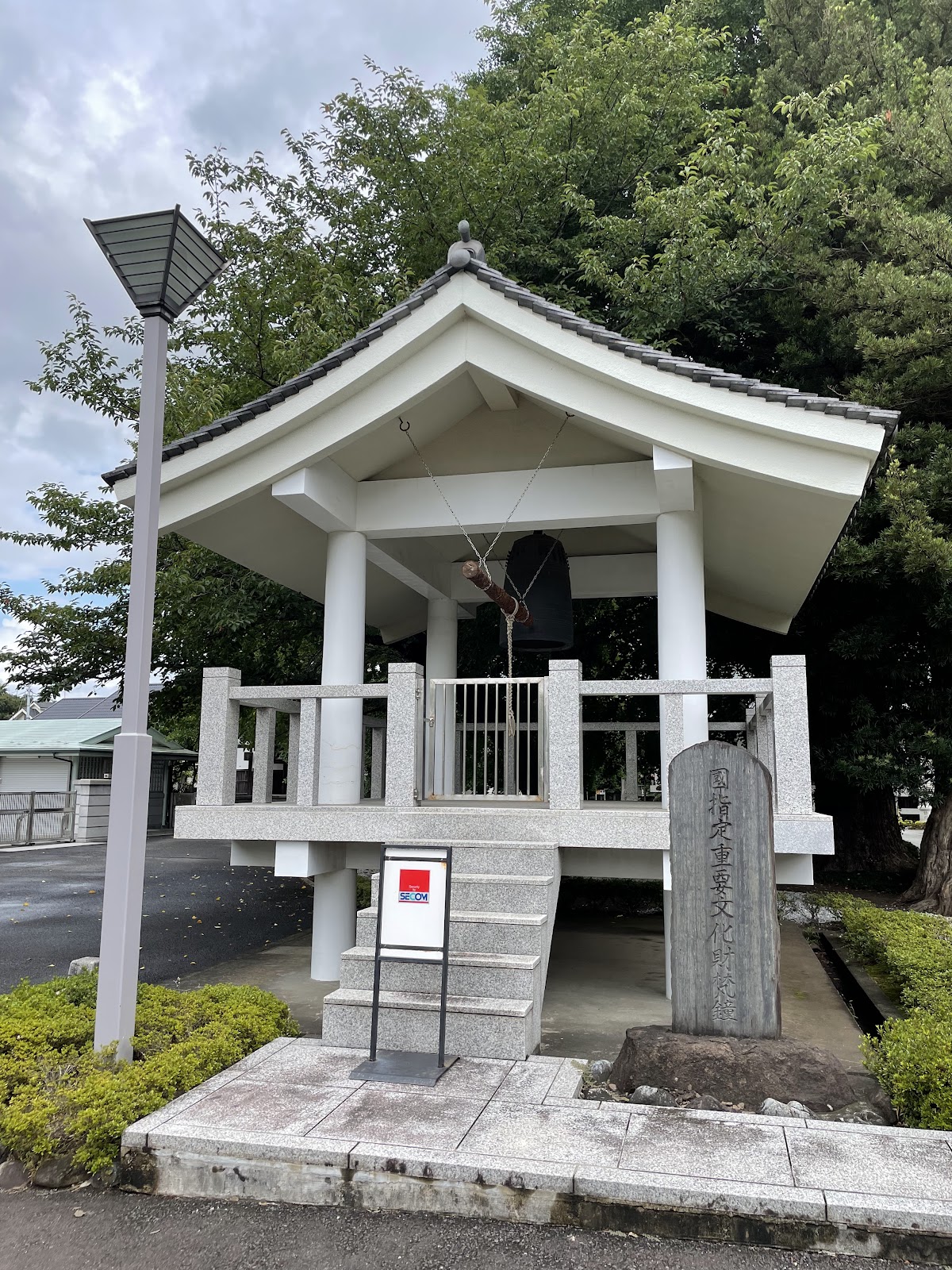
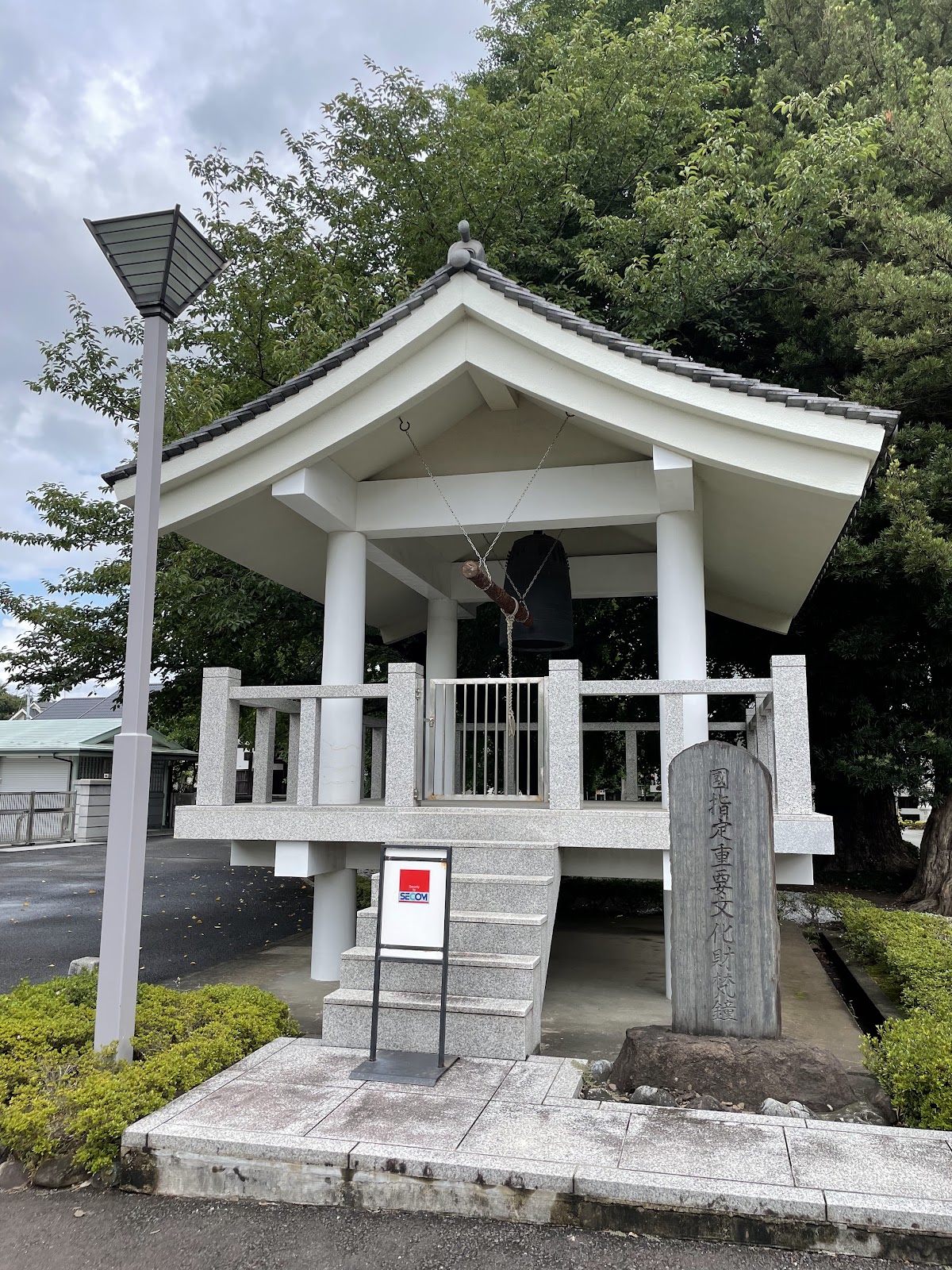
The temple bell at Hoshitani-ji Temple, cast in 1227 (Karoku 3), is one of the oldest temple bells in eastern Japan and is designated as a National Important Cultural Property. Its most distinctive feature is that it has only one striking point (the part used to strike the bell), whereas normally there are two.
Due to this unusual structure, it is counted as one of Japan’s “Three Unusual Bells,” and as the second oldest temple bell north of the Kanto region, it possesses extremely high historical value. As a valuable cultural asset that conveys the excellent casting technology of the Kamakura period, it attracts many researchers and history enthusiasts.
2. The Star Well
The old well on the temple grounds is called the “Star Well” and is one of the most famous of the seven mysteries. It is said that stars are reflected in the bottom of this well even during the day, and it is considered a mystical place related to the origin of the temple’s name.
Scientifically, it’s known that bright stars can be seen even in daylight when looking up at the sky from the bottom of a deep well. However, the well at Hoshitani-ji Temple has long been believed to possess a miraculous power that transcends such rational explanations. A connection to the “golden light shining like a star” that Gyoki saw in this area has also been suggested.
3. Camphor Tree Fossil
Within the temple grounds lies a mysterious stone called the “Camphor Tree Fossil.” It is said that shaking this stone produces a sound like flowing water. While there are various theories about the mechanism by which the internal structure of the fossilized wood produces sound, it remains a memorable and mysterious experience for visitors.
4. Kannon Grass (Herb Effective for Stroke)
The “Kannon Grass” that grows naturally on the temple grounds has been said to be effective for stroke (paralysis of the upper body due to a stroke). It has been valued as a medicinal herb since ancient times and is believed to possess special efficacy through the protection of Kannon (the Goddess of Mercy). This is an interesting legend that combines folk belief and medicinal herb culture.
5. The Everlasting Cherry Blossom
Hoshitani-ji Temple has a mysterious cherry tree known as the “everlasting cherry blossom.” This tree is said to bloom somewhere on its branches regardless of the season, even outside of the spring blooming period. This tree, exhibiting a different blooming pattern than typical cherry trees, has been revered as a manifestation of the divine power of Kannon (the Goddess of Mercy).
6. The Camellia with Diverse Blooming and Falling Flowers
The camellias on the temple grounds are known as the “camellias with diverse blooming and falling flowers,” and are said to produce five different types of flowers on a single tree. The sight of various colors and patterns of flowers—white, red, striped, etc.—blooming simultaneously evokes a sense of the mystery of nature and the wondrous power of Kannon.
7. Other Mysteries
While the specific details of the seven mysteries vary slightly depending on the document, these mysterious phenomena have been passed down through generations as evidence of the divine power of Hoshitani-ji Temple. Searching for these seven mysteries while strolling through the temple grounds is one of the pleasures of visiting the temple.
Highlights of the Temple Grounds
Kannon-do Hall (Main Hall)
Located in the heart of the lush temple grounds, the Kannon-do Hall is the central building of Hoshitani-ji Temple, housing the principal image, the Holy Kannon Bodhisattva. The well-maintained grounds are enveloped in a pure and serene atmosphere, offering peace to visitors. Praying before the Kannon-do Hall, one can feel the spiritual energy of this sacred place with over a thousand years of history.
Nio Statues and Temple Gate
At the entrance to Hoshitani-ji Temple, magnificent Nio statues greet visitors. These statues protect the temple, warding off evil spirits and watching over worshippers. Passing through the temple gate, one is enveloped in a solemn atmosphere, realizing that one has entered a sacred area.
Natural Environment of the Temple Grounds
Hoshitani-ji Temple grounds are blessed with abundant nature, allowing visitors to enjoy beautiful scenery throughout the seasons. Cherry blossoms and camellias bloom in spring, the greenery is lush in summer, and the autumn leaves color the grounds. Visiting the temple in the quiet of winter is a truly special experience.
Despite its location in an urban area, the temple maintains such a rich natural environment, a testament to its long-standing management and the cooperation of the local community.
Annual Events
Hoshitani-ji Temple holds various religious ceremonies throughout the year.
New Year’s Day Goma Ritual (January 1st)
On January 1st, the start of the new year, the New Year’s Day Goma Ritual is solemnly performed. Goma is an important ritual in Shingon Esoteric Buddhism, where a fire is lit on a goma altar to burn away worldly desires and fulfill wishes. Many worshippers gather to pray for good health and safety for their families in the new year.
Kannon Festival (April 15th)
On April 15th, the Kannon Festival is held. This is an important ceremony to express gratitude to the principal image, the Holy Kannon Bodhisattva, and to praise the compassion of Kannon. This event also preserves the tradition of the temple as one of the 33 Kannon pilgrimage sites of Bandō.
Segaki Memorial Service (August 10th)
On August 10th, the Segaki Memorial Service is held. Segaki is a Buddhist ritual in which food and drink are offered to spirits that have fallen into the realm of hungry ghosts and to spirits without relatives. Along with ancestor worship, it is an important event that expresses compassion for all spirits.
Access Information
Hoshiya-ji Temple is located in the heart of Zama City, Kanagawa Prefecture, and is easily accessible by both public transport and car.
Access by Train
From Odakyu Odawara Line “Zama Station”
- Approximately 7 minutes on foot from the West Exit (approx. 521m)
- Very close to the station, convenient access on foot
Access by Bus
Using Kanagawa Chuo Kotsu Bus
- Take a bus from Odakyu Line Zama Station
- Get off at the “Hoshiya Kannon-mae” bus stop, approximately 2 minutes on foot
Access by Car
Using the Ken-O Expressway (Metropolitan Inter-City Expressway)
- Easily accessible from the Ken-O Atsugi Interchange
- Parking available (for visitors)
Since the area around Zama Station is also a residential area, please be considerate of local residents when visiting by car.
Hoshiya-ji Temple Cemetery
Hoshiya-ji Temple is known not only as a pilgrimage site for the Bando Thirty-Three Kannon Pilgrimage, but also as a temple cemetery. Many people choose it as their burial place because they can receive perpetual memorial services within the grounds of this historic temple.
Features of the Temple Cemetery
Sect/Affiliation: This temple belongs to the Shingon sect, Daikakuji branch, but cemetery use may be open to people of all sects (please inquire with the temple for details).
Convenient Location: Located just a 7-minute walk from Zama Station on the Odakyu Line, it offers easy access for visiting graves. Elderly visitors and relatives from afar can easily visit using public transportation.
History and Prestige: With a long history dating back to the Tenpyo era, this is a prestigious temple that received a vermilion seal from Tokugawa Ieyasu. It possesses a nationally important cultural property (a temple bell) and, as one of the 33 Kannon pilgrimage sites of Bando, attracts many visitors, offering a dignified environment for memorial services.
Natural Environment: The lush grounds showcase beauty throughout the seasons, providing a peaceful environment suitable for remembering loved ones.
Information Regarding the Cemetery
Those considering using the temple cemetery should contact the temple directly regarding the following points.
- Perpetual Use Fee and Annual Maintenance Fee
- Conditions for Tombstone Construction
- Restrictions on Religious Sect
- Availability of Columbarium
- Details of Perpetual Memorial Services
Many temple cemeteries conduct regular memorial services and daily grounds maintenance, providing a safe and secure environment for honoring your ancestors.
Nearby Attractions
Zama Yatoyama Park
Northeast of Hoshitani-ji Temple, the site where the Kannon Hall once stood is now developed as “Zama Yatoyama Park.” Within the park is an area called “Legendary Hill,” known as a place related to the origins of Hoshitani-ji Temple.
This nature-rich park is perfect for a stroll, and visiting it in conjunction with a visit to Hoshitani-ji Temple is highly recommended.
History and Culture of Zama City
Zama City is located in the southern part of the Sagamihara Plateau and is a historical area where people have lived since ancient times. Besides Hoshitani-ji Temple, there are many other historical temples, shrines, and historical sites scattered throughout the area, making it a great place to enjoy historical walks.
Manners and Precautions for Visiting a Temple
Basic Manners for Visiting a Temple
- Bow at the Temple Gate: Before entering the temple grounds, bow at the temple gate to show respect for entering the sacred area.
- Procedure for Washing Hands: Wash your hands and mouth at the water basin before praying.
- Praying at the Main Hall: Join your hands in prayer in front of the main hall and offer your prayers quietly.
- Photography: Be mindful of areas where photography is prohibited, such as inside the main hall, and be considerate of other visitors.
- Quietness: Be quiet on the temple grounds and refrain from loud conversations.
Precautions When Receiving a Goshuin (Temple Stamp)
- Please observe the Goshuin hours (8:30 AM to 4:30 PM, excluding 12:00 PM to 1:00 PM).
- The Goshuin is proof of your visit, so be sure to receive it after praying.
- Don’t forget to bring your Goshuincho (temple stamp book).
Dress Code
While there are no specific dress code requirements, please dress appropriately and respectfully, as this is a sacred place like a temple.
Summary of Hoshitani-ji Temple’s Charms
Hoshitani-ji Temple, the eighth temple on the Bandō Thirty-Three Kannon Pilgrimage, boasts a history of over a thousand years and has continuously welcomed many visitors. Its nationally important cultural property bell, the legend of its seven mysteries, its rich natural environment, and its convenient location within walking distance of Zama Station—all of these factors make Hoshitani-ji a special temple.
With its founding legend attributed to Gyōki, a vermilion seal document from Tokugawa Ieyasu, and a Kamakura-period bell, Hoshitani-ji Temple is closely intertwined with Japanese history. It is not merely a tourist destination, but a living place of faith. It is a meaningful place for a variety of people, from pilgrims on the Bandō Thirty-Three Kannon Pilgrimage to history buffs, those seeking quiet time, and even those looking for a burial plot.
If you have the opportunity to visit Zama City, Kanagawa Prefecture, please be sure to visit Hoshitani-ji Temple. A stroll through the temple grounds searching for the seven mysteries, followed by a quiet prayer at the Kannon Hall, will be a precious experience that allows you to forget the hustle and bustle of everyday life.
Its convenient location, just a 7-minute walk from Zama Station on the Odakyu Line, is another major attraction that makes it easy to visit. Enjoy your time at Hoshitani-ji Temple as part of a weekend stroll or as part of the Bando Thirty-Three Kannon Pilgrimage.
Inquiries
For inquiries regarding visiting Hoshitani-ji Temple, obtaining temple stamps, and the temple cemetery, please contact the following:
Hoshitani-ji Temple (Myohozan Jihōin)
- Address: 3-12-22 Iriya-Nishi, Zama City, Kanagawa Prefecture 252-0024
- Phone: 046-251-2266
- Temple Stamping Hours: 8:30 AM – 4:30 PM (Lunch break 12:00 PM – 1:00 PM)
We recommend calling ahead to confirm before your visit. Please note that during the New Year holidays and on days of memorial services, our services may differ from our usual procedures.
Hoshitani-ji Temple is a historical and cultural heritage site that Zama City, Kanagawa Prefecture, is proud of, and a temple that has been cherished by the local community for many years to come. As the eighth temple on the Bando Thirty-Three Kannon Pilgrimage and a temple of seven mysteries, it will continue to inspire and bring peace to many people.