Complete Guide to Hoshiya-dera Temple: A Thorough Explanation of the History and Seven Mysteries of the Eighth Temple of the Bando Thirty-Three Kannon Pilgrimage
About Hoshiya-dera Temple
Hoshiya-dera Temple (also known as Shōkoku-ji or Hoshiya-dera) is a Shingon sect Daikaku-ji school temple located in Iriya-nishi, Zama City, Kanagawa Prefecture. Its mountain name is Myōhōzan, its temple name is Jihōin, and its principal image is the Holy Kannon Bodhisattva. As the eighth temple of the Bando Thirty-Three Kannon Pilgrimage, it has long been cherished by many pilgrims. Also known by the nickname “Hoshi no Tani Kannon” (Star Valley Kannon), this mystical name originates from the numerous mysterious legends passed down at the temple.
With a history of over 1200 years as an ancient temple in Sagami Province, Hoshiya-dera Temple houses many valuable cultural assets, including a temple bell designated as a National Important Cultural Property. Furthermore, the temple grounds are home to mysterious phenomena and artifacts known as the “Seven Wonders of Hoshitani-ji Temple,” including the “Star Well” and the “Fossil of Kannon Grass,” which continue to fascinate visitors.
History and Founding of Hoshitani-ji Temple
Founding Legend of the Nara Period
The founding of Hoshitani-ji Temple dates back to the Nara period, specifically the Tenpyo era (729-749). According to legend, when Gyoki Bodhisattva visited this area, he felt the divine power of Kannon Bodhisattva and built a Kannon Hall on the mountaintop, marking the beginning of the temple. Gyoki was a prominent high priest of the Nara period, known for constructing temples and social welfare facilities throughout Japan.
Initially, Hoshitani-ji Temple is believed to have been located near the mountaintop northeast of its current location, functioning as a sub-temple of the Kannon Hall. It is thought to have attracted worshippers early on as a sacred site where mountain worship and Kannon worship were intertwined.
Development from the Medieval to the Early Modern Period
During the Kamakura period, with the establishment of the Bandō Thirty-Three Kannon Pilgrimage by Minamoto no Yoritomo, it was officially designated as the eighth temple on the pilgrimage route. During this time, Kannon worship spread, particularly among the samurai class, and the number of pilgrims to Hoshitani-ji Temple increased.
From the Muromachi period to the Sengoku period, it received patronage from samurai families, including the Hōjō clan, who ruled Sagami Province. The temple bell, a nationally designated Important Cultural Property, is a valuable artifact that testifies to the temple’s prosperity during this period.
During the Edo period, it received a vermilion seal certificate from the Tokugawa shogunate, guaranteeing its temple lands. During this time, the Bandō Thirty-Three Kannon Pilgrimage became extremely popular among common people, and Hoshitani-ji Temple was bustling with many pilgrims. Much of the current temple complex was developed between the Edo and Meiji periods.
Progress Since the Modern Period
Despite the impact of the anti-Buddhist movement of the Meiji era, the temple continued to preserve its traditions, supported by the faith of the local people. During the Showa era, improvements were made to the temple grounds, creating the easily accessible environment for worshippers that we see today.
From the Heisei to the Reiwa era, it has continued to play an important role as a pilgrimage site for the Bando Thirty-Three Kannon Pilgrimage and as a temple that protects local cultural assets.
Hoshitani-ji Temple as the Eighth Temple of the Bando Thirty-Three Kannon Pilgrimage
What is the Bando Thirty-Three Kannon Pilgrimage?
The Bando Thirty-Three Kannon Pilgrimage is a pilgrimage route that visits 33 Kannon temples scattered throughout the Kanto region (Bando). It is said to have been established in the early Kamakura period at the behest of Minamoto no Yoritomo, and together with the Saigoku Thirty-Three and Chichibu Thirty-Four temples, it constitutes the “One Hundred Kannon of Japan.”
The Bando pilgrimage spans one metropolis and six prefectures: Kanagawa, Tokyo, Saitama, Gunma, Tochigi, Ibaraki, and Chiba, with a total route of approximately 1,300 kilometers. Each temple enshrines Kannon Bodhisattva and possesses its own unique history and story of faith.
Significance of Temple No. 8
Hoshiya-ji Temple, the second temple in Kanagawa Prefecture after Kamakura Sugimoto-ji Temple (the first temple on the pilgrimage), was one of the centers of Kannon worship in Sagami Province. The number eight indicates its location on the pilgrimage route and signifies its status as a sacred site.
The temple’s poem is said to be: “The clouds of delusion that hinder us are blown away, and together with the moon, we worship in the valley of stars.” This poem expresses how, through the compassion of Kannon Bodhisattva, the clouds of worldly desires are cleared, leading to a state of mind where one can gaze upon the starry sky with a pure heart. The inclusion of the phrase “valley of stars” also highlights the temple’s unique characteristics.
Modern Pilgrimage Culture
Even today, many people make the pilgrimage to the 33 Kannon temples of Bando. While pilgrimage styles have diversified, including walking pilgrimages and those undertaken by car or bus tours, the sight of pilgrims receiving Goshuin (temple stamps) at each temple and offering prayers to Kannon remains unchanged.
At Hoshitani-ji Temple, a temple office is provided for pilgrims, offering Goshuin and images of Kannon. It is particularly bustling with visitors during the spring and autumn pilgrimage seasons.
The Mysteries of Hoshitani-ji Temple’s Seven Wonders
Hoshitani-ji Temple has long been associated with seven mystical phenomena and artifacts known as the “Seven Wonders.” These are important elements that tell the story of the temple’s history and faith.
The Star Well
The most famous of the seven wonders is the “Star Well.” This well is known for the mysterious phenomenon of stars being visible even during the daytime. Scientifically, it is explained that water accumulates at the bottom of the deep well, and its surface reflects the sky like a mirror, making it possible to see bright stars and Venus even during the day.
The well is quite deep, and its darkness and silence are thought to create an ideal environment for stargazing. It is said that this mysterious phenomenon has been the origin of the temple’s name, “Hoshi no Tani” (Valley of the Stars), since ancient times.
The Bell with a Single Striking Point
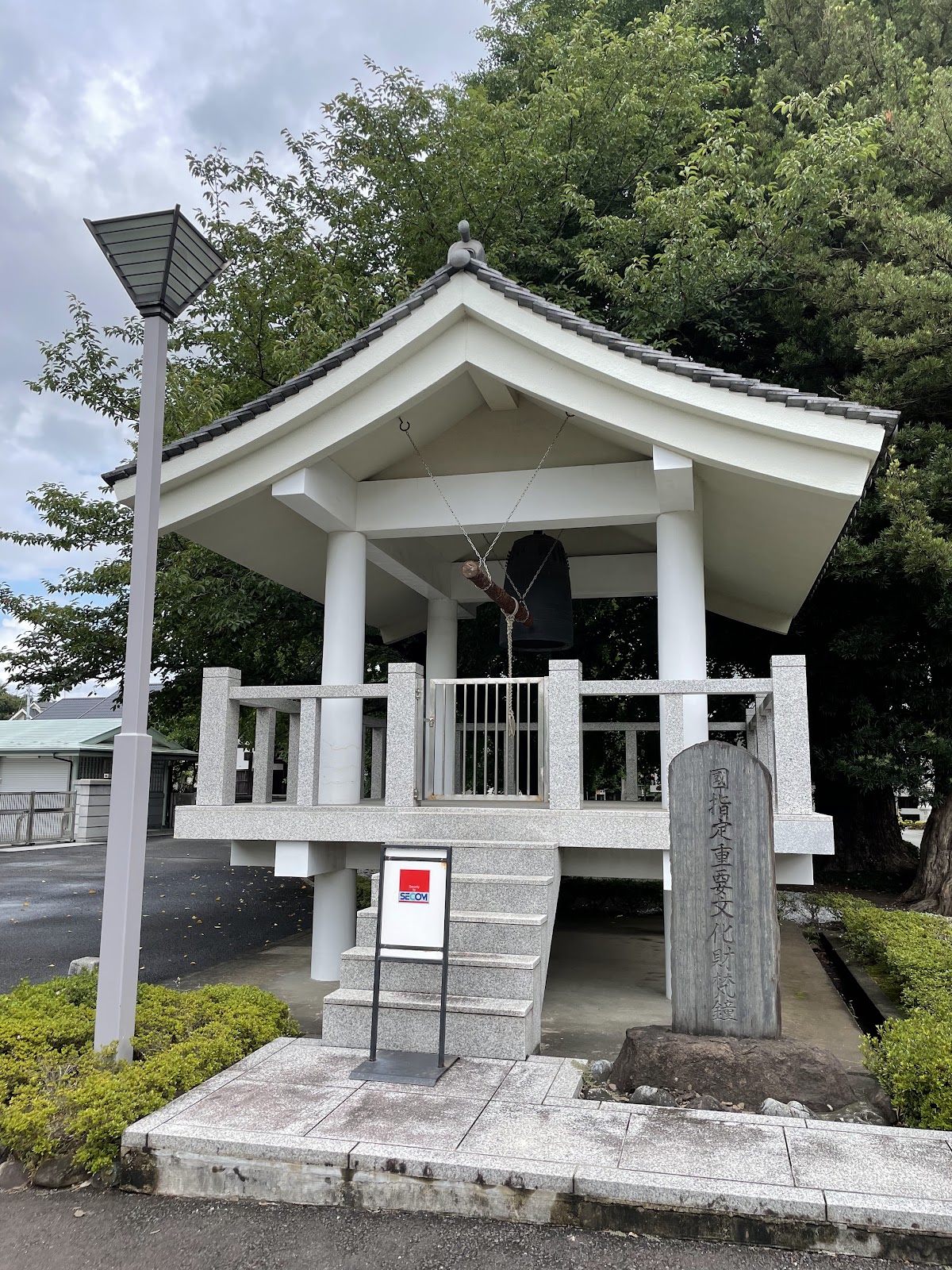
The temple bell, designated as a National Important Cultural Property, is also counted as one of the seven wonders. Normally, temple bells have two striking points (tsukiza), but the bell at Hoshiya-ji Temple has only one.
This bell is estimated to have been made in the late Kamakura period and is considered one of Japan’s three most unusual bells. There are various theories as to why it has only one striking point, but it is believed that there was a special intention behind its creation. Its sound is extremely beautiful and has been described as a “heavenly resonance.”
Fossil of Kannon Grass
A fossil of a plant called “Kannon Grass” remains on the temple grounds. This fossil was discovered in an ancient geological layer and is carefully preserved as a symbol of the compassion of Kannon Bodhisattva.
Geologically, it is also valuable evidence that this area was once the seabed, and it conveys the appearance of plants from millions of years ago. It can be said to be an interesting artifact where faith and science intersect.
Ancient Maple Tree
Within the temple grounds stands an ancient maple tree estimated to be several hundred years old. This tree displays magnificent autumn foliage in season, but its shape and branching pattern create a mysterious atmosphere, and it is counted as one of the seven mysteries.
The ancient tree has acquired a unique character over many years, and it exudes a presence that seems to embody the compassion of Kannon Bodhisattva. Many worshippers rest beneath this tree and spend a quiet time there.
Other Mysteries
In addition, various mysteries are passed down through generations, including strange sounds heard in specific locations, flowers that bloom out of season, and stones that are said to emit light at night. These legends have enhanced the temple’s mystique and deepened faith.
Many of the seven mysteries may be scientifically explainable phenomena, yet they continue to captivate people’s hearts. This can be said to be a characteristic of Japanese religious culture, where natural phenomena and faith are intertwined.
Highlights and Cultural Assets on the Temple Grounds
Main Hall and Principal Image
The main hall of Hoshitani-ji Temple was rebuilt in the late Edo period and boasts a magnificent structure typical of Shingon Buddhist temples. The principal image, a statue of the Holy Kannon Bodhisattva, is enshrined in the inner sanctuary.
The Holy Kannon Bodhisattva is the basic form of Kannon Bodhisattva, depicted with one face and two arms. Its compassionate expression, watching over all sentient beings, brings peace to many worshippers. The principal image is considered a hidden Buddha and is usually enshrined in a shrine, but it is sometimes unveiled during special religious ceremonies.
Niomon Gate and Nio Statues
At the entrance to the temple grounds stands a magnificent Niomon Gate, flanked by two Nio statues, one A-gyo and one Un-gyo. These statues are said to date from the Edo period and welcome visitors with their powerful forms.
The Nio statues are believed to protect the temple and prevent the intrusion of evil. The A-gyo statue, with its open mouth, represents the “a” sound, while the Un-gyo statue, with its closed mouth, represents the “un” sound, symbolizing the beginning and end of all things.
Kannon Hall
Separate from the main hall is the Kannon Hall, where Kannon Bodhisattva is also enshrined. This Kannon Hall is thought to be a descendant of the Kannon Hall that once stood on the mountaintop and has long been a center of worship.
The area around the Kannon Hall is particularly quiet, making it a suitable space for meditation and prayer. Many pilgrims recite the Heart Sutra and offer prayers to Kannon here.
Bell Tower and Temple Bell
The bell tower, housing the temple bell designated as a National Important Cultural Property, is one of the important structures on the temple grounds. While temple bells are usually rung at the end of the year as the New Year’s Eve bell, the bell at Hoshitani-ji Temple is currently rung only on special occasions for cultural property preservation reasons.
From the area around the bell tower, you can enjoy a panoramic view of the temple grounds and appreciate the beautiful scenery of each season.
Gardens and Nature
The grounds of Hoshitani-ji Temple are surrounded by abundant nature, displaying different expressions throughout the seasons. Cherry blossoms bloom in spring, the fresh greenery is vibrant in summer, the autumn leaves color the grounds, and in winter, it displays a dignified beauty amidst the silence.
Especially during the autumn foliage season, many visitors come, and the sight of the entire temple grounds bathed in autumn colors, along with the ancient trees, is breathtaking. Furthermore, various trees and flowers are planted on the grounds, creating a space where nature and faith are in harmony.
Other Temple Buildings and Stone Structures
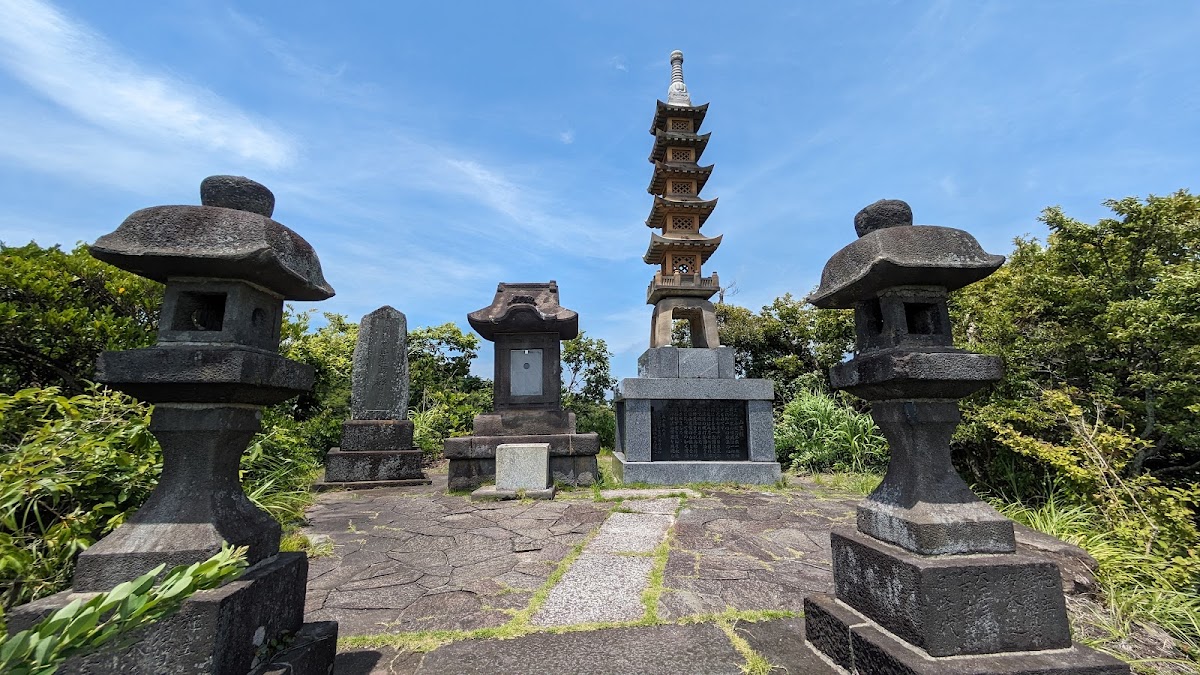
Within the temple grounds, there are several other buildings, including the Daishido (a hall dedicated to Kobo Daishi), Fudo-do (a hall dedicated to Fudo Myoo), and Jizo-do (a hall dedicated to Jizo Bodhisattva), each enshrining a different object of worship. Furthermore, the graves of successive chief priests, as well as stone Buddha statues and pagodas from the Edo period, remain, telling the story of the temple’s long history.
Access and Visiting Information
Location
Address: 3-2-1 Iriya-Nishi, Zama City, Kanagawa Prefecture
Transportation Access
Access by Train:
- Approximately 10 minutes on foot from Zama Station on the Odakyu Odawara Line
- Approximately 15 minutes on foot from Iriya Station on the JR Sagami Line
Zama Station is the nearest station, and the route from the station to the temple is flat and easy to walk. There are also signs from the station, so even first-time visitors can arrive without getting lost.
Access by Car:
- Approximately 20 minutes from the Tomei Expressway “Yokohama-Machida IC”
- Approximately 15 minutes from the Ken-O Expressway “Ebina IC”
Parking is available on the temple grounds for visitors, but spaces are limited. During busy periods, it is recommended to use nearby parking lots or public transportation.
Visiting Hours and Admission Fee
Visiting Hours: Temple grounds are open freely (generally from sunrise to sunset)
Temple Office: Approximately 9:00 AM to 4:00 PM (may vary depending on the season)
Admission Fee: Free (for visiting the temple grounds)
About Goshuin (Temple Seals)
Hoshiya-ji Temple offers Goshuin (temple seals) for the Bando Thirty-Three Kannon Pilgrimage. You can have the Goshuin written directly into your Goshuin book at the temple office, or receive a pre-printed Goshuin.
The Goshuin fee is usually around 300 yen. During busy periods, there may be a waiting time, so it is recommended to allow ample time for your visit.
Annual Events
- New Year’s Visit: January 1st-3rd
- Setsubun Festival: Around February 3rd
- Spring Grand Festival: April
- Segaki Ceremony: August
- Autumn Grand Festival: October
- New Year’s Eve Bell Ringing: December 31st
Special Buddhist services are held during these events, attracting many worshippers.
Etiquette for Visiting the Temple
- Bow before entering the Niomon Gate.
- Cleanse your hands and mouth at the water basin before praying.
- Pray quietly in the main hall and refrain from talking.
- Photography is permitted, but please be considerate of the interior of the main hall and other visitors.
- Smoking is prohibited on the temple grounds.
- If you are bringing a pet, please be considerate and hold it.
Nearby Tourist Attractions
Highlights of Zama City
Zama City, where Hoshitani-ji Temple is located, has other attractions.
Zama Shrine: An ancient shrine within walking distance of Hoshitani-ji Temple, worshipped as the local guardian deity.
Zama City Library: A library with a rich collection of local history materials, where you can learn about the history of Zama.
Zama Sunflower Fields: In summer, vast sunflower fields appear throughout the city, attracting many tourists.
Nearby Bando Pilgrimage Sites
If you continue the Bando Thirty-Three Kannon Pilgrimage, the next sites are as follows:
Seventh Site: Kinme Kannon (Komyo-ji Temple) – Hiratsuka City, Kanagawa Prefecture
Ninth Site: Jiko-ji Temple – Hiki District, Saitama Prefecture
After visiting the sites in Kanagawa Prefecture, the pilgrimage route continues into Saitama Prefecture.
The Charm and Significance of Visiting Hoshitani-ji Temple
The greatest charm of Hoshitani-ji Temple lies in its atmosphere as a place of faith nurtured by over 1200 years of history. In the increasingly urbanized Kanagawa Prefecture, it maintains a space of tranquility and prayer.
While it attracts many pilgrims as a site of the Bando Thirty-Three Kannon Pilgrimage, it also serves as a place of daily faith for local people. Its unpretentious nature, unspoiled by over-development as a tourist temple, is surprisingly calming.
The mystical legends, exemplified by the Seven Wonders, awaken a sense of reverence for nature and imagination for the unseen, qualities that modern people are in danger of forgetting. Perhaps it is precisely in this age of scientific advancement that there is value in encountering such wondrous stories.
The cultural assets, including the temple bell designated as a National Important Cultural Property, allow us to feel the weight of the culture built by our ancestors. Hoshitani-ji Temple quietly speaks to us about the importance of passing these on to future generations.
Summary
Hoshitani-ji Temple, located in Zama City, Kanagawa Prefecture, is the eighth temple on the Bando Thirty-Three Kannon Pilgrimage, boasting a long history and a rich tradition of faith. It offers a wide range of attractions, including the founding legend by Gyoki Bodhisattva, the temple bell designated as a National Important Cultural Property, and the Seven Wonders, including the Star Well.
Despite its convenient location just a 10-minute walk from Zama Station on the Odakyu Line, the temple grounds are enveloped in tranquility, allowing visitors to forget the hustle and bustle of the city. This temple is well worth visiting not only for those undertaking the pilgrimage of the 33 Kannon temples of Bando, but also for those interested in the history and culture of Kanagawa Prefecture, and for anyone seeking a quiet time for prayer.
With its seasonal natural beauty, the solemn atmosphere unique to an ancient temple, and the space enveloped in the compassion of Kannon Bodhisattva, Hoshitani-ji Temple offers peace of mind and spiritual richness to those of us living in the modern age. Why not visit this “Valley of the Stars” at least once?