Kongoji Temple (Zushi City, Kanagawa Prefecture) Complete Guide | History, Access, and Goshuin (Temple Seal) Information
Kongoji Temple, located in Sakurayama, Zushi City, Kanagawa Prefecture, is a temple belonging to the Koyasan Shingon sect. Its official name is “Eijitsuzan Kongoji,” and it is known as a branch temple of Enmeiji Temple. It features a modern main hall rebuilt during the Heisei era, and is a historic temple nestled in a quiet residential area of Zushi City, cherished by the local community.
Kongoji Temple (Zushi City, Kanagawa Prefecture) Complete Guide | History, Access, and Goshuin Information
Kongoji Temple (Zushi City, Kanagawa Prefecture) is located in Sakurayama, Zushi City, Kanagawa Prefecture, and is a temple belonging to the Koyasan Shingon sect. Its official name is “Eijitsuzan Kongoji,” and it is known as a branch temple of Enmeiji Temple. It is characterized by its modern main hall, rebuilt during the Heisei era, and is a beloved historical temple in the quiet residential area of Zushi City.
Kongoji Temple (Zushi City, Kanagawa Prefecture) Complete Guide | History, Access, and Goshuin Information
Kongoji Temple (Zushi City, Kanagawa Prefecture) is a temple belonging to the Koyasan Shingon sect. It is a temple belonging to the Koyasan Shingon sect. ## Basic Information about Kongoji Temple
Location: 7-10-20 Sakurayama, Zushi City, Kanagawa Prefecture 249-0005
Phone Number: 046-873-9322
Sect: Koyasan Shingon Buddhism
Mountain Name: Enjitsuzan
Head Temple: Enmeiji Temple (Zushi City)
Founding Date: Unknown (As Enmeiji Temple was founded during the Tenpyo era, it is presumed to have been founded later)
History and Origins of Kongoji Temple
From Founding to the Edo Period
Unfortunately, detailed records regarding the exact founding date and founder of Kongoji Temple are not available. Since its head temple, Enmeiji Temple, is believed to have been founded during the Tenpyo era (729-749), it is thought that Kongoji Temple was also founded later as a branch temple of Enmeiji Temple.
Kongoji Temple, a Shingon Buddhist temple that has continuously upheld the teachings of Esoteric Buddhism, has records indicating that it faced financial difficulties in its management during the late Edo period.
Absence of a Resident Temple in the Late Edo Period
According to records from 1821 (Bunsei 4), Kongoji Temple was already without a resident temple by this time, and its main temple, Enmeiji Temple, was managing it concurrently. This was a common problem faced by local temples at the time, and it is presumed that a decline in parishioners and economic difficulties were the underlying causes.
Dilapidation and Demolition in the Heisei Era
As a result of the long period of being without a resident temple, the main hall deteriorated significantly, and in 1992 (Heisei 4), the building became so severely damaged that it had to be demolished. For several years afterward, only the historical site indicating the former temple remained, known as the “Kongoji Temple Ruins.”
Reconstruction and Restoration in the Modern Era
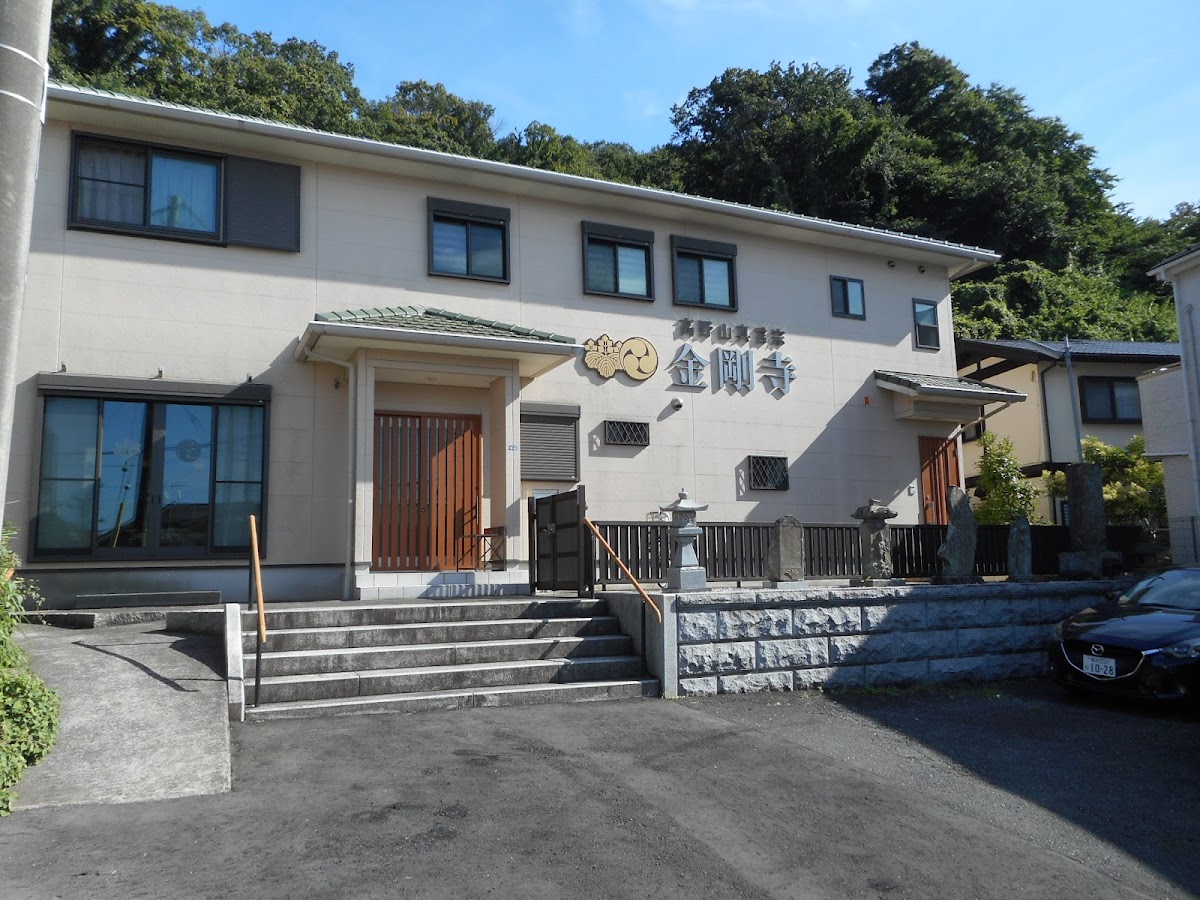
In the late Heisei era, Kongoji Temple underwent a remarkable restoration. The main hall has been newly rebuilt, transforming the temple into a modern, contemporary building with a modern exterior. Simultaneously, the temple’s uninhabited state has been resolved, and it is now managed by a resident priest.
This reconstruction is believed to have been made possible through the support of the local community, the cooperation of the temple’s parishioners, and the support of the Koyasan Shingon sect.
Kongoji Temple’s Architecture and Grounds
Rebuilt Main Hall
The current Kongoji Temple main hall incorporates elements of traditional temple architecture while blending modern architectural techniques and design. While primarily constructed of concrete, it maintains a temple-like atmosphere through its Japanese-style roof and exterior design.
As it was rebuilt during the Heisei era, the design prioritizes earthquake resistance and functionality, and incorporates modern needs such as barrier-free access.
Temple Grounds
Kongoji Temple’s grounds are located in a residential area of Sakurayama, Zushi City, and have a small, tranquil atmosphere. While not vast, the grounds are well-maintained and clean.
As is typical for temples in urban areas, parking space is limited, so using public transportation is recommended.
Access Methods
Access by Train
Kongoji Temple is accessible from several train stations.
From Keikyu Zushi Line “Zushi-Hayama Station”
- Approximately 6 minutes on foot (approx. 450m)
- This is the closest station and the most easily accessible route.
From JR Yokosuka Line “Zushi Station”
- Approximately 10 minutes on foot (approx. 800m)
- This is the most convenient option if using JR.
From Keikyu Zushi Line “Shin-Zushi Station”
- Approximately 5-6 minutes on foot (approx. 400m)
- This is the same station as Zushi-Hayama Station, but the distance varies depending on the ticket gate.
From Keikyu Zushi Line “Jinmuji Station”
- Approximately 15 minutes on foot
- This is a slightly longer route, but it’s the option if walking from the Jinmuji area.
Access by Car
From Yokohama-Yokosuka Expressway “Zushi IC”
- Approximately 10 minutes
- Accessible via National Route 134
Important Note: Parking space on the temple grounds is limited, so it is recommended to call ahead to confirm availability. There are coin-operated parking lots nearby, but they can be crowded on holidays.
Access by Bus
Keikyu buses operate from Zushi Station or Zushi-Hayama Station, but since it’s within walking distance, walking is more convenient if the weather is good.
Visiting Information
Visiting Hours
For specific visiting hours at Kongoji Temple, it is recommended to call ahead to confirm. Generally, visits are possible during daylight hours, but visits may be restricted during religious services or events.
Admission Fee
Visiting the temple grounds is generally free.
Regarding Goshuin (Temple Seals)
While it is likely that the head priest is present at Kongoji Temple and can provide Goshuin, it is recommended to call ahead to confirm. As a temple of the Koyasan Shingon sect, there is a possibility of receiving a formal Goshuin.
Annual Events at Kongoji Temple
As a temple of the Koyasan Shingon sect, the following Buddhist events are believed to be held:
- First three days of the New Year: Hatsumode (first shrine visit of the year), Shusho-e (New Year’s ceremony)
- Spring and Autumn Equinoxes: Higan memorial services
- Obon: Urabon-e (Buddhist festival)
- Other: Monthly memorial services, etc.
For specific event dates, please contact the temple directly.
About Cemeteries and Columbariums
Kongoji Temple has a temple cemetery, and in the past, graves have been constructed through stonemasons. For information on new cemetery plot availability and conditions, please contact the temple directly.
Cemetery Features
- Sect: Koyasan Shingon Buddhism (Confirmation is necessary as some cemeteries accept all sects)
- Location: Located in a residential area of Zushi city, with good access
- Management: Appropriate management by a resident priest
Nearby Attractions
Enmei-ji Temple (Main Temple)
Enmei-ji Temple, the main temple of Kongo-ji Temple, is an ancient temple said to have been founded during the Tenpyo era, and is one of the most historically significant temples in Zushi city. When visiting Kongo-ji Temple, we highly recommend visiting the main temple as well.
Zushi Beach
Zushi Beach, within walking distance of Zushi Station, is one of the representative beaches of the Shonan area. Enjoy swimming in the summer, and strolling or marine sports in other seasons.
Hiroyama Park
Located near the border of Zushi City and Hayama Town, this observation park offers magnificent views of Sagami Bay and Mt. Fuji. It is approximately a 10-minute drive from Kongo-ji Temple. ### Jinmuji Temple
A historic temple located near Jinmuji Station on the Keikyu Line, said to have been founded by Gyoki Bodhisattva. Its lush grounds and ancient stone steps are particularly striking.
Zushi City’s Temple Culture and Kongoji Temple
Zushi City has a history dating back to the Kamakura period, and is home to numerous temples and shrines. As part of the Kamakura cultural sphere, a unique religious culture has developed, blending samurai culture and Buddhist culture.
Kongoji Temple, though not large in scale, is a symbol of the relationship between temples and local communities in modern times, having been rebuilt with the support of the community after falling into ruin.
About the Koyasan Shingon Sect
The Koyasan Shingon sect, to which Kongoji Temple belongs, is a sect that inherits the teachings of Shingon Esoteric Buddhism, founded by Kobo Daishi Kukai. Its head temple is Kongobu-ji Temple on Mount Koya in Wakayama Prefecture, and it is one of the largest Buddhist sects in Japan, with approximately 3,600 temples nationwide.
Characteristics of Shingon Buddhism
- Emphasis on the practice of esoteric Buddhism
- Teaching of attaining Buddhahood in this lifetime
- Principal deity is Dainichi Nyorai
- Prayers and blessings such as Goma fire rituals
- Ritual music such as Shomyo (Buddhist chanting)
Manners and Precautions When Visiting a Temple
Basic Manners for Visiting a Temple
- Bow at the Temple Gate: Bow before entering the temple grounds.
- Be Quiet: As the temple is located in a residential area, please be especially quiet during your visit.
- Photography: Obtain permission before taking photographs inside the main hall.
- Attire: Modest clothing is preferable.
- Offering: There is no set amount, but please offer respectfully.
Etiquette for Visiting a Shingon Temple
- Join your hands in prayer and bow in front of the main hall.
- Chant “Namu Daishi Henjo Kongo” (Homage to the Great Master Henjo Kongo).
- Bow deeply.
Inquiries about Kongoji Temple
For inquiries regarding visits, cemeteries, memorial services, etc., please contact the following:
Phone Number: 046-873-9322
Address: 7-10-20 Sakurayama, Zushi City, Kanagawa Prefecture 249-0005
Confirming by phone before your visit will ensure a smoother experience for your visit and the issuance of temple stamps.
Summary
Kongoji Temple, a Koyasan Shingon Buddhist temple rebuilt during the Heisei era, possesses a unique charm that blends tradition and modernity. Having once been reduced to the “Kongoji Temple Ruins,” its restoration through local support speaks to the strong bond between the temple and the community.
With its convenient location just a 6-minute walk from Zushi-Hayama Station, it’s an easily accessible temple for Zushi sightseeing. Why not spend some time in quiet contemplation in its clean grounds nestled in a peaceful residential area?
By visiting Enmei-ji Temple and other temples and shrines in Zushi City, you can gain a deeper understanding of Zushi’s history and culture.