Saikoji Temple (Abeno Ward, Osaka Prefecture) Complete Guide | History, Access, and Features Explained in Detail
Located in Matsuzaki-cho, Abeno Ward, Osaka City, Saikoji Temple is a Jodo Shinshu Honganji-ha temple with a history of over 400 years. It is a beloved temple in the community, harmoniously blending a modern exterior with traditional Buddhist spirit. This article comprehensively introduces the history of Saikoji Temple, access methods, architectural features, and detailed information regarding visits.
Basic Information about Saikoji Temple
Temple Overview
Official Name: Jodo Shinshu Honganji-ha Shogozan Saikoji Temple
Address: 2-3-44 Matsuzaki-cho, Abeno-ku, Osaka City, Osaka Prefecture 545-0053
Sect: Jodo Shinshu Honganji-ha (Nishi Honganji-ha)
Mountain Name: Shogozan
Telephone Number: 06-6621-5969
Corporate Number: 1120005000998
Current Chief Priest: Currently serving as the 20th Chief Priest
Saikoji Temple is one of 56 temples located in Abeno-ku, Osaka City, and has a long history as a major Jodo Shinshu temple in the Tennoji area.
History and Development of Saikoji Temple
From Founding to the Senba Era
The history of Saikoji Temple dates back to Keicho 9 (1604). Initially, it was built in 4-chome, Hakuro-cho, Higashi-ku, Osaka City (present-day Chuo-ku, Osaka City), in the commercial area known as Senba. Since its founding in the early Edo period, it has functioned as a center of local faith for nearly 400 years in Senba, the heart of Osaka’s merchant culture.
Senba flourished as the economic and commercial center of Osaka from the Edo period, with many merchant houses and wholesalers lining the streets. Saikoji Temple was cherished in this vibrant area as a spiritual haven for merchants and local residents.
Midosuji Widening Project and Relocation
A major turning point in the history of Saikoji Temple was its relocation in Showa 10 (1935). Due to the widening of Midosuji Avenue, a project implemented as part of Osaka City’s urban planning, Saikoji Temple was forced to relocate from its former location in Semba to its current location in Matsuzaki-cho, Abeno-ku.
Midosuji Avenue, Osaka’s main street, was developed as a groundbreaking 44-meter-wide boulevard for its time. This urban development forced many temples and businesses to relocate, and Saikoji Temple was one of them.
The chosen relocation site, Matsuzaki-cho, Abeno-ku, boasts a convenient location close to Tennoji Station and Osaka Abenobashi Station, making it an ideal base for missionary activities in the new area.
From Wooden Main Hall to Modern Architecture
After the relocation in 1935, a traditional wooden main hall was built at Saikoji Temple. This main hall served as the center of local faith for over 70 years, hosting numerous religious services and events.
However, after more than 70 years, deterioration became a serious problem. To ensure safety and enhance the functionality of the temple in a modern setting, the wooden main hall was demolished in August 2009.
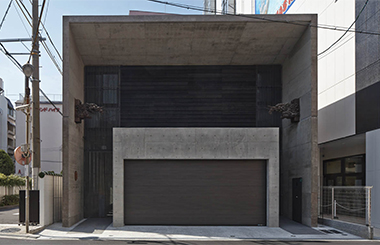
Subsequently, a new main hall was constructed, and the current Saikoji Temple was reborn as a modern reinforced concrete building. Its exterior has a modern and stylish design, unlike the traditional image of temple architecture, and many visitors are surprised, asking, “Is this really a temple?”
Saikoji Temple’s Architecture and Features
Modern Exterior Design
The most striking feature of the current Saikoji Temple is its innovative architectural design. The reinforced concrete building retains elements of traditional temple architecture while incorporating the aesthetics of modern architecture, resulting in a unique style.
The exterior has a simple and modern atmosphere with a white base, creating a building that harmonizes with the urban landscape while still possessing a strong presence. This architecture can be seen as one answer to the question of how Buddhist temples should exist in modern society.
Functionality of the Interior Space
The new main hall’s interior maintains traditional grandeur while incorporating the functionality necessary for modern temple activities. It is equipped with facilities for the smooth conduct of religious services, sermons, and various events, creating a comfortable space for visitors.
Furthermore, barrier-free design has been considered, ensuring an environment that is easily accessible for the elderly and those with disabilities.
Characteristics of the Jodo Shinshu Honganji School
The Jodo Shinshu Honganji School, to which Saikoji Temple belongs, is one of the largest Buddhist sects in Japan, founded by Shinran Shonin. Its head temple is Nishi Honganji (Ryukokuzan Honganji) in Kyoto, and it boasts over 10,000 temples nationwide.
A key characteristic of Jodo Shinshu teachings lies in the concept of “other-power vow,” which preaches salvation through the power of Amida Buddha’s original vow. The teaching that everyone can equally receive Amida Buddha’s salvation by chanting the Nembutsu (invocation of Amida Buddha) has become a source of spiritual support for many people. At Saikoji Temple, Buddhist services and sermons based on the teachings of Jodo Shinshu Buddhism are held regularly, supporting the religious lives of local believers and parishioners.
Access Information
Nearest Station and Walking Route
Saikoji Temple is located in the Tennoji/Abenobashi area, a major terminal station in Osaka City, making it very convenient to access by public transportation.
From Kintetsu Minami-Osaka Line “Osaka Abenobashi” Station:
- Approximately 1-4 minutes on foot from Exit 2 (Central South Exit)
- The closest station, making it convenient to use.
From Hankai Tramway Uemachi Line “Tennoji-Ekimae” Station:
- Approximately 3-5 minutes on foot
- Convenient access by tram.
From Osaka Metro Midosuji Line “Tennoji” Station:
- Approximately 5-7 minutes on foot
- Easily accessible from various parts of Osaka City.
From JR Lines “Tennoji” Station:
- Approximately 5-8 minutes on foot
- Convenient access from various parts of the Kansai region.
Landmarks in the Surrounding Area
Saikoji Temple is located in the heart of the Tennoji/Abeno area, close to major facilities such as Abeno Harukas and Tennoji Zoo. Matsuzaki-cho 2-chome is a mixed residential and commercial area, and the temple functions as a temple closely integrated into the lives of local residents.
Parking Information
For temple-specific parking, it is recommended to confirm by phone in advance. There are several coin-operated parking lots in the surrounding area, and reservation-only parking is also available, such as “akippa Osaka City Abeno Ward Matsuzaki-cho 2-chome 4 Parking.”
If you are visiting for a memorial service or other religious ceremony, it is recommended to contact the temple in advance to discuss parking arrangements.
Visiting and Events at Saikoji Temple
Daily Visits
Saikoji Temple welcomes general visitors. As a Jodo Shinshu temple, the main hall enshrines Amida Buddha, where visitors can quietly offer their prayers.
When visiting, please respect the tranquil atmosphere of the temple and be considerate of other visitors and religious ceremonies.
Memorial Services and Buddhist Rites
Saikoji Temple holds various memorial services for its parishioners and followers.
- Annual Memorial Services: First anniversary, third anniversary, seventh anniversary, etc.
- Monthly Memorial Service: Memorial service on the monthly anniversary of the deceased’s death
- Higan-e: Memorial service during the spring and autumn equinoxes
- Ho-on-ko: The largest Jodo Shinshu memorial service commemorating the death anniversary of Shinran Shonin
If you wish to hold a memorial service, you must contact the temple in advance to discuss the date and content.
About Perpetual Memorial Services and Cemeteries
Saikoji Temple also accepts consultations regarding cemeteries and perpetual memorial services. As a temple in an urban area, we propose forms of memorial services that are suited to modern lifestyles.
For details, please contact the temple directly to confirm specific information and costs.
Relationship between Abeno Ward and Saikoji Temple
Overview of Abeno Ward
Abeno Ward in Osaka City is a ward located in the southern part of Osaka City, and is a commercial and residential area including the Tennoji area. This area is home to many tourist attractions and historical buildings, including Abeno Harukas, Japan’s tallest building, Tennoji Zoo, and Shitennoji Temple.
Abeno Ward, with a population of approximately 100,000, is home to 56 temples, including Saikoji Temple, and boasts a rich religious culture despite being an urban area.
Connection with the Local Community
Since its relocation in 1935, Saikoji Temple has had a deep connection with the Abeno Ward community for approximately 90 years. It not only supports the religious lives of local parishioners and believers but also functions as a spiritual center for the local community.
The adoption of modern architecture can be seen as a reflection of its consideration for the local landscape and its exploration of a new role for an urban temple.
The Teachings of Jodo Shinshu Buddhism and Saikoji Temple
The Teachings of Shinran Shonin
Shinran Shonin (1173-1263), the founder of Jodo Shinshu Buddhism, studied the teachings of Nembutsu (recitation of Amida Buddha’s name) as a disciple of Honen Shonin and developed his own unique doctrines, such as the “theory of salvation for the wicked.”
The core of Shinran Shonin’s teachings is salvation through the power of Amida Buddha’s original vow. It teaches that salvation is not achieved through self-effort or merit, but through faith in the compassion of Amida Buddha and the recitation of the Nembutsu, allowing everyone to equally attain rebirth in the Pure Land.
Practice at Saikoji Temple
Saikoji Temple regularly holds Dharma talks and study sessions based on the teachings of Jodo Shinshu Buddhism. Through Dharma talks by the head priest, you can learn how to apply Buddhist teachings to modern life.
Those interested can inquire at the temple for information on the schedule of Dharma talks and events.
Nearby Temples, Shrines, and Cultural Facilities
Shitennoji Temple
Within walking distance of Saikoji Temple lies Shitennoji Temple, one of the oldest Buddhist temples in Japan, said to have been founded by Prince Shotoku. Founded in 593, this temple, the head temple of the Wa sect, attracts many worshippers.
Isshinji Temple
Isshinji Temple, known for creating Amida Buddha statues from cremated remains, is also nearby. While a Jodo sect temple, it shares many similarities with Saikoji Temple as both are Buddhist temples of the Nembutsu (chanting of Amida Buddha) lineage.
Tennoji Park and Zoo
Cultural facilities include Tennoji Park and Tennoji Zoo, which are enjoyable for families. Visiting these facilities in conjunction with temple visits will make for a fulfilling day.
Abeno Harukas
Abeno Harukas, Japan’s tallest skyscraper, is also within walking distance. The observation deck offers a panoramic view of Osaka city, making it an ideal sightseeing spot after visiting the temple.
Planning a Visit to Saikoji Temple
Preparation Before Your Visit
When visiting Saikoji Temple, please note the following:
- Dress Code: There are no specific dress code requirements, but appropriate and respectful attire for a temple is desirable.
- Participation in Memorial Services: If you wish to participate in a memorial service, please contact the temple in advance to confirm the date.
- Photography: Photography of the building’s exterior is permitted, but permission is required for photography inside the building or during memorial services.
- Offering: If you request a memorial service, you will need to prepare an offering.
How to Contact
You can contact Saikoji Temple by phone (06-6621-5969). They handle various inquiries, including requests for memorial services, consultations regarding cemeteries and perpetual memorial services, and requests to participate in temple events.
It is recommended to check the opening hours and available times in advance. Generally, temples are open from 9 AM to around 5 PM, but they may be closed for religious services or other events.
Combining with Nearby Sightseeing
The Tennoji and Abeno area is one of Osaka’s main tourist spots. Combining a visit to Saikoji Temple with the following nearby sightseeing activities will make for a more fulfilling experience:
- Morning: Visit Shitennoji Temple → Visit Saikoji Temple
- Afternoon: Tennoji Zoo → Abeno Harukas Observatory
- Evening: Enjoy Osaka’s gourmet food in the Shinsekai and Tsutenkaku area
The Role of Temples in Modern Times and Saikoji Temple
Challenges as an Urban Temple
The rebuilding of Saikoji Temple in 2009 is significant in considering the role of temples in modern times. The transition from traditional wooden architecture to modern reinforced concrete construction is not merely a measure to address aging, but a reflection of how an urban temple should confront modern society.
The modern exterior is likely intended to make it more approachable for modern people who may feel intimidated by Buddhism and temples.
Harmony of Tradition and Innovation
While the exterior is modern, the traditional teachings of Jodo Shinshu Buddhism are preserved inside, and religious services are conducted accordingly. This “harmony of tradition and innovation” is a characteristic of Saikoji Temple and can be considered an ideal form of a temple in the modern age.
With a history of over 400 years, Saikoji Temple’s flexibility in adapting to the times may be one of the reasons why it has been cherished by the local community for so long.
Contribution to the Local Community
Saikoji Temple functions not merely as a religious facility, but as an integral part of the local community. It not only supports the weddings, funerals, and other life events of its parishioners and followers, but also plays an important role as a place for spiritual counseling and learning.
In today’s society, where urbanization is progressing and the weakening of local communities is a concern, this role played by temples is becoming increasingly important.
Summary
Saikoji Temple in Abeno Ward, Osaka City, is a Jodo Shinshu Honganji-ha temple with a history of over 400 years since its founding in 1604. While adapting to changing times, such as relocating from Semba to its current location and rebuilding its wooden main hall into a modern structure, it has continued to uphold the teachings of Jodo Shinshu Buddhism.
With its convenient location just a few minutes’ walk from Tennoji and Abenobashi stations, its modern and approachable exterior, and its continuation of traditional Buddhist spirit, Saikoji Temple can be considered a model for urban temples in modern times.
You can visit for various purposes, including worship, requesting memorial services, and consulting about cemeteries and perpetual memorial services. When sightseeing in Osaka, why not visit Saikoji Temple along with the surrounding historical temples, shrines, and tourist attractions?
Under the leadership of its 20th head priest, Saikoji Temple continues to support the religious lives of local people and plays a vital role in the spiritual culture of Abeno Ward. This temple, where tradition and innovation harmonize, will undoubtedly continue to be cherished by many people for years to come.