Ichijoji Temple (Kita-ku, Osaka City, Osaka Prefecture) Complete Guide | History and Access Information for a Shinshu Takada-ha Temple
Located in Oyodo-naka, Kita-ku, Osaka City, Ichijoji Temple is a Jodo Shinshu temple belonging to the Shinshu Takada-ha sect, and has long been a place of worship for the local community. This article comprehensively introduces information useful for those considering visiting Ichijoji Temple, including its historical background, characteristics of the sect, detailed access information, and surrounding facilities.
Basic Information about Ichijoji Temple
Location and Exact Address
Location: 5-7-17 Oyodo-naka, Kita-ku, Osaka City, Osaka Prefecture
Ichijoji Temple is located in the Oyodo-naka area of Kita-ku, Osaka City, northwest of Urae Park and immediately west of Oyodo-naka 5 Park. The surrounding area is a mix of residential and commercial facilities, making it a familiar temple to local residents.
Sect and Principal Image
Sect: Shinshu Takada-ha (Jodo Shinshu lineage)
Principal Image: Zenkoji-style Amida Triad
The Shinshu Takada-ha is one of the ten Jodo Shinshu sects, with its head temple, Senshuji (Takada Honzan), located in Tsu City, Mie Prefecture. Its founder was Shinbutsu Shonin, a direct disciple of Shinran Shonin, and it teaches the belief in Amida Buddha’s original vow and the desire for rebirth in paradise through chanting the Nembutsu.
The Zenkoji-style Amida Triad, the principal image of Ichijoji Temple, is a three-figure arrangement with Amida Buddha in the center, Kannon Bodhisattva on the right, and Seishi Bodhisattva on the left, modeled after the principal image of Zenkoji Temple in Shinshu. This style has attracted the faith of many people since ancient times.
Abbot and Temple Management
The current abbot is Reverend Takashi Ichihashi, who manages the temple with a focus on community engagement. Based on the teachings of the Shinshu Takada sect, he deepens his interactions with parishioners and local residents through religious activities such as memorial services and Dharma talks.
History and Founding Background of Ichijoji Temple
Founded in the Early Showa Period
Ichijoji Temple is a relatively new temple, founded in 1927 (Showa 2). The late Taisho and early Showa periods in Osaka were a time of rapid urbanization and population growth. The Oyodo area, in particular, was developing as a new residential area in northern Osaka, and the need for a temple to serve as a spiritual pillar for local residents was increasing.
Pre-War Missionary Activities
Before World War II, Ichijoji Temple dedicated itself to the propagation of the Shinshu Takada sect in the Oyodo area. At that time, Osaka was undergoing industrialization and urbanization, and many people were moving there from rural areas. It has played a role in providing spiritual support to these new residents through the teachings of Buddhism.
The Shinshu Takada sect inherits the teachings of Shinran Shonin and preaches an egalitarian doctrine centered on the idea of “salvation for the wicked,” asserting that all people can receive salvation from Amida Buddha. This teaching has been a great source of spiritual support for people starting new lives in urban areas.
From the Post-War Period to the Present
After World War II, Kita Ward in Osaka City achieved reconstruction from war damage. Ichijoji Temple also overcame the chaos of the post-war period and continues to play an important role in the local community. The current temple building is a modern, three-story concrete structure, characterized by its practical design typical of urban temples.
Detailed Access Information
The most convenient way to access Ichijoji Temple is by public transportation. It is located within walking distance of several nearby stations.
Nearest Stations and Lines
JR Osaka Loop Line “Fukushima Station”
- Approximately 10-15 minutes on foot
- The Osaka Loop Line is a convenient line connecting Osaka city in a loop, providing good access from major stations.
Hanshin Main Line “Fukushima Station”
- Approximately 10-15 minutes on foot
- Convenient access from the Kobe area.
JR Tozai Line “Shin-Fukushima Station”
- Approximately 12-17 minutes on foot
- Convenient access from the Kyobashi area and along the Gakken Toshi Line.
JR Osaka Loop Line/JR Kobe Line “Osaka Station”
- Approximately 20 minutes on foot
- Within walking distance from Osaka’s central station.
Nearest Bus Stops and Lines
Osaka City Bus (formerly Osaka Municipal Bus) routes are also available.
“Oyodo-Naka 5-chome” Bus Stop
- Closest bus stop to the temple
- Multiple bus routes pass through, making it convenient to access from surrounding areas.
“Urae Park-mae” Bus Stop
- A few minutes’ walk away
- Bus routes from Umeda are available.
We recommend checking the latest information on bus timetables and routes on the Osaka City Bus official website.
Access by Car and Parking
If accessing by car, the nearest exits are the Hanshin Expressway’s “Fukushima Exit” or “Umeda Exit.” However, as it is a temple in an urban area, we recommend contacting the temple directly in advance regarding the availability of dedicated parking.
There are several paid parking lots, such as coin-operated parking lots, scattered around the area, but congestion is expected, especially during memorial services and events, so using public transportation is more convenient.
Features of Ichijoji Temple’s Buildings and Grounds
Modern Temple Architecture
Ichijoji Temple’s buildings are modern structures, consisting of three-story concrete buildings. Unlike traditional wooden temple architecture, it is a practical design that effectively utilizes the limited land available in an urban area. This architectural style is commonly seen in urban temples built after the Showa era, emphasizing functionality adapted to modern lifestyles.
Main Hall and Inner Sanctuary
The main hall houses the principal image, a Zenkoji-style Amida Triad, and the inner sanctuary is arranged according to the ornate style of the Shinshu Takada sect. As befits a Jodo Shinshu temple, it is adorned with ornate gold decorations, inviting visitors to the world of paradise.
Atmosphere of the Temple Grounds
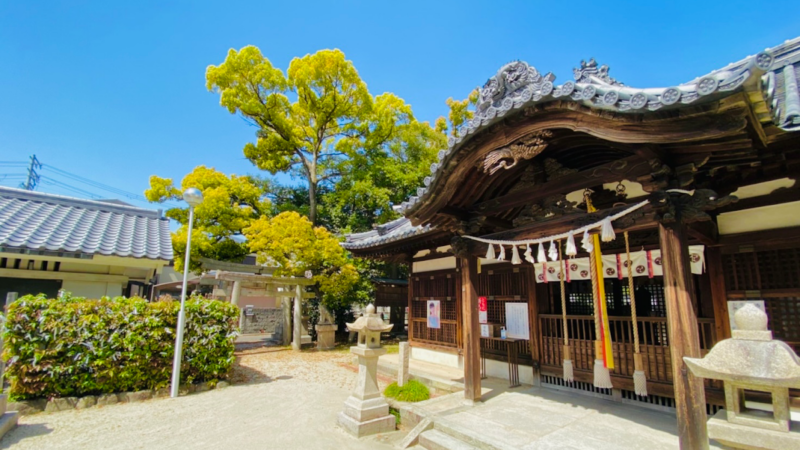
As a temple located in an urban area, it does not have vast grounds, but it has a friendly atmosphere that makes it easy for local residents to visit. Located just west of Oyodo-Naka 5 Park, many locals can be seen stopping by during their walks.
Religious Activities and Annual Events at Ichijoji Temple
Regular Memorial Services
As a Shinshu Takada sect temple, Ichijoji Temple holds the following regular memorial services:
Monthly Dharma Talks
- Dharma talks held on a fixed day each month
- An opportunity to listen to Dharma talks by the head priest and other monks
- Often open to the general public as well as parishioners
Memorial Service
- Memorial service for the death anniversary of Shinran Shonin, the founder of the sect
- One of the most important annual events at Shinshu temples
- Usually held from late November to January
Spring and Autumn Equinox Services
- Equinox services centered around the spring and autumn equinoxes
- An important opportunity for ancestor worship
Obon Service (Urabon-e)
- An ancestor worship service held during the Obon period in August
- Tanagyo (visiting and chanting sutras at parishioners’ homes) is also performed
Unique Events of the Shinshu Takada School
As unique events of the Shinshu Takada School, special Nembutsu services are sometimes held in conjunction with the grand memorial service at Senshuji Temple (Takada Honzan), the head temple. These events are important opportunities to strengthen the sense of unity within the sect and deepen one’s faith.
Obtaining Goshuin (Temple Seals) and Electronic Goshuin
About Goshuin
Ichijoji Temple offers Goshuin. While the recent Goshuin boom has led to an increase in people collecting them as souvenirs of temple and shrine visits, Goshuin are fundamentally proof of worship and a record of faith.
When receiving a Goshuin, please note the following:
- Always complete your prayers before receiving a Goshuin.
- Bring your Goshuincho (Goshuin notebook) (pre-printed Goshuin may be available).
- Prepare the Goshuin fee (usually around 300-500 yen).
- It is advisable to contact the temple in advance, as staff may be absent due to temple circumstances.
Obtaining Electronic Goshuin
Ichijoji Temple also offers electronic Goshuin using the latest digital technology. Electronic Goshuin are digital Goshuin (temple/shrine stamps) obtainable through smartphone apps, offering a different way to record your visit compared to traditional paper Goshuin.
Advantages of Electronic Goshuin:
- Can be obtained without bringing a Goshuincho (stamp book)
- Can be permanently saved as digital data
- Easy to share on social media
- Automatically records information such as the date and time of visit
For instructions on how to obtain electronic Goshuin, please follow the instructions of the temple or the corresponding app.
Nearby Temples and Religious Facilities
Several other temples are scattered around Ichijoji Temple, allowing you to enjoy temple and shrine hopping.
Major Temples in the Neighborhood
Anrakuji Temple
- Within walking distance of Ichijoji Temple
- A temple that attracts local faith
Shorakuji Temple
- A temple located in the Oyodo area
- Strong ties with local residents
Myojuji Temple
- A temple of the Nichiren sect
- An opportunity to experience the teachings of different sects
Jimyoin Temple
- A temple of the Shingon sect
- Preserves the traditions of Esoteric Buddhism
By visiting these temples, you can experience the diversity of Buddhist faith in Kita Ward, Osaka City. Each temple has its own unique history and characteristics, and it will be a good opportunity to learn about the differences in doctrines and rituals among the sects.
Facilities and Town Information Around Ichijoji
Parks and Places of Relaxation in the Area
Oyodo-Naka 5 Park
- Located immediately east of Ichijoji
- A place of relaxation for local residents
- Also used as a playground for children
Urae Park
- A large park located southeast of Ichijoji
- Enjoy nature throughout the seasons
- Popular as a walking course
Living Facilities and Commercial Areas
Oyodo-Naka is a residential area, yet it boasts a wealth of facilities necessary for daily life.
- Supermarkets: Convenient for daily shopping
- Convenience stores: Multiple stores scattered throughout the area
- Restaurants: Diverse genres including Japanese, Western, and Chinese cuisine
- Medical facilities: Multiple clinics and hospitals nearby
Transportation and Regional Characteristics
Oyodo-Naka, Kita-ku, Osaka City, maintains a relatively calm residential atmosphere despite its proximity to Osaka Station and the Umeda area. This area is convenient for commuting to work or school, as it offers excellent access to the city center via Fukushima Station on the Osaka Loop Line and Fukushima Station on the Hanshin Line.
In recent years, redevelopment has progressed, with an increase in new condominiums and commercial facilities. However, old temples and shopping streets remain, creating an attractive area where old and new harmonize.
Etiquette and Manners for Visiting Ichijoji Temple
Basic Etiquette for Worship
Worship etiquette at Shinshu temples differs slightly from that of other sects.
Bow at the Temple Gate
- Bow at the temple gate (entrance) before entering the temple grounds.
- Calm your mind and prepare for worship.
Worship at the Main Hall
- Remove your shoes before entering the main hall (slippers may be provided).
- Join your hands in prayer before the main image of Buddha.
- In Shin Buddhism, do not clap your hands; simply join your hands quietly.
- Recite the Nembutsu, “Namu Amida Butsu,” either silently or aloud.
Regarding Offerings
- There is no set amount; it is a matter of expressing your feelings.
- Quietly place your offering in the offering box.
Clothing and Belongings
Unless you are participating in a special ceremony, everyday clothing is acceptable for worship, but please consider the following:
- Clean and subdued clothing.
- Avoid revealing clothing.
- Remove your hat inside the main hall.
- Bring your Goshuincho (stamp book) if you wish to receive a Goshuin (temple stamp).
Regarding Photography
Rules regarding photography on the temple grounds and in the main hall vary by temple. If you wish to take photographs at Ichijoji Temple, please obtain permission in advance or follow the posted guidelines. Particular attention should be paid to the following points:
- Permission is often required for photography inside the main hall.
- Photography of the principal image of Buddha is generally prohibited.
- Please be considerate of the privacy of other visitors.
- Avoid using flash photography.
- When posting on social media, please respect the temple’s wishes.
Teachings and Characteristics of the Shinshu Takada School
A deeper understanding of the Shinshu Takada School, to which Ichijoji Temple belongs, will deepen the meaning of your visit.
Inheritance of Shinran Shonin’s Teachings
The Shinshu Takada School inherits the teachings of Shinran Shonin (1173-1263), a monk from the Kamakura period. Shinran Shonin learned the teachings of the Jodo sect from his teacher, Honen Shonin, and further developed them to establish the Jodo Shinshu sect.
The core of Shinran Shonin’s teachings is “reliance on the power of others.” This is the philosophy that salvation is achieved not through one’s own power (self-power), but through the power of Amida Buddha’s original vow (other-power). This egalitarian teaching, which states that anyone can attain rebirth in paradise by believing in Amida Buddha’s original vow and chanting the Buddha’s name, was revolutionary in contrast to the aristocratic-centered Buddhism of the time.
The Founding of Shinbutsu Shonin and the Takada School
The founder of the Shinshu Takada School was Shinbutsu Shonin (1209-1258), a direct disciple of Shinran Shonin. Shinbutsu Shonin established Senshuji Temple in Takada-go, Shimotsuke Province (present-day Tochigi Prefecture), and spread the teachings of Shinran Shonin. Later, the head temple was moved to Tsu City, Mie Prefecture, where it remains today.
The Takada School is also known as the “Takada Monto” and its faith spread mainly in the Tokai region. During the Edo period, the number of branch temples increased throughout Japan, and many temples were built in Osaka.
Differences from Other Branches of Jodo Shinshu
Jodo Shinshu has ten branches, the largest being the Honganji branch (Nishi Honganji) and the Otani branch (Higashi Honganji). However, the Takada branch maintains its own unique traditions and characteristics.
Main Features:
- Unique Buddhist ceremonies such as the “Oshichiya” ceremony at the head temple, Senshuji
- Inheritance of traditional Buddhist chanting (shomyo)
- Community-based missionary activities
Shinshu Takada Branch in Modern Times
The modern Shinshu Takada branch has approximately 600 temples nationwide and is developing activities that are adapted to modern society while preserving tradition. Ichijoji Temple is one such temple, playing an important role in the local community of Kita Ward, Osaka City.
Points to Note When Contacting or Visiting Ichijoji Temple
Recommendation to Contact in Advance
When visiting Ichijoji Temple, it is especially recommended to contact them in advance in the following cases:
- If you wish to receive a Goshuin (temple stamp)
- If you wish to participate in events such as Dharma talks
- If you are planning a group visit
- If you wish to conduct interviews or photography
- If you wish to consult about funerals or memorial services
Temples are religious facilities, and the priest may be absent for memorial services or events. If you wish to visit with certainty, it is advisable to check the opening hours and the priest’s presence beforehand.
Visiting Hours
Generally, temples are open for visits during the daytime (approximately 9:00 AM to 5:00 PM), but please contact Ichijoji Temple directly for its exact visiting hours. It is considered good manners to avoid visiting early in the morning or after sunset.
Year-End, New Year, and Obon Period
Obon (August) and the year-end/New Year period are the busiest times for temples. During these times, the priest is busy visiting parishioners and conducting memorial services, making it difficult to accommodate general visitors. If you are planning a visit during these periods, prior contact is especially important.
Distinguishing this temple from other Ichijoji temples in Kita Ward, Osaka City
There are several temples named “Ichijoji” throughout Japan, and even within Osaka Prefecture alone, there are multiple Ichijoji temples. To avoid confusion, please note the following:
Major Ichijoji Temples in Osaka Prefecture
Ichijoji Temple in Kita Ward, Osaka City (Featured in this article)
- Sect: Shinshu Takada School
- Location: 5-7-17 Oyodo-naka, Kita Ward, Osaka City
- Features: A modern temple founded in the early Showa period
Ichijoji Temple in Tennoji Ward, Osaka City
- Sect: Jodo Sect
- Location: Ikutama-cho, Tennoji Ward, Osaka City
- Nearest Station: Tanimachi 9-chome Station
Ichijoji Temple in Takatsuki City
- Sect: Nichiren Sect
- Location: Kajiwara, Takatsuki City
- Mountain Name: Shorinzan
- History: Founded in the Muromachi period (1427)
Ichijoji Temple in Hirakata City
- Sect: Jodo Sect
- Location: Okaminami-cho, Hirakata City
- Features: The 2nd temple of the Kawachi Thirty-Three Kannon Pilgrimage
When planning a visit or pilgrimage, be sure to check the location and sect to avoid going to the wrong temple.
Summary: The Charm of Ichijoji Temple and its Role in the Community
Ichijoji Temple, located in Oyodo-naka, Kita-ku, Osaka City, is a Shinshu Takada-ha temple founded in the early Showa period and has served as a center of faith for local people for approximately 100 years. While it boasts modern temple architecture in an urban area, it upholds the traditional teachings of Jodo Shinshu Buddhism and continues to engage in activities rooted in the local community.
Its excellent transportation access, the well-developed surrounding living environment, and its friendly atmosphere are major attractions of Ichijoji Temple. It also offers the possibility of obtaining Goshuin (temple stamps) in both physical and electronic form, catering to the needs of modern temple pilgrims.
If you visit Kita-ku, Osaka City, or have the opportunity to stroll around the Fukushima Station area, be sure to stop by Ichijoji Temple. Experiencing the teachings of the Shinshu Takada sect and spending time in quiet reverence away from the hustle and bustle of the city will be a precious spiritual respite for modern people.
Ichijoji Temple, while passing on its historical teachings to the present day, will continue to walk alongside the people of Kita Ward, Osaka City, as a central hub of the local community.