Complete Guide to Koryu-ji Temple (Kyoto Prefecture) | The Charm of Kyoto’s Oldest Temple and its National Treasure No. 1 Maitreya Bodhisattva Statue
Located in Uzumasa, Ukyo-ku, Kyoto City, Koryu-ji Temple is the oldest temple in Kyoto Prefecture, existing even before the relocation of the capital to Heian-kyo. This ancient temple, said to have been founded in 603 AD (the 11th year of Emperor Suiko’s reign), houses numerous precious Buddhist statues, including the National Treasure No. 1, the Crowned Maitreya Bodhisattva in a Half-Lotus Position. This article provides a detailed introduction to Koryu-ji Temple, including its history, highlights, and visiting information.
History and Origins of Koryu-ji Temple
Origins as Kyoto’s Oldest Temple
Koryu-ji Temple was founded in 603 AD (the 11th year of Emperor Suiko’s reign) by Hata no Kawakatsu, a powerful local lord of immigrant origin, with a Maitreya Bodhisattva statue bestowed upon him by Prince Shotoku as its principal image. Since the capital was moved to Heian-kyo in 794, this temple must have existed in Uzumasa approximately 200 years prior to that.
The *Nihon Shoki* (Chronicles of Japan) records that Prince Shotoku bestowed a Buddhist statue upon Hata no Kawakatsu, and this statue is believed to be the Maitreya Bodhisattva in a contemplative pose, now designated as National Treasure No. 1. Located in Uzumasa Hachioka-cho, Ukyo-ku, Kyoto City, Kyoto Prefecture, this temple is a valuable relic that conveys the oldest layers of Kyoto’s history.
Role as the Hata Clan’s Temple
Koryu-ji Temple was founded as the clan temple of the Hata clan. The Hata clan was a group of engineers who immigrated from the Korean Peninsula. They excelled in sericulture, weaving, and civil engineering, and were a powerful clan that greatly contributed to the development of ancient Japan. The name Uzumasa itself is said to originate from the fact that when the Hata clan presented silk to the imperial court, the silk was piled up “high.”
The Hata clan was deeply involved in the construction of Heian-kyo (Kyoto), and Koryu-ji Temple flourished as a symbol of the Hata clan’s economic and cultural power. Even today, it is affectionately known as Uzumasa Koryu-ji, reflecting its deep connection to the local community.
About Alternative Names and Mountain Name
Koryu-ji Temple has several alternative names. Its mountain name is Hachiokazan, and it has also been called Hachiokadera, Hata no Kimi-dera, and Uzumasa-dera. These names indicate the temple’s location and its relationship to the Hata clan, its founders.
Currently, it operates independently as a Shingon Buddhist temple, not belonging to any particular sect. Its principal image is Prince Shotoku, and it has played an important role as a center of Shotoku worship.
The Charm of the First National Treasure, the Maitreya Bodhisattva in a Half-Seated Contemplation Statue
The Mysterious Beauty of the Crowned Maitreya
The greatest highlight of Koryu-ji Temple is the wooden Maitreya Bodhisattva in a Half-Seated Contemplation Statue (Crowned Maitreya), which was designated as the first National Treasure. Created during the Asuka period, this statue depicts the Bodhisattva in a seated position with one leg lowered and his right hand resting on his cheek, in a state of deep contemplation.
Its expression is serene and compassionate, possessing a mystical beauty that could captivate one for hours. Often called the “Mona Lisa of the East,” this statue is said to represent the Bodhisattva contemplating how to save people in the afterlife, deeply touching the hearts of those who behold it.
The Meaning and Production Technique of the Half-Lotus Sitting Maitreya Bodhisattva
Half-lotus sitting refers to a posture of deep contemplation (sitting with one leg lowered). Maitreya Bodhisattva is a future Buddha said to appear 5.67 billion years after the death of Shakyamuni Buddha to save humanity. The half-lotus sitting Maitreya Bodhisattva statue represents him contemplating how to save people until that time.
The Crowned Maitreya Bodhisattva is carved from a single piece of red pine wood, and its elegant curves and exquisite carving techniques are considered the pinnacle of Buddhist sculpture from the Asuka period. The statue is 123.3 centimeters tall and is housed in the Reihoden (Treasure Hall).
Another National Treasure Maitreya Bodhisattva Statue
In fact, Koryu-ji Temple possesses another Maitreya Bodhisattva Half-Lotus Sitting statue designated as a National Treasure. This is the wooden half-seated statue of Maitreya Bodhisattva, also known as the “Weeping Maitreya.” Slightly smaller than the crowned Maitreya, it is carved from a single piece of Japanese red pine and stands 84.2 centimeters tall.
This is also a work from the Asuka period, and it has a different expression from the crowned Maitreya, characterized by a more introspective and melancholic look. The opportunity to view these two national treasure Maitreya Bodhisattva statues simultaneously is a rare experience, unique to Koryu-ji Temple in the world.
Main Highlights of Koryu-ji Temple
Reihoden (Treasure Hall)
The Reihoden houses numerous Buddhist statues, including national treasures and important cultural properties. Its vast collection of 20 national treasures and 48 important cultural properties is indispensable for understanding the history of Japanese Buddhist art.
Besides the Maitreya Bodhisattva statue, the temple also houses national treasures such as the Twelve Heavenly Generals statues and the Thousand-Armed Kannon Bodhisattva statue, allowing visitors to see the evolution of Buddhist sculpture from the Asuka period to the Heian period all in one place. Photography is prohibited inside the Treasure Hall, so please take your time to appreciate the statues and imprint them on your memory.
Lecture Hall and Main Hall
The lecture hall of Koryu-ji Temple is an Edo period building, and houses a seated statue of Amida Buddha, among other things. The main hall enshrines the principal image, a statue of Prince Shotoku, and serves as a center of worship for Prince Shotoku.
Prince Shotoku has long been an object of worship as a figure who dedicated himself to the flourishing of Buddhism. Koryu-ji Temple is counted as one of the seven great temples established by the Prince, and has a history of being deeply revered as a temple associated with him.
Katsura-no-miya-in (National Treasure)
The Katsura-no-miya-in is a single-story octagonal hall, a structure similar in design to the Yumedono (Dream Hall) of Horyu-ji Temple. Designated a National Treasure, it preserves the architectural style of the Kamakura period. The octagonal floor plan holds special significance in Buddhist architecture, symbolizing the center of the universe.
While normally closed to the public, there are opportunities to view the interior during special openings. Its elegant form is particularly striking within the grounds of Koryu-ji Temple.
The Gate and Temple Grounds
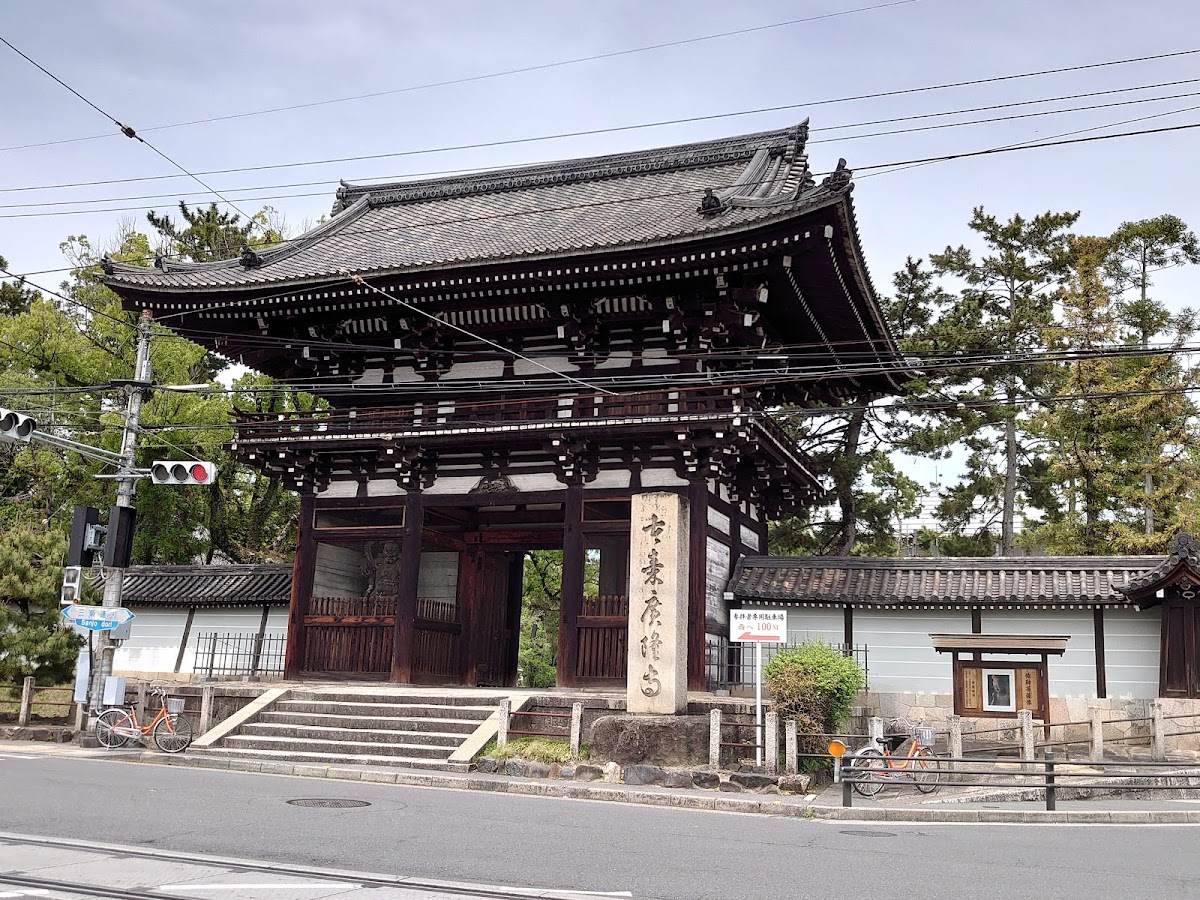
The gate tower, standing directly in front of the Arashiyama Electric Railway’s Uzumasa Koryu-ji Station, is a symbolic landmark of Koryu-ji Temple. Passing through this gate, one enters a tranquil space far removed from the hustle and bustle of the city.
The temple grounds exude a particularly peaceful atmosphere, reflecting the dignity of an ancient temple with over 1400 years of history. Visitors can enjoy the beauty of each season, from cherry blossoms in spring to autumn leaves, making it a popular hidden gem for Kyoto sightseeing.
Annual Events at Koryu-ji Temple
Ushimatsuri (October)
The most famous event at Koryu-ji Temple is the “Ushimatsuri” (Cattle Festival), held every October. Considered one of Kyoto’s three most unusual festivals, this unique event features people in extravagant costumes parading through the streets.
The origins of the Ushimatsuri date back to the Heian period, and it has been passed down as a folk event praying for a bountiful harvest and protection from disease. Currently, it is held on the Sunday closest to October 12th, attracting many spectators.
Other Buddhist Services and Events
At Koryu-ji Temple, in addition to the Taishi-e (Prince Shotoku Memorial Service) held on February 22nd, the anniversary of Prince Shotoku’s death, various Buddhist services are held throughout the year, including the spring and autumn equinox services and the Obon (Buddhist festival) Segaki (feeding of hungry ghosts) service. These events are evidence of the temple’s continued devotion to the local community.
Visiting Information and Access
Basic Information
Address: 32 Uzumasa Hachioka-cho, Ukyo-ku, Kyoto City, Kyoto Prefecture
Visiting Hours: 9:00 AM – 5:00 PM (until 4:30 PM from December to February)
Admission Fee: Adults 800 yen, University/High School Students 500 yen, Junior High/Elementary School Students 400 yen
Closed: Open all year round
Inquiries: 075-861-1461
An additional fee is required to view the Reihoden (Treasure Hall). This is a valuable opportunity to view national treasures and important cultural properties up close, so we highly recommend taking your time to explore.
Access by Train
Using Keifuku Electric Railway (Randen):
Get off at Uzumasa Koryuji Station and it’s a short walk. The main gate is visible right in front of you when you exit the station. The Randen is a streetcar connecting Arashiyama and the city center, allowing you to enjoy the Kyoto atmosphere while traveling. By JR Train: Get off at Uzumasa Station on the JR Sagano Line, approximately 12 minutes on foot. Convenient access from Kyoto Station.
By Subway: Get off at Uzumasa Tenjingawa Station on the Tozai Line, approximately 10 minutes on foot. Convenient access from the city center.
Access by Bus
Get off at “Uzumasa Koryuji-mae” bus stop (Kyoto City Bus/Kyoto Bus) and it’s right there. From Kyoto Station, City Bus Route 75 is convenient. The main gate is about a 1-minute walk from the bus stop.
Access by Car and Parking
Approximately 30 minutes from Kyoto Minami IC on the Meishin Expressway. There is free parking for visitors on the temple grounds (spaces are limited, so we recommend using nearby coin parking during busy times).
Nearby Tourist Attractions
Uzumasa Eigamura (Toei Movie Village)
Located about a 15-minute walk from Koryuji Temple, Toei Uzumasa Eigamura is a popular tourist spot and a theme park dedicated to period dramas. You can enjoy sets recreating Edo-period streetscapes and sword fighting shows. Many tourists visit this in conjunction with a visit to Koryu-ji Temple.
Ninna-ji Temple
Ninna-ji Temple, a World Heritage Site, is located about 2 kilometers north of Koryu-ji Temple. It is the head temple of the Omuro branch of Shingon Buddhism, famous for its Omuro cherry blossoms. Visiting both Koryu-ji and Ninna-ji together allows you to enjoy a tour of Kyoto’s ancient temples.
Myoshin-ji Temple
Myoshin-ji Temple is the head temple of the Myoshin-ji branch of Rinzai Zen Buddhism, boasting numerous sub-temples within its vast grounds. Located about 1.5 kilometers northeast of Koryu-ji Temple, it offers a tranquil Zen temple atmosphere.
Notes on Visiting Koryu-ji Temple
Photography of Buddhist Statues
Photography is prohibited inside the Reihoden (Treasure Hall). To protect national treasures and important cultural properties, both flash photography and regular photography are prohibited. Photography of the temple buildings and gardens is permitted, but please be considerate of other visitors.
Attire and Manners
As this is a temple, please avoid revealing clothing and observe with respect and quiet. While the Treasure Hall is air-conditioned, it can get cold in winter, so bringing a jacket is recommended.
Estimated Visiting Time
If you wish to carefully appreciate the Buddhist statues, you should allocate at least an hour for the Treasure Hall alone. Including the entire temple grounds, we recommend allowing 1.5 to 2 hours for your visit.
Cultural Assets and Academic Value of Koryu-ji Temple
National Treasure Buddhist Statues
Koryu-ji Temple possesses 20 national treasures. These include two statues of Maitreya Bodhisattva in a contemplative pose, as well as twelve standing statues of the Twelve Heavenly Generals, a standing statue of Senju Kannon Bodhisattva, and a seated statue of Fuku Kensaku Kannon Bodhisattva. These are extremely important works in the history of Japanese Buddhist art.
In particular, the Twelve Heavenly Generals statues are from the late Heian period and are characterized by their dynamic and lively expression. Each statue possesses a different expression and pose, demonstrating the high level of sculptural skill of the time.
Numerous Important Cultural Properties
There are 48 Buddhist statues designated as Important Cultural Properties, including works from the Asuka period to the Kamakura period. It is rare to find a temple where such a diverse collection of Buddhist statues from different eras can be seen at once, making it a valuable place for studying the evolution of Buddhist art.
Contribution to Academic Research
The Buddhist statues at Koryu-ji Temple are important resources for the study of Japanese Buddhist art. In particular, research on the Crowned Miroku statue continues to this day, examining its production date, techniques, and relationship with the Korean Peninsula. Koryu-ji Temple is also an important research subject when considering the relationship between the Hata clan and the Korean Peninsula.
Koryu-ji Temple as the Birthplace of Heian Culture
Koryu-ji Temple is also said to be the birthplace of Heian culture. Existing in Uzumasa before the relocation of the capital to Heian-kyo, it played a crucial role in the acceptance and development of continental culture as the clan temple of the Hata clan, who possessed advanced culture from the continent.
Koryu-ji Temple has functioned as a cultural center in various fields, including not only Buddhist art but also architecture, music, and literature. As a center of worship for Prince Shotoku, it attracted the devotion of Heian-period aristocrats, and records show that many cultural figures visited.
Summary: Why Koryu-ji Temple Continues to Captivate
As Kyoto’s oldest temple with a history of over 1400 years, Koryu-ji Temple continues to fascinate many people. The mystical beauty of the National Treasure No. 1, the crowned Miroku Bosatsu (Maitreya Bodhisattva in a contemplative pose), the vast collection of cultural artifacts, its historical importance as the family temple of the Hata clan, and the tranquil atmosphere of the temple grounds—
All of these elements harmonize to deeply move visitors. When sightseeing in Kyoto, be sure to visit Koryu-ji Temple in Uzumasa and have the precious experience of encountering some of Japan’s oldest Buddhist art. The image of the Miroku Bosatsu, smiling with its right hand on its cheek, will surely become a lasting memory in your heart.
Located in Uzumasa Hachioka-cho, Ukyo-ku, Kyoto City, Koryuji Temple boasts a convenient location just a short walk from Arashiyama Electric Railway’s Uzumasa Koryuji Station, yet offers a tranquil space that allows you to forget the hustle and bustle of the city. When sightseeing in Kyoto, be sure to visit not only famous tourist spots but also historically significant temples like this one.